
将人工智能洞察转化为可执行行动

热门趋势
Categories
Pratt & Whitney Develops Next-Generation Turbofan for Combat Aircraft
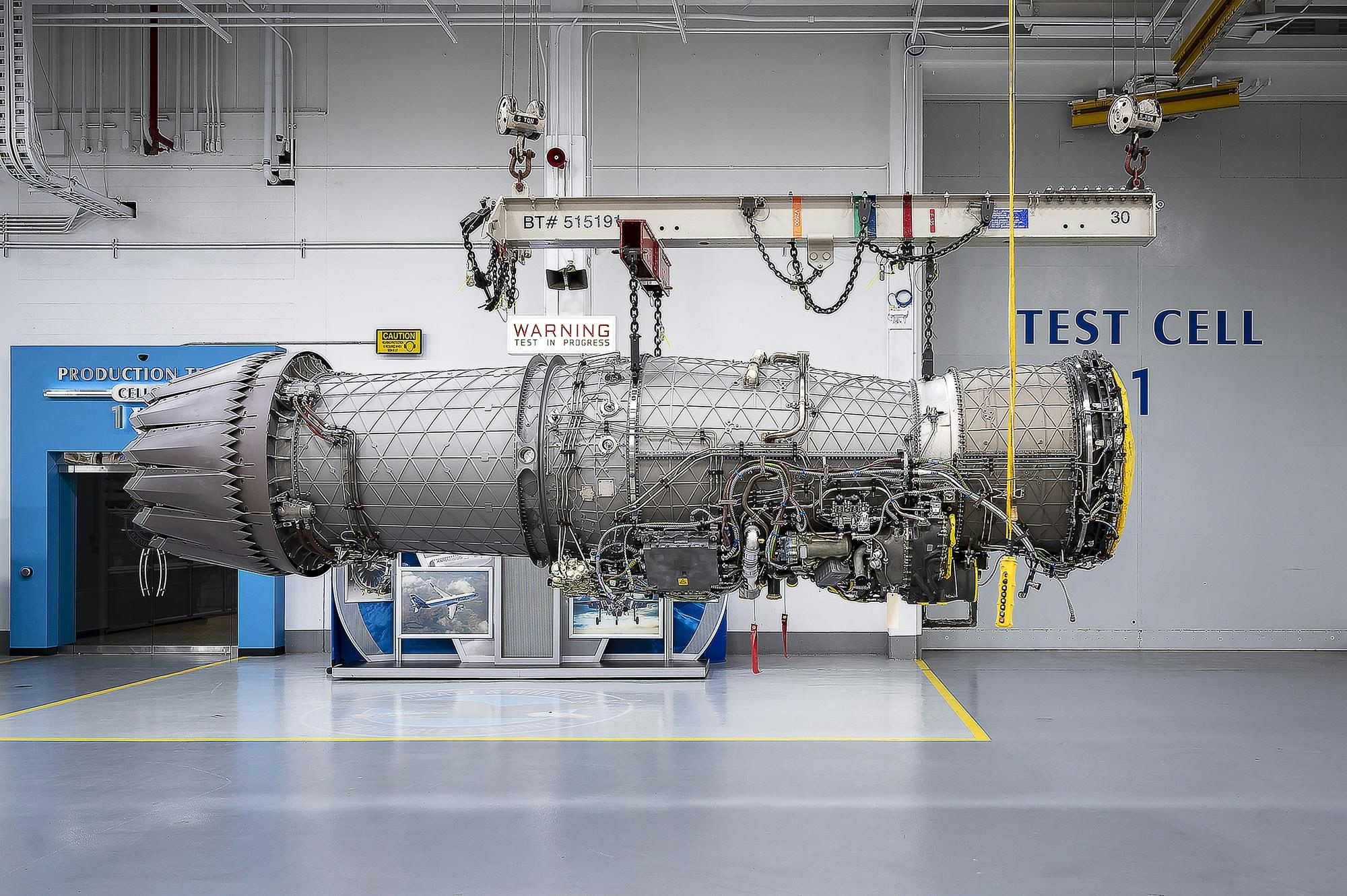
Pratt & Whitney Develops Next-Generation Turbofan for Combat Aircraft
Advancing Turbofan Technology for Collaborative Combat Aircraft
Pratt & Whitney (P&W) has reached a critical milestone in the development of its small turbofan engine family, marking a significant advancement toward powering next-generation Collaborative Combat Aircraft (CCA). Recent testing has demonstrated that these engines, initially designed for commercial aviation, can deliver up to 20% more thrust than their current certified ratings. This enhancement significantly bolsters their suitability for advanced military applications, where performance demands are increasingly stringent.
The company has adapted its turbofan technology to meet the rigorous requirements of CCAs, which necessitate engines that are compact, highly responsive, and capable of providing superior maneuverability alongside extended operational range. Jill Albertelli, President of Pratt & Whitney’s Military Engines business, highlighted that leveraging commercial-off-the-shelf engines not only enhances performance but also reduces both cost and weight. This is particularly advantageous when these engines are deployed across multiple unmanned platforms, where efficiency and reliability are paramount.
Navigating a Competitive Military Propulsion Landscape
Pratt & Whitney’s progress unfolds amid intensifying competition within the military propulsion sector. GE Aerospace is concurrently developing the XA201 engine for the U.S. Air Force’s Next Generation Adaptive Propulsion (NGAP) program, aiming to accelerate its readiness for integration into CCAs. As demand for these advanced combat aircraft grows among U.S. military branches and international partners, both companies are engaged in a race to deliver propulsion solutions that address evolving operational requirements.
Beyond thrust improvements, Pratt & Whitney is undertaking a second phase of testing focused on the impact of variations in inlet airflow and pressure—particularly when engines are embedded within an aircraft’s structure—on engine stability. Engineers are deliberately subjecting the engines to distorted or interrupted airflow conditions to better anticipate real-world performance challenges. To support this effort, the company is investing heavily in a model-based environment that combines digital twin technology with physical testing. This integrated approach facilitates detailed analysis of airflow dynamics, enhances propulsion design accuracy, and mitigates integration risks.
By merging advanced digital modeling with rigorous physical trials, Pratt & Whitney aims to ensure its development program aligns with cost, schedule, and technical objectives. This strategy is intended to equip future CCA platforms with engines that meet the highest standards of reliability and operational effectiveness. As competition intensifies, Pratt & Whitney’s integrated development approach seeks to maintain its leadership in the rapidly evolving market for next-generation combat aircraft propulsion.

Etihad Airways Suspends Airbus A380 Flights on Key Route

Aditya Birla Group Seeks Approval for Aircraft Leasing in GIFT City

Qatar Airways Highlights Innovation and Connectivity at Arabian Travel Market 2026

Hong Kong's Five-Year Plan Includes Andrew Fan's Aircraft Parts Processing Hub Proposal

ACIA Aero Leasing Delivers ATR72-600 to Air Nostrum

RTX Appoints Jill Albertelli as Head of Pratt & Whitney

TAT Technologies Joins Beyond Aero Hydrogen Aircraft Program

AURAK Study Highlights Barriers to Air Taxi Adoption in Emerging Economies

Xiamen Air Selects Altitude for 787 Maintenance at Heathrow

Etihad and Swissport Extend Global Partnership
