
将人工智能洞察转化为可执行行动

热门趋势
Categories
Riyadh Air Orders 25 Airbus A350-1000 Aircraft
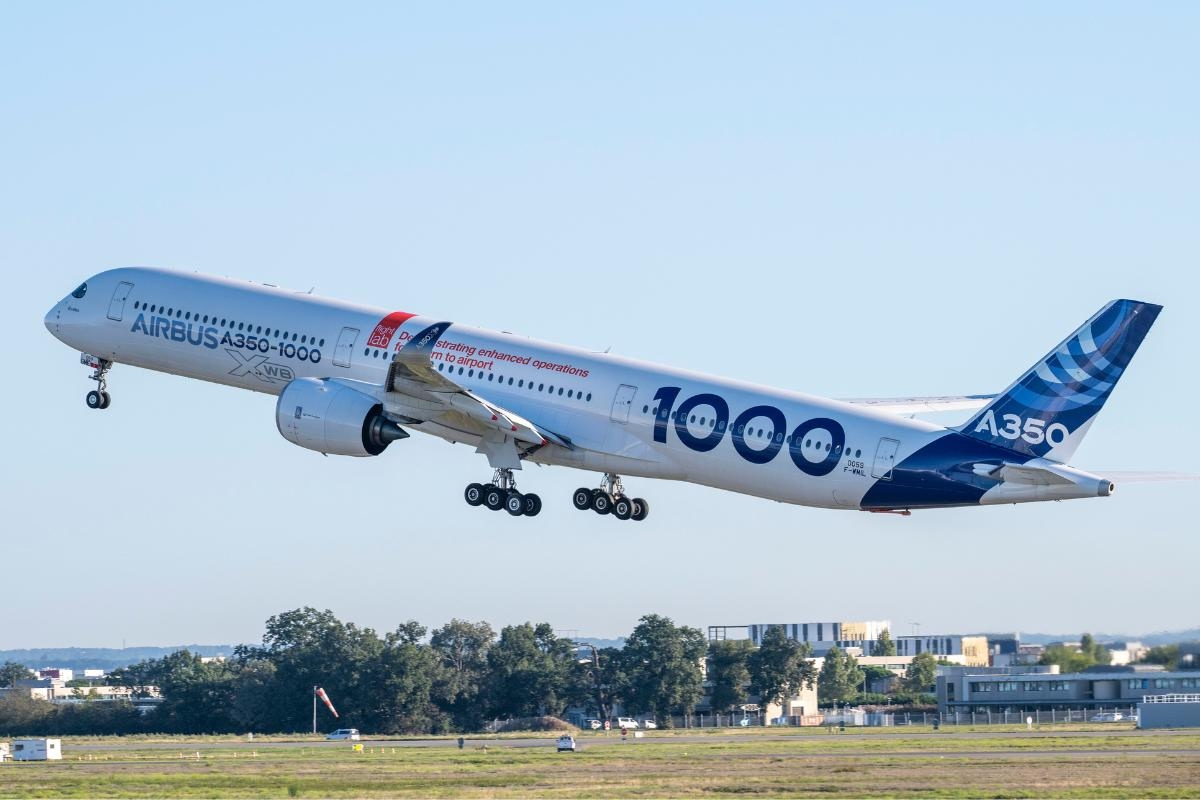
Riyadh Air Commits to 25 Airbus A350-1000 Aircraft
Riyadh Air, the newly established national carrier of Saudi Arabia, has announced an order for 25 Airbus A350-1000 aircraft, signaling a decisive move in its strategy to emerge as a significant contender in the global aviation sector. This agreement, revealed on Wednesday, highlights the airline’s determination to expand rapidly as it prepares to commence operations and challenge established regional competitors.
Strategic Fleet Expansion and Market Ambitions
The acquisition of the Airbus A350-1000, renowned for its long-range capabilities and cutting-edge technology, aligns with Riyadh Air’s objective to develop a modern, fuel-efficient fleet tailored for extensive international routes. The aircraft is expected to serve as the cornerstone of the airline’s long-haul services, supporting its vision to connect Saudi Arabia with key global destinations.
Despite the promising outlook, Riyadh Air confronts a series of challenges inherent in launching a new airline. These include navigating complex regulatory frameworks, cultivating brand recognition, and attracting both passengers and strategic partners. Furthermore, ongoing supply chain disruptions within the aviation industry pose potential risks to the timely delivery of the ordered aircraft.
Competitive Landscape and Industry Implications
Industry analysts are closely monitoring Riyadh Air’s expansion, recognizing that the airline’s capacity to implement its growth strategy effectively will be pivotal to its success. The substantial aircraft order reflects confidence in anticipated market demand but also raises questions regarding the airline’s ability to scale operations swiftly and achieve high load factors on its new routes.
Established Middle Eastern carriers such as Emirates and Qatar Airways are likely to respond strategically to Riyadh Air’s market entry. Potential countermeasures may include expanding their route networks, enhancing customer service, or investing in fleet modernization to maintain their competitive positions.
Nonetheless, Riyadh Air’s leadership remains optimistic about the airline’s prospects. The carrier intends to leverage Saudi Arabia’s strategic geographic location as a global transit hub and capitalize on the nation’s broader economic diversification and tourism development initiatives.
As Riyadh Air advances with its fleet expansion, industry observers will be attentive to how the airline addresses operational challenges and market dynamics, and whether it can fulfill its ambition to reshape the aviation landscape in the region.

Etihad Airways Suspends Airbus A380 Flights on Key Route

Aditya Birla Group Seeks Approval for Aircraft Leasing in GIFT City

Qatar Airways Highlights Innovation and Connectivity at Arabian Travel Market 2026

Hong Kong's Five-Year Plan Includes Andrew Fan's Aircraft Parts Processing Hub Proposal

ACIA Aero Leasing Delivers ATR72-600 to Air Nostrum

RTX Appoints Jill Albertelli as Head of Pratt & Whitney

TAT Technologies Joins Beyond Aero Hydrogen Aircraft Program

AURAK Study Highlights Barriers to Air Taxi Adoption in Emerging Economies

Xiamen Air Selects Altitude for 787 Maintenance at Heathrow

Etihad and Swissport Extend Global Partnership
