
将人工智能洞察转化为可执行行动

热门趋势
Categories
Rolls-Royce CEO Says Sustainable Aviation Fuel Is Key to Decarbonizing Long-Haul Flights
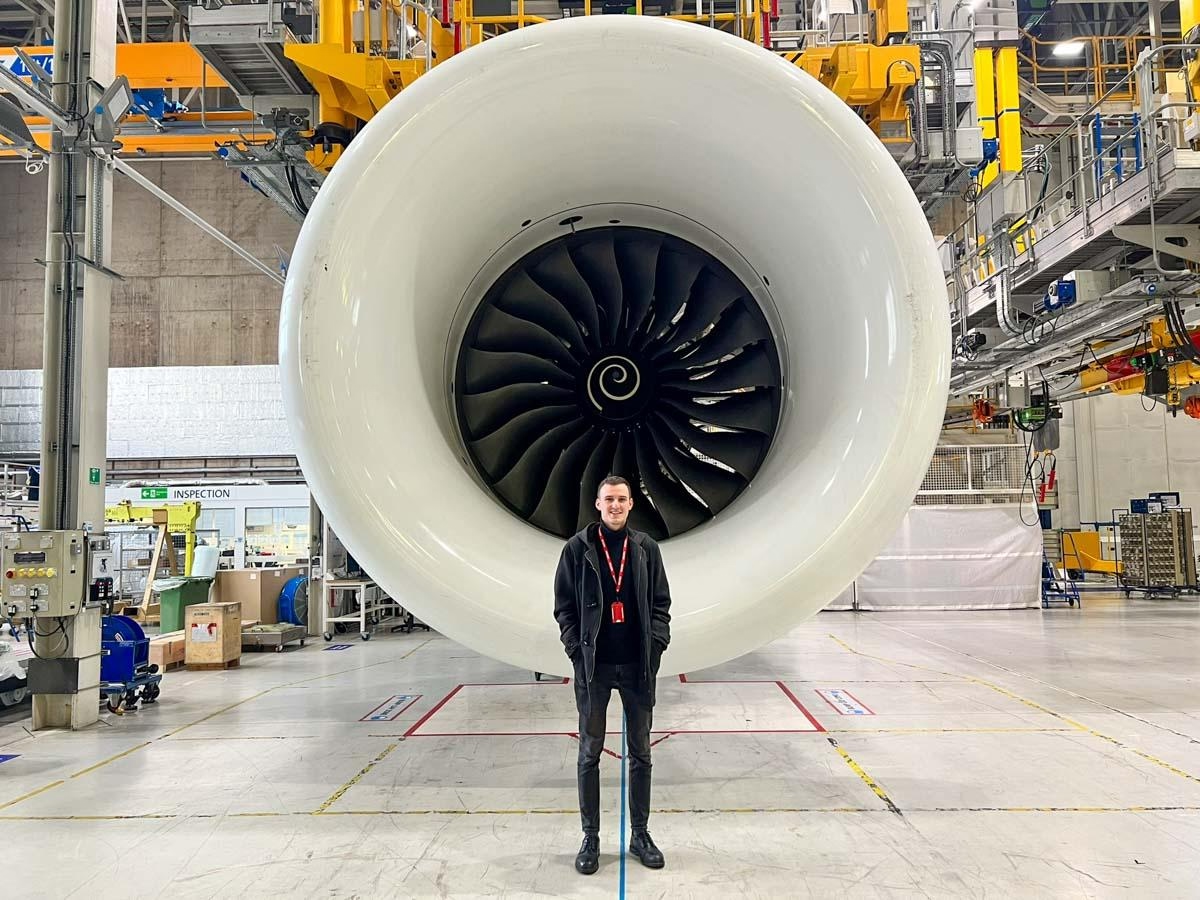
Rolls-Royce CEO Highlights Sustainable Aviation Fuel as Crucial for Decarbonizing Long-Haul Flights
Rolls-Royce Chief Executive Officer Tufan Erginbilgiç has underscored the pivotal role of sustainable aviation fuel (SAF) in achieving significant emissions reductions for long-haul flights over the coming two decades. Speaking at a Wall Street Journal event in London, Erginbilgiç asserted that SAF remains the only feasible technology capable of decarbonizing commercial aviation within this timeframe, as the industry strives to meet its net-zero emissions target by 2050.
The Limitations of Alternative Technologies
Erginbilgiç dismissed the near-term viability of alternative propulsion methods such as hydrogen and electric power for large commercial aircraft. While acknowledging that smaller planes might eventually adopt these technologies, he emphasized that SAF is the sole practical solution for narrowbody and widebody jets operating on international routes. This perspective reflects the current technological and infrastructural constraints that hinder the widespread adoption of hydrogen and electric propulsion in long-haul aviation.
Rolls-Royce, a key supplier powering prominent long-haul aircraft including the Boeing 777 and Airbus A350, has confirmed that all its existing aerospace engines are fully compatible with SAF. The company is also advancing the UltraFan engine, a next-generation model expected to deliver a 10% improvement in efficiency over current engines. However, the UltraFan is not anticipated to enter service until the 2030s, and while some of its innovations may be retrofitted to existing engines, specific details remain limited.
Challenges and Industry Response
The urgency to reduce aviation emissions is intensifying amid growing scrutiny from regulators and the public. The International Air Transport Association (IATA) has pledged to achieve net-zero emissions by 2050, but experts agree that substantial reductions must occur in the short and medium term, well before alternative propulsion technologies become commercially viable for large aircraft.
Despite its potential, SAF currently constitutes less than 1% of global aviation fuel consumption. Its adoption is constrained by limited production capacity and high costs, often reaching up to three times the price of conventional jet fuel. Expanding SAF production and ensuring its availability at airports represent significant challenges for the industry. Delta Air Lines’ Chief Sustainability Officer recently emphasized the necessity for considerable investment in SAF production and related technologies to meet climate objectives.
Market dynamics are beginning to shift in response to these pressures. Increased investment in SAF infrastructure and technology is evident, with airlines and manufacturers forming partnerships with SAF producers and accelerating the development of SAF-compatible aircraft. The European Union has introduced ambitious mandates for SAF usage, reinforcing its central role in the sector’s decarbonization strategy.
However, frustration is mounting over the slow pace of SAF adoption. IATA Director General Willie Walsh has criticized the lack of progress, highlighting that airlines cannot achieve emissions targets independently and calling for greater engagement from aircraft and engine manufacturers.
Erginbilgiç’s remarks reaffirm the prevailing consensus that sustainable aviation fuel represents the most practical interim solution for decarbonizing long-haul aviation, at least until alternative technologies can be deployed at scale.

Etihad Airways Suspends Airbus A380 Flights on Key Route

Aditya Birla Group Seeks Approval for Aircraft Leasing in GIFT City

Qatar Airways Highlights Innovation and Connectivity at Arabian Travel Market 2026

Hong Kong's Five-Year Plan Includes Andrew Fan's Aircraft Parts Processing Hub Proposal

ACIA Aero Leasing Delivers ATR72-600 to Air Nostrum

RTX Appoints Jill Albertelli as Head of Pratt & Whitney

TAT Technologies Joins Beyond Aero Hydrogen Aircraft Program

AURAK Study Highlights Barriers to Air Taxi Adoption in Emerging Economies

Xiamen Air Selects Altitude for 787 Maintenance at Heathrow

Etihad and Swissport Extend Global Partnership
