
图像

将人工智能洞察转化为可执行行动

立即加入 AeroGenie 候补名单!

热门趋势

Categories

Russia Cuts Commercial Aircraft Delivery Targets Amid Sanctions and Conflict
April 15, 2026By ePlane AI
Russia Cuts Commercial Aircraft Delivery Targets Amid Sanctions and Conflict
0
0
United Aircraft Corporation
Russian Aircraft Production
Western Sanctions Impact

Russia Cuts Commercial Aircraft Delivery Targets Amid Sanctions and Conflict

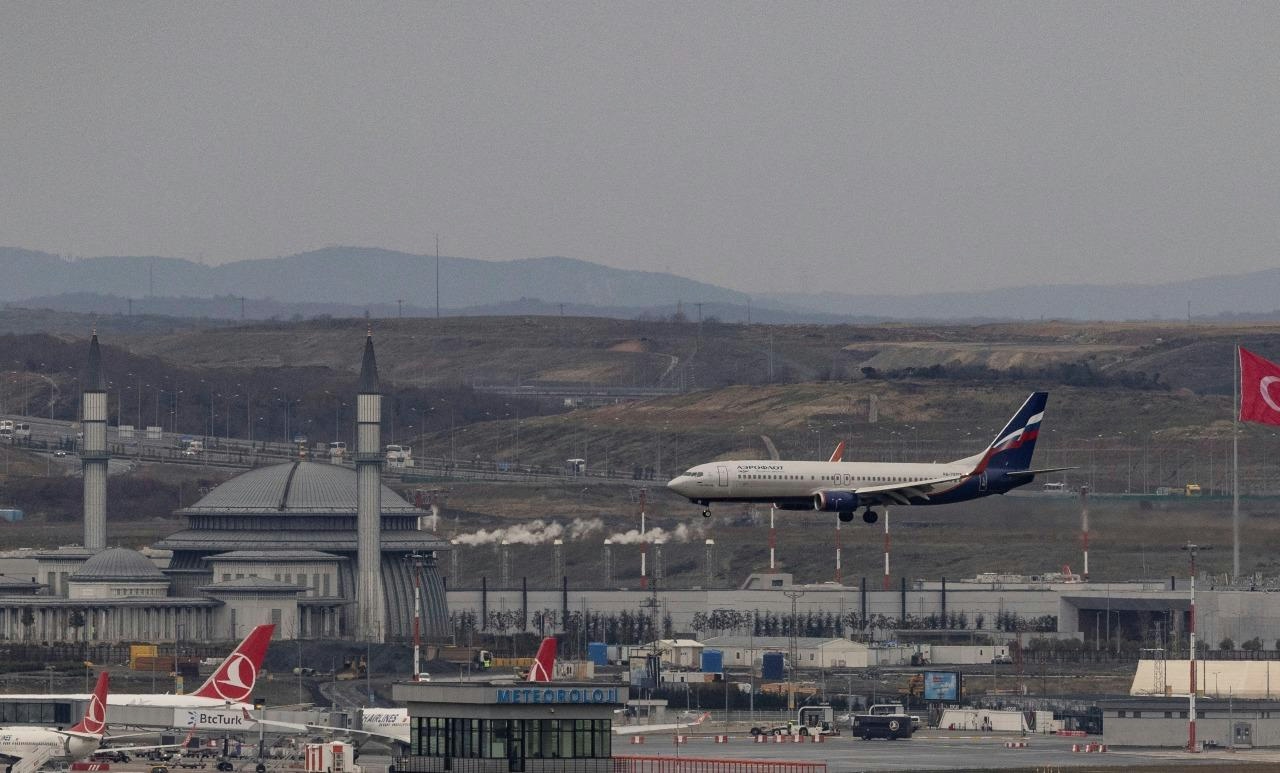
Russia has announced a substantial reduction and delay in its commercial aircraft production targets, underscoring the mounting difficulties confronting its aviation industry amid Western sanctions and the ongoing conflict in Ukraine. The United Aircraft Corporation (UAC) now aims to deliver 570 domestically produced commercial aircraft by 2035, a decrease of 36 aircraft and a five-year extension from the original 2030 deadline. This revision marks a significant departure from the initial 2022 plan, which targeted 606 aircraft by 2030, itself a reduction from over 1,000 aircraft originally planned for delivery within that period.

Revised Production Plans and Delivery Schedule

The updated production plan includes 90 Russified MC-21 aircraft for Aeroflot, supplementing the 18 already contracted, alongside 100 modernized Tu-214s for S7 Airlines and 20 Il-114-300s for Aurora. Notably, the previous intention to produce 14 widebody Il-96-300s has been abandoned. The first delivery batch is expected to consist of 18 MC-21s, 42 SJ-100s, 11 Tu-214s, and three Il-114-300s, with Aeroflot scheduled to receive its MC-21s between 2026 and 2027. UAC also plans to deliver at least 100 import-substituted SJ-100s in the coming years, as older Superjets—originally built with now-sanctioned Western components—are gradually phased out.

Russia’s commercial fleet is at a critical juncture, with many Soviet-era aircraft approaching the end of their operational lifespan and requiring urgent replacement. To address this gap, the Ural Civil Aviation Plant (UCAP) is developing new models, including the nine-seat Baikal, the 44-seat Ladoga, and the 15-19-seat Osvey.

Challenges in Domestic Aircraft Production

Despite these efforts, producing fully Russian-made aircraft remains a formidable challenge. Prior to the conflict, models such as the MC-21 and Superjet depended on 60 to 80 percent imported Western components, including engines. Even the Soviet-era Tu-214 incorporated approximately 13 percent Western parts. The domestically re-engineered MC-21 is heavier, has a reduced range, and its Russian engines are less powerful, less fuel-efficient, and more costly to operate and maintain.

These technical difficulties are compounded by competition for limited industrial resources between the commercial aviation sector and the military, as the war in Ukraine continues to demand significant capacity.

Market and Geopolitical Implications

Broader market dynamics further complicate Russia’s aviation outlook. A potential slowdown in travel demand could alleviate aircraft shortages but may also prompt airlines to reduce capacity, resulting in decreased maintenance, repair, and overhaul (MRO) expenditures and accelerated aircraft retirements. The insurance sector is responding with policy cancellations and rising premiums, adding another layer of complexity.

On the global stage, geopolitical tensions are reshaping the competitive environment. Persistent friction between the United States and China threatens Boeing’s delivery schedules and order books in the Asia-Pacific region, potentially altering market opportunities and challenges for all major aircraft manufacturers.

As Russia navigates these multifaceted pressures, its capacity to modernize and sustain its commercial aviation sector remains uncertain, with sanctions, resource constraints, and shifting global dynamics all exerting significant influence.

More news
The Airbus A380’s Four-Engine Design Poses Commercial Challenges

The Airbus A380’s Four-Engine Design Poses Commercial Challenges

The Airbus A380’s Four-Engine Design: Technical Necessity and Commercial Challenges When Airbus embarked on the development of the A380 in the 1990s, the decision to equip the aircraft with four engines was driven by technical imperatives rather than preference. Conceived as a colossal long-haul airliner, the A380 was designed to carry more passengers over greater distances than any existing commercial aircraft. With a maximum takeoff weight surpassing 1.2 million pounds (575 tonnes), it significantly outscaled competitors such as the Boeing 777-300ER. At that time, no twin-engine configuration could reliably provide the thrust necessary for such a large aircraft. Consequently, Airbus selected four high-thrust turbofan engines—either the Rolls-Royce Trent 900 or the Engine Alliance GP7200—each capable of producing up to 76,000 pounds of thrust, combining for over 307,000 pounds at takeoff. Regulatory frameworks of the era also influenced the A380’s design. In the 1990s, stringent ETOPS (Extended-range Twin-engine Operational Performance Standards) regulations limited the distance twin-engine aircraft could fly from suitable diversion airports in the event of an engine failure. Four-engine aircraft like the A380 were exempt from these restrictions, offering airlines greater operational flexibility on ultra-long-haul routes traversing oceans and remote regions. Airbus’s strategic vision was further shaped by industry forecasts anticipating increased congestion at major international hubs such as London Heathrow, Singapore Changi, and Tokyo Narita. The company predicted that airlines would respond by deploying larger aircraft to transport more passengers on fewer flights. Under these assumptions, the economics of a four-engine superjumbo appeared justified. Evolving Aviation Technology and Market Realities However, advancements in aviation technology outpaced Airbus’s initial projections. Throughout the 2000s, improvements in engine reliability allowed twin-engine aircraft to grow larger, more powerful, and more fuel-efficient. This evolution undermined the foundational rationale for the A380’s four-engine design. The commercial implications of operating four engines are significant. Four-engine aircraft incur substantially higher costs than twin-engine models, both in fuel consumption and maintenance. The A380 consumes approximately 4,600 gallons of jet fuel per hour, equating to nearly $18,000 in fuel expenses at current prices. Total operating costs range between $25,000 and $35,000 per flight hour, depending on variables such as route, fuel prices, and maintenance requirements. By comparison, modern twin-engine jets like the Airbus A350 operate at roughly $10,000 per hour. Maintenance expenses are also elevated, as four engines necessitate quadruple the inspections and overhauls. Market reception to the A380 has been mixed. While some airlines appreciate its unparalleled passenger capacity and range, particularly on high-density international routes, others favor more fuel-efficient twin-engine aircraft. Competitors have adapted accordingly; Boeing, for instance, has concentrated on enhancing the efficiency and range of its 777X to better align with airline preferences. Meanwhile, Airbus confronts additional operational challenges. Recent reports indicate a misalignment between production and deliveries, notably within the A320neo family, caused by panel quality issues and administrative delays. Airbus aims to realign production and delivery schedules by the end of June, highlighting the complexities of managing a diverse aircraft portfolio amid a rapidly changing market environment. Ultimately, the A380 remains a remarkable feat of engineering, yet its four-engine configuration underscores the commercial and operational difficulties inherent in designing aircraft for a market increasingly prioritizing efficiency and flexibility.
Azul Takes Delivery of First A330-900 from Airbus Order

Azul Takes Delivery of First A330-900 from Airbus Order

Azul Takes Delivery of First Directly Ordered Airbus A330-900, Marking Fleet Renewal Azul Airlines has received its first Airbus A330-900 aircraft purchased directly from the manufacturer, a pivotal step in the carrier’s ongoing long-haul fleet modernization. The aircraft, registered PR-ANU, was delivered at Airbus’ Toulouse facility and is scheduled to commence commercial operations in June. This delivery inaugurates Azul’s order of 11 A330-900s, with a second unit expected later this year and the remainder to be phased in over the coming years. Strategic Shift in Fleet Acquisition Although Azul has operated the A330-900 since 2019, its earlier aircraft were obtained through leasing arrangements. PR-ANU represents the airline’s first A330-900 acquired under a direct purchase contract with Airbus, signaling a strategic transition following Azul’s recent financial restructuring. As part of this shift, the airline has begun returning several leased A330-900s to lessor Avolon. Notably, five of these aircraft are slated for transfer to competitor GOL, which intends to launch its own widebody long-haul services in the latter half of the year. Configured with 298 seats, the new A330-900 features 34 business class seats, 96 extra-legroom economy seats, and 168 standard economy seats. Azul deploys this aircraft type on international routes linking Brazil with destinations across Europe and the United States. “These aircraft represent a new chapter for Azul,” stated Raphael Linares, the airline’s vice-president of legal affairs and fleet. The delivery follows Azul’s emergence from Chapter 11 proceedings in the United States, concluding a restructuring process that involved agreements with major creditors, many of whom are aircraft lessors, aimed at reducing debt and enhancing liquidity. Market Context and Industry Trends Azul’s fleet renewal occurs amid a dynamic and competitive Latin American aviation market. The airline faces the dual challenge of sustaining profitability while managing capacity and responding to evolving market pressures. The announcement of the new delivery has been met with positive market reactions, supported by Azul’s improved financial performance in the first quarter. Meanwhile, regional competitors are adapting their strategies. LATAM Airlines is reconsidering deployment plans for its Airbus A321XLR fleet in response to regulatory changes in Peru, while Embraer continues to increase aircraft deliveries and revenue despite ongoing supply chain challenges. On a broader scale, shifts in fleet strategies are evident across the global aviation sector. Italy’s recent procurement of six Airbus A330 MRTT multi-role tanker transport aircraft highlights a growing preference for European equipment, a development that may influence procurement decisions and market dynamics industry-wide. The Airbus A330neo family has secured a total of 489 orders to date, comprising 477 for the A330-900 and 12 for the smaller A330-800 variant. As of April, Airbus had delivered 191 A330neo aircraft, with major operators including Delta Air Lines, Condor, TAP Air Portugal, Virgin Atlantic, and Cebu Pacific.
Airbus Explores Artificial Intelligence to Enhance Air Travel Safety and Efficiency

Airbus Explores Artificial Intelligence to Enhance Air Travel Safety and Efficiency

Airbus Explores Artificial Intelligence to Enhance Air Travel Safety and Efficiency The aviation industry is undergoing a profound transformation as it increasingly adopts advanced technologies aimed at improving passenger experience, operational efficiency, and flight safety. Airbus has recently announced a strategic initiative to expand the application of artificial intelligence (AI) throughout its aviation operations, underscoring the growing significance of AI in shaping the future landscape of air travel. As global demand for air travel continues to rise, airlines and aircraft manufacturers are investing heavily in digital solutions designed to streamline operations, enhance reliability, and elevate safety standards. AI is emerging as a pivotal force in this evolution, with the capacity to fundamentally change how aircraft are designed, operated, and maintained. AI’s Expanding Role in Commercial Aviation Modern airlines generate enormous volumes of operational data daily, encompassing areas such as flight planning, maintenance, passenger services, and airport logistics. The effective management of this data is becoming increasingly critical to operational success. By harnessing AI, aviation companies can analyze and process information more efficiently, facilitating faster decision-making and improved overall performance. AI-powered predictive maintenance systems, for example, can identify potential technical issues before they occur, thereby reducing unexpected delays and maximizing aircraft availability. For passengers, these technological advancements promise more reliable flight schedules, fewer disruptions, and smoother travel experiences. As the industry pursues greater operational efficiency, AI-driven solutions are expected to become integral components of future aviation systems. Smarter Aircraft Design and Sustainability AI is also revolutionizing aircraft development and engineering processes. Through advanced simulations and digital modeling, engineers can rapidly evaluate thousands of design alternatives, optimizing components to enhance fuel efficiency and accelerate product development cycles. These innovations contribute to the creation of more sustainable aircraft, incorporating lighter materials, improved aerodynamics, and reduced environmental footprints—elements that are essential to meeting the aviation sector’s long-term sustainability objectives. Enhancing Flight Safety with Advanced Technologies Safety remains the paramount concern in aviation, and AI is positioned to play an increasingly critical role in this domain. AI systems are capable of analyzing vast quantities of operational data in real time, identifying potential hazards and enabling more rapid responses to dynamic conditions. Intelligent onboard systems are being developed to assist pilots by detecting obstacles, monitoring environmental factors, and supporting crucial decision-making throughout flights. These technologies are intended to augment human expertise, thereby further enhancing the safety and efficiency of air travel. Navigating Challenges and Industry Competition Despite the promising potential of AI integration, Airbus faces several challenges, including securing regulatory approval, ensuring seamless compatibility with existing systems, and contending with competition from other aviation companies also investing heavily in AI technologies. Regulatory authorities such as the Federal Aviation Administration (FAA) are actively exploring frameworks to incorporate AI into the management of the aviation system, reflecting a broader industry trend toward digital innovation. This evolving landscape is likely to stimulate increased investor interest in AI-driven aviation solutions, while prompting competitors to accelerate their own AI initiatives to maintain market competitiveness. Looking Ahead As AI adoption accelerates across the aviation sector, Airbus’s initiative highlights both the opportunities and complexities involved in embedding advanced technologies into air travel. Through continued innovation and collaborative efforts within the industry, AI is poised to become a central element in making future air travel safer, smarter, and more sustainable for airlines and passengers worldwide.
AI Challenges NTSB Efforts to Keep Cockpit Audio Recordings Private

AI Challenges NTSB Efforts to Keep Cockpit Audio Recordings Private

AI Advances Challenge NTSB’s Efforts to Protect Cockpit Audio Privacy Reconstruction of Cockpit Audio from Visual Data The National Transportation Safety Board (NTSB) is confronting unprecedented challenges in safeguarding the confidentiality of cockpit audio recordings due to recent advancements in artificial intelligence (AI). This issue came to light following the investigation of UPS flight 2976, which tragically crashed shortly after takeoff in Louisville, Kentucky last year, resulting in the deaths of all 15 people on board, including three pilots. By law, the NTSB is prohibited from releasing cockpit voice recordings to the public. However, during its investigation into the UPS crash, the agency published spectrograms—visual representations of audio frequencies—on its website. These images were intended to assist investigators in analyzing a mysterious high-pitched ringing sound captured in the cockpit recording. The spectrograms were meant solely to provide insight into the crash and not to disclose the actual audio. AI-Enabled Audio Reconstruction and Public Concern The potential for reconstructing audio from these spectrograms was first identified by Scott Manley, an engineer and YouTuber, who noted that the visual data might allow the original sounds to be recovered. Manley explained that investigators examine not only spoken words but also ambient sounds, which can offer critical clues. He raised concerns on social media that the NTSB may have inadvertently exposed cockpit audio through the published spectrograms. Following Manley’s observation, some individuals attempted to reconstruct the audio using AI tools. John McElhone, an operator of a small electrical turbine company with experience in AI applications, reported that it took him approximately ten minutes to convert the spectrograms back into audio using existing software. McElhone emphasized that while manual reconstruction is possible, AI significantly accelerates the process. Although he did not share his reconstructions publicly, others did, sparking widespread apprehension about the potential breach of sensitive information. NTSB’s Response and Broader Implications In response, the NTSB acted swiftly and decisively, temporarily removing its entire public docket system. This measure affected not only the UPS flight 2976 investigation but also thousands of other cases, aiming to prevent further unauthorized disclosures of sensitive cockpit recordings. This incident highlights the increasing difficulty faced by the NTSB in maintaining the privacy of critical crash investigation data amid rapidly evolving AI technologies. As AI tools grow more sophisticated and accessible, regulatory agencies must confront new challenges related to data security and privacy, even when adhering to established protocols. The UPS flight 2976 case exemplifies how technological progress can outstrip existing protective measures, compelling investigators and regulators to reevaluate their approaches to handling and disseminating information in the digital age.
Garmin Expands Aviation And Health Reach With SmartCharts And AI Partnerships

Garmin Expands Aviation And Health Reach With SmartCharts And AI Partnerships

Garmin Expands Aviation and Health Reach with SmartCharts and AI Partnerships Garmin (NYSE: GRMN) is advancing its presence in both aviation and health technology through the introduction of SmartCharts, an interactive aviation charting solution now accessible via Garmin Pilot Web. This new tool is designed to integrate smoothly into pilot planning workflows, offering synchronization across web and mobile platforms. By streamlining the use of charts during both preflight preparation and in-flight operations, SmartCharts aims to enhance efficiency and usability for pilots. Strategic Partnership in AI-Driven Health Solutions Concurrently, Garmin has entered into a partnership with Soaak Technologies to utilize Garmin Health APIs in the development of AI-powered feedback products. These solutions leverage real-time biometric data collected from Garmin wearables, expanding the company’s footprint in AI-based health and performance monitoring. This collaboration reflects Garmin’s broader strategy to embed its technology more deeply into everyday user experiences, whether in aviation or personal wellness. Market Context and Competitive Landscape Garmin’s expansion occurs within a highly competitive and rapidly evolving environment. The aviation technology sector is witnessing intensified activity, exemplified by Iridium’s recent $367 million acquisition of Aireon, which aims to strengthen its aviation offerings. Such moves by established players may compel traditional aviation chart providers to enhance their products in response to Garmin’s innovations, potentially generating skepticism or resistance within the market. In the health and AI domain, Garmin’s alliance with Soaak positions the company at the forefront of connected wellness solutions. However, the concentration of AI investments in the U.S. market presents risks, particularly if demand for AI-driven health technologies diminishes, as highlighted by analysts at Moneta. Additionally, market saturation and the rapid pace of technological advancement could challenge Garmin’s efforts to distinguish itself from competitors. Investor Perspective and Market Performance For investors monitoring NYSE: GRMN, these developments emphasize Garmin’s commitment to its core sectors of aviation electronics and connected health. SmartCharts reinforces the company’s integral role in pilot workflows, while the partnership with Soaak signals an expansion of the capabilities offered by Garmin wearables. Currently, Garmin’s shares trade at $233.92, approximately 11% below the $262.43 analyst target price, aligning closely with fair value estimates. According to Simply Wall St, the stock is considered to be trading near its estimated intrinsic value. However, the share price has experienced a 7.6% decline over the past 30 days, indicating negative short-term momentum. Despite the challenges posed by competitive pressures and potential market headwinds, Garmin’s innovative initiatives and strategic collaborations may generate significant market interest and provoke competitive responses. As the company continues to develop its aviation and health technology segments, investors will be closely observing how these efforts influence Garmin’s future growth trajectory and market positioning.
The Original Purpose of the Boeing 747 Beyond Passenger Travel

The Original Purpose of the Boeing 747 Beyond Passenger Travel

The Original Purpose of the Boeing 747 Beyond Passenger Travel Before the Boeing 747 became an emblem of long-haul passenger travel and airborne luxury, its design was rooted in a fundamentally different mission. In the early 1960s, the United States Air Force initiated the CX-Heavy Logistics System (CX-HLS) competition, seeking a large strategic transport aircraft capable of moving oversized military cargo over great distances. Boeing, alongside Douglas, Lockheed, General Dynamics, and Martin Marietta, submitted proposals for this demanding requirement. Although Lockheed ultimately won the contract with what would become the C-5 Galaxy, Boeing’s work on the CX-HLS project was instrumental in shaping the 747’s distinctive features. Military Origins and Design Innovations One of the most iconic elements of the 747—the raised upper deck, commonly referred to as the “hump”—originated from these military specifications rather than passenger comfort considerations. By elevating the cockpit above the main deck, Boeing engineers created space for a front cargo door, enabling freight to be loaded directly through the nose of the aircraft. This design was a practical response to anticipated industry trends at the time, which suggested that supersonic jets would soon dominate passenger travel, potentially relegating subsonic aircraft like the 747 to cargo operations. Boeing’s decision to retain these cargo-friendly features proved to be remarkably forward-looking. As airlines have gradually phased out the 747 in favor of more fuel-efficient twin-engine jets, the aircraft has maintained a significant presence in the global cargo market. Its versatility has also allowed it to serve in alternative roles beyond commercial aviation. Notably, the U.S. Air Force plans to deploy a Boeing 747 gifted by Qatar as Air Force One by July 4, 2026, using it as a temporary presidential aircraft until new replacements are introduced in 2028. Legacy and Economic Challenges The 747’s legacy is closely linked to Pan Am, the pioneering airline that played a pivotal role in its development and popularization. Today, there are ongoing efforts to revive the Pan Am brand, both as a cultural icon and as a potential full-service carrier, underscoring the enduring impact of the aircraft on aviation history. However, operating such a large aircraft has become increasingly challenging from an economic standpoint. With oil prices exceeding $100 per barrel, the cost of fueling a Boeing 747 now surpasses $250,000 per flight. This steep expense has compelled airlines to reevaluate ticket pricing and operational strategies. The transformation of the 747 from a military transport concept to a commercial and cargo aviation icon was guided by chief engineer Joe Sutter, often hailed as the “father of the 747.” Drawing on his extensive experience with earlier Boeing models such as the 707, 727, and 737, Sutter led one of the most ambitious aircraft programs in history, ensuring the 747’s adaptability and longevity. Today, while its role as a passenger aircraft is diminishing, the Boeing 747 continues to serve vital functions worldwide, a testament to its innovative origins and versatile design.
Key Trends Shaping Aviation in 2026

Key Trends Shaping Aviation in 2026

Key Trends Shaping Aviation in 2026 When major aircraft orders or delivery delays make headlines, they often pass unnoticed by the general public. However, these developments serve as early indicators for travellers, offering insights into which routes may be introduced, where additional seating capacity might become available, and whether future flights will feature modern amenities such as Wi-Fi and power outlets or retain older cabin configurations. For Australians, who rely heavily on aviation due to the continent’s vast distances, decisions regarding airline fleets have far-reaching implications for ticket prices, regional connectivity, service reliability, and environmental objectives. A clear understanding of these trends enables travellers to interpret aviation news with greater confidence. The Importance of Fleet Decisions An airline’s fleet functions as its operational foundation, with each aircraft type fulfilling distinct roles. Smaller turboprop planes typically serve regional destinations like Dubbo and Broken Hill, narrowbody jets manage high-frequency routes such as Sydney to Melbourne, and long-range widebody aircraft connect Australia to international hubs including London, Dallas, and the Middle East. The selection of aircraft influences seat availability, fuel efficiency, and nonstop flight range, all of which directly affect fare structures. Newer aircraft models generally offer improved fuel economy on a per-seat basis, which can help airlines reduce operating costs and potentially lower fares or mitigate increases when fuel prices rise. Beyond economics, fleet composition also impacts passenger comfort and operational reliability. Modern cabins tend to provide enhanced seating, in-flight entertainment systems, power outlets, and internet connectivity. Conversely, older aircraft, while maintaining safety standards, often require more frequent maintenance, increasing the likelihood of delays and schedule disruptions. Announcements of fleet renewals thus signal forthcoming changes in route networks, cabin quality, and overall service levels. Forces Influencing Airline Fleets in 2026 Several global and regional factors are shaping airline fleet strategies as the industry moves through 2026. Airbus and Boeing continue to grapple with substantial order backlogs, compounded by supply-chain disruptions, parts shortages, and quality-control challenges. These issues have led to delivery delays, forcing some airlines to extend the operational life of older, less efficient aircraft. This approach raises fuel consumption, postpones cabin upgrades, and complicates efforts to meet emissions reduction targets. In response, certain carriers are turning to leasing arrangements or deferring aircraft retirements, which may result in older cabin environments and reduced operational flexibility. Regulatory certification processes also play a critical role. Before new aircraft can enter commercial service, they must receive approval from authorities such as the Federal Aviation Administration (FAA), the European Union Aviation Safety Agency (EASA), or the Civil Aviation Safety Authority (CASA) in Australia. Delays in certification can hinder the deployment of advanced, more efficient aircraft models, thereby affecting airline expansion plans and passenger experience. Geopolitical tensions and economic pressures continue to influence airline operations. Conflicts in regions like Iran, coupled with rising fuel costs, are exerting downward pressure on airline profitability and shaping strategic decisions related to route planning, fleet investments, and fare policies. Technological innovation remains a key driver of change. Research institutions such as Germany’s DLR are exploring vibrational anti-icing systems, while developers are advancing concepts like all-electric, ducted-fan gyrocopters. The growing demand for graphite, a critical component in electric aircraft batteries, is also impacting mining and supply chains, reflecting the broader push toward electrification and sustainability in aviation. Environmental considerations are increasingly prominent. The European Union’s courts are poised to issue rulings on the environmental classification of business aviation, while companies like Desert Jet are collaborating with sustainability firms such as 4Air to promote greener practices. These initiatives underscore the industry’s commitment to meeting climate targets and responding to heightened regulatory and public scrutiny. Market dynamics and strategic investments further influence fleet decisions. Singapore Airlines’ continued support for Air India, despite operational challenges, exemplifies long-term strategic positioning. Competitors are similarly adapting their fleet and technology strategies to maintain competitiveness in a rapidly evolving market. Implications for Travellers For passengers, these intersecting trends will shape numerous aspects of air travel, from ticket pricing and route availability to cabin comfort and environmental impact. As airlines contend with supply constraints, regulatory complexities, and sustainability imperatives, the fleet choices made today will significantly influence the quality and nature of the flying experience in the years ahead.
Singapore Airlines Leads Asian Carriers in Fleet Modernization and Service Innovation

Singapore Airlines Leads Asian Carriers in Fleet Modernization and Service Innovation

Singapore Airlines Leads Asian Carriers in Fleet Modernization and Service Innovation Singapore Airlines has emerged as the foremost airline brand in Asia, outpacing regional competitors including Japan Airlines, Emirates, Qatar Airways, Turkish Airlines, ANA, and Thai Airways. This ascendancy is driven by a comprehensive strategy focused on aggressive fleet modernization, enhancements in premium service, and the introduction of advanced onboard experiences that are reshaping passenger expectations across the region. Innovation and Industry Leadership The airline’s commitment to innovation encompasses next-generation cabin designs and expanded global connectivity, positioning it at the forefront of recent industry rankings. Research indicates that Singapore Airlines now leads a highly competitive field, reflecting a broader shift in the aviation sector where comfort, cutting-edge technology, and personalized service have become critical differentiators. The global aviation industry is undergoing rapid transformation, influenced by factors beyond mere fleet expansion or passenger volume growth. Intelligence, sustainability, and customer-centric innovation have become central to airline strategies worldwide. Investments in advanced technologies, particularly artificial intelligence, are enabling carriers to optimize operations and enhance the passenger experience. AI-driven analytics facilitate more efficient flight routing, predictive maintenance, and improved aircraft utilization, which collectively contribute to reduced fuel consumption, lower operational costs, and minimized downtime. Sustainability has also taken a prominent role in strategic planning. Although sustainable aviation fuel (SAF) currently represents less than one percent of global aviation fuel consumption, the industry is firmly committed to achieving net-zero carbon emissions by 2050. This ambitious target is accelerating investments in cleaner technologies, alternative fuels, and more efficient aircraft operations. Simultaneously, demand for premium travel is experiencing a resurgence, with both business and leisure travelers seeking elevated comfort and personalized services. Innovations such as biometric boarding, digital identity verification, and automated passenger processing are streamlining airport operations and significantly reducing wait times, in some cases by as much as 30 percent. Challenges and Market Dynamics Despite these advancements, Singapore Airlines faces several challenges that could impact its trajectory. Delays in the delivery of Boeing 777X aircraft, now anticipated only after April 2027, threaten to slow the airline’s fleet renewal plans. Additionally, the company is managing financial and operational complexities related to its investment in Air India. External pressures, including geopolitical tensions in the Middle East and rising fuel prices, further complicate the outlook for future earnings. These factors have drawn increased scrutiny from investors and analysts and may influence competitive dynamics within the Asian airline market. To sustain its leadership position, Singapore Airlines and its regional rivals must continue to innovate and adapt amid evolving industry pressures. Anup Kumar Keshan, Founder and Editor-in-Chief of Travel And Tour World, observes that “these developments are redefining the future of aviation, creating a smarter, greener, and more passenger-centric industry.” Leading Asian Airlines by Innovation and Service Singapore Airlines currently tops the list of Asia’s most innovative and service-oriented carriers, followed by Qatar Airways, Turkish Airlines, Japan Airlines, Cathay Pacific, IndiGo, Saudia, Korean Air, All Nippon Airways (ANA), and Malaysia Airlines. As the aviation landscape continues to evolve, Singapore Airlines’ dedication to modernization and service excellence will be critical in setting new benchmarks for the region’s airline industry.
Alaska Pilot Has Transported Students to School for Four Decades

Alaska Pilot Has Transported Students to School for Four Decades

Alaska Pilot Transports Students to School for Over 40 Years For more than four decades, Jon King has been a familiar presence in the skies above the Naknek River, piloting a six-seater plane to ferry students to school. On a recent morning, he welcomed 16-year-old Tess Stewart aboard for her brief flight. When King inquired about Tess’s two sisters, who were absent, she explained that they were sick and staying home under their grandmother’s care, despite having passed the illness to her as well. For Tess, who has relied on these flights for seven years, the two-minute journey is a daily routine. She appreciates the view from the air, noting the houses, trees, lakes, and river that pass beneath her. King, meanwhile, regards flying students as second nature. He recalls beginning this work at age 21, transporting children who were not much younger than himself. “It’s all I’ve ever done, for work,” he said, reflecting on his long-standing role. The flight itself, he added, is mostly takeoff and landing—the most engaging parts of the journey. The Vital Role of Air Travel in Rural Alaska King’s daily flights underscore the critical importance of small aircraft in rural Alaska, where challenging geography and limited infrastructure make air travel indispensable. His air taxi business, King Air, serves a variety of community needs beyond school transport, including trips to weddings, funerals, and hunting excursions. “Weddings and funerals happen, and everything in between, and that’s what these little air taxis do for these people,” King explained. The necessity of such services is deeply rooted in the region’s history. In earlier decades, high school students from the Bristol Bay Borough area were compelled to leave their communities to attend boarding schools in distant cities such as Sitka, Anchorage, or even Oklahoma. The establishment of Alaska’s first borough in 1962, which combined Naknek, South Naknek, and King Salmon, allowed for the creation of a local school by pooling students from three villages. However, the Naknek River continues to separate South Naknek from the school, necessitating daily flights for students. Currently, King typically transports Tess and her two younger sisters, though in the past he has flown as many as 20 students at once. He makes a point of greeting the children each morning, aiming to create a welcoming atmosphere akin to a school bus ride. King exercises caution when flying young passengers, refusing to operate flights in the dark. Given Alaska’s short winter days, this precaution sometimes results in students arriving an hour late. Industry Changes and Future Prospects King’s work persists amid significant shifts in the airline industry. The recent closure of regional carriers such as Air Antilles has disrupted local transportation networks, prompting increased attention to alternative options like air taxis. As traditional airlines reduce their presence, competitors and regional operators are exploring similar school transport services to address the emerging gaps. Regulatory developments also stand to influence the future of air taxi services in rural areas. Initiatives like the White House’s eVTOL Integration Pilot Program could transform the landscape, presenting both opportunities and challenges for pilots like King. Despite these evolving circumstances, King remains steadfast in his commitment to his community, ensuring that students in South Naknek continue to reach their school safely—one short flight at a time.
Delta Air Lines Repairs Boeing 737-900ER Within 48 Hours After Engine Failure

Delta Air Lines Repairs Boeing 737-900ER Within 48 Hours After Engine Failure

Delta Air Lines Restores Boeing 737-900ER to Service Within 48 Hours Following Engine Failure Delta Air Lines demonstrated remarkable operational resilience by returning a Boeing 737-900ER to service in under 48 hours after experiencing an in-flight engine failure. This rapid maintenance response occurred amid ongoing challenges affecting the airline’s broader operations. Incident Overview and Immediate Response On the morning of Monday, May 25, Delta flight DL2791 departed Philadelphia International Airport at 5:36 AM, carrying 128 passengers en route to Minneapolis-St. Paul. Shortly after takeoff from runway 09L, the flight crew reported a failure in the aircraft’s right-hand CFM56 engine. The climb was halted at 14,000 feet, and the plane safely returned to Philadelphia, landing approximately 25 minutes after departure. Emergency services were on standby upon arrival, and passengers were promptly rebooked on alternative flights to reach their destinations. The affected aircraft, registered N833DN, was grounded overnight for thorough inspection and repairs. By the evening of May 26, the plane was cleared to resume operations, departing for Atlanta, Delta’s primary hub. This swift turnaround underscores the efficiency and expertise of Delta’s maintenance teams in minimizing disruption to the airline’s schedule. Operational Challenges Amid Industry Pressures This incident comes at a time when Delta is grappling with significant operational hurdles. The airline has recently canceled hundreds of flights due to internal crew restrictions and other logistical issues, with disruptions anticipated to continue through the summer months. These challenges have attracted scrutiny from competitors and raised concerns among travelers and industry analysts regarding Delta’s capacity to maintain reliable service. Compounding these difficulties are ongoing supply chain constraints that affect engine modifications and parts availability across the aviation sector. Safety Context and Industry Implications The engine failure on flight DL2791 occurs against a backdrop of heightened industry focus on safety and pilot training. In the wake of a recent Boeing 737 Max incident, the National Transportation Safety Board has recommended enhanced cockpit-smoke training for pilots, a development likely to influence Delta’s training protocols and broader industry standards. While the precise cause of the engine failure remains under investigation, potential factors include oil degradation, coolant leaks, abnormal combustion, or fuel contamination. Aircraft Profile and Fleet Details The Boeing 737-900ER involved in the incident was delivered to Delta in January 2015 and is configured to seat 180 passengers across two classes. It forms part of Delta’s extensive narrowbody fleet, which includes over 160 737-900ERs alongside other Boeing and Airbus models such as the 737-800, 717-200, A220, and A320 family aircraft. Outlook Delta’s rapid repair and return to service of the 737-900ER highlight the airline’s technical capabilities amid operational pressures and evolving safety expectations. As the busy summer travel season approaches, how Delta manages these challenges will remain under close observation by competitors, regulators, and passengers alike.
line









