
将人工智能洞察转化为可执行行动

热门趋势
Categories
Ryanair Warned to Reinforce Engine Part Before Incident of Passenger Sucked Into Window
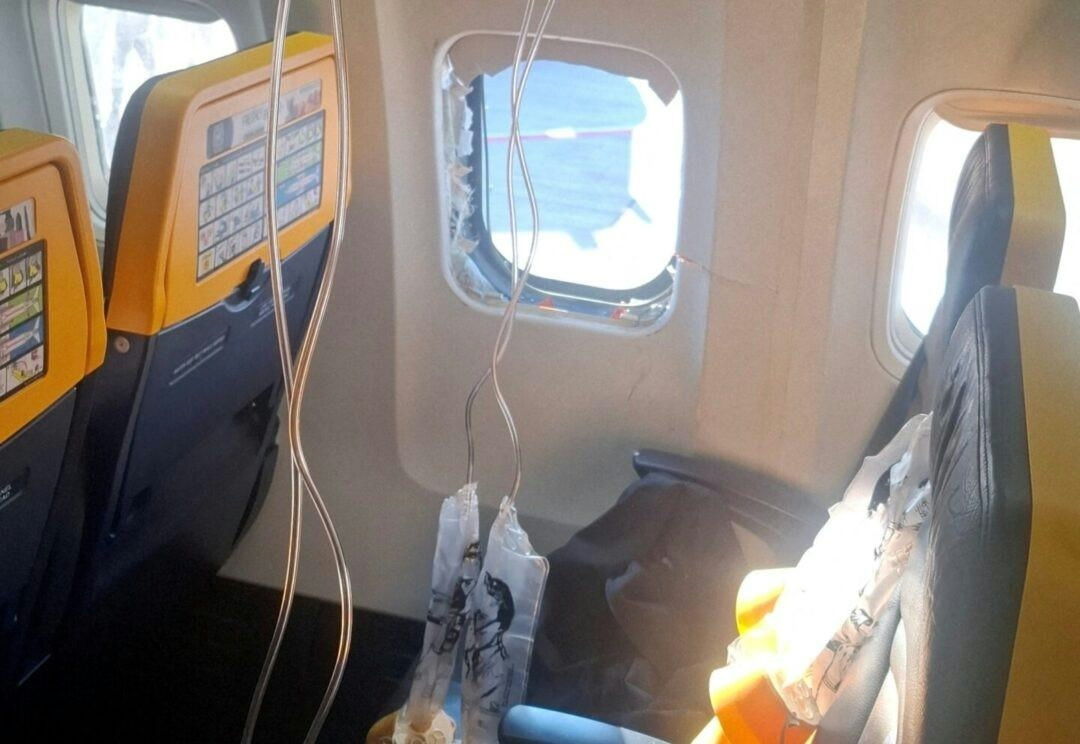
Ryanair Urged to Strengthen Engine Components Following Passenger Incident
Background and Regulatory Warnings
The hazardous condition that led to a Ryanair passenger being partially sucked out of an aircraft window was a known risk prior to the flight. The US Federal Aviation Administration (FAA) had issued three separate airworthiness directives mandating reinforcement of engine casing components on this generation of Boeing 737 aircraft. These directives were prompted by two earlier fan-blade failures in 2016 and the fatal 2018 Southwest Airlines incident, in which a passenger lost their life after being pulled partially through a shattered window.
Details of the Ryanair Incident
According to the National Transportation Safety Board (NTSB), the recent Ryanair event involved broken engine parts striking and shattering a cabin window, mirroring the circumstances of the Southwest tragedy. Ryanair’s CEO has suggested that the engine damage may have been caused by a foreign object. Nonetheless, the airline now faces intensified scrutiny regarding the maintenance of its 18-year-old fleet and the overall safety of its engines.
Compliance Deadlines and Industry Implications
Despite the FAA’s directives, airlines—including Ryanair—have until 2028 to complete the required retrofits, a full decade after the Southwest accident that triggered the regulations. At the time of the Ryanair engine failure, the compliance deadline was still two years away. The NTSB has not yet indicated whether earlier adherence to the directives would have averted this incident, but the delay between regulatory issuance and fleet-wide implementation remains a significant concern.
The incident has generated market unease about Ryanair’s safety record, potentially affecting passenger confidence and the airline’s stock performance. Competitors may leverage this moment to emphasize their own safety protocols and the benefits of operating newer aircraft, thereby increasing pressure on Ryanair.
As investigations continue to determine the precise cause—including whether maintenance shortcomings or external factors contributed—the gap between regulatory warnings and mandatory compliance highlights an ongoing risk for airlines and their insurers. Industry experts emphasize that such vulnerabilities should be incorporated into current risk assessments rather than deferred until after final investigation findings are released.

Etihad Airways Suspends Airbus A380 Flights on Key Route

Aditya Birla Group Seeks Approval for Aircraft Leasing in GIFT City

Qatar Airways Highlights Innovation and Connectivity at Arabian Travel Market 2026

Hong Kong's Five-Year Plan Includes Andrew Fan's Aircraft Parts Processing Hub Proposal

ACIA Aero Leasing Delivers ATR72-600 to Air Nostrum

RTX Appoints Jill Albertelli as Head of Pratt & Whitney

TAT Technologies Joins Beyond Aero Hydrogen Aircraft Program

AURAK Study Highlights Barriers to Air Taxi Adoption in Emerging Economies

Xiamen Air Selects Altitude for 787 Maintenance at Heathrow

Etihad and Swissport Extend Global Partnership
