
将人工智能洞察转化为可执行行动

热门趋势
Categories
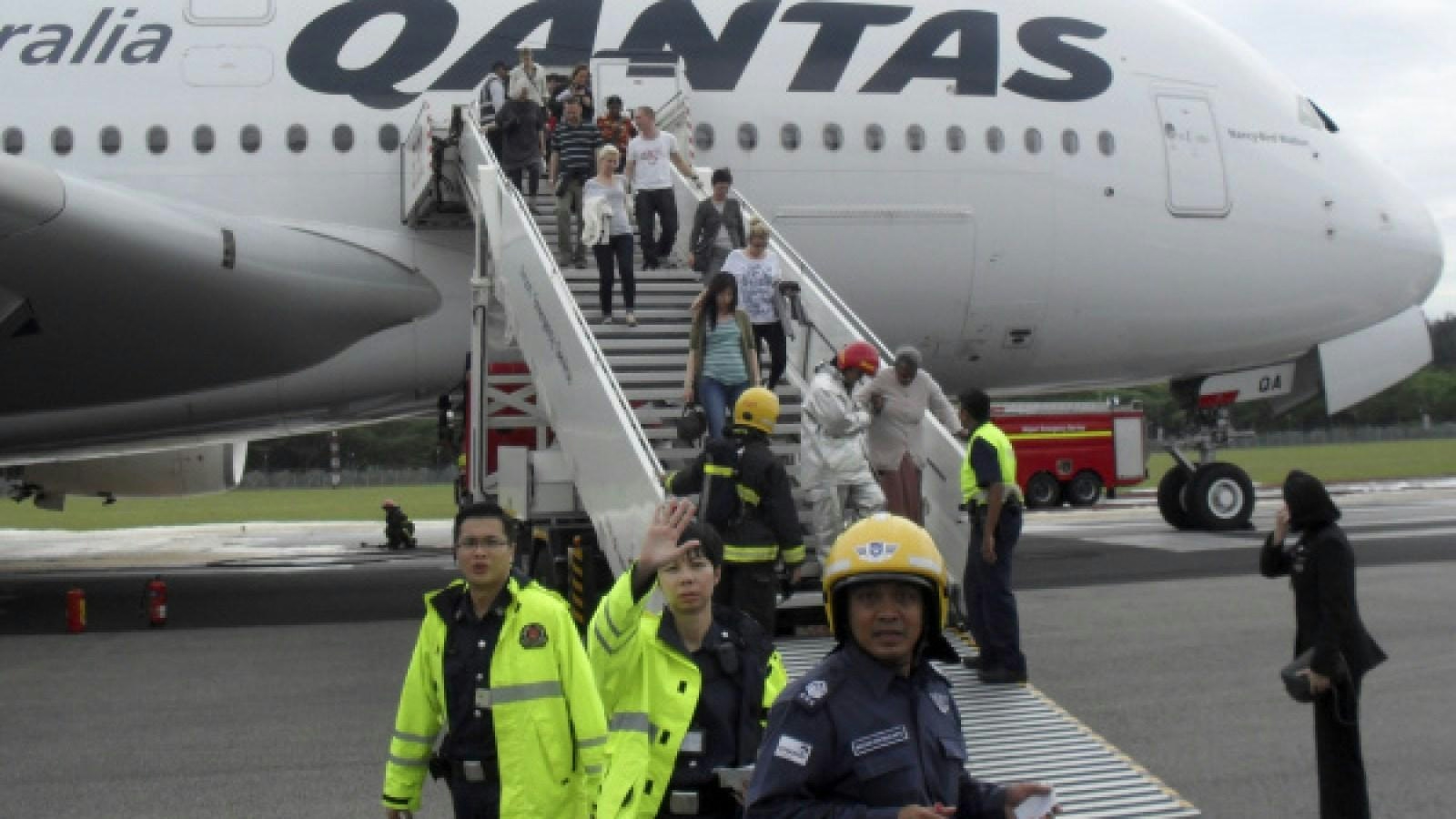
Safety Concerns Raised Over Qantas A380 Maintenance Work
Safety Concerns Raised Over Qantas A380 Maintenance Work
Investigation Uncovers Critical Lapses
An investigation conducted by the Australian Transport Safety Bureau (ATSB) has brought to light serious safety concerns regarding Qantas’ maintenance procedures after a work light was inadvertently left inside the wing of an Airbus A380. The incident occurred following maintenance at Sydney Airport on 7 January 2026. Remarkably, the aircraft completed flights to Dallas and back before the foreign object was discovered and removed on 9 January.
The ATSB report highlighted multiple failures in safety checks that allowed the work light to remain undetected. This points to a significant breakdown in foreign object control and tool accountability processes. ATSB Chief Commissioner Angus Mitchell stated, “Maintainers did not find the light during their foreign object clearance inspections at the end of the maintenance. And the work light’s absence was not noticed when the maintainer returned the tools, or during the unreturned tool check at the end of the shift.” Despite the missing equipment, a licensed aircraft maintenance engineer issued a certificate of release to service, underscoring the gravity of the oversight.
Systemic Issues and Industry Response
Further examination revealed that Qantas’ maintenance information system lacked prompts or controls to alert certifiers about unreturned tools or unactioned tool reports. In response to the incident, Qantas has issued a safety directive aimed at strengthening tooling control procedures. The airline has also established a tooling working group tasked with exploring new technologies and initiatives to enhance tool control across its maintenance facilities.
This event is not isolated. It follows a recent case in which a tool was left inside an engine, intensifying scrutiny of Qantas’ maintenance operations. The recurrence of such errors has raised questions about the robustness of the airline’s safety protocols. A Qantas spokesperson confirmed, “Qantas reported this event to the ATSB and since the event, have strengthened our tool control procedures, including introducing a mandatory pre-clearance check to confirm all tooling is accounted for following maintenance.”
The ATSB emphasized the necessity of systems that do not rely solely on human performance, particularly given the challenging environments and operational pressures inherent in aircraft maintenance. Mitchell noted, “Tool control systems and procedures must account for this variability, with safeguards to detect and recover from errors.”
Market and Industry Implications
The market has responded cautiously to these developments. Analysts warn that instability in Qantas’ maintenance operations could invite increased regulatory scrutiny and potentially affect the airline’s reputation and stock performance. Competitors are reportedly monitoring the situation closely, with some highlighting their own maintenance and safety protocols as points of differentiation.
These incidents underscore the critical importance of rigorous tool control and foreign object management in aviation maintenance. They also highlight the ongoing need for continual improvement in safety systems to protect passengers and preserve airline reputations.

Etihad Airways Suspends Airbus A380 Flights on Key Route

Aditya Birla Group Seeks Approval for Aircraft Leasing in GIFT City

Qatar Airways Highlights Innovation and Connectivity at Arabian Travel Market 2026

Hong Kong's Five-Year Plan Includes Andrew Fan's Aircraft Parts Processing Hub Proposal

ACIA Aero Leasing Delivers ATR72-600 to Air Nostrum

RTX Appoints Jill Albertelli as Head of Pratt & Whitney

TAT Technologies Joins Beyond Aero Hydrogen Aircraft Program

AURAK Study Highlights Barriers to Air Taxi Adoption in Emerging Economies

Xiamen Air Selects Altitude for 787 Maintenance at Heathrow

Etihad and Swissport Extend Global Partnership
