
将人工智能洞察转化为可执行行动

热门趋势
Categories
Safran Develops Hybrid-Electric Propulsion for Future Aircraft
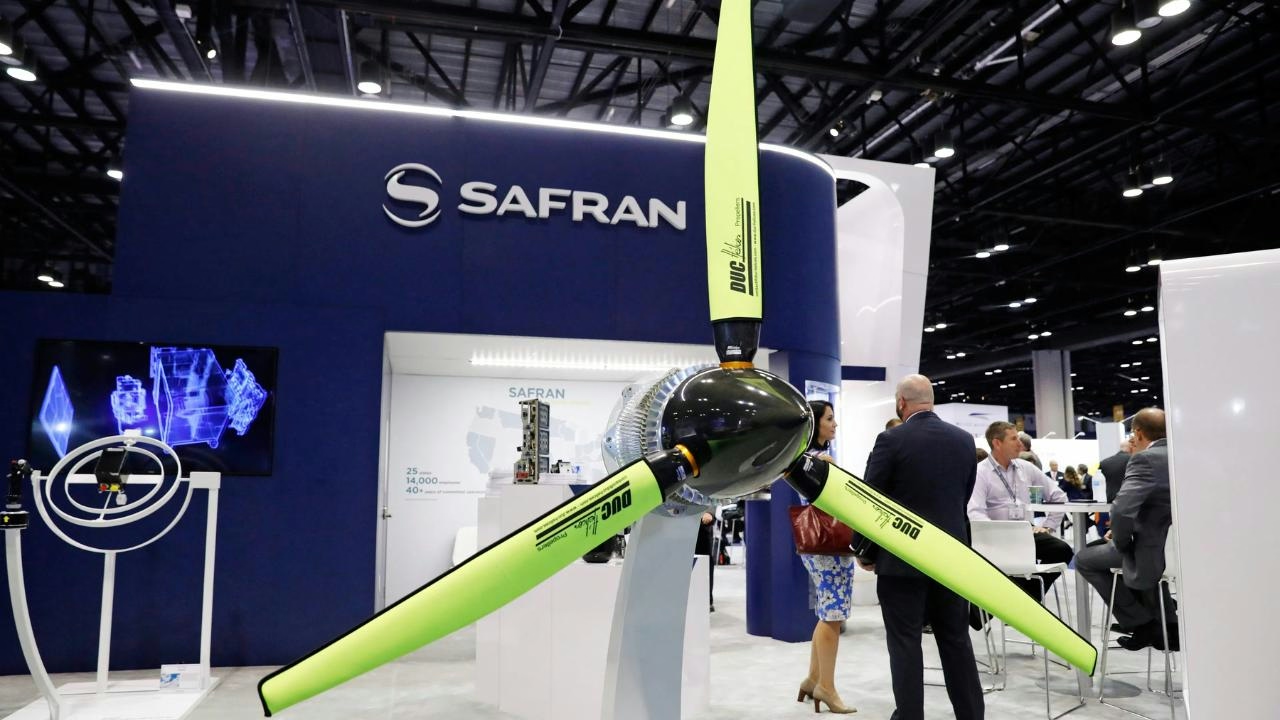
Safran Develops Hybrid-Electric Propulsion for Future Aircraft
Advancing Hybrid Turbofan Technology
Safran is pioneering a new era in aircraft propulsion with the development of a hybrid turbofan engine that incorporates high-power electrical machines on both the high-pressure (HP) and low-pressure (LP) spools of a conventional gas turbine. This innovative design allows for real-time energy exchange and power injection from an onboard battery, representing a significant advancement toward more efficient and versatile aircraft engines.
Drawing on over twenty years of research, Safran’s program has achieved key milestones, including the anticipated 2025 EASA type certification of the ENGINeUS 100B—the first electric motor to receive such approval. This certification has laid the regulatory and industrial foundation for larger-scale 800V hybrid systems. As a central element of the CFM RISE initiative, Safran’s hybrid-electric propulsion technology is currently undergoing system-level testing, with the goal of equipping next-generation short- to medium-range aircraft expected to enter service in the mid-2030s.
Technical Innovations and Operational Modes
Traditional turbofan engines operate with the HP and LP spools functioning independently, each driven by combustion to power their respective compressor and turbine stages. Safran’s hybrid turbofan redefines this arrangement by integrating an electrical machine on each spool. These machines can operate as motors or generators, enabling multiple modes of operation that enhance engine flexibility and efficiency.
Electrical power can be extracted from either or both spools and redirected to aircraft systems, providing a power balance function. Additionally, one electrical machine can act as a generator while the other functions as a motor, facilitating energy transfer between spools—a capability absent in conventional engine architectures. The onboard battery can also inject energy into either spool or serve as an auxiliary power source for the aircraft.
An 800V electrical network interconnects these components, allowing for dynamic power management across the propulsion system. This multi-mode operation enables the engine to optimize performance throughout all flight phases, reducing fuel consumption over the entire mission profile rather than at a single operating point.
Industry Landscape and Future Prospects
Safran is emerging as a leader in hybrid-electric propulsion, though it faces competition from companies such as Collins Aerospace and Pratt & Whitney, which are accelerating their own hybrid-electric development programs. The aviation industry is witnessing increased investment and compressed development timelines as airlines express growing interest in these technologies for their potential to improve fuel efficiency and lower emissions.
Despite the promise, significant challenges remain. Integrating large electrical systems into aircraft demands overcoming complex engineering obstacles, particularly in hybridizing gas-turbine engines and ensuring compatibility with existing aircraft infrastructure. Managing high-voltage networks safely and reliably at scale will be critical as these systems approach commercial deployment.
Safran has announced plans for a full-scale hybrid turbofan test representative of next-generation short- to medium-range aircraft by early 2026. Success in this endeavor could signal a transformative shift in civil aviation, where enhanced fuel efficiency is achieved not through entirely new engine designs but by making the conventional turbofan smarter, more adaptable, and deeply integrated with advanced electrical systems.

Etihad Airways Suspends Airbus A380 Flights on Key Route

Aditya Birla Group Seeks Approval for Aircraft Leasing in GIFT City

Qatar Airways Highlights Innovation and Connectivity at Arabian Travel Market 2026

Hong Kong's Five-Year Plan Includes Andrew Fan's Aircraft Parts Processing Hub Proposal

ACIA Aero Leasing Delivers ATR72-600 to Air Nostrum

RTX Appoints Jill Albertelli as Head of Pratt & Whitney

TAT Technologies Joins Beyond Aero Hydrogen Aircraft Program

AURAK Study Highlights Barriers to Air Taxi Adoption in Emerging Economies

Xiamen Air Selects Altitude for 787 Maintenance at Heathrow

Etihad and Swissport Extend Global Partnership
