
将人工智能洞察转化为可执行行动

热门趋势
Categories
South Korea Establishes Ministerial Committee to Oversee Fighter Engine Development
South Korea Establishes Ministerial Committee to Oversee Fighter Engine Development
South Korea has taken a decisive step toward advancing its defense technology capabilities by forming an inter-ministerial committee dedicated to the development of its first indigenous advanced fighter engine. Announced by the Defense Acquisition Program Administration (DAPA), the newly created “Inter-Ministerial Consultative Body” will coordinate efforts among several key government ministries, including the Ministry of Trade, Industry and Energy, the Ministry of Land, Infrastructure and Transport, and the Ministry of National Defense. This initiative underscores Seoul’s commitment to achieving greater self-reliance in critical military technologies.
Coordinated Efforts for Indigenous Engine Development
The committee’s primary mandate is to oversee and guide the development plans for the fighter engine, ensuring efficient allocation of resources and avoiding redundant investments across ministries. By fostering collaboration, South Korea aims to consolidate its technological expertise and streamline the path toward engine self-sufficiency. Developing an advanced fighter engine is a complex endeavor that only a handful of nations have successfully undertaken, a challenge that DAPA has acknowledged in its announcement.
Pursuing a domestically produced engine is expected to reduce the long-term costs associated with maintenance, repair, and overhaul of foreign-made engines. Moreover, an indigenous powerplant will enhance South Korea’s prospects in the global defense market by supporting its ambitions to export military aircraft. The project, committed to by DAPA in 2023, targets operational readiness by the late 2030s. The engine is designed to deliver a non-afterburner thrust of 15,000 pounds (66.8 kN) and will power the Block 3 variants of the Korea Aerospace Industries (KAI) KF-21 fighter.
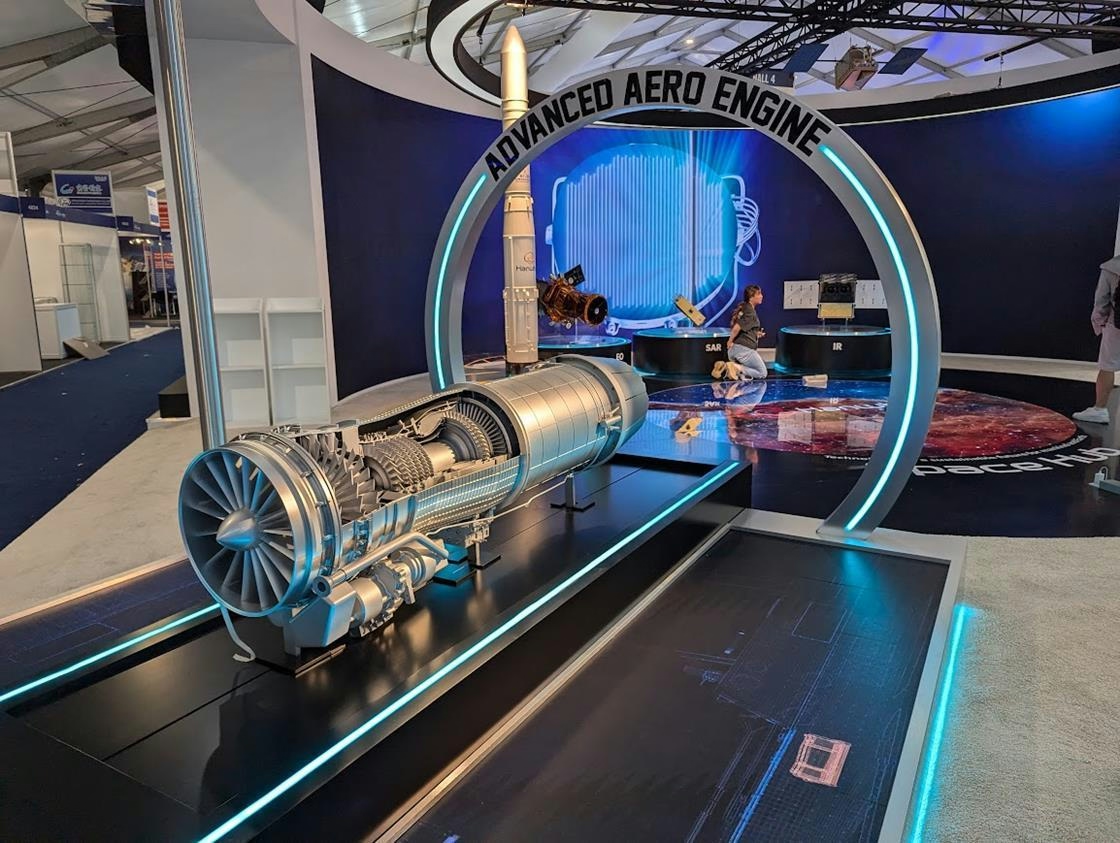
Hanwha Aerospace, a prominent player with extensive experience in licensed production of fighter engines—including the F414 engine for earlier KF-21 blocks and the F404 for the T-50/FA-50 family—will lead the technical development. At the Farnborough Airshow in July 2024, Hanwha unveiled a model of its Advanced Aero Engine, which company executives indicated could be adapted for other platforms such as South Korea’s proposed Next Generation Transport Aircraft and naval vessels.
Strategic Implications and Challenges
The establishment of the ministerial committee follows DAPA’s earlier creation of an “Advanced Technology Project Management Committee” in January, which has been working to consolidate national capabilities in testing infrastructure, parts, and materials. This layered governance structure reflects South Korea’s strategic approach to fostering innovation and industrial synergy in defense technology.
While the initiative positions South Korea at the forefront of a global trend toward sovereign artificial intelligence and technological self-reliance in defense, it also presents significant challenges. The development process faces technological hurdles, substantial costs, and the risk of delays that could affect the KF-21’s operational deployment timeline. Industry analysts suggest that this move may stimulate increased international interest in South Korea’s defense sector, potentially prompting competitors to accelerate their own engine development programs or forge new strategic alliances.
Jeong Jay-jun, acting director of DAPA’s Advanced Technology Division, emphasized the broader significance of the project, stating, “Advanced aircraft engines are a strategic technology with significant ripple effects beyond the military to the civilian sector. Therefore, we must work closely with each ministry to revitalize the industrial ecosystem and expand into civilian engine development in the future.”
South Korea’s coordinated approach not only aims to secure its defense supply chain but may also influence the dynamics of international defense partnerships as nations increasingly seek technological independence in critical military capabilities.

Etihad Airways Suspends Airbus A380 Flights on Key Route

Aditya Birla Group Seeks Approval for Aircraft Leasing in GIFT City

Qatar Airways Highlights Innovation and Connectivity at Arabian Travel Market 2026

Hong Kong's Five-Year Plan Includes Andrew Fan's Aircraft Parts Processing Hub Proposal

ACIA Aero Leasing Delivers ATR72-600 to Air Nostrum

RTX Appoints Jill Albertelli as Head of Pratt & Whitney

TAT Technologies Joins Beyond Aero Hydrogen Aircraft Program

AURAK Study Highlights Barriers to Air Taxi Adoption in Emerging Economies

Xiamen Air Selects Altitude for 787 Maintenance at Heathrow

Etihad and Swissport Extend Global Partnership
