
将人工智能洞察转化为可执行行动

热门趋势
Categories
Southwest Airlines Completes Cabin Reconfiguration of Boeing 737-700s
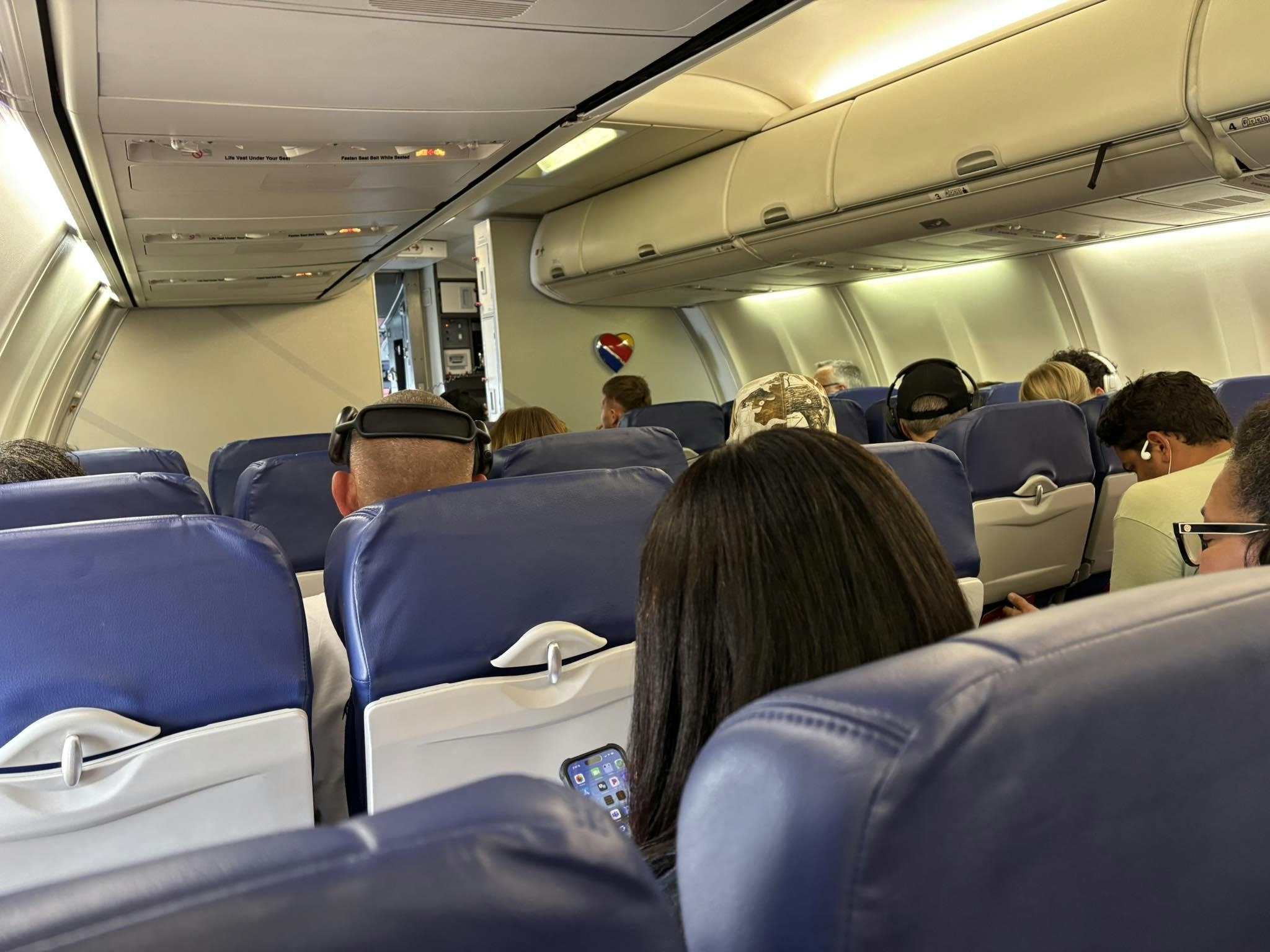
Southwest Airlines Completes Cabin Reconfiguration of Boeing 737-700s
Southwest Airlines has finalized the reconfiguration of the cabins across its entire fleet of 311 Boeing 737-700 aircraft, marking a significant departure from the carrier’s traditional seating and passenger experience model. The modification involved the removal of one row of seats per aircraft, reducing capacity by six seats and creating space for extra-legroom seating. This change sets the stage for the introduction of assigned seating, scheduled to commence on January 27.
Transitioning from Open Seating to Assigned Seats
Chief Financial Officer Tom Doxey confirmed the completion of the reconfiguration in a recent statement, highlighting that the airline’s technical operations team began the modifications immediately after the holiday season and completed the work on all active aircraft a week ahead of schedule. Prior to this overhaul, the 737-700s featured a single-class layout accommodating 143 passengers.
This initiative forms part of a broader strategic restructuring at Southwest, which is moving away from its decades-old open seating policy. The airline is introducing several new features, including assigned seating, red-eye flights, and premium seating options. These changes respond to pressure from activist investor Elliott Management, which has advocated for modernization and enhanced revenue streams throughout 2024 and 2025.
Challenges and Industry Context
The decision to reduce seat count in favor of extra-legroom options introduces new operational challenges. Southwest must now carefully balance passenger demand with efficiency, as the lower overall capacity could affect both revenue and scheduling. Furthermore, the introduction of a new pricing structure for extra-legroom seats may encounter resistance from customers accustomed to Southwest’s historically egalitarian fare model.
This strategic shift occurs amid a competitive landscape where rivals such as Delta Air Lines and United Airlines are expanding their fleets with newer aircraft, potentially altering market dynamics. Industry trends indicate a growing emphasis on add-on services aimed at attracting higher-paying travelers, exemplified by WestJet’s recent focus on premium seating at the expense of economy class passengers. Southwest’s approach aligns with this broader movement, seeking to increase premium revenue while retaining its core customer base.
Meanwhile, Boeing is accelerating production of its 737 Max and 787 Dreamliner models, developments that could further influence airline fleet renewal and expansion decisions in the near future.
It is important to note that Southwest’s larger aircraft—the 201 Boeing 737-800s and 300 Boeing 737-8s—did not require seat removal to accommodate extra-legroom seating due to their more spacious cabins. The reconfiguration efforts have been concentrated exclusively on the 737-700 fleet.
As Southwest prepares to implement its new seating options, the airline faces the dual challenge of adapting to evolving passenger expectations while preserving its operational strengths in an increasingly competitive aviation market.

Etihad Airways Suspends Airbus A380 Flights on Key Route

Aditya Birla Group Seeks Approval for Aircraft Leasing in GIFT City

Qatar Airways Highlights Innovation and Connectivity at Arabian Travel Market 2026

Hong Kong's Five-Year Plan Includes Andrew Fan's Aircraft Parts Processing Hub Proposal

ACIA Aero Leasing Delivers ATR72-600 to Air Nostrum

RTX Appoints Jill Albertelli as Head of Pratt & Whitney

TAT Technologies Joins Beyond Aero Hydrogen Aircraft Program

AURAK Study Highlights Barriers to Air Taxi Adoption in Emerging Economies

Xiamen Air Selects Altitude for 787 Maintenance at Heathrow

Etihad and Swissport Extend Global Partnership
