
图像

将人工智能洞察转化为可执行行动

立即加入 AeroGenie 候补名单!

热门趋势

Categories

SpiceJet to Lease 20 Additional Aircraft
September 3, 2026By ePlane AI
SpiceJet to Lease 20 Additional Aircraft
0
0
SpiceJet
Aircraft Leasing
Boeing And Airbus

SpiceJet to Lease 20 Additional Aircraft Ahead of Winter Travel Season

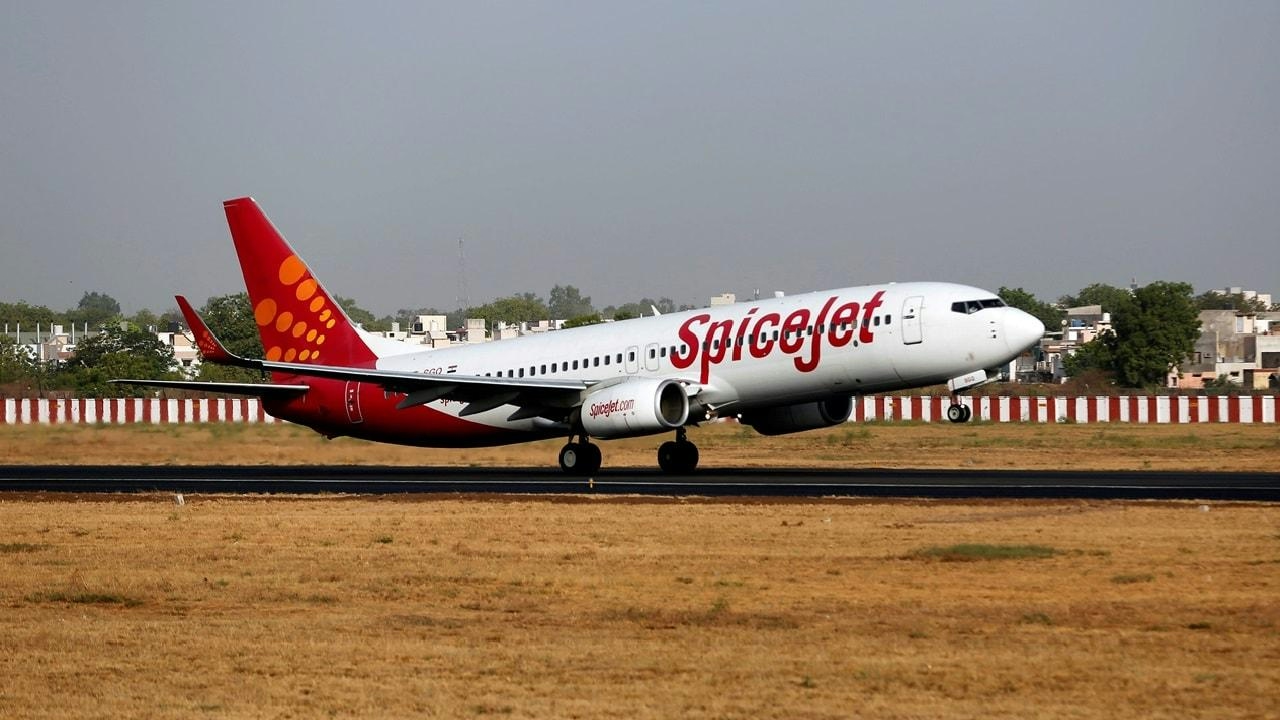
SpiceJet has announced plans to lease 20 additional aircraft in anticipation of the upcoming winter travel season, aiming to substantially increase its operational capacity during a period of heightened demand. The airline finalized agreements with three aircraft operators to acquire 15 Boeing and five Airbus planes, which are scheduled to be inducted in phases between mid-October and mid-November, just ahead of the festive travel rush.

Fleet Expansion and Operational Strategy

This expansion is expected to enable SpiceJet to operate approximately 200 daily flights during the winter schedule, with the increased capacity also intended to support peak travel periods extending into the following year. The new aircraft will be introduced through a combination of wet- and damp-lease arrangements, allowing the airline to scale up operations rapidly without the need for outright purchases. Among the additions, the Airbus A321—a high-capacity narrow-body jet—will allow SpiceJet to offer more seats on routes experiencing strong demand.

Financial and Legal Challenges

The ambitious fleet expansion comes amid significant challenges for the airline. SpiceJet continues to face liquidity constraints, with several aircraft currently grounded. The company is also embroiled in a costly legal dispute involving KAL Airways and Kalanithi Maran. Additionally, the airline has been managing multiple legal challenges from lessors, having recently resolved one of eight ongoing cases. These financial and legal pressures have attracted scrutiny from investors and analysts, who are closely monitoring the potential impact of the leasing strategy on SpiceJet’s financial health.

Competitive Environment

The competitive landscape in the Indian aviation sector is intensifying. Low-cost carriers such as Fly91 have recently placed substantial orders for regional aircraft, signaling increased competition. At the same time, major international airlines like Lufthansa are reportedly observing the Indian market for strategic opportunities, which could further challenge SpiceJet’s efforts to regain market share.

Despite these obstacles, SpiceJet’s decision to rapidly expand its fleet underscores its determination to capitalize on the seasonal surge in travel demand and strengthen its position within the competitive Indian aviation market. The success of this strategy will depend on the timely induction of the leased aircraft and the airline’s ability to manage ongoing legal and financial difficulties while adapting to evolving market conditions.

More news
Civil Aviation Minister Urges Faster Aircraft Deliveries

Civil Aviation Minister Urges Faster Aircraft Deliveries

Civil Aviation Minister Urges Expedited Aircraft Deliveries to Support India’s Aviation Growth Civil Aviation Minister Ram Mohan Naidu has called upon global aircraft manufacturers to accelerate the delivery of aircraft to India, emphasizing the country’s rapidly expanding airport network and the surging demand for regional air connectivity. Speaking at the signing ceremony for FLY91’s firm order of 40 ATR 72-600 aircraft, Naidu underscored the critical need for timely deliveries to sustain the momentum of India’s aviation sector. The $1 billion order will expand FLY91’s fleet from six to over 60 aircraft in the coming years, with a target to deploy all 40 new planes by 2030. However, the Minister urged ATR to expedite this timeline, citing the pressing market demand. India’s airlines currently have approximately 1,600 aircraft on order, with most deliveries scheduled over the next decade. At the event, Naidu also appealed to Airbus, requesting its India and South Asia President and Managing Director Jürgen Westermeier to prioritize deliveries for the Indian market. He highlighted that the scale of FLY91’s order reflects the “enormous potential” of India’s regional aviation sector. Expanding Infrastructure and Enhancing Regional Connectivity The Minister outlined the government’s ambitious plans to expand airport infrastructure across the country. Currently, 166 airports are operational, with another 100 planned over the next ten years. The focus is on connecting underserved regions, including the Himalayas, the Northeast, and island territories. Over the past decade, daily air passenger numbers have nearly doubled from approximately 200,000–250,000 to close to 500,000, underscoring the need for a robust aviation ecosystem that incorporates both large and small aircraft to serve diverse markets. To support this growth, the government has allocated ₹28,840 crore under the modified UDAN scheme aimed at enhancing regional connectivity and airport infrastructure. Naidu stressed the importance of ensuring that airports remain accessible within reasonable distances for all citizens. In regions where traditional airports are not feasible due to terrain or land constraints, alternative modes of transport such as seaplanes and helicopters are being considered. Seaplane operations are expected to commence shortly, with the Kochi-Lakshadweep route among the first proposed connections. Additionally, Naidu invited ATR to explore the possibility of establishing aircraft manufacturing facilities in India, offering government support to facilitate such initiatives. Challenges in Aircraft Production and Supply Chain Disruptions Despite these ambitious plans, the Minister acknowledged potential challenges that could impede faster aircraft deliveries. Delays in aircraft production and ongoing supply chain disruptions remain significant concerns. These issues have already led some airlines to reconsider their capacity growth strategies, with certain carriers exploring alternative suppliers or adjusting their fleet expansion plans. Recent industry data illustrates these pressures: in July 2026, combined deliveries from Airbus and Boeing totaled 100 units—24 fewer than in June, though slightly above July 2025 figures—highlighting the volatility in global aircraft supply. As India’s aviation sector continues its rapid expansion, the government’s emphasis on accelerating aircraft deliveries and infrastructure development remains central to meeting the country’s growing connectivity needs.
Airbus Plans Over Two Aircraft Deliveries per Week to India for Next Decade

Airbus Plans Over Two Aircraft Deliveries per Week to India for Next Decade

Airbus to Deliver Over Two Aircraft Weekly to India for the Next Decade Airbus has announced plans to deliver more than two aircraft per week to India on average over the coming ten years, reflecting the company’s significant backlog of over 1,200 aircraft orders from Indian carriers. This delivery pace, equating to approximately 120 aircraft annually, highlights both the rapid growth of India’s aviation sector and Airbus’s dominant market position within the country. Expanding Presence and Backlog Commitments Jurgen Westermeier, President and Managing Director of Airbus India and South Asia, emphasized the company’s strong foothold in the Indian aviation market. He noted that out of nearly 800 commercial aircraft currently operating in India, more than 500 are Airbus models. Westermeier described the backlog as a clear indicator of Airbus’s commitment to supporting the country’s expanding aviation needs. “With a backlog of more than 1,200 aircraft, this means in the next 10 years, you just do the maths—1200 divided by 10 is 120, so more than two aircraft per week which Airbus will deliver to India,” he stated. Challenges Amidst Competitive Pressures Despite these ambitious delivery targets, Airbus faces several challenges. Industry experts point to ongoing supply chain constraints and the necessity of securing timely regulatory approvals as potential hurdles. Additionally, competition from other manufacturers, particularly Boeing, remains intense. The rivalry between Airbus and Boeing continues to shape the commercial aircraft market, with recent figures showing their combined narrowbody deliveries reaching 100 units in July 2026 alone. Boeing’s prominent presence at the recent Farnborough International Airshow underscored its determination to compete aggressively in key markets such as India. Market dynamics are also evolving as airlines increasingly prioritize passenger experience and operational efficiency. For example, American Airlines has announced plans to reinstall seatback screens on its narrowbody fleet starting in 2028, reflecting shifting customer expectations and competitive pressures that may influence aircraft specifications and airline procurement strategies. Strengthening Local Infrastructure and Safety Assurance Beyond aircraft deliveries, Airbus is investing in India’s aviation infrastructure, particularly in maintenance, repair, and overhaul (MRO) capabilities. The company has partnered with Indamer Technics to establish South Asia’s first comprehensive radome repair facility in Nagpur. This facility will serve as an authorized center for the repair, storage, and exchange of radomes for Airbus A320, A330, A350, and A380 aircraft. Westermeier highlighted that developing such local capabilities will enable airlines to benefit from faster turnaround times and contribute to the broader aviation ecosystem’s growth. In response to recent safety concerns, including the Air India flight AI2379 incident involving a sudden altitude drop of an Airbus A320 that resulted in injuries, Westermeier assured that all official safety protocols are being rigorously followed to ensure the best possible outcomes. As India’s aviation market continues its rapid expansion, Airbus’s delivery commitments and investments in local infrastructure position the company as a central player in shaping the future of air travel in the region, even as it navigates a complex and competitive global environment.
Ramco Systems to Integrate Safran Helicopter Engine Data with Aviation Software

Ramco Systems to Integrate Safran Helicopter Engine Data with Aviation Software

Ramco Systems to Integrate Safran Helicopter Engine Data with Aviation Software Ramco Systems, a prominent Software-as-a-Service provider within the Ramco Group, has formalized a partnership with Safran Helicopter Engines, a leading manufacturer of rotorcraft turbines, through a recently signed Memorandum of Understanding (MoU). This collaboration aims to integrate Safran’s helicopter engine data directly into Ramco’s Aviation Software platform, marking a significant advancement in digital connectivity for the aviation maintenance, repair, and overhaul (MRO) sector. Enhancing Maintenance Operations through Data Integration The agreement facilitates the automatic transfer of engine information following shop visits from Safran into the Maintenance Information System (MIS) embedded within Ramco’s platform. By automating the ingestion of engine configurations, usage metrics, and maintenance events, the integration is designed to reduce the reliance on manual data entry by helicopter operators. This shift is expected to improve data accuracy and consistency, allowing operators to concentrate more effectively on maintaining aircraft readiness and operational efficiency. Sam Jacob, Executive Vice President and SBU Head for Aviation, Aerospace, and Defence at Ramco Systems, emphasized the strategic importance of the partnership. He noted that Ramco’s platform, which serves several of the world’s largest helicopter operators, occupies a unique position within the aviation MRO ecosystem by connecting original equipment manufacturers (OEMs) and operators through a unified digital backbone. The collaboration with Safran Helicopter Engines is seen as a critical step toward enabling seamless digital data exchange across the industry. Challenges and Industry Implications Despite the potential benefits, the integration faces several challenges. Ensuring compatibility with existing systems remains a primary concern, alongside the imperative to maintain stringent data security and privacy standards. Furthermore, there may be resistance from users accustomed to established workflows, which could slow the adoption process. Initial skepticism within the aviation sector regarding the efficiency and reliability of the new integration is also anticipated. Industry analysts suggest that this initiative by Ramco Systems and Safran Helicopter Engines may prompt competitors to accelerate enhancements to their own aviation software offerings. Such competitive dynamics could lead to a broader wave of more robust and integrated digital solutions across the aviation maintenance landscape. As digital transformation continues to reshape the sector, the successful implementation of this integration will be closely monitored by stakeholders worldwide. The partnership represents a notable advancement in streamlining maintenance operations and fostering greater digital integration within the aviation industry.
Veryon Acquires Polaris Aero to Expand Aviation Safety Management

Veryon Acquires Polaris Aero to Expand Aviation Safety Management

Veryon Acquires Polaris Aero, Enhancing Aviation Safety Management Capabilities SAN FRANCISCO — Veryon, a prominent provider of aviation software solutions, has announced its acquisition of Polaris Aero, a Scottsdale-based company specializing in aviation safety software. This strategic move significantly broadens Veryon’s presence in the aviation safety management sector by adding over 200 new customers and incorporating Polaris Aero’s established products—VOCUS SMS, FlightRisk, and GroundRisk—into its existing portfolio. Expanding Safety and Maintenance Integration Since its founding in 2007, Polaris Aero has been delivering innovative safety management tools to aircraft operators and maintenance, repair, and overhaul (MRO) organizations worldwide. Its solutions are widely trusted by corporate flight departments, charter operators, and MRO providers to streamline regulatory compliance, assess operational risks, and improve overall safety standards. Bethany Little, Chief Executive Officer of Veryon, emphasized the significance of the acquisition, stating, “It’s a pivotal step towards better alignment between aviation safety and maintenance, enabling smarter and safer decisions across every phase of our customers’ operations.” The acquisition will merge Polaris Aero’s extensive de-identified data—comprising over 112,000 safety reports, 32 million FlightRisk assessments, and 174 million flight hazard records—with Veryon’s dataset of more than 100 million maintenance events. This integration is poised to create what the company describes as the industry’s most comprehensive aviation safety and maintenance data repository. The enriched dataset is expected to enhance the capabilities of Veryon AIRE, the company’s AI-driven data intelligence platform, by delivering more precise insights into safety risks and maintenance requirements for operators. Chris Connor, CEO of Polaris Aero, expressed optimism about the partnership, noting, “With Veryon, we can scale our mission even further, integrating safety and maintenance in ways that deliver more value, more efficiency, and ultimately, safer operations for our customers.” Operational Continuity and Market Implications In the short term, Polaris Aero will continue to function as an independent business unit, maintaining all existing products, contracts, and customer support without interruption. Both companies intend to develop a comprehensive integration strategy over the coming months, aiming to provide aircraft operators and maintenance teams with enhanced tools to manage operations more safely and efficiently. Nonetheless, the integration of Polaris Aero’s extensive safety data into Veryon’s software ecosystem presents potential challenges. Ensuring a seamless transition without disrupting ongoing operations will be critical to the success of the merger. Market reactions have been mixed; while some investors welcome the expanded capabilities in aviation safety management, others remain cautious about the financial impact of the acquisition. Competitors may respond by bolstering their own safety management offerings or by closely monitoring Veryon’s strengthened position in the market. Pete Bunce, former CEO of the General Aviation Manufacturers Association (GAMA) and Senior Advisor to Veryon, highlighted the strategic importance of the acquisition: “Safety and maintenance have always been two sides of the same coin, but they’ve rarely been managed that way. Bringing Polaris Aero’s safety intelligence together with Veryon’s maintenance data gives operators a single, connected view of risk and reliability. That’s exactly the kind of data-driven decision-making our industry needs right now.” For further information, visit veryon.com and polarisaero.com.
Airbus Shares Dip Amid A330 Quality Concerns, Delivery Delays; Outlook Unchanged

Airbus Shares Dip Amid A330 Quality Concerns, Delivery Delays; Outlook Unchanged

Airbus Shares Decline Amid A330 Quality Concerns and Delivery Delays Airbus shares experienced a decline on September 3, 2026, following the company’s announcement of a quality issue affecting certain A330 aircraft, which resulted in delivery delays over the summer months. Despite this disruption, Airbus reaffirmed its target to deliver approximately 870 commercial aircraft in 2026, supported by a strong order backlog and solid financial performance in the first half of the year. Quality Issue and Impact on Deliveries The European aerospace manufacturer identified an isolated quality problem related to the horizontal tail plane on specific A330 jets. This discovery prompted comprehensive inspections and a temporary slowdown in deliveries. Airbus stressed that the issue was confined in scope and categorized as a quality concern rather than a safety risk. After determining the root cause and implementing corrective actions, the company has since resumed deliveries. Market response was cautious, with Airbus shares trading at around €195.82 on the Paris Euronext exchange, down 0.55% for the day and approximately 1.29% lower year-to-date. On Germany’s Xetra exchange, shares fell 1.62% to €193.74, reflecting investor apprehension over the delivery interruptions. Delivery Performance and Industry Implications Data from the industry showed that Airbus did not deliver any A330neo aircraft in June and July 2026, with only a single A330neo handed over in August to Starlux Airlines as the company concentrated on inspecting the affected jets. Prior to this pause, Airbus had delivered nine A330neo aircraft in 2026, including three in March, two in April, and four in May. This interruption disrupted what had been a steady increase in deliveries. Airbus had targeted a monthly delivery rate of about four A330neo jets, with plans to increase this to five per month by 2029, making the summer halt a significant deviation from its production objectives. The delivery delays have intensified pressure on Airbus to meet its ambitious 2026 target. By the end of July, the company had delivered 418 jets, necessitating an average of roughly 90 deliveries per month for the remainder of the year. This accelerated schedule coincides with ongoing delays faced by both Airbus and its main competitor, Boeing, compelling airlines to extend the operational life of older aircraft. Consequently, airlines are incurring higher engine maintenance costs, adding further strain to the aviation sector. Outlook and Recovery Efforts Despite these challenges, Airbus remains confident in its 2026 guidance, citing a robust order book and the resumption of deliveries following the resolution of the A330 quality issue. The company’s most recent monthly update reported 67 aircraft deliveries, indicating a return to more typical delivery volumes as Airbus strives to recover lost ground and fulfill its production commitments.
Airbus Partners with Indamer Technics to Establish South Asia’s First Radome Repair Facility in Nagpur

Airbus Partners with Indamer Technics to Establish South Asia’s First Radome Repair Facility in Nagpur

Airbus and Indamer Technics Establish South Asia’s First Radome Repair Facility in Nagpur European aerospace leader Airbus has joined forces with Indamer Technics to inaugurate South Asia’s first dedicated radome repair facility in Nagpur, India. This collaboration marks a pivotal advancement in enhancing the region’s maintenance, repair, and overhaul (MRO) infrastructure, particularly for commercial aircraft. Expanding MRO Capabilities in India Under the terms of the partnership, Indamer Technics will operate as an authorised centre for the repair, storage, and exchange of radomes for Airbus aircraft models including the A320, A330, A350, and A380. The Nagpur facility will provide a comprehensive range of services such as structural inspections, advanced non-destructive testing (NDT), paint stripping and repainting, as well as both major and minor repairs. All work performed will adhere to stringent Release to Service (RTS) certification standards, ensuring the highest levels of safety and quality. Prajay Patel, Director of Indamer Technics, emphasized the significance of the agreement, describing it as a testament to the company’s engineering capabilities. He stated that safety and precision remain paramount, and the partnership represents a critical step toward positioning India as a self-reliant, world-class aerospace MRO hub. Jürgen Westermeier, President and Managing Director of Airbus India and South Asia, underscored the strategic value of the facility in supporting the Government of India’s ‘Make in India’ initiative. He noted that by localising these essential maintenance services in Nagpur, Airbus aims to reduce turnaround times and bolster the region’s capacity to manage an anticipated surge in aircraft fleet size. Strategic Importance of Radome Maintenance The radome, located at the aircraft’s nose cone, serves as a vital weatherproof enclosure that protects radar and antenna systems from environmental hazards such as hail, bird strikes, and aerodynamic forces, while allowing uninterrupted electromagnetic signal transmission. The establishment of this repair centre is expected to play a crucial role in supporting airline operations across South Asia, particularly as the region prepares for increased deployment of widebody aircraft and seeks to optimise maintenance for single-aisle fleets. Despite the promising outlook, the partnership must navigate several challenges, including India’s complex regulatory framework, the need to secure a skilled workforce, and the management of supply chain logistics. Additionally, the move is likely to intensify competition within the regional MRO market, with major players such as Boeing and COMAC anticipated to expand their own service offerings in response. Airbus regards this collaboration as a foundational step toward building a localised avionics repair network throughout South Asia. The initiative not only addresses the demands of a rapidly growing aviation sector but also establishes a platform for future expansion of Airbus’ repair capabilities in the region. Indamer Technics operates as a wholly owned subsidiary of Horizon Aero Solutions Limited, a joint venture between Adani Defence & Aerospace and Prime Aero. With this partnership, all Airbus programme radomes for the A320, A330, A350, and A380 families will now be serviced locally at the Nagpur facility, reinforcing India’s emerging status as a key hub for aerospace maintenance and repair.
Air Sénégal Takes Delivery of Its First Boeing 737-800

Air Sénégal Takes Delivery of Its First Boeing 737-800

Air Sénégal Takes Delivery of Its First Boeing 737-800, Signaling Fleet Expansion and Regional Ambitions Air Sénégal has officially received its first Boeing 737-800 aircraft, marking a significant milestone in the airline’s fleet expansion and modernization efforts. Fully financed and managed by the Senegalese government, this acquisition highlights the state’s commitment to enhancing the national carrier’s operational capacity and competitiveness across regional and international markets. The announcement, made through a statement by Dakar-based news agency Seneweb, underscores the strategic importance placed on Air Sénégal as a key player in the country’s economic development and connectivity. Government Support and Strategic Role of the New Aircraft CEO Tidiane Ndiaye attributed the purchase to strong government backing, describing it as a clear endorsement of Air Sénégal’s growth trajectory. While the airline has not disclosed specific details regarding the aircraft’s registration, delivery date, or previous operator, nor clarified whether the plane is owned outright or leased, industry observers anticipate further information as the airline integrates the jet into its operations. The Boeing 737-800 will serve a prominent role as the official aircraft for the Dakar 2026 Youth Olympic Games, scheduled from October 31 to November 13. It is set to transport the Olympic flame to Senegal and will be adorned with a special Dakar 2026 livery, promoting the first Olympic Games to be hosted on African soil. This high-profile assignment reflects the aircraft’s symbolic and practical significance within Air Sénégal’s fleet. Fleet Modernization and Regional Market Dynamics This delivery is part of a broader fleet modernization strategy aimed at building a stronger, more competitive national airline. In the first quarter of 2026, the Senegalese government allocated XOF27 billion (approximately USD 47.7 million) in financial support to Air Sénégal, including operating subsidies and investment transfers. Half of these funds were designated for the acquisition of two new aircraft, underscoring the government’s long-term vision for the carrier. Air Sénégal’s expansion aligns with a wider trend of fleet renewal among African airlines. For instance, Nigeria’s ValueJet has also incorporated Boeing 737-800s into its fleet, reflecting a regional push toward modernization and enhanced service quality. However, integrating new aircraft presents operational challenges such as crew training, maintenance, and schedule adjustments, which may affect short-term performance as the airline adapts to its evolving fleet. The airline’s growth is expected to intensify competition within the regional aviation market, potentially challenging established carriers such as Royal Air Maroc, Ethiopian Airlines, and Gulf-based operators. These competitors may respond by refining their fleet strategies, adjusting pricing models, or enhancing service offerings to maintain their market positions. Current Fleet and Future Orders At present, Air Sénégal wet leases two Boeing 737-800s from GetJet Airlines for regional routes including Abidjan, Cotonou, Conakry, Casablanca, and Tenerife, according to ADS-B data. Additionally, it leases a Boeing 777-200ER from MyWay Airlines for services to Paris Charles de Gaulle. The airline’s owned fleet includes two ATR72-600 turboprops, with only one currently active on domestic and regional routes. In November 2025, Air Sénégal placed an order for nine Boeing 737-8 aircraft, with six additional options, signaling a clear intent to expand its regional and international footprint. As the airline advances its modernization program, its ability to successfully integrate new aircraft and navigate a competitive landscape will be closely observed within the African aviation sector.
Airbus Delays A330 Deliveries Over Production Quality Issue

Airbus Delays A330 Deliveries Over Production Quality Issue

Airbus Delays A330 Deliveries Over Production Quality Issue Discovery and Response Airbus has temporarily slowed deliveries of its A330neo aircraft following the discovery of a stray tool within the tail section of an aircraft during production, according to a source familiar with the matter. The incident, confirmed by Airbus, involved an isolated quality issue detected on an A330 horizontal tail plane, a critical component responsible for controlling the aircraft’s nose angle. This part is manufactured at Airbus’s facilities in Spain. Although the company did not specify the exact location where the tool was found, it emphasized that the issue was unrelated to recent labor strikes at its Spanish plants. In response to the discovery during a pre-delivery inspection, Airbus initiated comprehensive inspections of A330s still in production. These measures led to a slowdown in monthly deliveries over the summer months. Airbus has since identified the root cause of the problem and resumed deliveries of the A330. Impact on Deliveries and Industry Implications The inspections resulted in no A330 deliveries in June or July, with data expected to show only a single delivery in August out of a total 57 jets delivered that month. This disruption arrives at a critical juncture for the aviation sector, which is under increasing pressure to modernize fleets to improve fuel efficiency and reduce emissions. Delays in aircraft deliveries risk impeding airlines’ fleet renewal strategies, potentially slowing progress toward industry-wide decarbonization goals as carriers continue to operate older, less efficient aircraft. The production lapse has also exposed Airbus to heightened scrutiny from regulatory authorities, raising the possibility of financial penalties and reputational damage. The market reacted with a temporary decline in Airbus’s stock price as investors evaluated the potential consequences. Meanwhile, competitors such as Boeing may seek to leverage the situation by highlighting their own track record of delivery reliability. Foreign Object Damage: A Persistent Industry Challenge The issue of Foreign Object Damage (FOD)—which encompasses tools or other items inadvertently left inside aircraft during manufacturing or maintenance—remains a significant concern across the aviation industry. To mitigate these risks, manufacturers have increasingly adopted advanced technologies, including RFID tagging and internet-connected tracking systems, to monitor tools and equipment throughout production processes. The Australian Transport Safety Bureau recently underscored the safety hazards posed by FOD in a report detailing a maintenance lapse involving an aircraft already in service. Outlook Although Airbus has resumed deliveries of the A330 following the resolution of the quality issue, the incident highlights the critical importance of rigorous quality control measures in aircraft manufacturing. The company’s handling of the situation, alongside ongoing industry efforts to address FOD risks, will continue to attract close attention from regulators, customers, and investors.
HAL Receives Three Additional GE F404 Engines for Tejas Mk1A, Total Now Ten

HAL Receives Three Additional GE F404 Engines for Tejas Mk1A, Total Now Ten

HAL Receives Three Additional GE F404 Engines for Tejas Mk1A, Total Now Ten US defense contractor GE Aerospace has delivered three more F404-IN20 engines to Hindustan Aeronautics Limited (HAL) for India’s Light Combat Aircraft (LCA) Tejas Mk1A program, increasing the total number of engines supplied to ten. This latest shipment, completed in August, forms part of a broader contract to provide 99 engines for the indigenous fighter fleet. The F404-IN20 Engine and Its Significance The F404 engine, regarded by GE Aerospace as one of the most successful military aviation powerplants globally, powers thousands of combat aircraft. The F404-IN20 variant is specifically designed for India’s single-engine Tejas, offering the highest thrust within the F404 family. It features a higher-flow fan, unique single-crystal turbine blades, and several specialized components tailored to the aircraft’s operational requirements. While HAL’s production line for the Tejas Mk1A is operational, the pace of aircraft deliveries has been constrained by delays in engine supply. Engine availability remains a critical bottleneck, prompting HAL to impose contractual penalties on GE for late deliveries. HAL officials confirmed that the contract includes provisions for liquidated damages should GE fail to meet delivery schedules, with penalties being enforced accordingly. Production Commitments and Challenges Ahead Former HAL Chairman DK Sunil has indicated that GE has committed to delivering 20 F404 engines between June and December 2026. The Indian Air Force’s order of 180 LCA Mk1A aircraft underscores the urgency of timely engine deliveries to meet operational demands. GE Aerospace had previously fulfilled an earlier commitment by delivering 65 F404-IN20 engines by 2016. Following a pause in orders, production was halted. However, the 2021 contract with HAL, valued at ₹5,375 crore, led GE to restart the F404-IN20 production line after a five-year hiatus and to re-engage its global supply chain. Despite recent deliveries, HAL continues to face challenges in securing additional engines. Industry analysts highlight that production delays and quality control issues—concerns also raised by the U.S. Air Force regarding current jet engine manufacturing—could further affect the Tejas program’s timeline. These difficulties arise amid intensifying competition in the military engine market. Notably, French manufacturer Safran is collaborating with HAL to develop a new turboshaft engine, indicating potential shifts in future procurement strategies. Market observers anticipate that these developments may prompt rival engine manufacturers to intensify efforts to secure defense contracts and enhance their technological offerings to meet evolving military requirements. As HAL and GE Aerospace maintain their partnership, overcoming supply chain obstacles remains critical to ensuring the timely induction of the Tejas Mk1A into the Indian Air Force.
Airbus A330neo Deliveries Suspended for Nearly Three Months Due to Quality Issue

Airbus A330neo Deliveries Suspended for Nearly Three Months Due to Quality Issue

Airbus Suspends A330neo Deliveries for Nearly Three Months Amid Quality Concerns Airbus temporarily halted deliveries of its A330neo aircraft for close to three months after identifying a quality issue with the horizontal tail plane. This disruption occurred during a period of robust market demand, significantly affecting the handover process. Airbus described the problem as isolated, confirming that the root cause has been identified and that deliveries have since resumed. Production and Delivery Impact Between March and May, Airbus delivered nine A330neos—three in March, two in April, and four in May. However, no deliveries took place in June or July, marking a notable interruption. The suspension ended on August 11, when Starlux Airlines received an A330-900, the sole A330neo delivered that month. Despite the delivery pause, Airbus maintained production, continuing to build aircraft while implementing additional inspections. These extra checks slowed the handover process, with some jets awaiting further inspection or corrective work before being handed over to customers. Airbus has not disclosed the specific details of the tail plane issue or the number of aircraft affected but emphasized that there is no evidence of any impact on A330neos already in service. Backlog and Market Response The delivery suspension coincides with the A330neo program’s largest backlog since its launch. As of July, Airbus reported 523 firm orders for the two A330neo variants, with 126 aircraft delivered. The A330-900 dominates the order book with 511 orders and 119 deliveries following the August handover to Starlux. The smaller A330-800 has recorded only 12 orders, with eight delivered. Approximately 396 A330neos remain undelivered, representing about three-quarters of all orders. Market reactions to the delivery halt have been mixed. Some investors have expressed concerns about Airbus’s ability to meet its delivery targets, particularly as the company plans to increase A330 production from around four to five aircraft per month by 2029. Others regard the issue as a contained setback rather than indicative of broader systemic problems. Meanwhile, competitors have subtly capitalized on the disruption; Boeing, for example, surpassed Airbus in aircraft deliveries in August. Ongoing Challenges and Future Outlook The delivery pause adds to Airbus’s ongoing challenges, which include supply chain delays and quality issues affecting other aircraft components. Nevertheless, the manufacturer remains committed to ramping up production to meet its 2026 delivery goals. Airlines continue to seek replacements for aging widebody fleets and alternatives to the Boeing 787 and larger Airbus A350 models. Although monthly production and delivery figures do not always align precisely, the sharp decline in A330neo handovers following the quality issue underscores the vulnerability of Airbus’s delivery schedule to manufacturing disruptions. With deliveries now resumed, Airbus is focused on clearing the backlog and regaining momentum in a highly competitive market.
line









