
将人工智能洞察转化为可执行行动

热门趋势
Categories
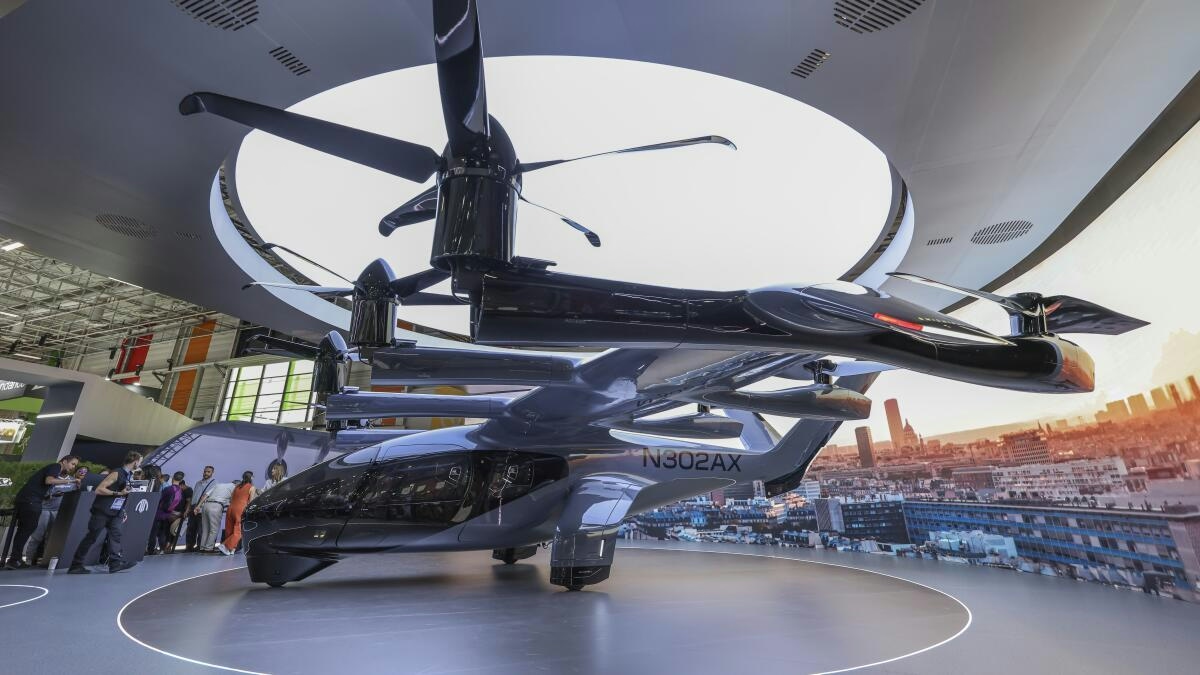
Testing a New Air Taxi Service Potentially Cheaper Than Uber
Testing a New Air Taxi Service Potentially Cheaper Than Uber
Revolutionizing Urban Commutes with Electric Air Taxis
Vertical Aerospace is developing the Valo, an electric vertical takeoff and landing (eVTOL) aircraft designed to transform urban transportation by significantly reducing commute times. Promising to cut journeys from hours to mere minutes, the Valo aims to offer fares comparable to premium Uber services such as Uber Black or Comfort. With a potential launch as early as 2028, subject to regulatory approval, the Valo is poised to operate in congested metropolitan areas including Manhattan and London. This new mode of transport seeks to provide a faster, quieter, and more environmentally sustainable alternative to traditional ground travel.
The Valo targets short, high-value trips between key urban points, such as airport transfers or quick connections between city heliports. Unlike conventional helicopters, it employs electric propulsion, enabling vertical takeoff and landing before transitioning to efficient forward flight at speeds up to 150 miles per hour and a range of approximately 100 miles. This innovative design reduces noise pollution and emissions, offering passengers a smoother and quieter experience while minimizing disruption to communities below.
Industry Interest and Market Positioning
Vertical Aerospace has reported around 1,500 pre-orders for the Valo from customers spanning four continents, including prominent airlines such as American Airlines and Japan Airlines. This level of demand indicates strong industry confidence and suggests that the Valo could evolve into a mainstream commercial platform rather than remaining a niche offering.
Cost competitiveness remains a crucial consideration. Current helicopter transfers, for example with operators like BLADE, start at roughly $195 per seat for routes such as Manhattan to JFK Airport. Vertical Aerospace aims for an operating cost near $2 per passenger mile for the Valo, potentially undercutting helicopter fares significantly. By comparison, a typical UberX ride from Manhattan to JFK ranges between $65 and $130, with prices often surging during peak periods. While the Valo may not immediately be cheaper than every Uber trip, it promises substantial time savings and a competitive price point, particularly when measured against helicopter services.
Challenges and Competitive Dynamics
Launching a new air taxi service involves considerable challenges. Regulatory approval remains a significant barrier, as aviation authorities must rigorously assess the safety and reliability of these novel aircraft. Community concerns may also arise regarding noise levels, flight paths, and the impact on urban airspace congestion. Furthermore, established ride-hailing and autonomous vehicle companies such as Uber and Waymo may respond aggressively through pricing strategies or technological advancements to protect their market positions.
The competitive environment is already intense, underscored by ongoing legal disputes like the trade-secrets lawsuit between Archer Aviation and Joby Aviation. These conflicts reflect the high stakes and rapid pace of innovation within the emerging urban air mobility sector.
Consumer reactions are expected to be mixed. While some may harbor skepticism about the safety and dependability of air taxis, others could be attracted by the prospect of faster, greener urban commutes. Ultimately, the success of services like the Valo will hinge not only on technological innovation and pricing but also on effectively navigating regulatory frameworks, community acceptance, and competitive pressures.

Etihad Airways Suspends Airbus A380 Flights on Key Route

Aditya Birla Group Seeks Approval for Aircraft Leasing in GIFT City

Qatar Airways Highlights Innovation and Connectivity at Arabian Travel Market 2026

Hong Kong's Five-Year Plan Includes Andrew Fan's Aircraft Parts Processing Hub Proposal

ACIA Aero Leasing Delivers ATR72-600 to Air Nostrum

RTX Appoints Jill Albertelli as Head of Pratt & Whitney

TAT Technologies Joins Beyond Aero Hydrogen Aircraft Program

AURAK Study Highlights Barriers to Air Taxi Adoption in Emerging Economies

Xiamen Air Selects Altitude for 787 Maintenance at Heathrow

Etihad and Swissport Extend Global Partnership
