
将人工智能洞察转化为可执行行动

热门趋势
Categories
The Development of the HondaJet: From Concept to Innovation
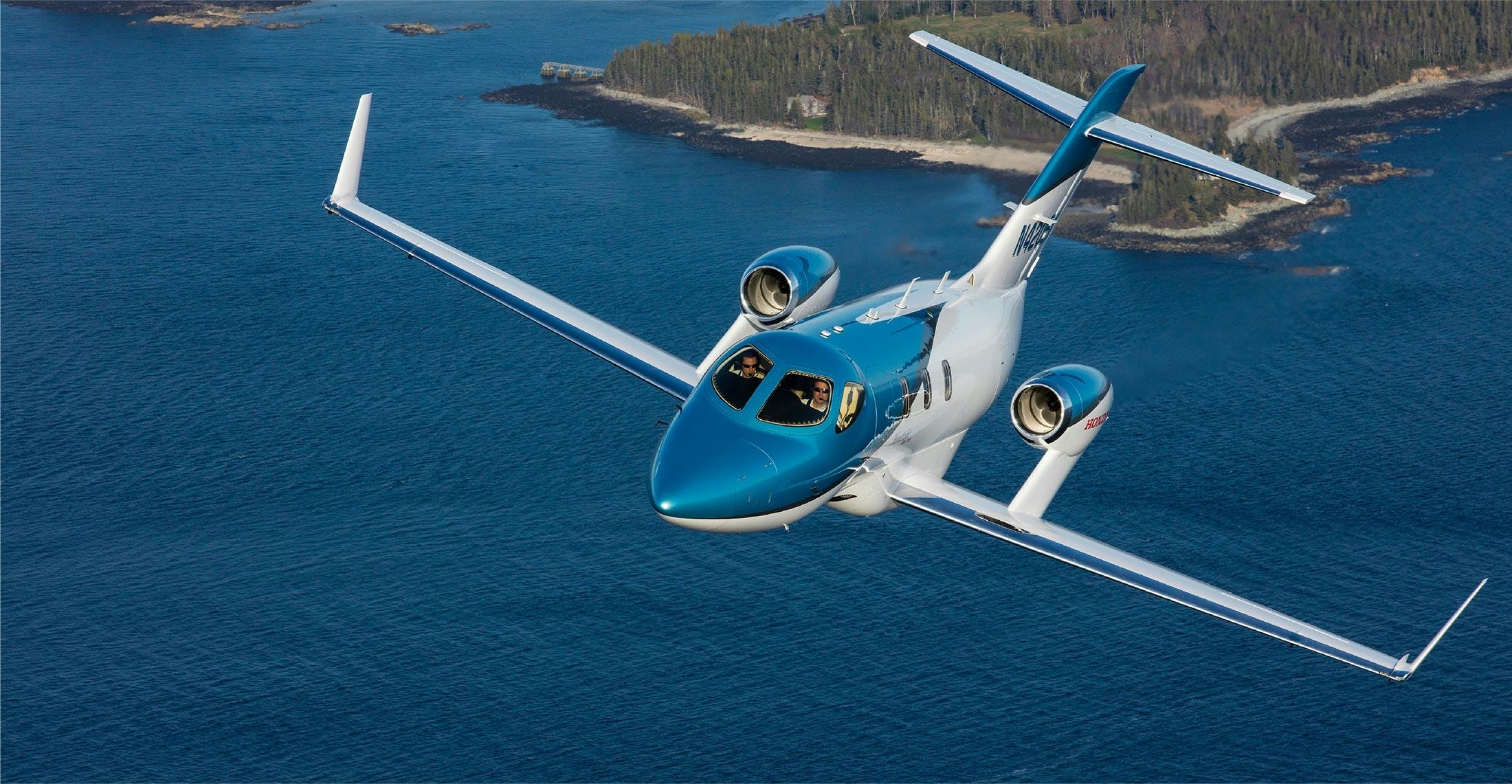
The Development of the HondaJet: From Concept to Innovation
A Revolutionary Idea Takes Flight
The inception of the HondaJet dates back to 1997, when Michimasa Fujino, an aeronautical engineer who would later become the founding president of Honda Aircraft Company, conceived a groundbreaking design in an unexpected moment of inspiration. Without access to paper, Fujino sketched his vision on the back cover of a calendar: a business jet featuring engines mounted atop the wings. This unconventional configuration challenged entrenched principles in aviation engineering and set the stage for a new chapter in business jet design.
Traditionally, business jets have employed rear-mounted engines, a layout that facilitates shorter landing gear and easier boarding, while providing greater ground clearance—an important consideration for operations on less-than-ideal runways. The concept of mounting engines above the wings had been largely avoided due to concerns about airflow disruption, increased drag, and diminished lift. The VFW-Fokker 614 of the 1970s, which adopted a similar design, ended in commercial failure, reinforcing industry skepticism toward such configurations.
Overcoming Technical and Market Challenges
Despite these historical reservations, Fujino and his team at Honda recognized the potential advantages of the over-the-wing engine mount. This design promised to enhance cabin space, reduce interior noise, and improve fuel efficiency—benefits that could redefine the business jet experience. However, realizing this vision required surmounting significant technical obstacles and convincing a conservative market to embrace innovation.
The HondaJet’s development unfolded amid fluctuating global economic conditions and fierce competition from established aircraft manufacturers. Market acceptance was uncertain, as buyers typically favored proven technologies over novel designs. Competitors responded with aggressive pricing strategies and rapid technological advancements, intensifying the challenge for Honda to secure its position in the market.
Balancing innovation with practicality was a constant theme throughout the project. Each design decision involved careful consideration of trade-offs, from aerodynamic performance to manufacturing costs. The team’s persistence and rigorous testing ultimately culminated in the HondaJet’s successful market entry, where it garnered acclaim for its distinctive engineering and operational efficiency.
A Testament to Innovation in Aerospace
The HondaJet’s journey exemplifies the complexities of introducing pioneering technology within a traditionally conservative industry. Its development was influenced not only by engineering challenges but also by broader economic cycles, evolving customer preferences, and competitive dynamics. The aircraft stands as a symbol of how bold ideas, coupled with determination and strategic navigation of market forces, can drive meaningful innovation in the global aerospace sector.

Etihad Airways Suspends Airbus A380 Flights on Key Route

Aditya Birla Group Seeks Approval for Aircraft Leasing in GIFT City

Qatar Airways Highlights Innovation and Connectivity at Arabian Travel Market 2026

Hong Kong's Five-Year Plan Includes Andrew Fan's Aircraft Parts Processing Hub Proposal

ACIA Aero Leasing Delivers ATR72-600 to Air Nostrum

RTX Appoints Jill Albertelli as Head of Pratt & Whitney

TAT Technologies Joins Beyond Aero Hydrogen Aircraft Program

AURAK Study Highlights Barriers to Air Taxi Adoption in Emerging Economies

Xiamen Air Selects Altitude for 787 Maintenance at Heathrow

Etihad and Swissport Extend Global Partnership
