
将人工智能洞察转化为可执行行动

热门趋势
Categories
The Fate of Widebody Aircraft After Their Final Commercial Flight
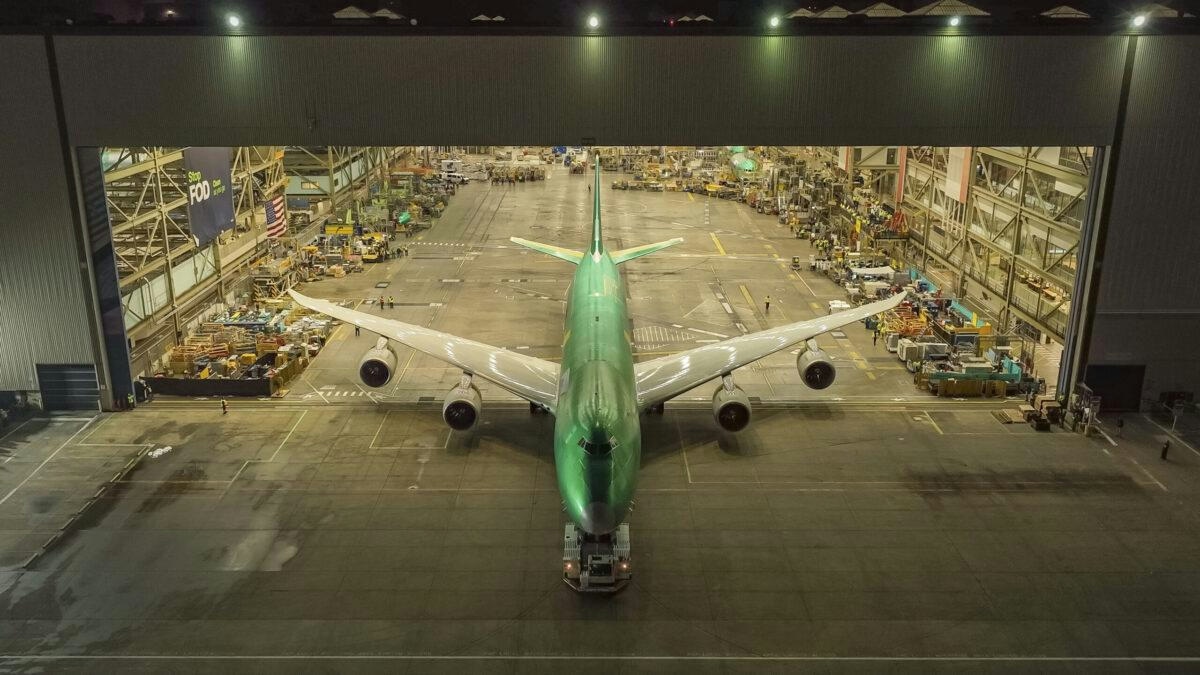
The Fate of Widebody Aircraft After Their Final Commercial Flight
When a widebody aircraft completes its final commercial journey, its operational life does not simply conclude. Although it ceases to generate revenue through passenger or cargo transport, the aircraft remains a valuable asset. Comprising certified components, recyclable materials, and sophisticated engineering, these aircraft can continue to yield economic returns long after retirement. Thus, the end of commercial service marks the beginning of a new phase, driven predominantly by financial considerations.
Economic Drivers of Retirement and Storage
The ultimate disposition of retired widebody aircraft—such as the Boeing 747 or Airbus A340—is influenced by a range of factors including the aircraft’s age, maintenance record, demand for spare parts, opportunities for cargo conversion, and the residual value of its materials. Owners and leasing companies carefully evaluate these elements, often prioritizing financial outcomes over sentimental value. For many aircraft, the final passenger flight is merely the initial step in a carefully orchestrated retirement strategy.
Following retirement, most widebodies are relocated to specialized storage facilities, commonly referred to as aircraft boneyards. These sites, frequently situated in arid regions like the US Southwest—including the Mojave Air and Spaceport in California, Southern California Logistics Airport in Victorville, and various locations across Arizona and New Mexico—offer optimal conditions for aircraft preservation. The low humidity and stable climate significantly reduce corrosion, enabling planes to be stored outdoors for extended periods. Internationally, Alice Springs in Australia has emerged as a notable storage hub, accommodating aircraft from carriers such as Singapore Airlines.
During the COVID-19 pandemic, these boneyards assumed a critical role by housing hundreds of grounded aircraft worldwide. Typically, the final commercial flight is succeeded by a ferry flight operated solely by pilots, after which the aircraft undergoes thorough inspection, documentation, and parking. Despite their seemingly dormant state, storage operations are highly systematic, with technicians actively working to maintain and preserve the aircraft’s value.
Preserving Value and Exploring Future Options
Widebody aircraft may remain in storage for months or even years, incurring considerable costs during this period. Some are parked immediately after retirement due to strong demand for spare parts, while others await favorable market conditions. Throughout this phase, every decision is guided by the objective of maximizing financial return, as these aircraft can retain multimillion-dollar value even after commercial service ends.
Not all stored aircraft are destined for dismantling. Some may be converted for cargo operations or potentially returned to service if market dynamics improve. However, such transitions involve significant challenges, including regulatory compliance, substantial upfront investment, and rigorous testing to ensure safety and operational efficiency.
Industry Trends and Future Outlook
Despite these complexities, market sentiment remains optimistic, particularly for modern, fuel-efficient widebodies like the Boeing 787. In response, manufacturers are investing heavily in the development of high-speed and ultra-efficient aircraft, intensifying competition within the industry. As global air travel continues to expand—especially in emerging markets—the demand for new, efficient aircraft is expected to grow. This ongoing evolution ensures that widebody aircraft, even after their final commercial flight, continue to hold a significant place in the dynamic global aviation landscape.

Etihad Airways Suspends Airbus A380 Flights on Key Route

Aditya Birla Group Seeks Approval for Aircraft Leasing in GIFT City

Qatar Airways Highlights Innovation and Connectivity at Arabian Travel Market 2026

Hong Kong's Five-Year Plan Includes Andrew Fan's Aircraft Parts Processing Hub Proposal

ACIA Aero Leasing Delivers ATR72-600 to Air Nostrum

RTX Appoints Jill Albertelli as Head of Pratt & Whitney

TAT Technologies Joins Beyond Aero Hydrogen Aircraft Program

AURAK Study Highlights Barriers to Air Taxi Adoption in Emerging Economies

Xiamen Air Selects Altitude for 787 Maintenance at Heathrow

Etihad and Swissport Extend Global Partnership
