
将人工智能洞察转化为可执行行动

热门趋势
Categories
The New Aircraft Succeeding the Boeing 777-200
The New Aircraft Succeeding the Boeing 777-200
As the Boeing 777-200 approaches the end of its operational lifespan—having first taken to the skies in 1994—major legacy airlines are actively pursuing modern replacements to sustain their fleets into the late 2020s and beyond. With these aircraft now exceeding 30 years in service, carriers such as American Airlines and United Airlines are shifting focus toward newer, more efficient models that align with evolving market demands and increasingly stringent regulatory requirements.
Fleet Transition and Replacement Strategies
Data from ch-aviation reveals that both American and United Airlines continue to operate substantial fleets of 777-200 and 777-200ER aircraft, yet their strategic emphasis is clearly moving toward the Boeing 787 Dreamliner family, particularly the 787-9 variant. United Airlines also maintains a significant number of aging 767s, which are similarly slated for replacement in the near future.
American Airlines currently operates 40 active 777-200ERs alongside 33 active 787-8s and 29 active 787-9s, with an additional 19 Dreamliners on order. United Airlines’ fleet includes 13 active 777-200s and 45 active 777-200ERs, complemented by 47 active 767-300ER/400ERs. The carrier also fields 11 active 787-8s, 47 active 787-9s with 85 more on order, and 20 active 787-10s with 56 additional units pending delivery. This substantial investment in the Dreamliner family underscores both airlines’ commitment to phasing out older 777-200s and, in United’s case, replacing the 767 fleet as well.
The Boeing 787-9: A Superior Successor
The Boeing 787-9 Dreamliner has emerged as the preferred successor to the 777-200, distinguished by its enhanced range and operational versatility. Capable of flying up to 7,565 nautical miles, the 787-9 surpasses the standard 777-200’s range of 5,240 nautical miles and even exceeds the 777-200ER’s 7,065 nautical miles. Furthermore, the 787-9 requires a shorter takeoff distance—8,500 feet compared to 11,100 feet for the 777-200ER—enabling access to a broader array of airports.
Beyond range and runway performance, the 787-9 offers significant improvements in fuel efficiency, reliability, and overall operating costs. These factors are critical in a highly competitive airline market, making the Dreamliner family not only a natural replacement for the 777-200 but also a viable option to supplant the aging 767 fleet.
Industry Challenges and Market Dynamics
Despite the clear momentum behind the 787-9, the transition to newer aircraft is not without obstacles. Both Boeing and Airbus face mounting pressure to accelerate production rates to satisfy growing demand, a challenge that will dominate industry management agendas through 2026. Delivery delays, particularly in the Asia-Pacific region, continue to test airline patience, even as confidence in long-term market growth remains robust.
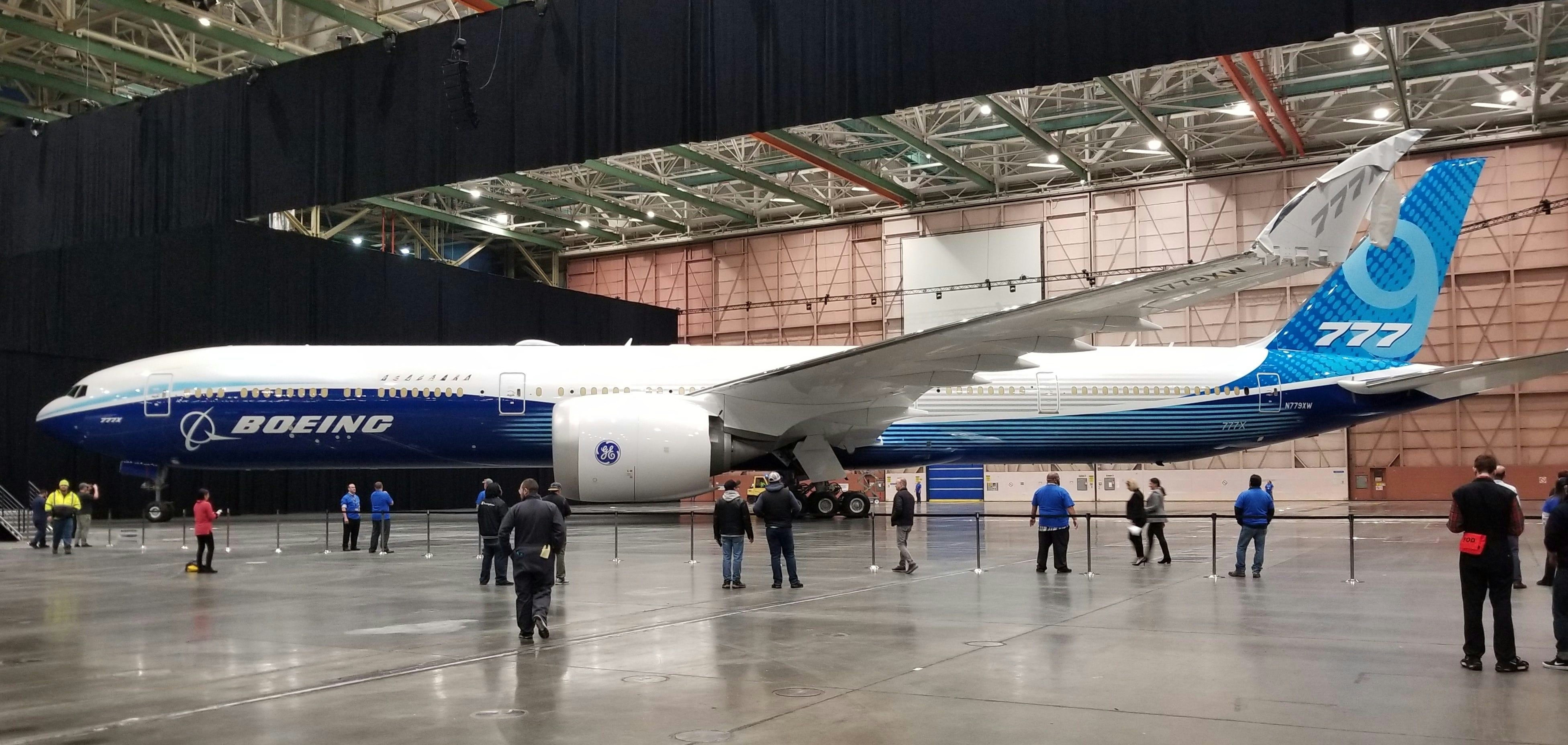
The Boeing 777X, once considered a potential replacement for older 777 variants, has encountered repeated production setbacks. Notably, no major U.S. carrier—including American and United—has placed significant orders for the 777X, reflecting skepticism about its near-term viability.
Meanwhile, competitors such as Embraer are recalibrating their strategies, prioritizing sales of their E2 jets and focusing on expansion in defense and emerging electric vertical takeoff and landing (eVTOL) markets rather than launching new commercial airliner programs.
Conclusion
As legacy carriers retire their aging 777-200 fleets, the Boeing 787-9 Dreamliner has established itself as the leading replacement, offering superior efficiency, range, and operational flexibility. However, ongoing production and delivery challenges continue to shape the competitive landscape, influencing fleet decisions and industry dynamics for years to come.

Etihad Airways Suspends Airbus A380 Flights on Key Route

Aditya Birla Group Seeks Approval for Aircraft Leasing in GIFT City

Qatar Airways Highlights Innovation and Connectivity at Arabian Travel Market 2026

Hong Kong's Five-Year Plan Includes Andrew Fan's Aircraft Parts Processing Hub Proposal

ACIA Aero Leasing Delivers ATR72-600 to Air Nostrum

RTX Appoints Jill Albertelli as Head of Pratt & Whitney

TAT Technologies Joins Beyond Aero Hydrogen Aircraft Program

AURAK Study Highlights Barriers to Air Taxi Adoption in Emerging Economies

Xiamen Air Selects Altitude for 787 Maintenance at Heathrow

Etihad and Swissport Extend Global Partnership
