
将人工智能洞察转化为可执行行动

热门趋势
Categories
The Role of Argo Turboserve Components in Modern Aviation Engineering
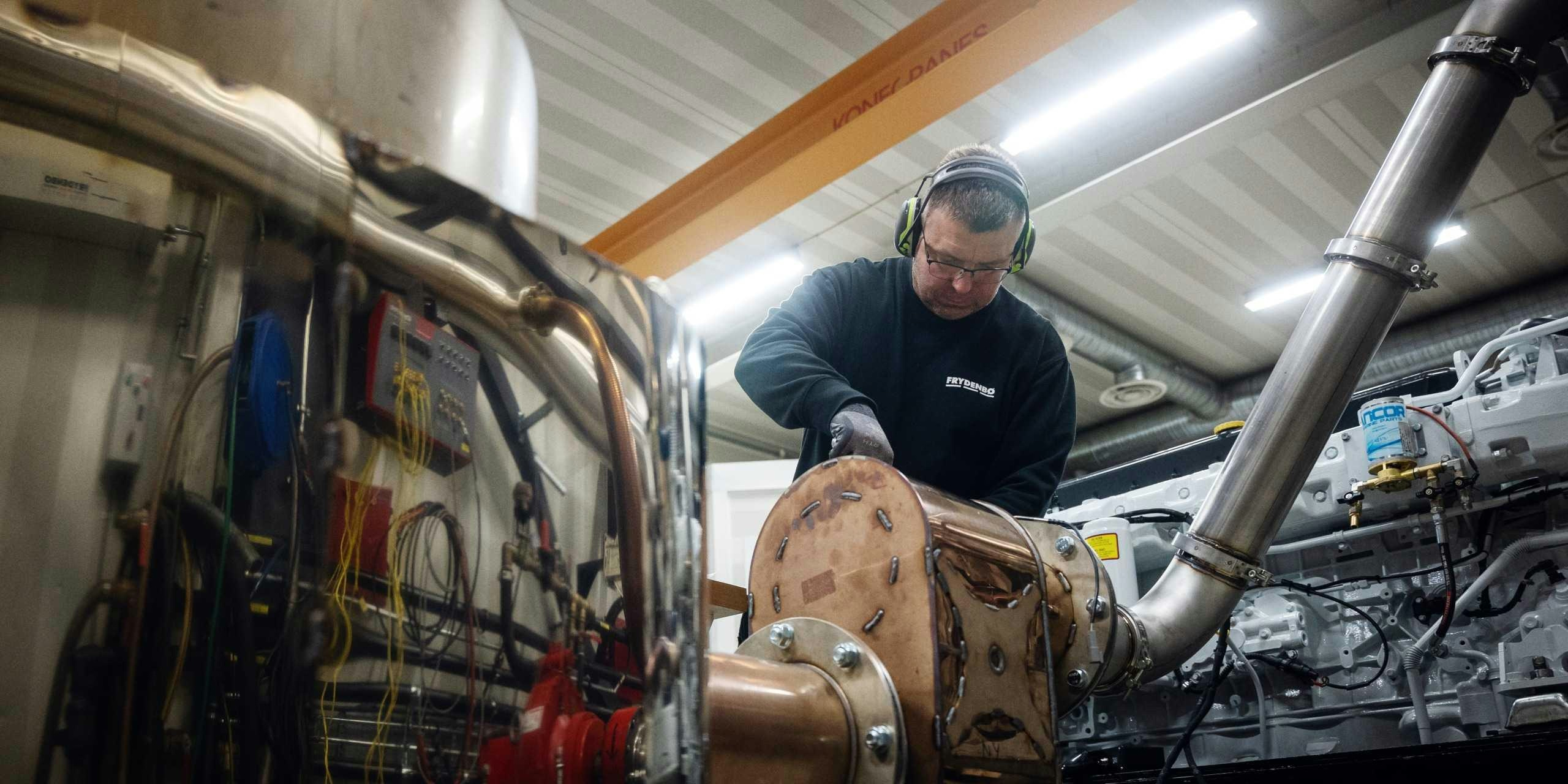
The Role of Argo Turboserve Components in Modern Aviation Engineering
In the realm of modern aviation engineering, the pursuit of reliability hinges on precision manufacturing and stringent quality control. Aircraft systems comprise thousands of specialized components that must function harmoniously under demanding conditions. Among the pivotal suppliers in this intricate ecosystem is Argo Turboserve Corporation. Rather than relying on marketing narratives, it is imperative to assess Argo Turboserve’s contributions through the lens of engineering and maintenance, where safety and performance remain paramount.
Aerospace Hardware and Operational Demands
Aircraft represent complex assemblies of mechanical and electronic systems, each component engineered to endure extreme operational stresses. These include continuous vibration during flight, significant temperature variations at high altitudes, mechanical loads generated by thrust, and prolonged service intervals. Engine accessory components provided by firms such as Argo Turboserve are specifically designed to meet these rigorous demands, thereby ensuring the integrity and safety of aircraft operations.
Integration within the Aviation Supply Chain
Argo Turboserve is distinguished for supplying specialized aircraft hardware and turbine-related parts, frequently cataloged under the National Stock Number (NSN) system. This classification facilitates efficient identification and verification of compatible replacement components by both military and commercial maintenance teams. The use of certified and traceable parts is critical to maintaining operational readiness and compliance with aviation standards.
Engine Components and Turbine Performance
Aircraft engines operate in some of the most challenging mechanical environments, where turbine assemblies must sustain structural and thermal stability at high rotational speeds. Components supplied by Argo Turboserve play essential roles in regulating airflow, distributing thermal loads, maintaining mechanical housing integrity, and optimizing fuel combustion efficiency. Even minimal deviations in component geometry can adversely affect engine performance over extended flight hours, underscoring the necessity for exacting precision in manufacturing.
The Critical Role of Fastening Technology
Precision fasteners, though often overlooked, are fundamental to the structural integrity of aviation assemblies. Aerospace fasteners are engineered to resist vibration and maintain load stability, preventing fatigue failures, micro-movements, and accelerated wear. This sector of the industry, while less visible, is indispensable to ensuring the overall safety and durability of aircraft structures.
Engineering Standards and Certification
Aviation engineering is governed by the principle of predictable performance under stress. Components undergo rigorous testing for thermal cycling endurance, dynamic vibration resistance, material fatigue thresholds, and long-term reliability. Manufacturers like Argo Turboserve must comply with stringent certification protocols before their products are approved for use in flight, reflecting the uncompromising safety standards of the industry.
Industry Challenges and Market Dynamics
The American Institute of Aeronautics and Astronautics (AIAA) highlights the ongoing challenges faced by suppliers such as Argo Turboserve in integrating advanced materials and propulsion technologies. The aerospace sector’s evolution toward smart maintenance monitoring and predictive failure detection has increased demand for innovative components. However, as noted by Aviation Week, these technological advances also introduce concerns regarding data privacy and security in maintenance operations.
Competitive pressures further shape the market landscape. For instance, Honeywell’s expansion into the Asia-Pacific defense sector, emphasizing autonomous flight and counter-drone technologies, signals a rising demand for sophisticated turboserve components. Such developments are likely to influence both the pace of innovation and the competitive dynamics among suppliers.
Future Outlook
As aircraft systems become increasingly digitally integrated and reliant on lightweight, high-strength materials, companies like Argo Turboserve will continue to play a vital role in supporting next-generation flight platforms. Their capacity to adapt to technological progress and evolving industry requirements will be essential in upholding the safety, reliability, and performance standards that define contemporary aviation.

Etihad Airways Suspends Airbus A380 Flights on Key Route

Aditya Birla Group Seeks Approval for Aircraft Leasing in GIFT City

Qatar Airways Highlights Innovation and Connectivity at Arabian Travel Market 2026

Hong Kong's Five-Year Plan Includes Andrew Fan's Aircraft Parts Processing Hub Proposal

ACIA Aero Leasing Delivers ATR72-600 to Air Nostrum

RTX Appoints Jill Albertelli as Head of Pratt & Whitney

TAT Technologies Joins Beyond Aero Hydrogen Aircraft Program

AURAK Study Highlights Barriers to Air Taxi Adoption in Emerging Economies

Xiamen Air Selects Altitude for 787 Maintenance at Heathrow

Etihad and Swissport Extend Global Partnership
