
将人工智能洞察转化为可执行行动

热门趋势
Categories
The Role of Flight Engineers in Modern Aviation
The Role of Flight Engineers in Modern Aviation
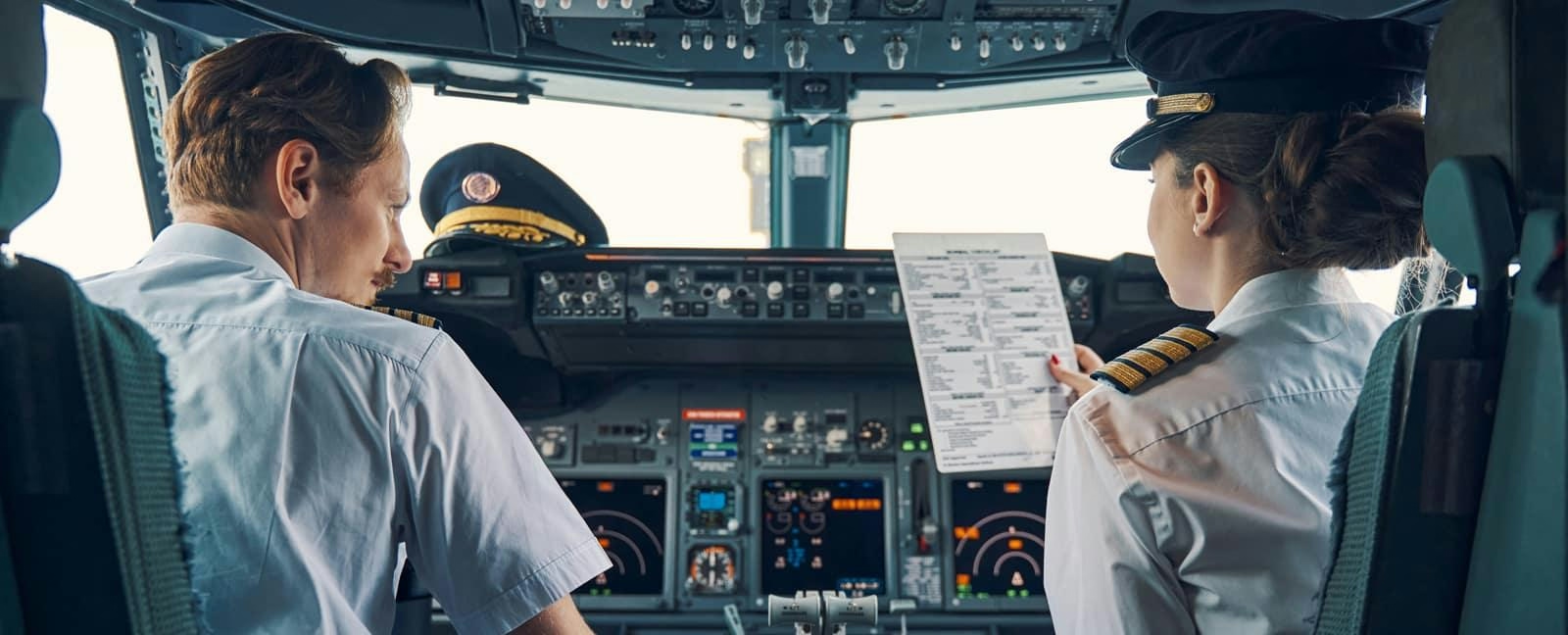
Flight engineers (FEs) have historically played a vital role within the flight crew, tasked with monitoring and managing an aircraft’s complex systems, including engines and critical flight controls. Originally referred to as “air mechanics,” flight engineers became indispensable as aircraft technology advanced and systems grew increasingly sophisticated. However, the introduction of computers and electronic microprocessors in the late 20th century gradually rendered the position obsolete.
Until the 1980s, most widebody aircraft operated with a flight engineer alongside the captain and first officer. The Boeing 737, introduced in 1967, marked a turning point by eliminating the need for a dedicated FE through its design innovations. While the role persisted in certain widebody models such as the McDonnell Douglas MD-11 and some Russian aircraft until as recently as 2013, the majority of Western-built commercial aircraft have since phased out the position entirely.
The Decline in Commercial Aviation
In contemporary commercial aviation, the flight engineer is nearly absent, particularly among airlines operating Western-built fleets. This transition is largely attributable to the retirement or retrofitting of older aircraft that originally required a flight engineer. For instance, the Boeing 747-400 and 747-8 were designed without the need for an FE, whereas earlier variants like the 747-200—still occasionally used as freighters or specialty aircraft—retain the position only if they have not undergone modernization.
Aircraft that once necessitated flight engineers include the Boeing 307, 377, 707, and 727; Douglas DC-6, DC-7, early DC-8s and DC-10s; Lockheed L-1011 TriStar; early Airbus A300s; and the Lockheed Constellation. Their successors, such as the Airbus A310, A300-600, Boeing 767, and MD-11, were engineered to operate without a flight engineer. Even among older aircraft still in service, many have been upgraded to eliminate the FE role. For example, FedEx completed modifications to its DC-10 fleet in 2021, removing the requirement for a flight engineer entirely.
Persistent Pockets: Kyrgyzstan’s Aerostan
Despite the global decline, some operators continue to employ aircraft that require flight engineers. Aerostan, a cargo airline based in Kyrgyzstan, operates three Boeing 747-200s and an Airbus A300B4—both models originally designed with a flight engineer position. Unlike many Western carriers, Aerostan’s 747-200s have not been retrofitted to remove the FE role, as reflected in ongoing job postings for flight engineers.
Modern Challenges and Industry Responses
The near disappearance of flight engineers coincides with broader challenges facing the aviation industry, including shortages of pilots and maintenance engineers. These personnel deficits have led to operational disruptions, such as the suspension of flights by Pacific Coastal, and have prompted a reassessment of flight training and maintenance strategies across the sector. Concurrently, the rise of drone technology is reshaping traditional pilot roles, with military organizations like the U.S. Army expressing concern over the implications for conventional flight careers.
In response, industry leaders and competitors are investing in advanced technologies aimed at enhancing safety and operational efficiency. Innovations such as self-healing aircraft materials, currently under investigation by NASA, seek to reduce maintenance demands and further automate aircraft systems—continuing the technological trajectory that began with the decline of the flight engineer.
As aviation continues to evolve, the role of the flight engineer remains a significant marker of the industry’s transformation, shaped by technological progress and shifting workforce dynamics.

Etihad Airways Suspends Airbus A380 Flights on Key Route

Aditya Birla Group Seeks Approval for Aircraft Leasing in GIFT City

Qatar Airways Highlights Innovation and Connectivity at Arabian Travel Market 2026

Hong Kong's Five-Year Plan Includes Andrew Fan's Aircraft Parts Processing Hub Proposal

ACIA Aero Leasing Delivers ATR72-600 to Air Nostrum

RTX Appoints Jill Albertelli as Head of Pratt & Whitney

TAT Technologies Joins Beyond Aero Hydrogen Aircraft Program

AURAK Study Highlights Barriers to Air Taxi Adoption in Emerging Economies

Xiamen Air Selects Altitude for 787 Maintenance at Heathrow

Etihad and Swissport Extend Global Partnership
