
图像

将人工智能洞察转化为可执行行动

立即加入 AeroGenie 候补名单!

热门趋势

Categories

TikToker Raises Pledges to Buy Spirit Airlines After Weekend Collapse
May 4, 2026By ePlane AI
TikToker Raises Pledges to Buy Spirit Airlines After Weekend Collapse
0
0
Spirit Airlines
Social Media Activism
Airline Financial Crisis

TikToker Mobilizes Support to Acquire Spirit Airlines Amid Financial Turmoil

In an unprecedented convergence of social media influence and corporate crisis, a prominent TikTok creator has spearheaded a campaign to raise funds for the acquisition of Spirit Airlines, which is currently grappling with significant financial challenges. This grassroots movement highlights the expanding role of digital platforms in shaping consumer advocacy, particularly as companies confront volatile market conditions.

Spirit Airlines’ Struggles and the Campaign’s Emergence

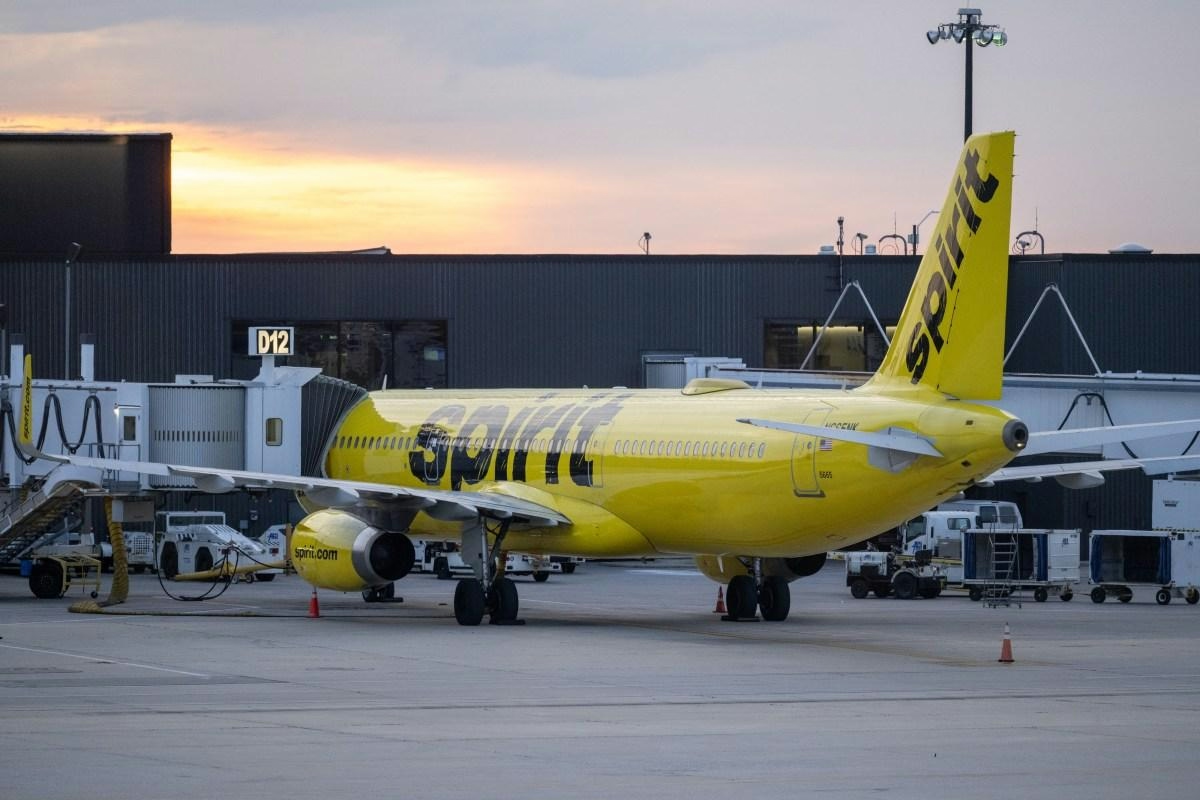
Spirit Airlines, recognized for its distinctive yellow aircraft and ultra-low-cost, no-frills service model, has faced mounting difficulties in recent years. The airline’s approach—offering unbundled services with minimal base fares—has come under increasing strain amid intensifying competition, rising operational expenses, and shifting traveler expectations in the aftermath of the pandemic. As consumers increasingly favor more inclusive travel experiences, Spirit’s traditional business model has been tested.

Against this backdrop, the TikTok-driven campaign has reportedly secured $23 million in pledges, reflecting a broader phenomenon of social media users rallying around causes that extend beyond conventional activism to encompass consumer-led corporate interventions. While this surge of digital support underscores Spirit’s dedicated customer base, industry experts caution that the capital amassed thus far falls short of what would be required to purchase and effectively restructure the airline. Significant investment and strategic overhaul remain essential to restore operational stability.

Industry Response and Market Implications

Reactions within the market have been varied. Some analysts express skepticism regarding the practicality of acquiring and revitalizing a major airline through grassroots fundraising alone. Conversely, others view the campaign as a testament to robust consumer engagement and brand loyalty. The initiative has also attracted the attention of Spirit’s competitors, though official responses from other low-cost carriers have yet to materialize. Experts suggest that this development may prompt rival airlines to reevaluate their strategic positioning in anticipation of potential changes in Spirit’s ownership or market dynamics.

Despite uncertainties about the campaign’s ultimate outcome, the heightened visibility has renewed focus on Spirit Airlines and the broader challenges confronting budget carriers. The aviation sector is closely monitoring how social media-driven movements are transforming consumer interactions with, and potentially the futures of, struggling brands.

The Spirit Airlines campaign exemplifies the growing influence of digital platforms in mobilizing public support within the high-stakes environment of commercial aviation, even as the effectiveness of such grassroots efforts in preventing corporate collapse remains to be seen.

More news
Navi Mumbai Airport to Launch International Flights with Abu Dhabi Service on Wednesday

Navi Mumbai Airport to Launch International Flights with Abu Dhabi Service on Wednesday

Navi Mumbai Airport to Launch International Flights with Abu Dhabi Service on Wednesday Navi Mumbai International Airport (NMIA) is poised to inaugurate its first international flight service on Wednesday, with Air India Express commencing a direct route to Abu Dhabi. The inaugural flight, scheduled to depart at 2:55 am, represents a significant milestone for the airport, which began domestic operations just over six months ago on December 25. A New International Gateway for the Mumbai Metropolitan Region Operated by Air India Group’s low-cost subsidiary, the Abu Dhabi service will operate three times weekly, offering travelers in the Mumbai Metropolitan Region (MMR) a convenient direct connection to the United Arab Emirates. According to Adani Airports Holding Ltd (AAHL), the airport’s operator, this achievement is the result of coordinated efforts among government agencies, aviation regulators, airline partners, and other stakeholders, all working to establish NMIA as the region’s second global gateway. NMIA is a joint venture between the Adani Group and Maharashtra government’s urban planning agency, CIDCO. With the launch of this international route, all eight airports under the AAHL portfolio—including Mumbai, Ahmedabad, Jaipur, Lucknow, Thiruvananthapuram, Guwahati, and Mangaluru—now provide both domestic and international services. This expansion highlights the rapid development of India’s newest greenfield international airport and enhances connectivity within one of the country’s most economically dynamic regions. Arun Bansal, CEO of AAHL, remarked, “The launch of our first scheduled international flight marks the beginning of a new phase in Navi Mumbai International Airport’s journey. We thank all state and central government agencies and stakeholders for their invaluable support in helping us achieve this milestone. We also appreciate Air India Express for partnering with us on this important first international route.” Enhancing Cargo Capabilities and Regional Connectivity The inaugural flight will also carry NMIA’s first global perishable export shipment, positioning the airport as an emerging hub for high-value, time-sensitive cargo. AAHL anticipates that this development will improve international market access for Indian exporters and further strengthen the airport’s cargo operations. Currently, NMIA manages approximately 150 air traffic movements daily, connecting 46 domestic destinations. The introduction of international services is expected to increase passenger traffic and generate economic benefits for the region. Nevertheless, the airport faces potential challenges, including competition from established European and Middle Eastern carriers, rising operating costs, and geopolitical uncertainties. Market responses may include heightened demand and economic activity, while competitors such as Etihad and Lufthansa could implement strategic adjustments to maintain market share and enhance connectivity. “As we expand our network with more airline partners and destinations, our focus remains on delivering seamless operations while strengthening Navi Mumbai’s position as a preferred gateway for international travel,” Bansal added. The Abu Dhabi route is the first of several international services planned from NMIA. As the airport continues to broaden its airline partnerships and destination network, it aims to play an increasingly vital role in supporting Mumbai’s aviation capacity as well as India’s growing international connectivity, trade, and tourism.
YVR Advances Baggage Handling with AI and Robotics

YVR Advances Baggage Handling with AI and Robotics

YVR Advances Baggage Handling with AI and Robotics The landscape of airport baggage handling is undergoing a profound transformation driven by rapid advancements in automation, artificial intelligence (AI), and robotics. Airports and airlines are increasingly focused on creating smarter, more resilient, and passenger-centric operations. This shift moves beyond merely automating existing processes to fundamentally reimagining how baggage is managed throughout the airport ecosystem. Reimagining the Baggage Journey Allen Yuarata, Director of Terminal, Baggage & Groundside Services at Vancouver Airport Authority and Captain of the FTE Baggage Innovation Working Group, will address these developments at the forthcoming FTE Global 20th anniversary event in Dallas, Texas, scheduled for 8–10 September 2026. In a session titled “Scaling the Baggage Handling Revolution,” Yuarata and other panelists will explore how the industry can navigate current challenges and seize new opportunities. These include adopting innovative business models, securing diverse funding approaches, and fostering collaborative strategies among stakeholders. Yuarata highlights a critical shift in industry thinking: the focus is no longer on automating existing baggage handling processes but on fundamentally improving the entire movement of baggage. He explains, “The biggest opportunity is to eliminate repetitive, physically demanding work while creating a more predictable and resilient baggage system.” He further notes that robotics, AI, and enhanced data analytics can improve operational consistency, reduce workplace injuries, and provide operators with comprehensive visibility across the baggage journey. Challenges and Industry Response Despite the promise of these technologies, significant challenges remain. Implementing AI and robotics at Vancouver International Airport (YVR) and other major hubs demands a robust AI infrastructure capable of supporting advanced systems. Integration with legacy baggage handling systems and scalability without extensive infrastructure overhaul are essential for successful deployment. Yuarata observes, “The technology is advancing quickly, but the next step is maturity. Airports need solutions that can handle the realities of live operations.” Market reactions to these innovations are varied. While many industry stakeholders welcome the potential efficiency improvements, concerns persist regarding the high initial investment costs and the complexities involved in integrating new technologies with existing systems. The competitive environment is intensifying as some airports and airlines adopt similar technologies to maintain their edge, while others invest heavily in research to develop superior AI and robotics solutions. The global market for specialized, task-specific robots is projected to surpass $257 billion, underscoring the imperative for ongoing innovation. Yuarata emphasizes that successful innovation in baggage handling must begin with a clearly defined operational challenge rather than technology seeking a problem to solve. He states, “The best projects bring together airports, airlines, and technology partners early so everyone understands the operational challenge and what success looks like. It’s also important to be willing to test, learn, and adapt rather than expecting perfection from day one.” Vancouver International Airport has established itself as a leader in baggage handling innovation. As the industry advances, collaboration and adaptability will be crucial to unlocking the full potential of AI and robotics in transforming baggage operations worldwide.
Vertiport Development Advances Air Taxi Plans in Central Florida

Vertiport Development Advances Air Taxi Plans in Central Florida

Vertiport Development Advances Air Taxi Plans in Central Florida Central Florida is poised to enter a new chapter in transportation as plans for air taxi services progress at Kissimmee Gateway Airport. Aviation leaders recently unveiled infrastructure enhancements aimed at supporting electric vertical takeoff and landing (eVTOL) aircraft, marking a significant step toward the region’s anticipated launch of air taxi operations. Infrastructure and Technological Advancements At the heart of these developments is the proposed construction of a vertiport—a dedicated facility designed to accommodate the landing, charging, and maintenance of electric air taxis. Matt Franklin of Signature Aviation emphasized the region’s readiness for the forthcoming electric aviation revolution, stating, “For the upcoming electric aviation revolution that we are anticipating, Kissimmee is ready as of today.” Shaun Germolus, Director of Aviation for the City of Kissimmee, outlined the strategic vision behind the project, highlighting the potential for dramatically reduced travel times between key destinations. He noted that air taxis could enable trips from the Orlando area to Tampa in approximately 30 minutes, allowing passengers to complete a round trip with a lunch break in the time it currently takes to drive along Interstate 4. During a recent tour for WFTV, officials showcased new technologies integral to the airport’s modernization. Among these are the Beta Charge Cube, which facilitates rapid charging of eVTOL aircraft, and the Alta system, which assists in-flight navigation for air taxis. These innovations are part of a broader initiative to usher in a quieter, zero-emission, and safer mode of transportation. Challenges and Industry Dynamics Despite the promising advancements, the widespread adoption of air taxis faces considerable challenges. Regulatory approval and safety remain primary concerns as the industry awaits comprehensive guidance from federal authorities. Recent legal disputes involving Boeing-owned Wisk Aero have underscored the critical importance of stringent safety standards. Meanwhile, competition is intensifying among key players such as Joby Aviation, which has formed a partnership with Toyota and is actively pursuing Federal Aviation Administration (FAA) certification and strategic alliances. Investor sentiment reflects a cautious optimism. While some view air taxis as a transformative innovation with significant potential, others remain wary due to the high costs involved and ongoing technological uncertainties. The success of projects like Kissimmee’s vertiport will depend on overcoming these hurdles and demonstrating consistent, safe operations. Testing of air taxi systems is already underway in Kissimmee and other locations. Germolus reported that most test flights have covered circuits of approximately 60 miles, with some extending to 80 miles. He added that aircraft can be recharged within 50 minutes, a critical factor for operational viability. Legislative Support and Future Outlook Legislative measures are also advancing to support the development of air taxi infrastructure. Florida’s House Bill 1093 authorizes the Department of Transportation to assist in funding public vertiport projects and promotes public-private partnerships to accelerate development. Officials regard this legislative backing as essential for establishing the necessary infrastructure before air taxis can become a mainstream transportation option. Although no definitive timeline has been set for public availability, Kissimmee’s ongoing preparations position Central Florida as a leading hub in the emerging air taxi industry. The region’s investments in infrastructure and technology signal a commitment to embracing the next generation of urban mobility.
Outlook for the GCC Engine MRO Market Through 2034

Outlook for the GCC Engine MRO Market Through 2034

Outlook for the GCC Engine MRO Market Through 2034 The aviation sector in the Gulf Cooperation Council (GCC) region is experiencing a pivotal transformation. The focus is gradually shifting from rapid fleet expansion to prioritizing the long-term reliability and efficiency of existing aircraft. As the region rebuilds capacity, enhances international connectivity, and invests heavily in airport infrastructure, maintaining the operational safety and efficiency of aircraft engines has become paramount. This evolving emphasis is redefining the GCC as a strategic hub for aircraft engine Maintenance, Repair, and Overhaul (MRO) services. Evolving Priorities in Engine Maintenance Aircraft engine MRO involves a range of specialized services, including detailed inspections, component replacements, non-destructive testing, digital diagnostics, and comprehensive overhauls. These processes are critical to ensuring the safety, efficiency, and regulatory compliance of modern turbofan engines, which face unique operational challenges in the Gulf’s harsh environment. High temperatures, airborne sand, and intensive utilization place considerable stress on engine components, necessitating rigorous maintenance protocols. As flight hours accumulate, the demand for engine inspections and scheduled overhauls intensifies. Airlines in the region are increasingly prioritizing engine reliability, while GCC governments are investing in domestic MRO capabilities to reduce dependence on overseas repair centers. This strategic realignment is attracting global aerospace companies and positioning the GCC as a long-term support hub, moving beyond its traditional role as a passenger transit market. Market Size and Growth Projections Industry estimates from The Report Cube value the GCC aircraft engine MRO market at approximately USD 3.95 billion in 2026. Projections indicate that this figure will nearly double to USD 7.59 billion by 2034, representing a robust compound annual growth rate (CAGR) of around 8.5%. This growth underscores the increasing importance of engine maintenance services in the region’s aviation ecosystem. Drivers of Demand and Market Dynamics The expansion of regional airline fleets to meet rising passenger and cargo demand is a primary driver of sustained maintenance requirements. Concurrently, governments in countries such as Saudi Arabia and the United Arab Emirates are investing in airport expansions, certified maintenance facilities, and the development of engineering talent to bolster domestic MRO capabilities. This focus on regionalization enables airlines to reduce turnaround times and logistics costs by relying on local service providers. Technological advancements are also reshaping the market. The adoption of predictive maintenance technologies—including engine health monitoring systems, artificial intelligence, and digital inspection platforms—allows operators to anticipate potential issues and minimize unexpected downtime. Recent industry developments, such as BeauTech’s 10-year spare engine agreement, highlight the growing emphasis on long-term planning for spare engine availability, further stimulating demand for MRO services across the GCC. Challenges and Innovation Despite the positive outlook, the market faces challenges. Geopolitical volatility in the Middle East, particularly affecting sectors like offshore support vessels (OSVs), can disrupt operations and impact maintenance schedules. Nevertheless, the industry’s commitment to sustainability and the integration of advanced technologies such as predictive analytics and additive manufacturing are fostering innovation and operational efficiency. Companies that successfully adopt these innovations are poised to gain a competitive advantage in the evolving MRO landscape. Conclusion As the GCC aviation industry matures, the engine MRO market is projected to experience sustained growth through 2034. Strategic investments, technological innovation, and a concerted shift toward regional self-sufficiency are positioning the Gulf as a leading center for aircraft engine maintenance and support. This development is crucial to ensuring the reliability and competitiveness of the region’s aviation sector in the years ahead.
Pentastar Aviation Expands Fivestar Gourmet with Acquisition of Gourmet Airfare

Pentastar Aviation Expands Fivestar Gourmet with Acquisition of Gourmet Airfare

Pentastar Aviation Expands Fivestar Gourmet with Acquisition of Gourmet Airfare Pentastar Aviation, a prominent global private aviation services provider headquartered in Waterford Township, has announced the expansion of its in-house catering operation, Fivestar Gourmet, through the acquisition of Gourmet Airfare. This longtime private aviation catering provider operates at Detroit Metropolitan Airport (DTW) in Romulus. The acquisition grants Fivestar Gourmet a full-service kitchen facility at DTW, complementing its original base at Oakland County International Airport and significantly enhancing its regional catering capabilities. Financial details of the transaction were not disclosed. Expansion of Regional Catering Services With the integration of Gourmet Airfare, Fivestar Gourmet will extend its services across multiple airports in the region, including Coleman A. Young International Airport (Detroit City Airport), Oakland County International Airport, Toledo Express Airport, Willow Run Airport, Ann Arbor Municipal Airport, and Capital Region International Airport in Lansing, among others. Customers previously served by Gourmet Airfare will transition to the Fivestar brand, consolidating the catering services under one umbrella. Brad Bruce, president and CEO of Pentastar Aviation, emphasized the company’s commitment to customer service, stating that the expansion allows the team to better serve its clientele through increased accessibility and additional locations. Fivestar Gourmet caters to a diverse range of clients, from individual business travelers and families to large corporate flights and professional sports teams. The company manages catering logistics, accommodates dietary preferences, and handles special requests, all while providing access to an extensive recipe library and custom menu development. Ben Hammond, vice president of FBO services at Pentastar Aviation, highlighted the team’s dedication to precision and personalized service, noting that every order is carefully tailored to meet the specific needs of each customer. Industry Context and Challenges The acquisition occurs amid a highly competitive travel and aviation sector, where private equity firms and larger groups are actively pursuing consolidation through acquisitions. Pentastar Aviation faces several challenges in this environment, including regulatory scrutiny, the integration of two distinct brands, and the management of operational synergies. Market observers have noted potential skepticism from investors regarding the long-term profitability of gourmet catering services within the aviation industry. Additionally, competitors may respond with strategic adjustments or aggressive pricing to protect their market share. Founded in 1964, Pentastar Aviation offers a comprehensive suite of services, including aircraft maintenance, private jet charters, aircraft management, fixed-base operator (FBO) services, full maintenance, repair, and overhaul (MRO) services, in-house catering through Fivestar Gourmet, and advisory services. The company is owned by Edsel B. Ford II, a former board member of Ford Motor Company. For further information, visit pentastar.aero or pentastar.aero/fbo/fivestar-gourmet.
Boeing Reports Highest First-Half Aircraft Deliveries Since 2018

Boeing Reports Highest First-Half Aircraft Deliveries Since 2018

Boeing Reports Highest First-Half Aircraft Deliveries Since 2018 Boeing achieved a significant milestone in June by delivering 64 jetliners, an increase from 60 in May, culminating in its highest first-half aircraft deliveries since 2018. Over the first six months of the year, the U.S. aerospace manufacturer handed over a total of 314 aircraft, representing a 12% rise compared to the same period last year. This growth underscores Boeing’s ongoing recovery and expansion amid a competitive and evolving global aviation market. Despite this progress, Boeing remains behind its primary competitor, Airbus, which delivered 89 jets in June and 351 aircraft in the first half of the year. Airbus has notably accelerated deliveries of its A320neo family, reinforcing its dominant market position. However, the European manufacturer recently revised its 20-year industry-wide forecast for passenger aircraft demand downward by 1%, attributing the adjustment to geopolitical tensions, including the ongoing conflict in Iran and broader global trade uncertainties. Delivery Breakdown and Production Outlook In June, Boeing’s deliveries comprised 42 of its best-selling 737 MAX jets, 13 787 Dreamliners—including five aircraft delayed due to seat certification issues for the startup carrier Riyadh Air—three 777 freighters, and five 767s, three of which are slated for conversion into KC-46 aerial refueling tankers by Boeing’s defense division. Looking forward, Boeing anticipates an increase in deliveries during the second half of the year, driven by plans to raise monthly production of the 737 MAX from 42 to 47 units. This production ramp-up aims to meet sustained global demand for commercial jets, although manufacturers remain cautious, adjusting forecasts in response to geopolitical and economic uncertainties that continue to influence the industry. Order Activity and Market Dynamics In June, Boeing secured 121 new orders while recording eight cancellations, resulting in a net gain of 113 orders for the month. The company’s cumulative orders for the 737 MAX have now reached 7,206, surpassing the 7,159 orders received for its previous best-selling 737 Next Generation model. Among notable customer developments, Canadian airline WestJet canceled orders for six 737s, while Aviation Capital Group placed an order for six 737s intended for leasing to WestJet. Year-to-date, Boeing has achieved 408 net orders after accounting for cancellations and conversions, reflecting steady demand despite some fluctuations in customer commitments. Competitive Landscape and Industry Outlook Boeing and Airbus continue to dominate the commercial aircraft sector, yet other manufacturers are also experiencing growth. Brazilian aerospace company Embraer, for instance, has maintained its full-year targets for both commercial and business jet deliveries, with a marked increase in executive aviation shipments. Overall, global demand for commercial aircraft remains robust, but the industry faces a complex environment shaped by intensifying competition, shifting market dynamics, and external pressures such as geopolitical conflicts and trade disputes. Both Boeing and Airbus are actively adjusting their strategies and forecasts to navigate these challenges while capitalizing on the sustained appetite for new aircraft worldwide.
Aviation Capital Group Leases 13 Boeing 737-10 Aircraft to WestJet

Aviation Capital Group Leases 13 Boeing 737-10 Aircraft to WestJet

Aviation Capital Group Expands Boeing 737-10 Lease Portfolio with WestJet NEWPORT BEACH, Calif., July 14, 2026 — Aviation Capital Group LLC (ACG), a prominent global aircraft asset manager, has finalized long-term lease agreements with Canadian carrier WestJet for thirteen Boeing 737-10 aircraft. This transaction builds upon ACG’s earlier delivery of two Boeing 737-8 jets to WestJet earlier this year and aligns with the airline’s strategic efforts to modernize and expand its fleet across domestic and international routes. Strategic Fleet Enhancement with the Boeing 737-10 The Boeing 737-10, the largest variant in the 737 MAX family, is expected to significantly improve WestJet’s operational efficiency by delivering enhanced fuel economy, reduced emissions, and lower cost per seat. The aircraft will also maintain operational commonality with WestJet’s existing Boeing narrowbody fleet, facilitating streamlined maintenance and crew training. ACG plans to deliver the world’s first 737-10 from its orderbook to WestJet following the completion of type certification. Thomas Baker, Chief Executive Officer and President of ACG, emphasized the importance of the deal, stating, “We are thrilled to expand our relationship with WestJet through this placement. ACG and WestJet share a strong commitment to the Boeing 737-10, with over 140 aircraft on order between us. This agreement demonstrates the strategic value of ACG’s Boeing orderbook and our ability to support WestJet’s future growth.” Mike Scott, Chief Financial Officer and Executive Vice President of the WestJet Group, highlighted the operational benefits, noting, “This long-term lease agreement for 13 Boeing 737 aircraft with Aviation Capital Group supports WestJet’s growth plans and gives us added flexibility as we scale to meet guest demand. Shifting deliveries to the 737-10 is a strategic step that helps ensure we have the right aircraft in our fleet to serve our guests reliably over the long term.” Industry Challenges and Market Context The lease agreement arrives amid intensified scrutiny of Boeing’s 737 MAX program. Production challenges at Boeing’s Everett facility, including a notable January 2024 incident involving an Alaska Airlines 737 MAX 9 linked to oversight and installation errors, have raised concerns regarding quality control and reliability. These issues have drawn increased attention to the safety and dependability of the forthcoming 737-10 models. The competitive environment is also evolving, with carriers such as Delta Air Lines planning to integrate the 737 MAX 10 and 787-10 into their fleets to enhance capacity, potentially reshaping market dynamics. Concurrently, the aircraft leasing sector has experienced volatility, exemplified by ICBC’s recent attempts to repossess four 737 MAX jets from SpiceJet, underscoring the complexities and risks inherent in current leasing arrangements. Despite these challenges, ACG remains the leading lessor for the 737-10, while WestJet ranks among the largest airline customers for the type. The 737-10 offers approximately 20 percent greater revenue potential and 20 percent lower fuel burn per seat compared to older models. It accounts for roughly 30 percent of the 737 MAX order backlog, with over 1,400 orders placed to date. About Aviation Capital Group Founded in 1989 and a wholly owned subsidiary of Tokyo Century Corporation, Aviation Capital Group manages a fleet of approximately 500 aircraft leased to around 90 airlines across 50 countries. The company specializes in commercial aircraft leasing, asset management, and financing solutions. For further details, visit www.aviationcapitalgroup.com.
Lufthansa’s First A350-1000 Arrives in Anniversary Livery

Lufthansa’s First A350-1000 Arrives in Anniversary Livery

Lufthansa’s First A350-1000 Arrives in Anniversary Livery Lufthansa is poised to receive its first Airbus A350-1000, marking a significant milestone as the German flag carrier approaches its 100th anniversary. The aircraft, recently painted at Airbus’s Toulouse facility, features a distinctive blue livery adorned with a white crane graphic and the inscriptions “1926 | 2026” and “100.” This special design commemorates a century of Lufthansa’s operations and will make the A350-1000 the seventh aircraft in the airline’s fleet to bear the anniversary livery. Delivery and Specifications The painting process for the aircraft required approximately 432 liters of blue paint and 246 liters of white. Registered as D-AIFA and named “Deutschland,” the A350-1000 is scheduled for delivery from Toulouse to Munich in the fall of 2026. Prior to its official handover, the aircraft will undergo a series of test flights, interior installations, and a final acceptance inspection. Lufthansa plans to hold a formal naming ceremony at a later date. This delivery will mark the 700th Airbus aircraft handed over to the Lufthansa Group, underscoring the airline’s enduring partnership with the European manufacturer. Measuring 73.8 meters in length, the A350-1000 is approximately seven meters longer than the A350-900 currently in Lufthansa’s fleet. Configured to accommodate up to 300 passengers across four cabin classes—First, Business, Premium Economy, and Economy—the aircraft reflects Lufthansa’s continued investment in widebody jets. The airline has placed orders for 15 A350-1000s, with deliveries scheduled through 2030. Strategic Context and Industry Implications The introduction of the A350-1000 arrives at a critical juncture for Lufthansa and the broader European aviation sector. Airlines across the continent face rising operating costs, geopolitical uncertainties, and mounting sustainability pressures. Lufthansa’s strategic focus on expanding its widebody fleet, even as it reduces its European network, signals a commitment to long-haul growth and premium services. This approach positions the airline to compete more effectively on global routes, particularly as competitors such as Qantas prepare to launch ambitious projects like the world’s longest nonstop flight between London and Sydney using the A350-1000ULR. The new A350-1000 joins a growing number of Lufthansa aircraft adorned with the anniversary livery, including an A350-900, an A380, a Boeing 787-9, a Boeing 747-8, and two A320neo aircraft. These planes operate across both long-haul and short- to medium-haul routes. Lufthansa reports that the distinctive anniversary design has garnered significant attention from passengers and aviation enthusiasts since its introduction. As Lufthansa prepares to celebrate its centenary, the arrival of the A350-1000 in this special livery not only honors the airline’s legacy but also highlights its efforts to adapt and innovate amid a rapidly evolving industry landscape.
SkyDrive Conducts SD-05 Flight Test in Yamaguchi for 2028 Tourism

SkyDrive Conducts SD-05 Flight Test in Yamaguchi for 2028 Tourism

SkyDrive Conducts SD-05 Flight Test in Yamaguchi for 2028 Tourism Toyota-affiliated SkyDrive Inc. has successfully completed two demonstration flights of its SD-05 electric vertical takeoff and landing (eVTOL) aircraft in Yamaguchi Prefecture, marking a significant milestone in its ambition to launch commercial tourism operations by 2028. The tests, held on July 13, 2026, at Yamaguchi Kirara Expo Memorial Park, simulated scenic aerial tours over the Seto Inland Sea, showcasing the aircraft’s potential to transform regional tourism. The event drew the attention of prominent officials, including Yamaguchi Governor Tsugumasa Muraoka, Yamaguchi Prefectural Assembly Vice Chairperson Toru Kawano, and Toshihiro Suzuki, President of Suzuki Motor Corporation, a key production partner for SkyDrive. Autonomous Demonstrations Simulate Passenger Experience Both flights were conducted autonomously and remotely, without pilots or passengers on board. The first flight, departing at 8 a.m., covered a distance of 2 kilometers (1.24 miles) in 6 minutes and 20 seconds, reaching a maximum speed of 86 km/h (53.4 mph) and ascending to an altitude of 30 meters (98.4 feet). The second flight, at 11:05 a.m., spanned 1,900 meters (1.18 miles) in 5 minutes and 42 seconds, achieving a top speed of 54 km/h (34 mph) and a maximum altitude of 25 meters (82 feet). These flights were designed to replicate the full passenger journey, beginning with arrival by road at the vertiport and proceeding to immediate boarding. This exercise tested the seamless ground-to-air transition that SkyDrive envisions as a cornerstone of its future commercial service. Progress and Challenges in a Competitive Market The SD-05 prototype has now completed over 300 test flights across various locations, including Toyota City, Yamaguchi City, Expo 2025 Osaka, Osaka Port, and Tokyo Big Sight. Each demonstration advances SkyDrive closer to its target of launching commercial eVTOL services in 2028. Despite this progress, the company faces substantial regulatory hurdles in obtaining certification for urban air mobility operations. The approval process demands stringent compliance with safety protocols and airspace integration standards, challenges that affect the entire eVTOL industry. Industry observers are closely monitoring the viability of eVTOL technology for tourism, particularly as major competitors such as Toyota and Joby Aviation accelerate their development efforts and increase investments. The competitive landscape is intensifying, with companies vying to establish early market presence and technological leadership. Tourism as a Catalyst for Urban Air Mobility SkyDrive CEO Tomohiro Fukuzawa described the Yamaguchi demonstration as a “model case” for next-generation urban air mobility, underscoring the importance of a seamless, zero-wait transition from ground to air transport. He emphasized that scenic flights will be a central component of the commercial eVTOL services planned for 2028. Fukuzawa also highlighted intentions to integrate rail connections with eVTOL departures, enhancing accessibility for travelers. While tourism is expected to serve as an initial use case, SkyDrive’s broader vision encompasses supporting urban and regional economies, disaster relief, and emergency medical services. Fukuzawa reiterated that safety remains the company’s highest priority as it advances aircraft development and production. As the race to commercialize eVTOL technology intensifies, SkyDrive’s latest test represents a crucial step toward realizing the promise of urban air mobility in Japan and beyond.
ForeFlight Introduces AI-Generated NOTAM Summaries

ForeFlight Introduces AI-Generated NOTAM Summaries

ForeFlight Introduces AI-Generated NOTAM Summaries Jeppesen ForeFlight has announced the upcoming launch of ClearNOTAMs, an AI-driven feature designed to generate concise, plain-language summaries of Notices to Air Missions (NOTAMs) within its mobile and web flight-planning platforms. Unveiled shortly after the EAA AirVenture Oshkosh event, this innovation seeks to simplify the traditionally complex and technical language of NOTAMs, thereby enhancing pilots’ ability to quickly comprehend critical flight information. Enhancing Clarity and Usability in Flight Planning ClearNOTAMs will present AI-generated summaries as the default text for each notice, while allowing users the option to toggle the feature on or off. Pilots can expand any summary to access the original NOTAM alongside the AI interpretation, ensuring transparency and direct access to source material. ForeFlight has developed multiple AI models tailored to interpret different types of NOTAMs, supported by automated accuracy checks that determine whether a summary meets quality standards. In cases where a summary fails to meet these criteria or a new NOTAM has not yet been processed, the original notice will be displayed by default. Cole Crawford, ForeFlight’s director of product, emphasized the feature’s potential to improve flight planning efficiency. “ClearNOTAMs helps pilots spend less time deciphering information and more time understanding it,” he stated. “By transforming complex NOTAM language into clear, concise summaries, we’re making one of the most important parts of flight planning more accessible and actionable.” Alongside ClearNOTAMs, ForeFlight will introduce enhanced tools for filtering and sorting NOTAMs by category, issuing authority, activation time, and recency. Users will also be able to pin important notices and collapse less relevant ones, allowing for a more tailored briefing experience. These features will be accessible across all ForeFlight subscription tiers. Addressing Industry Concerns Amid Growing AI Skepticism The ClearNOTAMs rollout will begin with a complimentary three-month trial for individual subscribers following AirVenture, after which continued access will require a ForeFlight Premium subscription for individuals, Business Performance plans for flight departments, or select military and government subscriptions. This launch occurs amid widespread skepticism toward AI-generated content. Recent studies reveal that approximately 80% of Americans express wariness about AI-produced information, citing concerns over transparency and control. Within the aviation community, where safety-critical decisions depend on precise and verified data, such skepticism may lead to heightened scrutiny of AI tools. ForeFlight has sought to mitigate these concerns by incorporating a user feedback mechanism that allows pilots to report suspected translation errors directly within the app. When flagged, the notice reverts to its original format for that user and is reviewed by the company for accuracy. The introduction of ClearNOTAMs also positions ForeFlight within a competitive environment where rivals are likely to accelerate their own AI initiatives. However, the industry must navigate challenges related to trust, reliability, and legal liability, especially in light of recent high-profile legal disputes involving AI-generated misinformation. As ForeFlight integrates artificial intelligence into its flight-planning ecosystem, the company confronts the dual imperative of fostering innovation while upholding the accuracy and trustworthiness that are fundamental to aviation safety.
line
TikToker Raises Pledges to Buy Spirit Airlines After Weekend Collapse









