
图像

将人工智能洞察转化为可执行行动

立即加入 AeroGenie 候补名单!

热门趋势

Categories

UK Ministry of Defence Orders Skyhammer Air Defence System with Deliveries Starting Next Month
April 10, 2026By ePlane AI
UK Ministry of Defence Orders Skyhammer Air Defence System with Deliveries Starting Next Month
0
0
Skyhammer Air Defence
Cambridge Aerospace
Counter-Drone Technology

UK Ministry of Defence Orders Skyhammer Air Defence System with Deliveries Starting Next Month

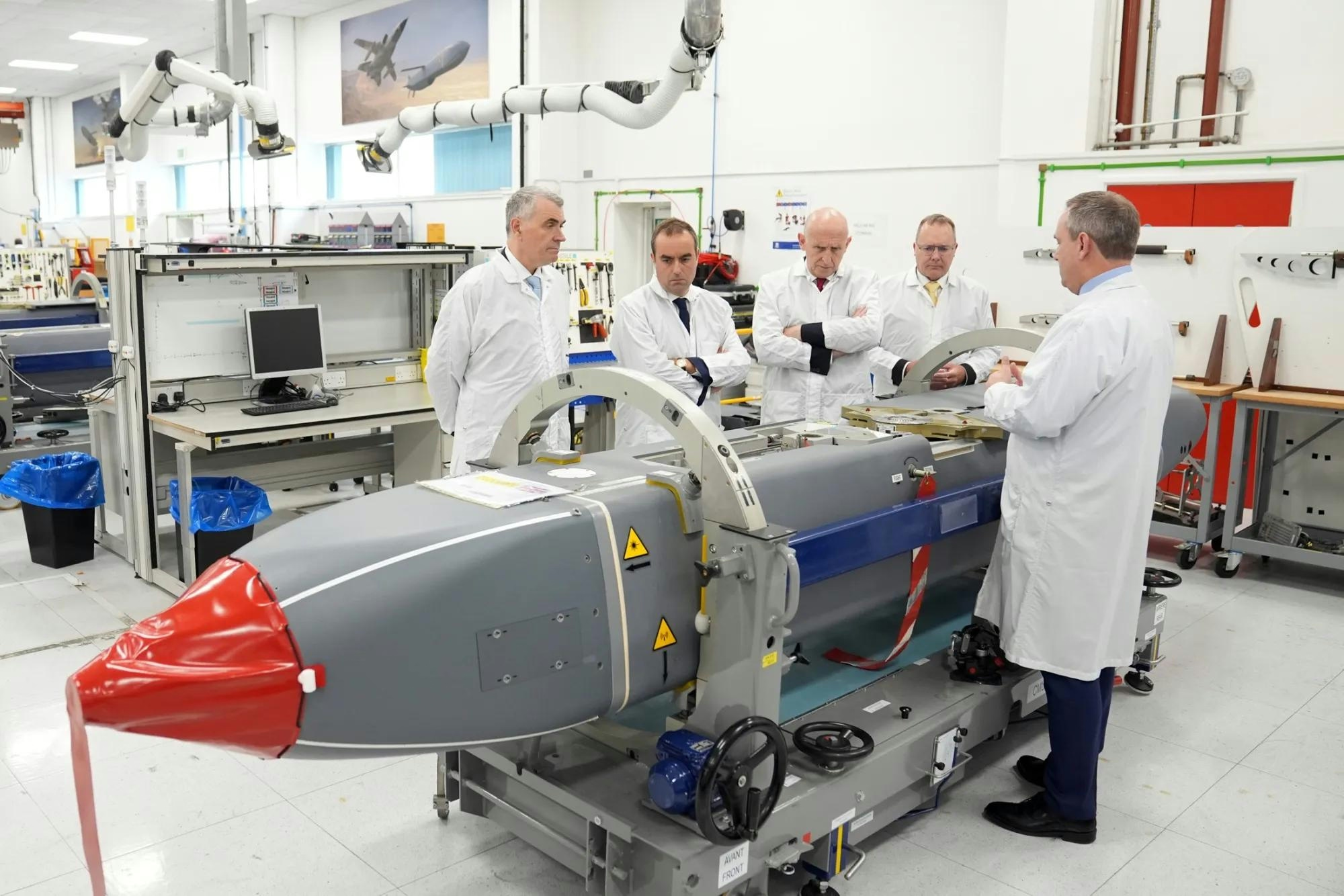
Cambridge Aerospace, an emerging British defence manufacturer, has secured a significant contract from the UK Ministry of Defence (MoD) for its new Skyhammer air defence system. Designed to counter attack drones such as the Shahed 136 at ranges exceeding 30 kilometres, Skyhammer aims to strengthen the UK’s counter-drone capabilities amid escalating aerial threats.

Development and Capabilities of Skyhammer

The announcement was made by Defence Secretary John Healey MP during the London Defence Conference at King’s College London. Although the exact number of units ordered remains undisclosed, Cambridge Aerospace confirmed that deliveries are scheduled to commence as early as May 2026. The full order is expected to be completed within six months of the initial shipment, subject to final contract approval.

Skyhammer was first revealed at the Defence and Security Equipment International (DSEI) exhibition last year, having been developed at an impressive pace—from concept to flight in just six weeks. The system is ground-launched from a tube and powered by a jet engine capable of reaching speeds up to 700 km/h. It incorporates a bespoke radar for terminal guidance, with its maiden flight occurring in the first half of 2025.

Cost efficiency is a central feature of Skyhammer. While the precise unit price has not been disclosed, company representatives, including CEO Steven Barrett, have indicated that it is comparable to the Shahed 136 drone, estimated between £20,000 and £30,000 per unit. This positions Skyhammer as a more affordable alternative to existing counter-drone options such as the Martlet Lightweight Multirole Missile (LMM) and the Advanced Precision Kill Weapon System II (APKWS II), both currently trialled or deployed by UK forces. Notably, Skyhammer offers a longer operational range than these systems while remaining significantly less expensive than the Advanced Short Range Air to Air Missile (ASRAAM), which costs approximately £200,000 per unit.

Challenges and Strategic Context

Despite the promising capabilities of Skyhammer, the MoD’s rapid procurement presents certain challenges. Integrating the new system into existing defence infrastructure will require swift adaptation, and Cambridge Aerospace’s status as a start-up raises questions regarding supply chain resilience and production scalability. This procurement occurs amid heightened European interest in counter-drone technologies, with increased demand for systems such as Thales’ Martlet and Rheinmetall’s Skynex and Skyranger platforms, which are accelerating production to meet market needs.

The UK’s investment in Skyhammer reflects a broader European trend to enhance air defence capabilities in response to evolving aerial threats. The Netherlands’ recent order for an additional Patriot air defence system from Raytheon exemplifies this shift, as nations seek advanced solutions to counter the growing use of drones and other airborne weapons.

As deliveries of Skyhammer begin next month, the UK’s ability to effectively integrate this new system into its wider air defence strategy will be closely observed by both allies and competitors.

More news
General Aviation Airports Drive South Florida’s Economy

General Aviation Airports Drive South Florida’s Economy

General Aviation Airports Drive South Florida’s Economy While recent attention in South Florida’s aviation sector has centered on Spirit Airlines’ bankruptcy at Fort Lauderdale-Hollywood International Airport, a less conspicuous yet crucial narrative is unfolding across the region’s 15 general aviation airports. These facilities, often overshadowed by commercial hubs, serve as vital economic engines, sustaining thousands of jobs and generating billions in economic activity. Economic Contributions and Regional Impact The Florida Department of Transportation’s 2022 Statewide Economic Impact Study underscores the significance of general aviation, revealing that it supports over 156,000 jobs statewide and contributes more than $27 billion annually to Florida’s economy. In South Florida, the influence of general aviation is particularly pronounced. Fort Lauderdale Executive Airport alone accounts for nearly 23,000 jobs and a $3.9 billion annual economic impact. Miami-Opa Locka Executive Airport supports 5,288 jobs with an $841 million contribution, while Pompano Beach Airpark sustains 2,597 jobs and generates $410 million in economic activity. Collectively, these three airports create over 30,000 jobs and contribute $5.1 billion annually to the regional economy. Beyond their economic footprint, these airports function as critical hubs for flight training, business aviation, emergency response, and community engagement. Pompano Beach Airpark, for instance, hosts five flight schools, the Goodyear “Wingfoot Two” blimp, and the North American headquarters of aircraft manufacturer Daher TBM. North Perry Airport in Pembroke Pines supports eight flight schools and operates the largest aerial media operation in the Southeast, providing banner towing services across 49 states and serving as a helicopter base for local news organizations. Miami-Opa Locka Executive Airport manages over 147,000 operations annually and is home to the nation’s busiest U.S. Coast Guard Air/Sea Rescue Station. Its three fixed-base operators (FBOs) help alleviate congestion at Miami International Airport, while the facility also functions as a staging ground for Caribbean cargo and hosts Bombardier’s largest North American service center. Fort Lauderdale Executive Airport is a focal point for business aviation, featuring four FBOs, extensive maintenance facilities, and a strategic location within a foreign-trade zone. The presence of U.S. Customs and Border Protection on-site supports high-wage employment and fosters economic development in Broward County. The airport also serves as the venue for the Fort Lauderdale Air Show and organizes career events aimed at inspiring the next generation of aviation professionals. Challenges and Future Outlook Despite their critical role, South Florida’s general aviation airports face significant challenges. An aging workforce poses a threat to the sustainability of Florida’s $86.6 billion aviation industry, with concerns over the future availability of skilled pilots, mechanics, and support personnel essential to airport operations. Additionally, major upcoming events such as the 2026 FIFA World Cup are expected to increase demand for business aviation services, placing further strain on airport infrastructure and staffing. In response to these pressures, industry players are expanding capacity. For example, Sheltair is increasing hangar space at North Florida Gulf Airport to accommodate a growing number of aircraft, reflecting broader efforts to meet rising demand for business aviation storage and services. Policy uncertainties also present potential challenges. Ongoing discussions in Washington, D.C., regarding the privatization of air traffic control could alter operational priorities, potentially favoring commercial aviation over general aviation needs. Despite these headwinds, South Florida’s general aviation airports remain indispensable. They continue to support flight training, emergency services, business operations, and specialized industries, thereby sustaining the region’s economic vitality and connectivity.
Regulatory Breaches and Engine Failure Cited in Tema Crash

Regulatory Breaches and Engine Failure Cited in Tema Crash

Regulatory Breaches and Engine Failure in Fatal Tema Aircraft Crash The Aircraft Accident and Incident Investigation and Prevention Bureau (AIB Ghana) has identified a series of critical operational, regulatory, and maintenance failures that culminated in the tragic aircraft crash in Tema on March 16, 2026, which resulted in two fatalities. Unauthorized Flights and Procedural Violations Captain Paul Fordjour, Head of Investigations at AIB Ghana, revealed that all three flights conducted from Ho Airport on the day of the incident were unauthorized, lacking valid permits and proper regulatory clearance. This exposed significant weaknesses in aviation compliance and oversight. Investigators found that neither Air Traffic Control (ATC) nor airport management at Ho and Accra were fully aware of the flight permissions, highlighting serious coordination failures within the aviation system. Although the pilot was licensed and qualified, the investigation uncovered deviations from approved flight procedures. Notably, the pilot occupied the rear seat of the microlight aircraft on all three flights, while a friend and the pilot’s brother occupied the front pilot seats. This seating arrangement violated permit conditions and restricted the pilot’s access to essential flight instruments and controls. The report further clarified that the third passenger disembarked in Ho before the aircraft’s final, fatal journey to Tema. Maintenance Deficiencies and Engine Failure AIB Ghana’s investigation also exposed significant maintenance shortcomings involving the aircraft, registered as 9G-ADV. There was no designated maintenance facility or assigned personnel responsible for the aircraft’s upkeep. Previous incidents of engine overheating and white smoke emissions had not been adequately addressed despite clear signs of mechanical distress. No maintenance records were available for the aircraft between January 14 and March 16, 2026, during which approximately 15 flights were conducted. Investigators concluded that persistent engine overheating likely led to engine failure, which played a central role in the crash. Compounding these issues, no distress call or emergency declaration was made before the aircraft went down, limiting the opportunity for emergency response. Additionally, ATC failed to notify the Bureau about the incident as required by law, underscoring further procedural lapses in emergency reporting. Broader Regulatory Context and Industry Implications These findings emerge amid heightened regulatory scrutiny of the aviation sector, particularly concerning engine reliability. Mandatory inspections for certain engine types, such as CF34 engines affected by corrosion issues, are increasing operational costs for airlines and causing potential delays in maintenance schedules. The intensified focus on safety and compliance is also driving up insurance premiums and prompting airlines to consider alternative engine technologies. As manufacturers face pressure to improve engine reliability and safety features, shifts in market share among competitors are anticipated. The investigation recommends that the Ghana Civil Aviation Authority (GCAA) strengthen oversight of General Aviation operations and ensure that approved maintenance providers are properly documented to enhance safety. Furthermore, the GCAA should establish procedures to guarantee timely communication between Air Traffic Control and relevant authorities in the event of incidents, thereby improving emergency response and regulatory compliance. The Tema crash underscores the urgent need for improved regulatory enforcement, maintenance oversight, and industry-wide vigilance to safeguard aviation safety in Ghana.
Ascent Aviation Names Tim McGuire President and COO Amid Expansion

Ascent Aviation Names Tim McGuire President and COO Amid Expansion

Ascent Aviation Appoints Tim McGuire as President and COO Amid Strategic Expansion Ascent Aviation Services has announced the promotion of Tim McGuire to president and chief operating officer, expanding his leadership responsibilities as the company accelerates its operational growth and initiates new freighter conversion programs. Having served as COO for the past four years, McGuire will now oversee a broader range of corporate functions, including sales and marketing, contracts, and finance, alongside his existing operational duties. Leadership Expansion in a Growing MRO Market This leadership enhancement occurs at a critical juncture for maintenance, repair, and overhaul (MRO) providers, who are adapting to increased demand driven by aging aircraft fleets, a surge in cargo conversion activities, and persistent supply-chain challenges affecting airline capacity planning worldwide. Ascent credits McGuire with significant improvements in operational performance, productivity gains, reductions in rework and damage rates, and strengthened customer confidence during a period marked by heightened demand for maintenance and modification services. The promotion aligns with Ascent’s preparations to launch its inaugural Boeing 777-300ER passenger-to-freighter conversion program. This segment is gaining prominence as airlines, cargo operators, and leasing companies seek to extend aircraft lifecycles through cargo conversion strategies. The demand for widebody freighter conversions has risen sharply in recent years, as global air cargo operators aim to expand capacity without the financial and temporal burdens associated with new aircraft orders. This trend has created substantial opportunities for MRO firms possessing the technical expertise to execute large-scale modification programs. Strategic Vision and Industry Implications Ascent CEO Dave Querio highlighted McGuire’s expanding influence across the company and its stakeholder relationships. “Tim has become a trusted leader across the organization and a valued partner to our customers, employees, and shareholders,” Querio stated. McGuire will gradually assume additional oversight responsibilities, enabling the executive leadership team to concentrate more on long-term corporate strategy, shareholder engagement, and growth initiatives. Although the company’s reporting structures remain unchanged for the time being, further updates regarding leadership transitions are anticipated as McGuire’s role broadens. This move reflects a wider evolution within the global MRO sector, where providers are increasingly balancing traditional heavy maintenance with higher-margin services such as aircraft modifications, storage, teardown operations, and end-of-life asset management. Ascent has established itself as one of the larger independent MRO providers serving both commercial and military aviation markets, with capabilities spanning heavy maintenance, aircraft storage, disassembly, and modification services. The company’s ongoing investment in cargo conversion aligns with broader industry dynamics, as airlines and lessors seek to optimize aircraft utilization amid production bottlenecks at Boeing and Airbus. Industry analysts observe that while the leadership change presents opportunities, it also poses challenges related to integrating new strategies with existing operations, managing expansion effectively, and maintaining competitive positioning. Market responses are expected to be favorable given McGuire’s extensive experience, though competitors are likely to monitor Ascent’s developments closely and adjust their own strategies accordingly. “Together, we are moving the company forward, growing the business, and increasing the global recognition of the Ascent Aviation Services name and brand,” Querio added. McGuire’s elevation underscores the growing strategic importance of operational leadership within aviation services firms navigating complex labor markets, supply-chain disruptions, fleet aging, and rising demand for specialized aircraft modification programs.
Impact of Rising Fuel Prices on Aviation and Maintenance in 2026

Impact of Rising Fuel Prices on Aviation and Maintenance in 2026

Impact of Rising Fuel Prices on Aviation and Maintenance in 2026 Escalating Fuel Costs and Industry Challenges In 2026, the global aviation industry is grappling with unprecedented pressure from soaring fuel prices, fundamentally altering airline economics and maintenance operations. The sharp increase in jet fuel costs—doubling since January—has been largely attributed to the closure of the Strait of Hormuz amid the ongoing US-Iran conflict. This surge has compelled airlines to reduce capacity, cancel flights, modify routes, and raise fares. Concurrently, carriers have intensified their reliance on hedging strategies to manage the volatility of fuel expenses, underscoring the critical role of fuel costs in operational planning. Complex Effects on Maintenance, Repair, and Overhaul (MRO) Demand The impact on the Maintenance, Repair, and Overhaul (MRO) sector is multifaceted. While reduced aircraft utilization and a growing number of parked planes have dampened some maintenance activities, raising concerns about diminished demand, the evolving dynamics of fleet management are simultaneously generating new opportunities. The necessity to maintain grounded aircraft has increased, requiring sustained MRO engagement. Additionally, the importance of spare-parts availability and efficient aviation marketplaces has grown, as airlines, MRO providers, and suppliers strive to minimize sourcing delays, optimize cash flow, and uphold operational resilience amid the challenging environment. Financial Strain and Strategic Responses from Airlines Fuel prices emerged as a critical pressure point in April and May 2026, influencing not only airline fuel expenditures but also decisions regarding capacity, route planning, and aircraft utilization. For airlines, the cost of fuel has become a decisive factor in determining the viability of specific routes. For MRO providers, the impact hinges on aircraft usage intensity and fleet longevity. Aviation marketplaces have gained prominence as inventory management becomes more complex and costly due to grounded aircraft and supply chain disruptions. The financial repercussions are evident in recent corporate results and forecasts. American Airlines revised its 2026 profit outlook downward, warning that sustained high jet fuel prices could increase its annual fuel bill by over $4 billion. Despite reporting a record first-quarter revenue of $13.9 billion, the airline adjusted its full-year earnings expectations in response to fuel inflation. Similarly, Air France-KLM projected a 2026 fuel bill of $9.3 billion—an increase of $2.4 billion year-over-year—and reduced its capacity-growth forecast, citing fuel price pressures. Delta Air Lines anticipated an all-in fuel price of approximately $4.30 per gallon for the second quarter, expecting fuel expenses to rise by more than $2 billion. The airline planned to maintain flat capacity, offset higher fuel costs through pricing strategies, and leverage its refinery operations for a $300 million benefit. Ryanair emphasized the importance of hedging in its May update, with 80% of its fuel requirements secured through April 2027 at around $67 per barrel. Nonetheless, the carrier cautioned that sustained high prices could increase unit costs by roughly 5%. EasyJet faced an unexpected £25 million fuel-cost increase in March, prompting a rise in minimum ticket prices and resulting in a £552 million pre-tax loss. Growing Focus on Sustainable Aviation Fuel and Efficiency Measures The surge in jet fuel prices has intensified scrutiny of sustainable aviation fuel (SAF) pricing, as airlines and regulators seek alternatives to conventional fossil fuels. European authorities, including the European Union Aviation Safety Agency (EASA) and Eurocontrol, are exploring measures to enhance fuel efficiency. Meanwhile, companies such as Titan Aviation Fuels are deploying innovative technologies aimed at mitigating supply shortages and managing costs. As oil prices reach record highs, the aviation sector continues to face significant uncertainty. Airlines, MRO providers, and suppliers are adapting their strategies to navigate this volatile landscape, with fuel costs now central to operational and financial decision-making across the industry.
UK Airline Pilot Salaries Projected for 2026

UK Airline Pilot Salaries Projected for 2026

UK Airline Pilot Salaries Projected for 2026 The UK aviation sector is poised for a significant shift in pilot remuneration by 2026, with salaries reaching unprecedented levels. This upward trend is primarily driven by a shortage of experienced pilots, expanding airline fleets, and a robust increase in demand for air travel. Both newly qualified first officers and seasoned captains are experiencing notable changes in pay, benefits, and career opportunities. However, beneath these encouraging figures lies a more nuanced and complex landscape. The Financial and Professional Demands of Becoming a Pilot Pursuing a career as an airline pilot in the UK continues to require a substantial financial commitment. Training expenses frequently exceed £100,000 before securing a first position, representing a significant barrier to entry. Beyond the initial investment, pilots must navigate demanding work schedules, stringent medical assessments, and intense competition within the industry. Although salaries are on the rise, the path to the cockpit remains both challenging and costly, underscoring the demanding nature of the profession. Long-Haul Sector: British Airways and Virgin Atlantic British Airways and Virgin Atlantic remain the dominant players in the UK’s long-haul market, operating extensive international routes with modern widebody aircraft such as the Airbus A330, A350, and Boeing 787 and 777. While passengers often compare cabin services, pilots focus on the financial packages and career trajectories offered by these carriers. In 2026, both airlines are expected to provide some of the highest pilot salaries in the UK. British Airways long-haul first officers can anticipate earnings ranging from £70,000 to £125,000, depending on experience and fleet assignment, while captains typically earn between £100,000 and £225,000, inclusive of allowances and flying pay. Virgin Atlantic offers similarly competitive compensation, with first officers earning between £70,000 and £100,000 and captains receiving £115,000 to £200,000. Career progression distinguishes the two carriers. British Airways presents a structured advancement pathway, often beginning with CityFlyer operations, moving through short-haul European routes, and culminating in long-haul fleet assignments. In contrast, Virgin Atlantic’s all-long-haul network allows pilots immediate access to widebody flying. Both airlines remain highly attractive to UK pilots, though they offer distinctly different career development models. The Rise of Low-Cost Carriers and Market Challenges The traditional perception of low-cost carriers as offering lower pay and more demanding conditions is rapidly evolving. Airlines such as easyJet, Ryanair, and Wizz Air now provide salaries that rival, and in some cases exceed, those of legacy carriers for short-haul operations. As these airlines expand and compete for experienced pilots, remuneration has become increasingly competitive. Nevertheless, the broader European aviation market faces uncertainties. Ryanair’s CEO Michael O’Leary has highlighted the financial pressures caused by elevated jet fuel prices, which may lead to operational constraints affecting pilot compensation. In response, airlines are likely to adjust salary structures to balance competitiveness with rising operational costs. Notably, financially resilient carriers like Ryanair, benefiting from hedged fuel prices, may enable their pilots to negotiate improved terms, potentially establishing new industry benchmarks for pay. Balancing Rewards and Challenges While UK airline pilot salaries projected for 2026 are among the highest in Europe, the profession remains demanding and expensive to enter. The evolving market presents both significant opportunities and inherent risks. Aspiring pilots must carefully consider the substantial financial rewards alongside the rigorous demands and shifting dynamics of the aviation industry.
Schiphol and easyJet Introduce Engine-Free Taxiing

Schiphol and easyJet Introduce Engine-Free Taxiing

Schiphol and easyJet Introduce Engine-Free Taxiing to Advance Sustainable Aviation Amsterdam Schiphol Airport and easyJet have jointly launched electronic TaxiBot operations for Airbus aircraft, marking a notable advancement in sustainable ground handling and operational efficiency. This initiative, supported by the SESAR HERON project, follows a successful trial earlier this year and represents a pioneering effort to reduce emissions and noise during aircraft taxiing. Innovation in Ground Operations TaxiBot is a semi-robotic aircraft tug that allows planes to taxi between the gate and runway using only their auxiliary power unit (APU), thereby eliminating the need to engage the main engines during ground movement. This method significantly reduces fuel consumption, carbon dioxide emissions, and apron noise. After initial testing in March, easyJet operated its first passenger flight using TaxiBot on April 30. The airline is now equipping three additional Airbus A320neo aircraft with the system as part of a comprehensive programme developed in collaboration with Schiphol, Menzies Aviation, Airbus, and SAS. easyJet estimates that each flight utilizing TaxiBot can save approximately 95 kilograms of fuel and reduce CO₂ emissions by 299 kilograms. Schiphol, the first European airport to deploy electric TaxiBot technology for Airbus operations, projects that widespread adoption could reduce taxiing fuel consumption by up to 65%, while also lowering nitrogen oxide (NOx) and ultrafine particle emissions. This rollout forms a key component of Schiphol’s broader sustainability strategy, which involves close cooperation with airlines, ground handlers, air traffic control, and technology providers to mitigate the environmental impact of daily airport activities. Challenges and Industry Response Despite its promise, the introduction of engine-free taxiing faces several challenges. Regulatory scrutiny remains a significant concern, as the European Union continues to deliberate potential barriers and protectionist measures that could influence the adoption of new aviation technologies. Additionally, integrating TaxiBot into existing airport operations presents logistical and operational complexities, requiring airlines and ground handlers to adapt to new procedures. Market reactions have been varied. While some airlines embrace the innovation for its potential to reduce emissions and operational costs over time, others express reservations regarding the initial investment and the complexity of incorporating the system into their fleets. Competitors such as Air France-KLM and Lufthansa are closely observing the development, with some expected to accelerate their own sustainability initiatives or lobby for regulatory adjustments to ensure fair competition. The broader aviation sector is watching the progress at Schiphol and easyJet with keen interest. The success of engine-free taxiing could catalyse a wider shift toward sustainable ground operations across Europe and beyond. As airports and airlines face mounting pressure to reduce their environmental footprint, technologies like TaxiBot may become instrumental in the industry’s transition toward greener practices.
3TOP Expands Regional Jet Aftermarket with E190 Acquisition

3TOP Expands Regional Jet Aftermarket with E190 Acquisition

3TOP Expands Regional Jet Aftermarket with E190 Acquisition 3TOP Aviation Services (3TOP) has announced the acquisition of two Embraer E190-100 regional jets, marking a significant expansion into the competitive regional jet aftermarket. The aircraft, previously operated by Alitalia and identified by manufacturer serial numbers 19000470 and 19000479, will be utilized to supply high-quality engine and airframe components in response to sustained international demand. This strategic move not only diversifies 3TOP’s portfolio but also reinforces its position within the global aviation supply chain, particularly as operators continue to face persistent supply chain and maintenance challenges. Strategic Importance of the E190 Platform Paul Dsilva, Vice President of Operations & Technical at 3TOP, highlighted the enduring relevance of the Embraer E190 platform in the regional aviation market. He noted that operators increasingly seek dependable support solutions amid ongoing supply chain constraints. The acquisition aligns with 3TOP’s broader strategy of investing in assets that offer strong teardown value, component liquidity, and immediate aftermarket demand. By expanding into the E-Jet platform, the company aims to enhance its capacity to provide responsive inventory support for both engine and airframe materials, thereby meeting the evolving needs of regional jet operators. Market Dynamics and Competitive Landscape 3TOP’s entry into the E190 aftermarket occurs against a backdrop of intensifying competition. Other aftermarket providers, such as Steiner Aviation, have recently increased their maintenance capabilities for midsize jets, indicating a crowded and dynamic market for component and support services. The market for used regional jets remains robust, characterized by a vibrant seller’s market that continues to influence acquisition strategies across the sector. In addition to aftermarket players, major original equipment manufacturers (OEMs) are actively shaping the competitive environment. Airbus, for example, is targeting growth in India for its ACJ TwoTwenty business jet, reflecting broader efforts to capture market share in both business and regional aviation segments. These developments underscore the challenges and opportunities confronting 3TOP as it seeks to leverage its new E190 assets amid shifting market conditions. Despite these pressures, 3TOP’s acquisition positions the company to address ongoing supply chain disruptions effectively and capitalize on the enduring demand for reliable regional jet support. As the regional aircraft aftermarket continues to evolve, 3TOP’s strategic investments are poised to play a pivotal role in supporting operators worldwide.
Five Key AI Applications in Aviation

Five Key AI Applications in Aviation

Five Key AI Applications in Aviation Artificial intelligence is rapidly transforming the aviation sector, embedding itself across various operational domains from aircraft maintenance to ticket pricing. As reported by Forbes, AI is becoming an integral part of aviation’s infrastructure, enhancing efficiency and reducing costs while simultaneously presenting new challenges for airlines, passengers, and industry competitors. Predictive Maintenance One of the most significant applications of AI in aviation is predictive maintenance. Airlines now utilize AI to analyze extensive sensor data collected from aircraft, enabling the early detection of wear and potential mechanical failures before they manifest. This proactive approach shifts maintenance from a reactive to a predictive model, thereby minimizing delays and operational disruptions. However, the deployment of such systems demands substantial investment in robust AI infrastructure to ensure both reliability and safety. Personalized Pricing AI-driven dynamic pricing algorithms have revolutionized how airlines set ticket prices. These algorithms take into account variables such as booking history, route demand, loyalty status, and user behavior, resulting in passengers potentially encountering different prices for the same flight. This practice has raised concerns regarding transparency and fairness, prompting regulators and consumer advocates to scrutinize the implications of AI-based pricing on market equity and customer trust. Customer Service During Disruptions AI-powered customer service platforms have become essential in managing flight disruptions. These systems can automatically rebook tickets, issue vouchers, respond to passenger inquiries, and provide real-time updates during delays or cancellations. While automation enhances operational efficiency, it also risks diminishing customer satisfaction due to reduced human interaction, underscoring the importance of maintaining a balanced approach to service quality. Automation of Ground Processes AI is also streamlining airport ground operations, including biometric boarding, baggage handling, security screening, and gate allocation. The widespread adoption of biometric technologies has notably improved efficiency and passenger flow. Nevertheless, these advancements necessitate continuous investment in technology and data security measures to uphold public confidence and privacy standards. Crew Support In the cockpit, AI assists pilots by analyzing aircraft conditions, weather patterns, and fuel consumption. This support contributes to enhanced fuel efficiency, which not only lowers operational costs but also aids airlines in reducing emissions without the need for fleet overhauls. Despite these technological strides, fully autonomous passenger aircraft remain unlikely in the near term due to regulatory constraints and technical challenges. Market Dynamics and Competitive Responses The integration of AI is reshaping competitive dynamics within the aviation industry. Airlines leveraging AI tools, including large language models, are increasingly driving direct bookings, thereby exerting pressure on traditional travel agencies and aggregators. This disruption may compel competitors to accelerate their own AI adoption or develop proprietary platforms to sustain their market positions. Market responses to AI adoption are varied. While the technology offers promising gains in efficiency and cost reduction, concerns persist regarding pricing transparency, service quality, and margin pressures—particularly for companies supplying AI infrastructure such as Nvidia. The competitive landscape continues to evolve as industry stakeholders strive to harness AI’s benefits while managing its associated risks. As AI becomes further entrenched in aviation, the industry faces the ongoing challenge of balancing innovation with transparency, fairness, and customer experience to foster sustainable growth.
FTAI Aviation Prices First Asset-Backed Securities Offering

FTAI Aviation Prices First Asset-Backed Securities Offering

FTAI Aviation Prices Inaugural Asset-Backed Securities Offering FTAI Aviation has successfully priced its first asset-backed securitization (ABS) through its Strategic Capital vehicle, FTAI MRE 2026-1, marking a pivotal development in the company’s strategy to diversify funding sources and enhance its capital market presence. The offering comprises US$612 million in notes secured by a portfolio of 48 narrow-body aircraft, including Airbus A320ceo and Boeing 737NG models, leased to 23 airlines worldwide. Structure and Investor Response The ABS issuance features two classes of investment-grade notes. The Series A notes are projected to receive Asf ratings from Fitch and A(sf) from KBRA, while the Series B notes are expected to be rated BBB+sf by Fitch. The transaction, scheduled to close on June 4, 2026, attracted strong investor demand, with both tranches significantly oversubscribed, reflecting robust market confidence in the deal. The underlying aircraft are owned by FTAI’s initial Strategic Capital vehicle, which completed its fundraising in October 2025 with US$2.0 billion in equity commitments and currently holds a fleet of 292 aircraft. Kallie Steffes, Head of Strategic Capital at FTAI, described the securitization as a “significant milestone,” emphasizing that the strong investor interest underscores confidence in FTAI’s distinctive investment approach within the narrow-body aircraft sector. Steffes highlighted the company’s integration of leading engine maintenance capabilities with aircraft ownership as a key differentiator. Market Context and Strategic Implications The transaction was structured and led by ATLAS SP Partners and Deutsche Bank, serving as joint structuring agents and joint lead bookrunners. Additional joint bookrunners included BNP Paribas, Citigroup, and PNC Capital Markets, while Standard Chartered Bank and KeyBanc Capital Markets acted as co-managers. This successful ABS pricing occurs amid ongoing challenges in the aviation industry, notably elevated fuel costs that continue to strain airline profitability—a dynamic exemplified by recent financial maneuvers at major carriers such as American Airlines. These pressures have driven airlines and lessors to explore innovative financing mechanisms to manage liquidity and operational expenses. FTAI’s entry into asset-backed securities may establish a precedent, potentially encouraging competitors to adopt similar strategies to maintain competitiveness. Investor confidence in FTAI’s capacity to sustain its market leadership in engine maintenance and to effectively manage engine leasing and trading will be crucial as the company operates within a complex and evolving market environment. The strong demand for the ABS notes signals optimism regarding FTAI’s business model, though future market responses will depend on the company’s execution and adaptability amid ongoing industry challenges.
CargoTech reports surge in airline contracts

CargoTech reports surge in airline contracts

CargoTech Reports Surge in Airline Contracts Amid Industry Shift to AI CargoTech has secured over ten new airline contracts in the early months of 2026, signaling a significant shift within the air cargo industry toward artificial intelligence and digital innovation. This momentum comes as airlines and freight forwarders navigate mounting geopolitical tensions and economic uncertainties. The aviation technology group, which encompasses Aerios, Wiremind Cargo, Rotate, and CargoAi, has reported robust commercial growth, new product developments, and expanding customer engagement across its portfolio during the first quarter. Airlines Embrace Digital Solutions to Enhance Operational Resilience Cédric Millet, President of CargoTech, highlighted the growing adoption of digital platforms by airlines aiming to improve efficiency and respond swiftly to operational disruptions. He noted that the company’s recent contract wins represent a strong endorsement of its technology offerings in 2026. Customer feedback is actively informing a series of upcoming product launches planned for later this year. The air cargo sector is currently grappling with volatile fuel prices, geopolitical instability—particularly the ongoing conflict involving the United States and Iran—and fluctuating demand patterns. These challenges have intensified the industry’s focus on operational resilience. Airlines and freight forwarders are increasingly seeking technology solutions that enhance cost control, revenue optimization, and real-time decision-making capabilities. Millet emphasized that the persistent volatility has made predictive and scenario-based planning tools essential for businesses to continuously adapt their strategies. Data-driven decision-making has become central to the sector’s evolution, with rising demand for tools that provide greater visibility into capacity management, pricing strategies, and overall operational performance. Expansion of Aerios and Rotate Customer Bases Within CargoTech’s portfolio, Aerios, a specialist in charter software, signed six new customers in the first quarter, including US operator Berry Aviation, which has already implemented its platform. Aerios also introduced a Commercial Pricing Insights module integrated with CargoAi, designed to help users analyze market competition and identify charter opportunities more efficiently. Furthermore, Aerios partnered with Wiremind Cargo to incorporate the SkyPallet cargo optimization solution into its platform. Simon Watson, Founder and CEO of Aerios, described the quarter as a milestone, citing rapid customer acquisition and validation of the platform’s scalability. Simultaneously, Rotate expanded its airline and freight forwarder customer base following the deployment of its Sales Cockpit and Sales Steering platform at American Airlines. CEO Ryan Keyrouse observed that airlines are increasingly prioritizing speed and transparency amid rapidly shifting market conditions. He noted that persistently high fuel prices could lead airlines to reduce or rationalize cargo capacity in the coming months, further underscoring the need for agile decision-making tools. Challenges Accompany Rapid Growth and Intensifying Competition CargoTech’s surge in contracts presents new operational challenges, including managing increased demand, ensuring timely service delivery amid heightened competition, and maintaining cost efficiency as operational expenses rise. The market is closely monitoring CargoTech’s capacity to scale effectively and adapt to fluctuating demand, with investor interest intensifying around its growth trajectory. As competition intensifies, rival firms are expected to accelerate efforts to secure contracts, leverage technological advancements, and forge strategic partnerships to strengthen their market positions. Artificial intelligence has emerged as a dominant force shaping the air cargo technology landscape, with companies across the sector racing to enhance resilience and agility in an increasingly unpredictable environment.
line









