
将人工智能洞察转化为可执行行动

热门趋势
Categories
United Airlines CEO Says Company Leads in AI Adoption
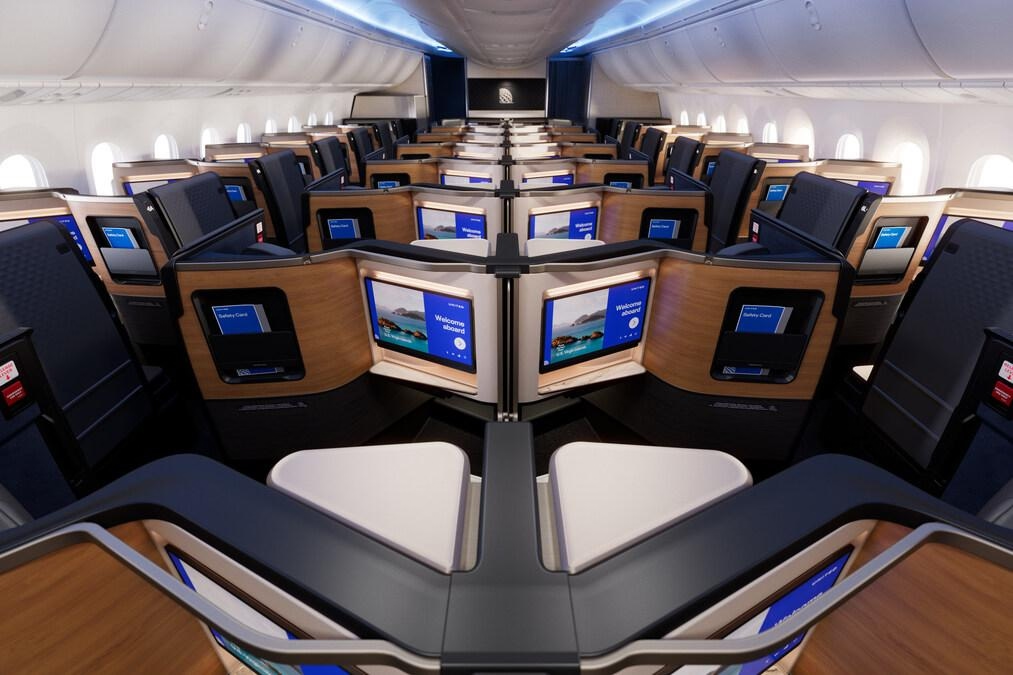
United Airlines Accelerates AI Integration Across Operations
United Airlines is intensifying its commitment to artificial intelligence, with CEO Scott Kirby asserting that the company is “probably doing more AI than anyone” in the aviation sector. Although many of these initiatives remain in developmental stages, the airline’s strategic focus on embedding AI throughout its operations highlights a clear intent to leverage technology for competitive advantage.
Strategic Investment and Operational Impact
United’s significant investment in AI reflects a deliberate effort to enhance operational efficiency and secure a technological edge over its competitors. The airline is exploring a broad spectrum of AI applications, prompting industry analysts to suggest that this proactive approach may compel other carriers to accelerate their own AI adoption in order to remain competitive. By prioritizing cutting-edge technology, United aims to potentially reshape industry standards and strengthen its market position.
The airline has already implemented AI tools to improve customer engagement by providing real-time flight information and to streamline internal workflows, such as managing labor contract updates. Kirby emphasized that AI systems have outperformed human counterparts in both speed and accuracy when handling contract revisions, contributing to smoother operations and improved service delivery.
Challenges in AI Deployment
Despite these advancements, United has encountered challenges in certain AI applications. Kirby acknowledged that efforts to deploy AI for predictive maintenance have not met expectations, underscoring the complexities of applying artificial intelligence within the highly regulated and multifaceted airline environment. These setbacks offer valuable insights as the company continues to refine its AI strategy.
As United Airlines advances its AI initiatives, the broader aviation industry is observing closely. The airline’s aggressive pursuit of artificial intelligence may not only transform its own operations but also influence the future trajectory of technological innovation across the sector.

Etihad Airways Suspends Airbus A380 Flights on Key Route

Aditya Birla Group Seeks Approval for Aircraft Leasing in GIFT City

Qatar Airways Highlights Innovation and Connectivity at Arabian Travel Market 2026

Hong Kong's Five-Year Plan Includes Andrew Fan's Aircraft Parts Processing Hub Proposal

ACIA Aero Leasing Delivers ATR72-600 to Air Nostrum

RTX Appoints Jill Albertelli as Head of Pratt & Whitney

TAT Technologies Joins Beyond Aero Hydrogen Aircraft Program

AURAK Study Highlights Barriers to Air Taxi Adoption in Emerging Economies

Xiamen Air Selects Altitude for 787 Maintenance at Heathrow

Etihad and Swissport Extend Global Partnership
