
将人工智能洞察转化为可执行行动

热门趋势
Categories
United Airlines Shifts Order to Airbus Amid Doubts Over Boeing’s Delivery Schedule
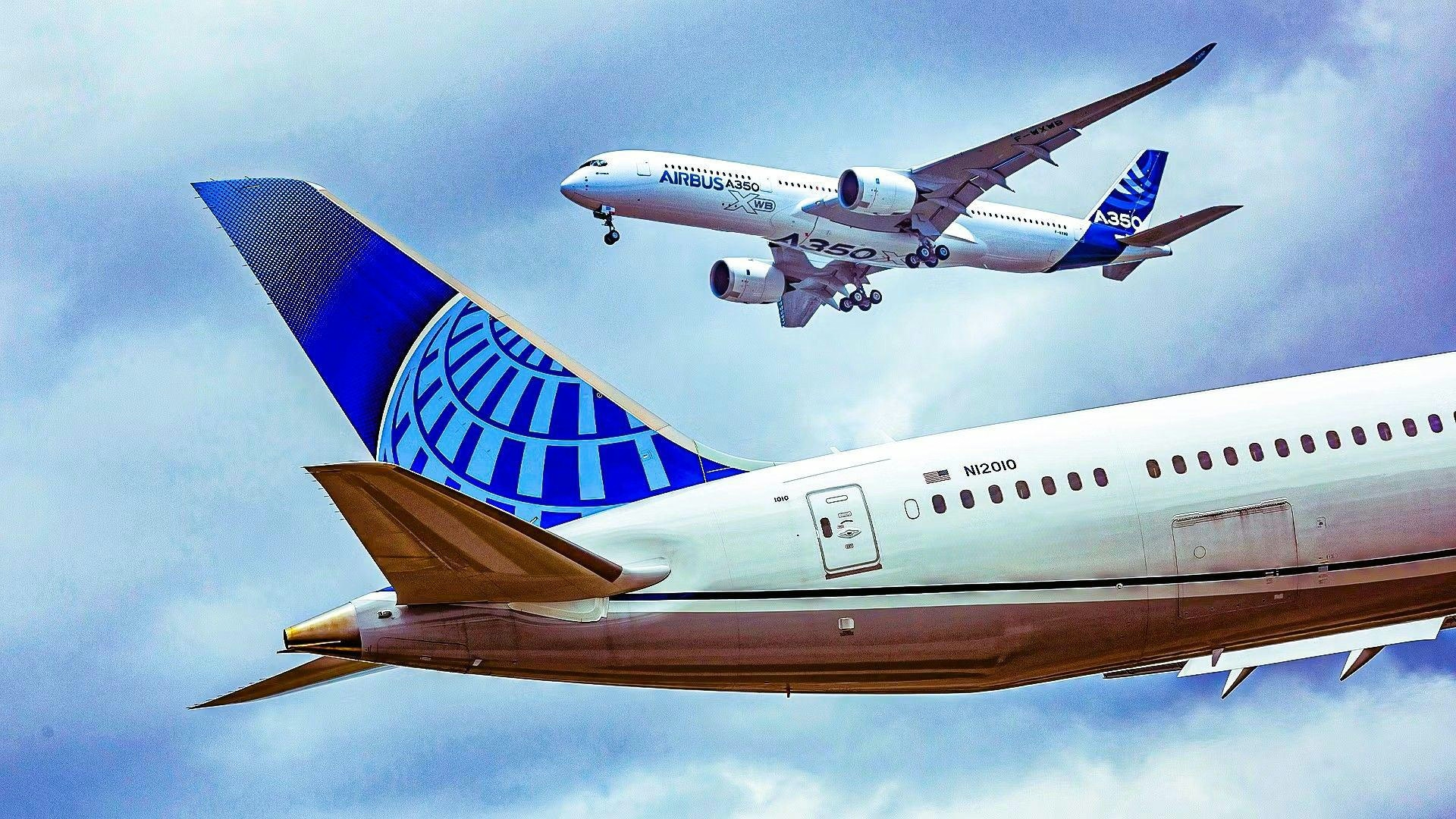
United Airlines Shifts Order to Airbus Amid Doubts Over Boeing’s Delivery Schedule
A Strategic Shift in Fleet Composition
Airbus has steadily increased its foothold among U.S. carriers, securing substantial orders for its A321 aircraft from Delta Air Lines and establishing American Airlines as the world’s largest operator of the A320 family. United Airlines, however, has historically remained aligned with Boeing, largely due to its 2010 merger with Continental Airlines, which left it with an extensive Boeing 737 fleet. For years, United continued to place significant orders for Boeing’s narrowbody jets, including the 737 MAX 8 and 9 models. Notably, United was an early advocate of the 737 MAX 10, committing to purchase 100 units in 2017.
Despite this early commitment, nearly a decade later, United has yet to receive a single 737 MAX 10, as the model remains uncertified and delayed by several years. This growing uncertainty surrounding Boeing’s delivery schedule has compelled United to reassess its fleet strategy. The airline has gradually shifted its order portfolio toward the Airbus A321neo, initially supplementing its Boeing orders but increasingly converting MAX 10 commitments to MAX 9s and expanding its Airbus acquisitions.
Modernization Amid Delivery Challenges
United’s strategic pivot occurs at a pivotal moment. The airline plans to retire 80 older aircraft by 2027, making room for newer, more fuel-efficient Boeing 737 MAX 10s and Airbus A321XLRs. This fleet modernization effort aims to enhance fuel efficiency and operational performance but also introduces risks of disruption should delivery delays persist. Market reactions have been mixed: some investors express concern over Boeing’s reliability, while others regard United’s diversification as a prudent measure to improve fleet flexibility and efficiency.
The narrowbody aircraft market remains fiercely competitive, with the Airbus A320neo and Boeing 737 MAX 8 offering comparable performance and economics. However, Boeing has lacked a direct competitor to the larger A321 since discontinuing the 757 in 2004. The 737-900 and MAX 9 models fall short in capacity and per-seat economics relative to the A321, a gap the MAX 10 was designed to address. Although the MAX 10 can accommodate nearly as many passengers as the A321neo and promises favorable economics, its prolonged certification delays have diminished its competitive edge.
Implications for the Industry
For airlines, the decision between the A321neo and 737 MAX 10 often hinges on price, delivery schedules, and contractual conditions, as operational differences are minimal. United’s initial order for 50 A321XLRs in December 2019—a long-range variant—was independent of Boeing’s setbacks. However, as Boeing’s delays have persisted, United has increasingly favored Airbus orders.
Competitors are closely monitoring United’s shift, which could prompt other carriers to reevaluate their own procurement strategies or intensify pressure on Boeing to resolve its delivery challenges. Additionally, United’s introduction of new seating configurations on the A321XLRs may enhance passenger appeal, potentially influencing market dynamics as airlines compete for customer loyalty through upgraded cabins and improved reliability.
In this evolving environment, United’s fleet decisions highlight the critical importance of manufacturer reliability and delivery certainty, as airlines strive to balance immediate operational demands with long-term strategic objectives.

Etihad and Swissport Extend Global Partnership

Sepehran Airlines B737 Returns to Mashhad After Tyre and Engine Issues

Etihad Deploys Widebody Fleet to Meet Strong Demand

Korean Air Finalizes $36.2 Billion Deal with Boeing

Australia’s RFDS Queensland Section Orders Six King Air 260Cs

Korean Air Finalizes Order for 103 Boeing Jets and Engines
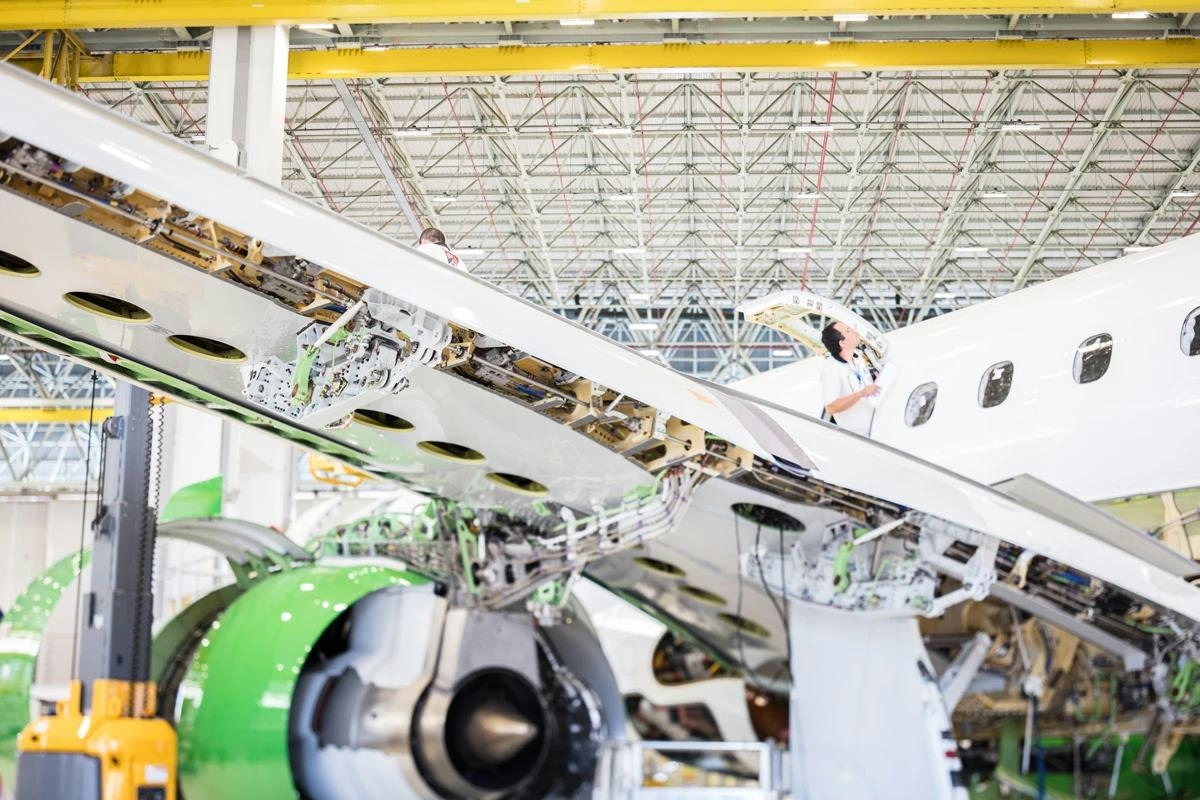
Embraer E195-E2 Features Distinctive Engine Placement Among Regional Jets
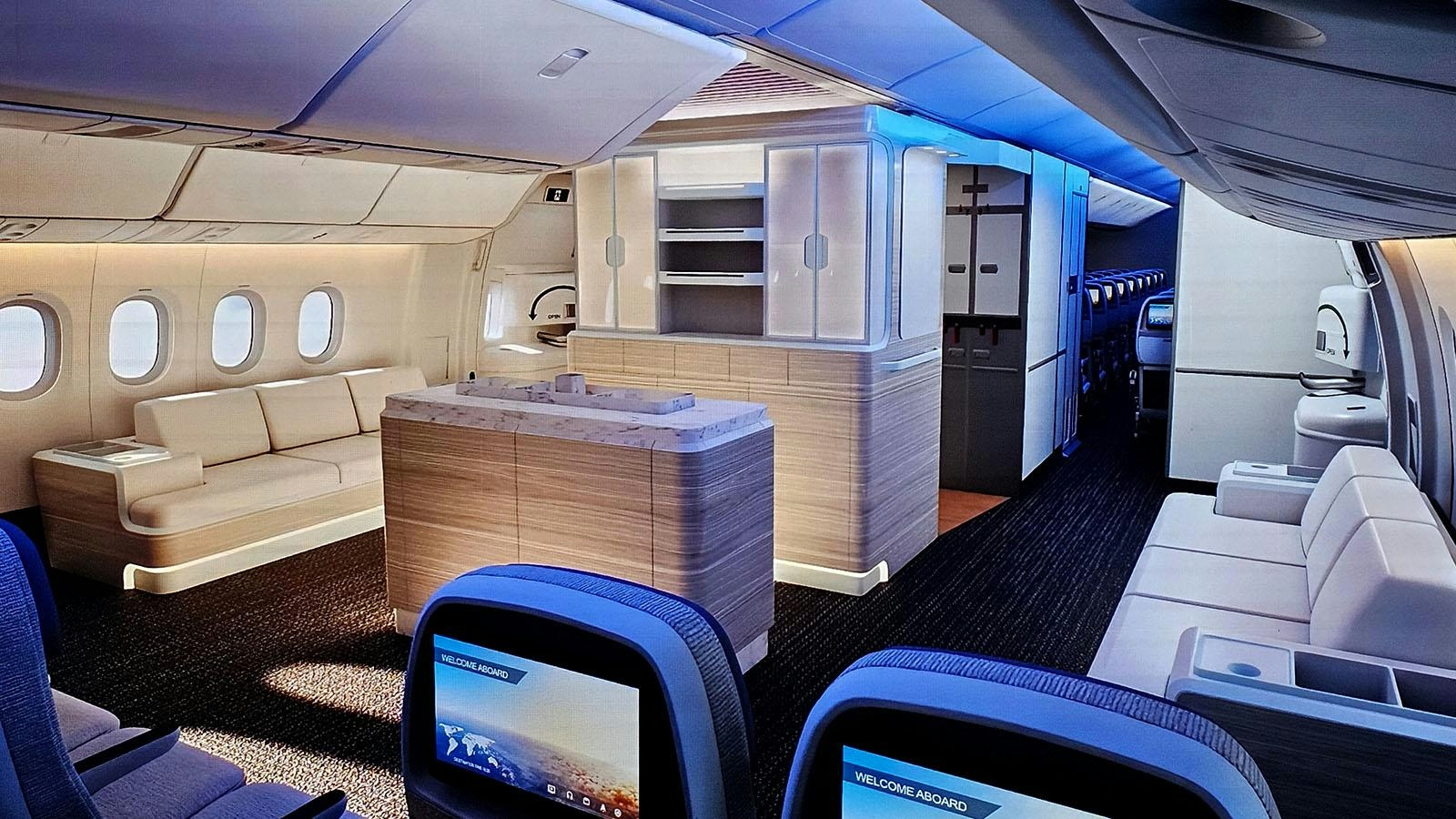
What Passengers Can Expect on Boeing’s New 777X Jet

How Ethiopian Airlines Became Africa’s Leading Carrier Amid Gulf Competition
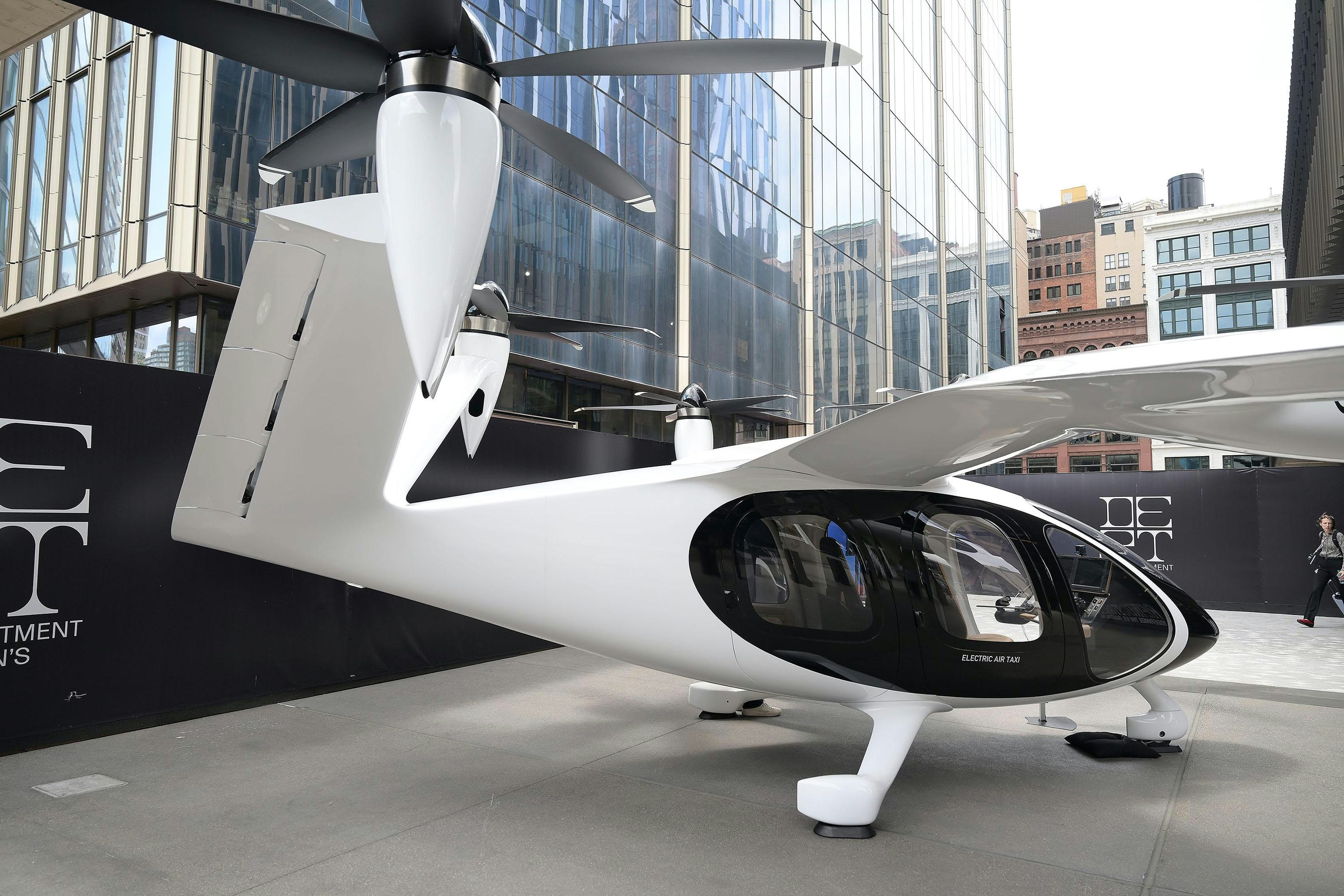
Joby Aviation Extends Autonomous Flight Capabilities with Cross-Country Tour
