
将人工智能洞察转化为可执行行动

热门趋势
Categories
United Airlines Stockpiled Widebody Jets During Pandemic to Expand Mediterranean Routes Ahead of Delta
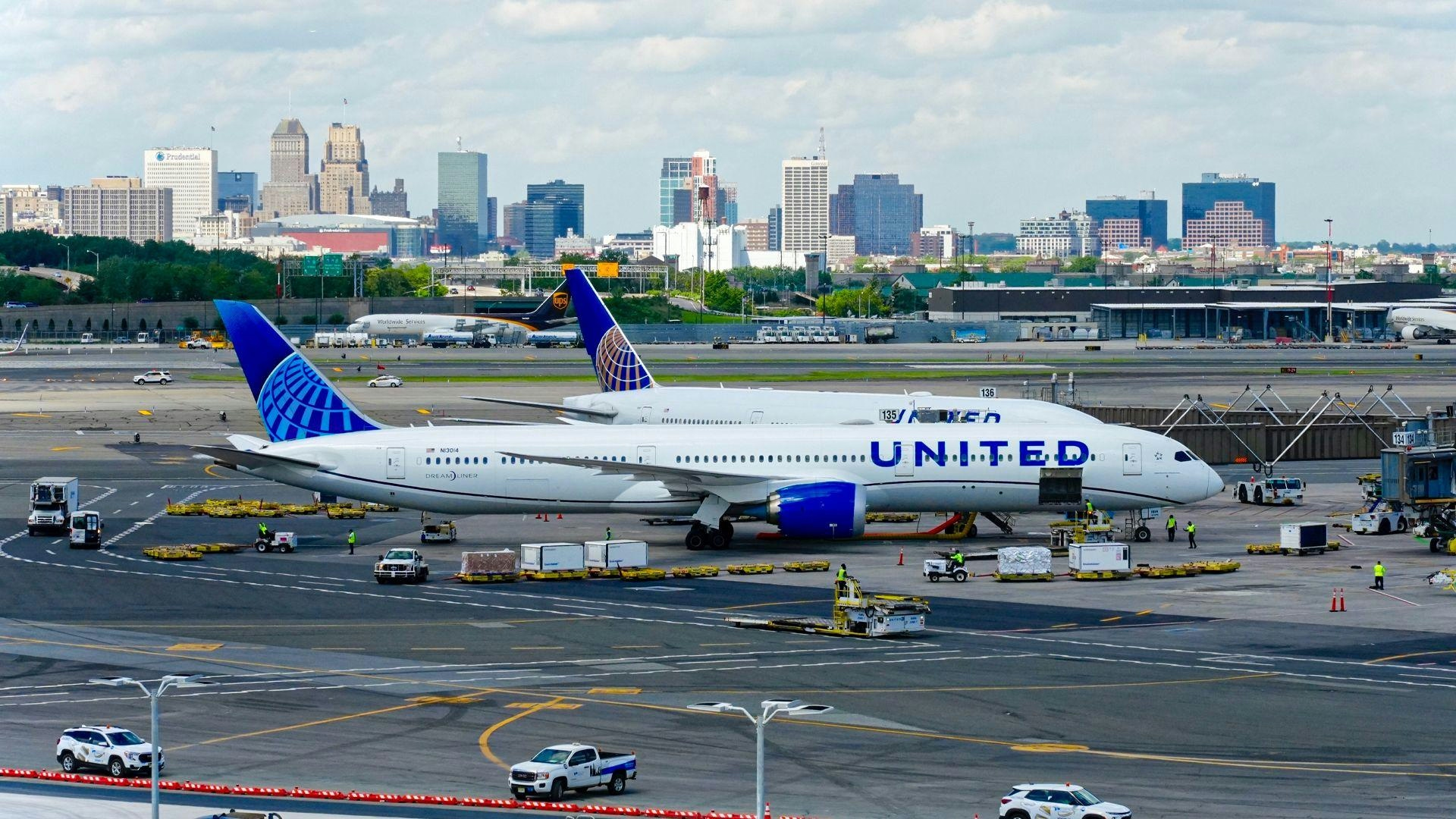
United Airlines Stockpiled Widebody Jets During Pandemic to Expand Mediterranean Routes Ahead of Delta
Strategic Fleet Retention Amid Industry Downturn
The COVID-19 pandemic brought global air travel to an unprecedented halt, with passenger volumes plunging by more than 90%. In response, most major airlines implemented aggressive cost-cutting measures, including the retirement of entire aircraft types to streamline operations and reduce expenses. American Airlines, for instance, phased out its Airbus A330s, Boeing 757s and 767s, Bombardier CRJ200s, and Embraer E190s. Similarly, Delta Air Lines retired its Boeing 777s along with its McDonnell Douglas MD-88 and MD-90 fleets.
United Airlines, however, adopted a markedly different approach. Instead of downsizing its fleet extensively, United chose to retain nearly all of its aircraft, anticipating a swifter recovery in travel demand. This decision positioned the airline advantageously, particularly in transpacific markets, and enabled rapid expansion across the Atlantic, including the launch of new routes such as Newark to Johannesburg.
While United did retire a limited number of older Pratt & Whitney-powered Boeing 757-200s—primarily used for transcontinental flights—the majority of its widebody and long-haul aircraft were placed in storage but remained ready for reactivation. The airline’s 16 Boeing 767-400ERs, distinct from its 767-300ERs in both parts and engine configuration, were also temporarily grounded but subsequently returned to service as demand improved. Unlike some competitors, United’s fleet composition avoided a proliferation of “oddball” aircraft types, reducing the need for further downsizing.
Competitive Advantages and Emerging Challenges
United’s decision to stockpile widebody jets has allowed it to outpace American and Delta in restoring and expanding international services, particularly to Mediterranean destinations. This fleet strategy has provided the airline with a significant operational edge during the recovery phase. However, the broader aviation industry continues to face substantial challenges, including ongoing supply chain disruptions. For example, Qantas has experienced delays in the delivery of Airbus A350-1000 aircraft, a situation that could similarly affect United’s plans to deploy additional aircraft on new routes.
In response to United’s expansion, competitors are also adjusting their strategies. Airlines such as Ethiopian are accelerating growth through new Airbus orders, while American and Delta may recalibrate their route networks and fleet compositions to protect their market shares. Moreover, United’s ambitions are subject to external risks, including regulatory obstacles, geopolitical tensions, and the unpredictable effects of conflicts and bureaucratic complexities on international operations.
Despite these headwinds, United’s pandemic-era fleet management has conferred a distinct advantage in the current recovery. By retaining its widebody jets, the airline is well-positioned to capitalize on emerging opportunities in transatlantic and Mediterranean markets, even as the industry contends with ongoing uncertainty and intensifying competition.

Etihad Airways Suspends Airbus A380 Flights on Key Route

Aditya Birla Group Seeks Approval for Aircraft Leasing in GIFT City

Qatar Airways Highlights Innovation and Connectivity at Arabian Travel Market 2026

Hong Kong's Five-Year Plan Includes Andrew Fan's Aircraft Parts Processing Hub Proposal

ACIA Aero Leasing Delivers ATR72-600 to Air Nostrum

RTX Appoints Jill Albertelli as Head of Pratt & Whitney

TAT Technologies Joins Beyond Aero Hydrogen Aircraft Program

AURAK Study Highlights Barriers to Air Taxi Adoption in Emerging Economies

Xiamen Air Selects Altitude for 787 Maintenance at Heathrow

Etihad and Swissport Extend Global Partnership
