
将人工智能洞察转化为可执行行动

热门趋势
Categories
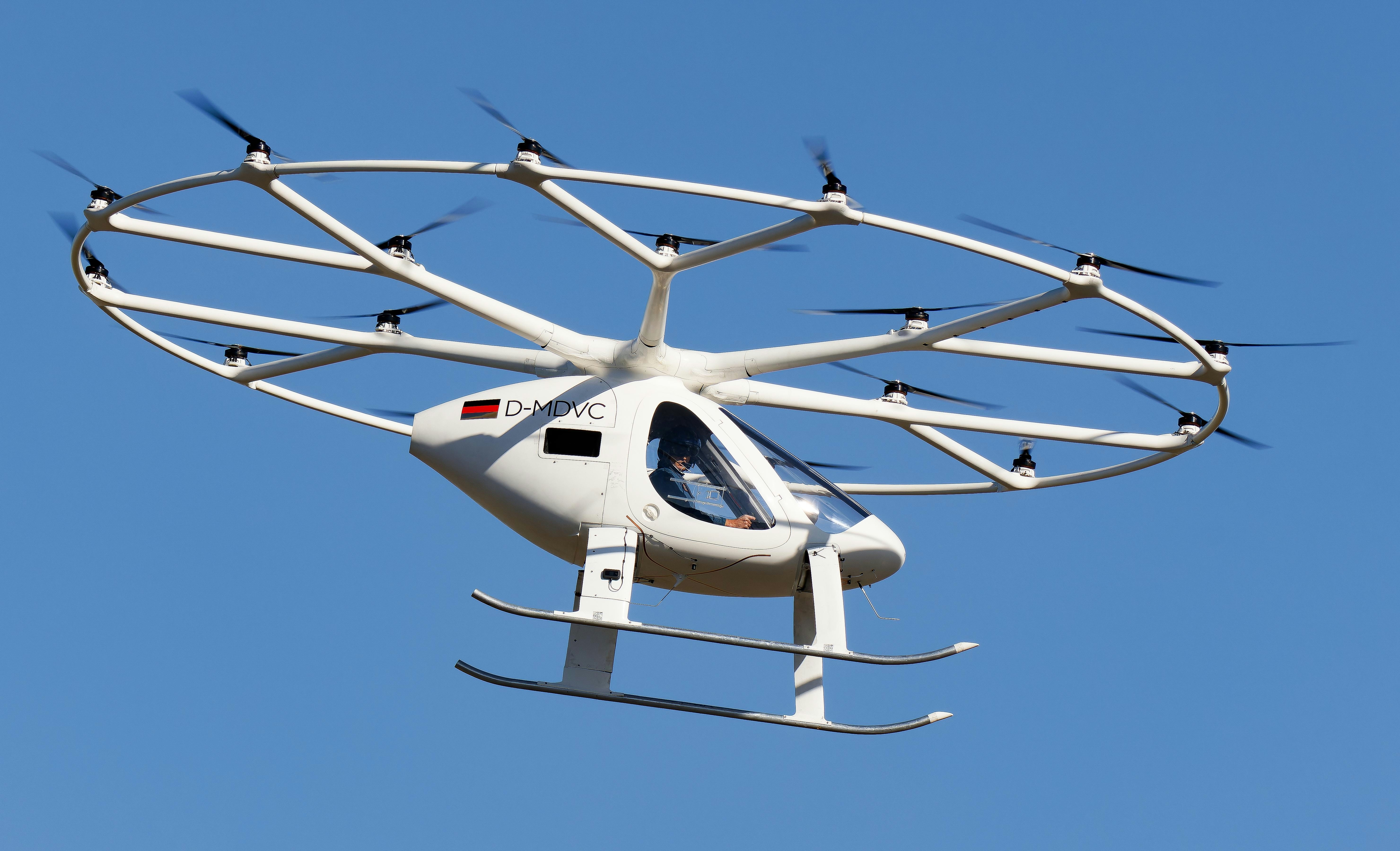
USF Researcher Advances Flying Taxi Project in Florida
USF Researcher Advances Flying Taxi Project in Florida
Flying taxis are edging closer to becoming a practical component of daily transportation as Tampa joins a statewide initiative to incorporate air travel into routine commutes. This effort seeks to utilize low-altitude airspace to alleviate congestion on Florida’s heavily trafficked roads and bridges. While limited service may commence in the near future, a comprehensive rollout will require time for the necessary technology and infrastructure to mature.
Pioneering Urban Air Mobility in Florida
At the forefront of this initiative is a University of South Florida researcher leading efforts to integrate electric vertical takeoff and landing aircraft, or eVTOLs, into the state’s transportation network. These aircraft are designed to operate between 500 and 3,000 feet above ground, traveling at speeds ranging from 100 to 200 miles per hour. They offer a promising alternative to the gridlock that frequently plagues Florida’s highways.
Florida’s rapidly expanding population is placing increasing strain on existing transportation systems, particularly in the Bay Area, where limited bridge access often creates significant bottlenecks. In the absence of a high-speed rail system, experts emphasize the need for innovative solutions. Flying taxis have the potential to reduce commute times and ease the burden on current infrastructure.
Dr. Yu April Zhang, who directs the Advanced Air Mobility program at USF, is spearheading efforts to capitalize on underutilized low-altitude airspace for urban travel. “Can we utilize the low altitude airspace so that people can avoid the congestion on the ground?” Zhang remarked. She anticipates a gradual adoption process, noting, “I envision it will have a slow start… but later, the maturity level will increase.”
USF researchers have identified several potential vertiport locations—dedicated takeoff and landing hubs for air taxis—including Downtown Tampa, Westshore, and Downtown St. Petersburg. Dr. Zhang has also developed AI-driven tools to simulate passenger demand and flight patterns throughout the region, providing critical data to guide implementation.
Regulatory and Market Challenges
Despite the promise of flying taxis, significant challenges remain. Regulatory approval stands as a major hurdle, with multiple companies awaiting federal clearance to launch air taxi services in Florida. The Federal Aviation Administration (FAA) is still finalizing airworthiness certifications for eVTOL aircraft, leaving the timeline for commercial operations uncertain.
The competitive landscape is intensifying, with firms such as Archer Aviation and Joby Aviation embroiled in legal disputes over alleged trade secret theft and concerns regarding foreign affiliations. Other contenders, including Vertical Aerospace and Doroni Aerospace, are preparing to introduce air taxi services in South Florida, contingent upon certification. Meanwhile, the federal government’s pilot program aims to accelerate eVTOL integration, but the development of vertiports and charging infrastructure remains a formidable challenge.
If the FAA grants the necessary approvals, limited flying taxi services could begin as early as the end of this year, with gradual expansion expected as technology advances and infrastructure is established. For now, the Tampa Bay Area stands at the forefront of a transportation revolution that may soon elevate commuters above the persistent traffic below.

Etihad Airways Suspends Airbus A380 Flights on Key Route

Aditya Birla Group Seeks Approval for Aircraft Leasing in GIFT City

Qatar Airways Highlights Innovation and Connectivity at Arabian Travel Market 2026

Hong Kong's Five-Year Plan Includes Andrew Fan's Aircraft Parts Processing Hub Proposal

ACIA Aero Leasing Delivers ATR72-600 to Air Nostrum

RTX Appoints Jill Albertelli as Head of Pratt & Whitney

TAT Technologies Joins Beyond Aero Hydrogen Aircraft Program

AURAK Study Highlights Barriers to Air Taxi Adoption in Emerging Economies

Xiamen Air Selects Altitude for 787 Maintenance at Heathrow

Etihad and Swissport Extend Global Partnership
