
将人工智能洞察转化为可执行行动

热门趋势
Categories
Vertical Aerospace to Develop High-Power Charging for Commercial Electric Aircraft
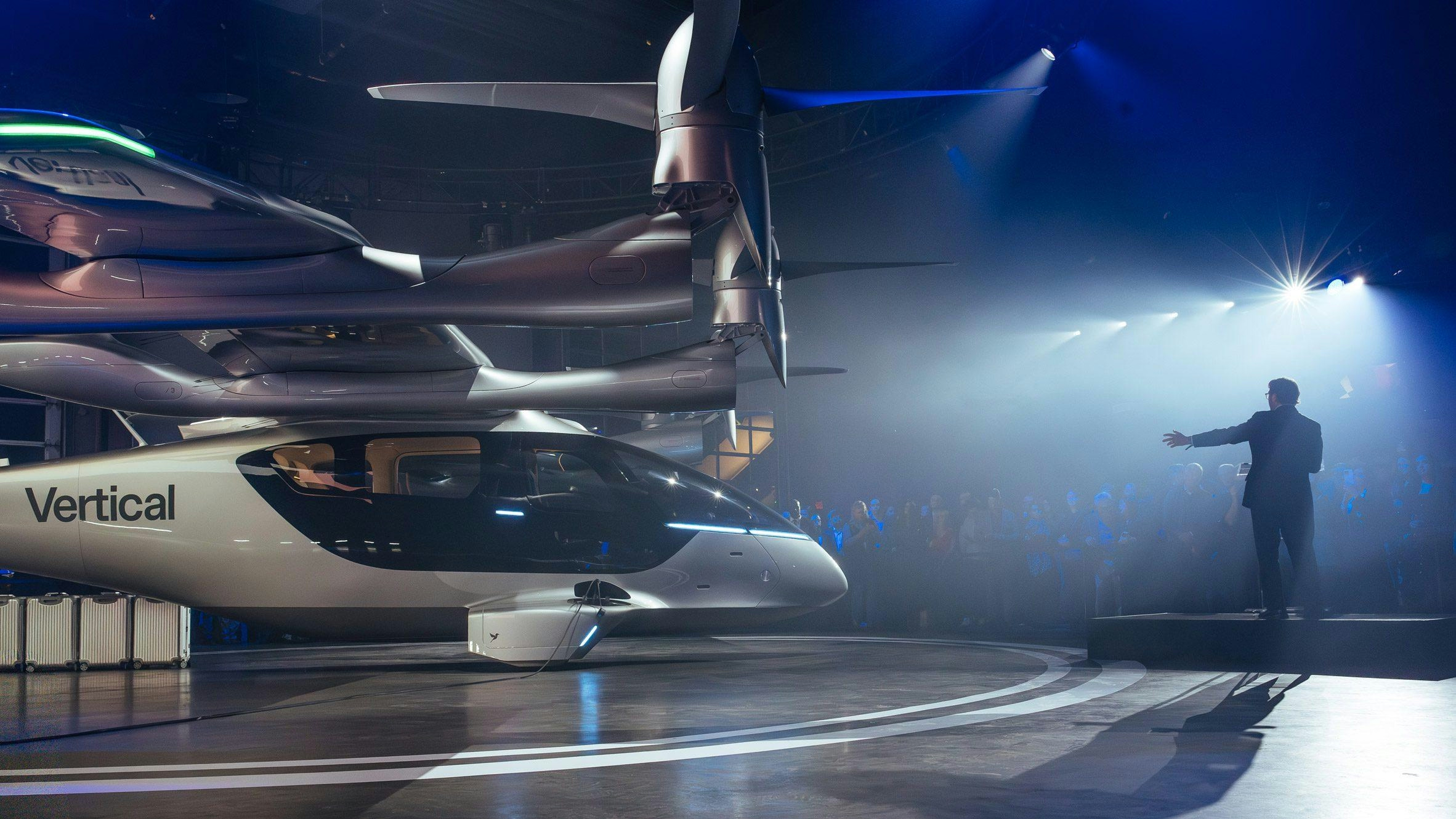
Vertical Aerospace to Develop High-Power Charging for Commercial Electric Aircraft
Vertical Aerospace (NYSE: EVTL), a prominent figure in electric aviation technology, has announced its leadership role in developing advanced high-power charging and thermal management systems for electric aircraft. This initiative is part of the UK Government-backed ECLiPSE (Electrified Charging & Liquid-cooling Provision for Support of E-flights) programme, which seeks to overcome a critical barrier to the commercialisation of electric flight: the establishment of efficient and scalable charging infrastructure.
The ECLiPSE Programme and Its Objectives
The £3.4 million ECLiPSE project, revealed at the Farnborough International Airshow, represents a collaborative effort between Vertical Aerospace, the University of Bath, and engineering consultancy InnCat Ltd. It has secured funding through the UK Department for Transport's Zero Emission Flight Demonstrator programme, with government support of up to £1.75 million, contingent upon grant agreement finalisation. This project is part of a wider £43 million UK Government investment aimed at advancing next-generation aviation technologies.
As electric aviation approaches commercial viability, the demand for rapid and reliable charging solutions intensifies. The ECLiPSE programme focuses on pioneering charging and liquid-cooling technologies intended to lower infrastructure costs, facilitate smoother integration at airport sites, and enable quicker aircraft turnaround times. These technological advancements are anticipated to enhance the commercial feasibility of zero-emission aviation and bolster the UK’s position as a leader in sustainable aerospace innovation.
Challenges and Strategic Partnerships
Despite the promise of these developments, integrating sophisticated charging infrastructure into existing airport environments presents considerable challenges. Retrofitting airports is complex and may lead to delays and increased expenses, while regulatory approval processes for novel technologies tend to be protracted and stringent. Market adoption is expected to be gradual; early adopters may embrace the technology swiftly, but widespread acceptance will depend on proven reliability and cost efficiency.
Vertical Aerospace is addressing these challenges through strategic collaborations with partners such as Near Earth Autonomy and Honeywell Aerospace. By leveraging their expertise, the company aims to accelerate both the development and integration of these systems. These partnerships are designed to navigate technical and regulatory obstacles, positioning Vertical Aerospace competitively as other industry players develop their own charging solutions or form alliances to remain at the forefront.
Stuart Simpson, CEO of Vertical Aerospace, emphasised the importance of infrastructure in enabling commercial electric aviation, stating, “To unlock commercial electric aviation, the industry needs infrastructure that allows aircraft to recharge quickly, operate efficiently, and scale economically. Through ECLiPSE, we're making electric flight operational and commercially viable, while strengthening the UK's leadership in next-generation aerospace innovation.”
Heidi Alexander, Secretary of State for Transport, highlighted the broader impact of the initiative, noting, “The next generation of flight is taking off in the UK. By powering up electric and hydrogen-powered planes, we’re bringing passengers closer to the flights of the future—while creating skilled jobs, backing UK businesses, and spreading economic growth nationwide.”
Broader Implications for Transport Electrification
The technologies emerging from the ECLiPSE programme are expected to have applications beyond aviation, extending across the transport sector as electrification advances. Recent government-supported research from the University of Birmingham suggests that innovations such as flying taxis could enhance connectivity, stimulate economic growth, and contribute to cleaner aviation throughout the UK.
Through the ECLiPSE project, Vertical Aerospace is positioning itself at the forefront of the transition to sustainable commercial electric flight, while actively managing the technical, regulatory, and market challenges that accompany this transformative shift.

Hong Kong's Five-Year Plan Includes Andrew Fan's Aircraft Parts Processing Hub Proposal

ACIA Aero Leasing Delivers ATR72-600 to Air Nostrum

RTX Appoints Jill Albertelli as Head of Pratt & Whitney

TAT Technologies Joins Beyond Aero Hydrogen Aircraft Program

AURAK Study Highlights Barriers to Air Taxi Adoption in Emerging Economies

Xiamen Air Selects Altitude for 787 Maintenance at Heathrow

Etihad and Swissport Extend Global Partnership

Sepehran Airlines B737 Returns to Mashhad After Tyre and Engine Issues

Etihad Deploys Widebody Fleet to Meet Strong Demand

Korean Air Finalizes $36.2 Billion Deal with Boeing
