
将人工智能洞察转化为可执行行动

热门趋势
Categories
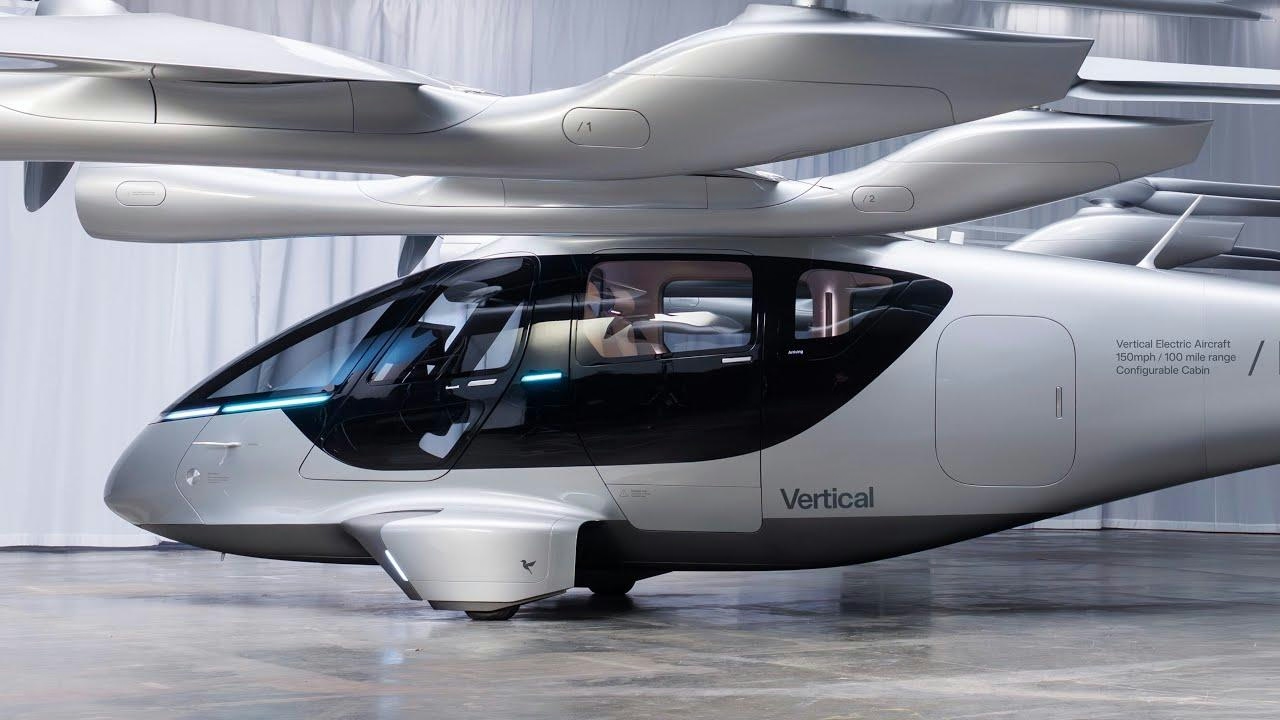
Vertical Aerospace Unveils Valo, Advancing Air Taxi Prospects for 2028
Vertical Aerospace Unveils Valo, Advancing Air Taxi Prospects for 2028
Vertical Aerospace has taken a significant step forward in the electric air taxi sector with the unveiling of its Valo eVTOL aircraft in New York. The company aims to achieve certification and commence commercial operations by 2028, positioning Valo as a near-silent, zero-emission airport shuttle. Targeting pricing comparable to premium ride services such as Uber Black, Vertical Aerospace plans to collaborate with major airlines to integrate the service seamlessly into existing travel networks. This public debut not only elevates the profile of urban air mobility but also highlights the regulatory and commercial challenges that lie ahead, particularly in key markets including Sydney, Melbourne, and Brisbane.
Certification and Regulatory Challenges
Securing regulatory approval from both the Federal Aviation Administration (FAA) in the United States and the relevant UK authorities represents a central hurdle for Vertical Aerospace. The Valo must comply with stringent airliner-level safety standards, necessitating a rigorous process involving design freezes, extensive flight testing, and conformity builds. Critical certification milestones will encompass noise, energy efficiency, and software verification, alongside the establishment of comprehensive maintenance protocols and pilot training programs. Regulatory engagement, including the publication of issue papers and means-of-compliance documents, will serve as important indicators for investors and industry observers.
Despite these efforts, schedule risks persist, particularly concerning supply chain stability, battery performance, and the readiness of ground infrastructure. Any modifications to the certification scope could prolong testing phases, although clear regulatory guidance may help streamline the approval process. The certification journey will be closely monitored as competitors such as Joby Aviation and Airbus advance their own eVTOL initiatives, intensifying the race to bring electric air taxis to market.
Market Dynamics and Investor Considerations
The public introduction of Valo marks a transition from conceptual development to tangible execution, attracting increased media scrutiny and prompting a closer examination of timelines and technical details. For investors, this milestone provides valuable insights for comparing different platforms, battery technologies, and partnership strategies. Companies with clearer certification pathways and stronger financial backing are likely to gain a competitive advantage as the industry approaches the 2028 horizon.
Partnerships with airlines are central to Vertical Aerospace’s commercial strategy. Airlines’ control over airport access, loyalty programs, and passenger flows can generate steady demand for short-haul transfers. Integrating air taxi bookings with existing flight itineraries could reduce friction for travelers and improve load factors, initially focusing on peak airport transfers before expanding to city center and tourism routes. The company’s pricing strategy, which aims to match premium ride-share costs, will be tested against factors such as total cost per seat, utilization rates, maintenance expenses, and energy consumption.
Competitive Landscape and Industry Outlook
Reactions to Valo’s unveiling have been mixed. While the prospect of affordable, zero-emission air taxis is appealing, skepticism remains within traditional aviation circles regarding the feasibility of regulatory timelines and the affordability of such services for the general public. Meanwhile, competitors like Joby Aviation and Airbus are expected to accelerate their own eVTOL developments, emphasizing safety, noise reduction, and operational readiness to maintain their positions in this emerging market.
Australian Market: Regulation, Routes, and Infrastructure
In Australia, the Civil Aviation Safety Authority (CASA) will play a pivotal role in evaluating foreign type certifications, integrating airspace management, and enforcing noise standards. Initial approvals may be confined to specific corridors, with certified vertiports required to support operations. Progress in regulatory frameworks, procurement processes, and infrastructure development will be critical drivers as the industry moves toward commercial launch.
As the 2028 target approaches, the electric air taxi sector faces increasing pressure to deliver on safety, affordability, and operational viability, setting the stage for a transformative period in urban air mobility.

Etihad Airways Suspends Airbus A380 Flights on Key Route

Aditya Birla Group Seeks Approval for Aircraft Leasing in GIFT City

Qatar Airways Highlights Innovation and Connectivity at Arabian Travel Market 2026

Hong Kong's Five-Year Plan Includes Andrew Fan's Aircraft Parts Processing Hub Proposal

ACIA Aero Leasing Delivers ATR72-600 to Air Nostrum

RTX Appoints Jill Albertelli as Head of Pratt & Whitney

TAT Technologies Joins Beyond Aero Hydrogen Aircraft Program

AURAK Study Highlights Barriers to Air Taxi Adoption in Emerging Economies

Xiamen Air Selects Altitude for 787 Maintenance at Heathrow

Etihad and Swissport Extend Global Partnership
