
将人工智能洞察转化为可执行行动

热门趋势
Categories
What World Leaders’ Aircraft Reveal About National Priorities
What World Leaders’ Aircraft Reveal About National Priorities
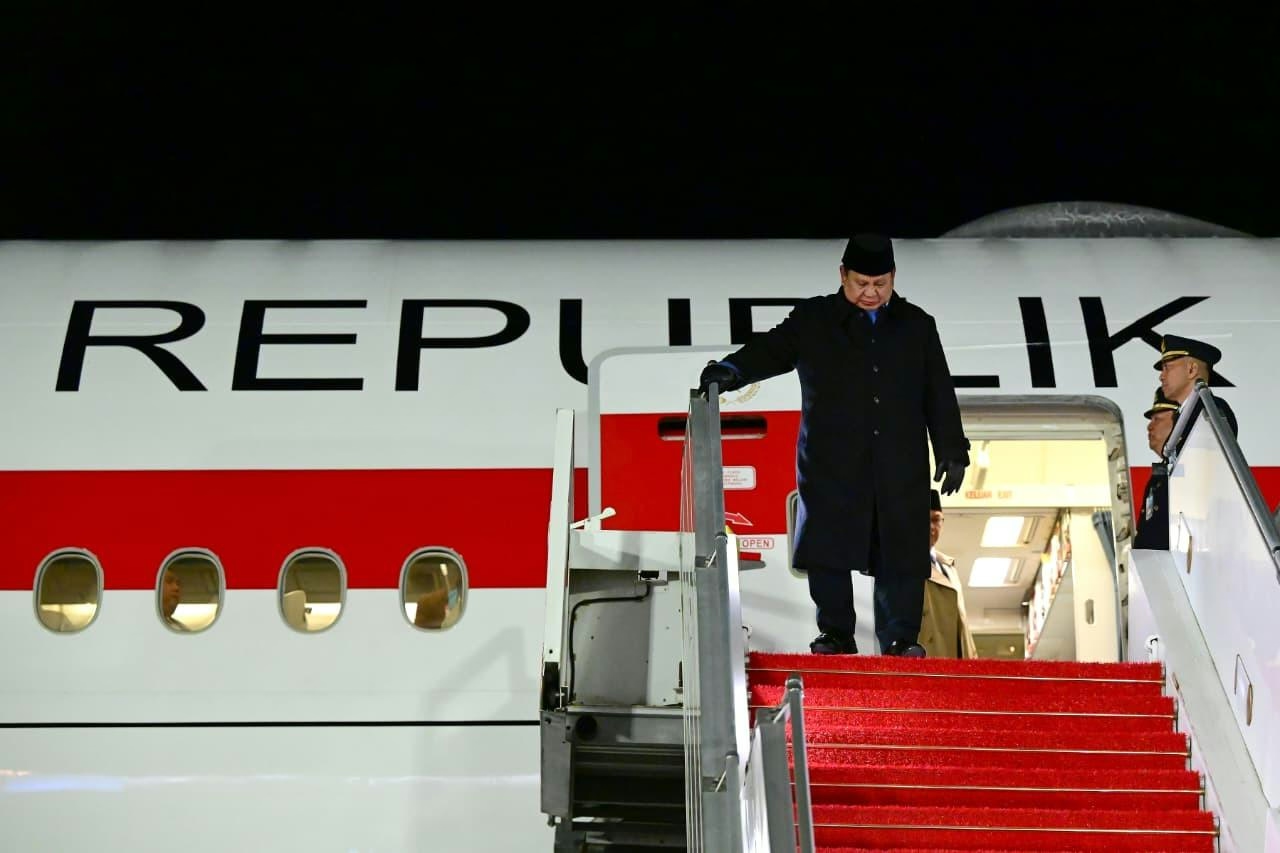
An aircraft transporting a head of state transcends its functional role as mere transportation; it serves as a potent symbol embodying a nation’s priorities, security imperatives, and geopolitical aspirations. The selection of such aircraft varies significantly among countries, influenced by a complex interplay of domestic messaging, defense budgets, and international stature.
Symbolism and National Messaging
In some countries, leaders opt for modesty and egalitarianism by traveling on commercial flights, signaling transparency and accountability to their citizens. The Norwegian Prime Minister’s use of scheduled airlines exemplifies this approach, reflecting democratic values and a commitment to public service. Conversely, other nations choose large, conspicuous aircraft to project power and prestige on the global stage. The United States’ VC-25A, widely recognized as Air Force One when the President is aboard, epitomizes American strength, technological sophistication, and military readiness.
National Industry and Procurement Choices
A notable trend is that countries with established aviation industries tend to select domestically produced aircraft for their leaders, reinforcing national pride and supporting local economies. The U.S. President travels aboard a Boeing 747, the Russian President uses an Ilyushin Il-96, and many European leaders rely on Airbus jets. However, only the United States, Europe, and Russia/Ukraine have developed widebody aircraft suitable for long-haul VIP transport. Consequently, nations such as Brazil and Canada depend on Airbus for their primary VIP jets, while also operating regional aircraft from manufacturers like Embraer and Bombardier for shorter journeys.
Ukraine presents a distinctive case, primarily utilizing an Airbus A319 for presidential travel while maintaining a domestically produced Antonov An-148 for select missions. Although Ukraine possesses the massive Antonov An-124, deploying such an aircraft for VIP transport would be impractical and potentially counterproductive, especially given the country’s ongoing reliance on international financial assistance.
Prestige, Defense Budgets, and Global Challenges
For several countries, the size and technological sophistication of the leader’s aircraft are closely tied to national prestige. The United States’ decision to replace its aging VC-25As with Boeing 747-8 models reflects not only enhanced technical capabilities but also a desire to maintain an imposing global presence. Similarly, China’s top leader currently travels on a modified Boeing 747, as the domestic aviation industry has yet to produce a suitable alternative for this role.
These procurement decisions are deeply influenced by shifts in defense budgets, which are often shaped by military engagements abroad and evolving government priorities. U.S. defense contractors such as Textron have expressed concerns about potential disruptions in government funding and changes in procurement policies. The Pentagon’s increasing openness to commercial contracting models, as highlighted by Lockheed Martin’s leadership, may help sustain defense spending amid ongoing global conflicts.
Market dynamics and competitor strategies are also affected by these developments, with companies adapting to new procurement frameworks and emphasizing cost control. Meanwhile, global instability and domestic political divisions—issues underscored at forums like the McCain Institute Sedona Forum—pose additional challenges to maintaining robust national defense priorities and international influence.
Ultimately, the aircraft chosen to transport world leaders serve as more than mere conveyances; they are reflections of national identity, industrial capability, and the intricate nexus of security, politics, and global perception.

Etihad Airways Suspends Airbus A380 Flights on Key Route

Aditya Birla Group Seeks Approval for Aircraft Leasing in GIFT City

Qatar Airways Highlights Innovation and Connectivity at Arabian Travel Market 2026

Hong Kong's Five-Year Plan Includes Andrew Fan's Aircraft Parts Processing Hub Proposal

ACIA Aero Leasing Delivers ATR72-600 to Air Nostrum

RTX Appoints Jill Albertelli as Head of Pratt & Whitney

TAT Technologies Joins Beyond Aero Hydrogen Aircraft Program

AURAK Study Highlights Barriers to Air Taxi Adoption in Emerging Economies

Xiamen Air Selects Altitude for 787 Maintenance at Heathrow

Etihad and Swissport Extend Global Partnership
