
图像

AeroGenie — 您的智能副驾驶。

问任何问题。分析一切。立即行动。

热门趋势

Categories

Why Did British Aerospace Equip the BAe-146 with Four Engines?
September 19, 2025By ePlane AI
Why Did British Aerospace Equip the BAe-146 with Four Engines?
0
0
British Aerospace
BAe-146
Four Engine Aircraft

Why Did British Aerospace Equip the BAe-146 with Four Engines?

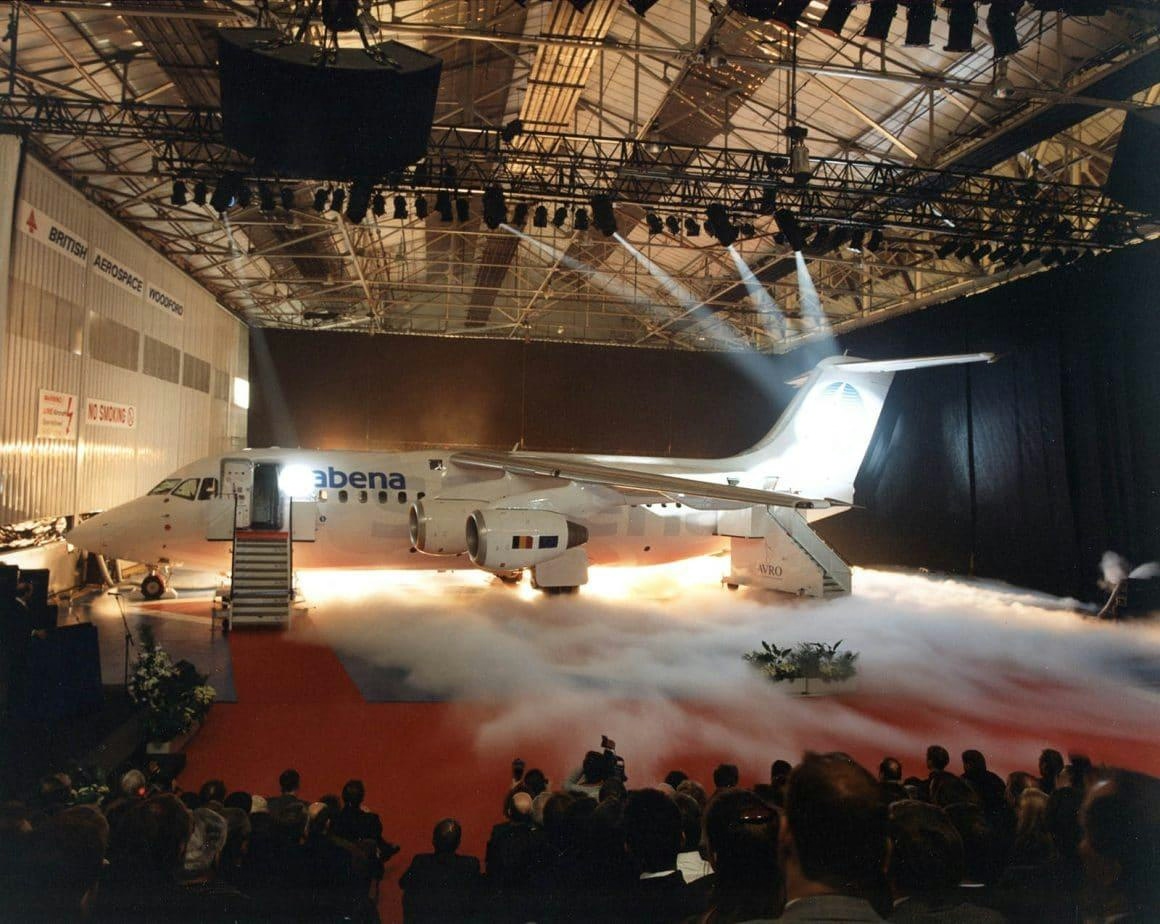
Few aircraft in operation today possess the distinctive profile of the British Aerospace BAe-146. As one of the most unique four-engine jets ever produced, the BAe-146 stands apart in a market where regional aircraft predominantly rely on two engines. While most short-haul commercial flights—typically lasting under two hours and connecting smaller destinations—are served by twin-engine jets or turboprops, the BAe-146 was deliberately designed with a four-engine configuration. This choice marked it as a notable exception in the history of regional aviation.

The Rationale Behind Four Engines

British Aerospace’s decision to equip the BAe-146 with four engines was primarily driven by the need for enhanced redundancy and reliability, both critical considerations in commercial aviation. The four-engine layout offered several operational advantages that distinguished the aircraft from its contemporaries. Most importantly, the presence of four engines provided greater safety margins in the event of an engine failure, a feature that appealed strongly to airlines and regulatory authorities alike. This redundancy contributed significantly to the aircraft’s reputation for reliability.

In addition to safety, the four-engine configuration enabled superior performance under challenging conditions. The BAe-146 was capable of operating effectively in adverse weather and from airports with short or difficult runways, characteristics that made it particularly well-suited for noise-sensitive and operationally restricted airports such as London City. This operational flexibility enhanced the aircraft’s market appeal, attracting operators who prioritized safety and reliability in their regional fleets.

However, the four-engine design also entailed higher manufacturing and maintenance costs compared to twin-engine competitors. Despite these financial challenges, British Aerospace considered the trade-off worthwhile, given the operational benefits and the aircraft’s ability to meet specific market demands.

Overview and Development

Introduced in 1983, the BAe-146 quickly became the most successful British civilian aircraft program, with over 380 units produced. Initially manufactured by British Aerospace, which later became part of BAE Systems, the aircraft evolved into the Avro Regional Jet (RJ) series during the 1990s. This series included improved variants such as the RJ70, RJ85, and RJ100, which built upon the original design’s strengths.

The BAe-146 featured a high-wing cantilever design, four under-wing geared turbofan engines, and retractable tricycle landing gear. It was renowned for its low noise output and strong short-field performance, qualities that contributed to its popularity not only as a regional airliner but also as a private jet and dedicated freighter. Its versatility was further enhanced by the availability of optional gravel kits, allowing operations from rough or semi-prepared airstrips.

Legacy

Although the four-engine configuration was unconventional for a regional jet, it enabled the BAe-146 to establish a unique position in the aviation market. The aircraft’s combination of quiet operation, short-runway capability, and robust safety features made it a preferred choice at airports with stringent operational restrictions. Despite the higher operating costs associated with its design, the BAe-146 exemplified British Aerospace’s commitment to reliability and performance, securing its status as a distinctive and influential aircraft in regional aviation history.

More news
EFW Secures New A330 Freighter Conversion Contract in China

EFW Secures New A330 Freighter Conversion Contract in China

EFW Secures New A330 Freighter Conversion Contract in China Elbe Flugzeugwerke (EFW), the joint venture between ST Engineering and Airbus, has entered into a new contract with Hengqin Winglet Aircraft Technology to convert Airbus A330 passenger aircraft into freighters. This agreement marks Hengqin Winglet’s inaugural involvement in EFW’s Airbus A330 passenger-to-freighter (P2F) programme, signaling an expansion of EFW’s footprint within China’s rapidly growing aviation market. Details of the Conversion Agreement Under the terms of the contract, EFW will conduct the A330P2F conversions at a partner facility located in China, with work slated to commence in mid-2026. The technical planning and certification processes will be overseen from EFW’s headquarters in Dresden, Germany. James Huang, Chief Executive Officer of Hengqin Winglet, emphasized the strategic nature of the collaboration, highlighting the company’s expertise in leasing, trading, and technical aircraft management as key factors in their decision to convert their A330 aircraft into advanced freighters. The deal arrives amid robust growth in China’s aviation sector, driven primarily by surging demand in express logistics and cross-border e-commerce. This dynamic is prompting fleet expansions among operators and lessors, positioning China as a critical market for freighter conversions. Jordi Boto, CEO of EFW, expressed enthusiasm about welcoming Hengqin Winglet to the EFW family, underscoring the A330P2F as a leading solution for the medium-sized air freighter segment and anticipating collaborative efforts to expand Hengqin Winglet’s converted fleet. Challenges and Market Implications Despite the promising outlook, EFW faces notable challenges in executing this contract. The company must contend with competition from other aircraft conversion specialists eager to capitalize on the region’s burgeoning demand. Additionally, managing the conversion process at a partner site in China introduces logistical complexities, including ensuring adherence to local aviation regulations and maintaining consistent quality standards across international operations. Industry analysts suggest that this contract may stimulate further demand for freighter conversions as China’s aviation market continues to expand. Competitors are likely to respond by enhancing their conversion capabilities or pursuing similar agreements within the region. While concerns persist regarding potential overcapacity in China’s widebody market, Airbus maintains a positive long-term outlook on demand, a perspective that indirectly supports EFW’s strategic positioning and the sustained interest in aircraft conversions. With this latest contract, EFW reinforces its presence in China, aligning itself to address the evolving requirements of the global air cargo industry.
BlueFive Capital Launches Aircraft Leasing Platform Aiming to Raise Over $1 Billion

BlueFive Capital Launches Aircraft Leasing Platform Aiming to Raise Over $1 Billion

BlueFive Capital Launches Aircraft Leasing Platform with Ambitious Fundraising Target BlueFive Capital has unveiled BlueFive Leasing, a new aircraft leasing and asset management platform headquartered in Muscat, Oman. The initiative marks the firm’s entry into the aviation finance sector, with plans to raise over $1 billion through its first investment vehicle, BlueFive Wings Fund I. The fund will focus on acquiring commercial aircraft assets, aiming to capitalize on growing demand in key global markets. Strategic Foundations and Market Focus Founded by Hazem Ben-Gacem, formerly co-head at the Middle Eastern alternative investment firm Investcorp, BlueFive Capital established its Oman-based entity, BlueFive Capital Majan SPC, in October of the previous year. The platform benefits from strong local backing, with Oman’s sovereign investment funds among its founding shareholders. BlueFive Leasing is structured as a partnership between BlueFive Capital and one of Oman’s sovereign institutions, reflecting a strategic alignment with regional investment priorities. The platform intends to leverage sustained growth in air travel across the Middle East, North Africa (MENA), and Asia by leasing a diversified fleet of narrow-body and wide-body aircraft. Its client base will include a broad range of high-quality airlines worldwide, positioning BlueFive Leasing to serve markets with expanding passenger traffic and evolving fleet requirements. Navigating Market Challenges and Competitive Dynamics BlueFive’s launch comes amid a period of heightened geopolitical and economic uncertainty, which has introduced volatility into the aviation sector. Industry leaders, including AerCap CEO Aengus Kelly, have urged caution against overreacting to global disruptions, emphasizing the need to maintain investor confidence in aviation finance. Despite these challenges, demand for dollar-denominated aviation assets remains strong. For instance, JetLoan Capital has reported $250 million in transactions for business jets and yachts slated for delivery in 2025, underscoring ongoing investor appetite. The competitive environment is intensifying as established lessors like AerCap seek to secure limited inventories of serviceable aircraft. Concurrently, airlines such as Vietnam Airlines are expanding their fleets through dry-leasing arrangements, highlighting the persistent demand for flexible leasing solutions. While market responses to new entrants like BlueFive Leasing may vary, the sector’s resilience to economic fluctuations and the enduring need for aircraft leasing services suggest potential for sustainable growth. BlueFive’s strategy to offer a diversified fleet to a global clientele positions the platform to navigate both the opportunities and challenges inherent in the dynamic aviation finance landscape.
Air Canada Orders Airbus A350-1000 to Update Fleet

Air Canada Orders Airbus A350-1000 to Update Fleet

Air Canada Orders Airbus A350-1000 to Modernize Fleet Amid Financial and Competitive Pressures Air Canada has announced a significant fleet modernization initiative with an order for eight Airbus A350-1000 aircraft, along with options for an additional eight planes. The deal, valued at up to $3 billion if fully exercised, aims to enhance the airline’s cost efficiency and passenger experience. Deliveries are expected to commence in the second half of 2030. This acquisition complements Air Canada’s existing commitments to 30 Airbus A321XLRs, 23 Airbus A220s, and 14 Boeing 787-10 Dreamliners, reflecting a comprehensive strategy to update its fleet and maintain competitiveness in the global aviation market. As Canada’s largest airline, Air Canada, together with its low-cost subsidiary Rouge and regional partners, serves nearly 50 million passengers annually. The carrier plays a pivotal role as a sixth-freedom operator, facilitating long-haul travel between the United States and international destinations through Canadian hubs. Financial Health and Market Position Air Canada’s recent financial performance reveals a mixed outlook. The airline has experienced a robust revenue growth of 48.1% over the past three years, indicating a strong recovery trajectory following pandemic-related disruptions. Despite this growth, profitability remains constrained, with a gross margin of 21.14%, an operating margin of 1.55%, and a net margin of -1.35%. The company’s financial leverage is considerable, as evidenced by a debt-to-equity ratio of 5.4. Liquidity ratios, including a current ratio of 0.59 and a quick ratio of 0.56, suggest potential short-term financial constraints. Furthermore, an Altman Z-Score of 0.64 places Air Canada within the financial distress zone, signaling possible challenges ahead. From a valuation standpoint, the airline’s price-to-sales ratio stands at 0.3, below its historical median of 0.4, indicating modest undervaluation. The price-to-book ratio of 2.66 also remains below its historical median. Analyst consensus reflects a moderate buy sentiment, with an average recommendation rating of 2.2. Technical indicators, such as a relative strength index (RSI) of 59.44 and a slightly elevated 20-day simple moving average (SMA-20), point to a neutral trading trend. Competitive and Operational Challenges The introduction of the Airbus A350-1000 aircraft entails substantial upfront capital expenditure and ongoing maintenance costs, which may place additional pressure on Air Canada’s balance sheet. The integration of these new widebody jets will require extensive logistical coordination and staff retraining, adding layers of operational complexity. The order also occurs within a highly competitive environment. Other major carriers, including Delta Air Lines, have similarly invested in Airbus A350 aircraft, intensifying competition on key international routes. Additionally, rival airlines such as Air Cambodia have pursued fleet modernization through orders for Boeing 737 Max aircraft, underscoring a broader industry trend toward upgrading fleets to improve efficiency and passenger appeal. Risk Assessment Investors should be mindful of Air Canada’s elevated risk profile. The stock exhibits high volatility, with a beta of 2.09, and the airline remains vulnerable to sector-specific risks such as fluctuating fuel prices and evolving regulatory frameworks. The Beneish M-Score of -2.94 indicates a low probability of earnings manipulation, yet the company’s financial metrics and the challenging industry environment warrant cautious consideration. As Air Canada advances its fleet renewal program, its capacity to manage costs effectively, integrate new aircraft seamlessly, and navigate an increasingly competitive landscape will be crucial to sustaining its recovery and achieving long-term growth.
Daedalus Withdraws Wilmington Airport Lease Proposal Amid ICE Controversy

Daedalus Withdraws Wilmington Airport Lease Proposal Amid ICE Controversy

Daedalus Withdraws Wilmington Airport Lease Proposal Amid ICE Controversy Daedalus Aviation, a contractor for U.S. Immigration and Customs Enforcement (ICE), has officially withdrawn its proposal to lease hangar space at Wilmington Airport, the Delaware River and Bay Authority (DRBA) announced on Wednesday. This decision comes amid escalating public and political opposition linked to the company’s involvement in federal immigration enforcement, highlighting broader national tensions surrounding the use of airports for deportation operations. Public Backlash and Political Response The DRBA, a bi-state agency responsible for transportation infrastructure in Delaware and New Jersey, had intended to review Daedalus’ lease application at its forthcoming board meeting. However, the proposal quickly sparked controversy after activists identified it on the DRBA’s December agenda. Advocacy groups and Delaware Senate Democrats called on Governors Matt Meyer of Delaware and Mikie Sherrill of New Jersey to block the agreement, citing concerns over Daedalus’ role in ICE deportations and recent contentious enforcement actions, including two fatal shootings by federal agents in Minneapolis last month. Gayle Gibson of the Delaware Stop Avelo Coalition remarked, “This got so much attention because of outrage over recent enforcement actions by federal immigration agents. Just looking at what the company is involved with the Department of Homeland Security was not the type of operation we wanted.” Rebekah Rodriguez, also from the coalition, emphasized the political stakes, stating, “If the governors will permit Daedalus to operate here despite this, they need to explain to the public why this doesn’t conflict with the other values they profess to hold. This is not a neutral decision.” Both Governors Meyer and Sherrill have publicly criticized recent Department of Homeland Security immigration enforcement actions. Holding veto power over DRBA board decisions, they were briefed on the proposed lease. Sherrill’s spokesperson, Maggie Garbarino, expressed that the governor “had serious concerns about this proposal and is pleased to learn that Daedalus is no longer pursuing this lease.” Mila Myles, communications director for Governor Meyer, acknowledged the company’s withdrawal and affirmed that the governor “will continue to work with the DRBA to ensure that any opportunities at ILG responsibly advance Delaware’s economic interests.” Myles further added, “We will also encourage the DRBA to take appropriate actions in the future to ensure that the airport is not used to circumvent the Constitutional obligation of due process.” Corporate Ties and Industry Implications Daedalus reportedly generated $140 million last year through sales of aircraft to the Department of Homeland Security for ICE deportations. Additionally, executives from Daedalus control a separate firm holding a nearly $1 billion contract supporting so-called “self deportations.” The company’s association with controversial immigration policies has not only provoked activist opposition but also raised concerns among investors and market analysts increasingly attentive to firms linked to enforcement operations. In the wake of Daedalus’ withdrawal, some competitors may seek to position themselves as more socially responsible alternatives. The controversy surrounding Daedalus has also intensified tensions at airports nationwide. Recent protests against ICE operations have resulted in arrests of demonstrators at facilities such as Minneapolis-Saint Paul International Airport, underscoring the legal and reputational risks companies face when pursuing similar agreements. Daedalus’ decision to withdraw its lease proposal marks a significant moment in the ongoing debate over the intersection of immigration enforcement and public infrastructure, with potential ramifications for future airport operations and industry practices.
Former Pilots Lead Innovation at Axial Aero

Former Pilots Lead Innovation at Axial Aero

Former Fighter Pilots Lead Innovation at Axial Aero Amid Industry Challenges Transitioning from military aviation to aerospace entrepreneurship, the founders of Axial Aero are applying their extensive experience as former Indian Air Force pilots to address critical deficiencies in pilot training technology. Both co-founders, alumni of the National Defence Academy, bring decades of combined operational expertise. Following early retirements, one pursued an MBA in Aviation from Concordia University in Canada, while the other continued flying for major Indian airlines. Their third partner, an engineer and longtime associate, completes the founding team, blending technical and operational insights. From Military Cockpits to Aviation Innovation The founders’ journey from fighter jets to startup leadership was influenced by a combination of professional ambition and personal circumstances. After holding aviation management roles across Africa, the United States, and Qatar, one founder returned to India due to a family health emergency and transitioned into IT leadership. The onset of the COVID-19 pandemic in 2020 provided the impetus for the trio to collaborate on developing an aerospace product. Initially focused on propulsion systems, budget limitations common to bootstrapped startups necessitated a strategic pivot toward flight simulators. Drawing on their firsthand knowledge, the founders identified a significant shortcoming in conventional six-degrees-of-freedom Stewart platform simulators. These systems apply uniform motion across all axes, whereas actual aircraft—particularly fighters and helicopters—rely predominantly on rotational rather than translational movement. This discrepancy, well documented by the International Civil Aviation Organisation (ICAO) and Indian armed forces, had yet to be effectively addressed by existing industry solutions. Innovation Amidst a Competitive Landscape The global flight simulator market is dominated by three major companies, with unit costs ranging between $10 million and $15 million. Recognizing an opportunity to innovate, Axial Aero self-funded the development of a prototype simulator designed to more accurately replicate real-world flight dynamics. The founders emphasized the importance of pilot involvement in evaluating new training technologies. Their simulator underwent testing and validation by the Indian Air Force, Navy, and Army, which facilitated further development and submission to the IDEX defense innovation program. Despite these advances, Axial Aero faces considerable challenges in scaling its innovations. The electric aircraft sector is intensely competitive, with established players such as Elektra Solar expanding rapidly. Industry analysts remain skeptical about the scalability and cost-effectiveness of emerging entrants like Axial Aero, particularly as traditional aerospace giants including Airbus and Boeing intensify research and development efforts to maintain their market dominance amid evolving electric aircraft trends. The broader aerospace industry is also preparing for significant transformation. By 2026, increased production rates and critical decisions regarding future aircraft models are expected to reshape the market landscape. These developments may indirectly affect Axial Aero’s positioning as larger manufacturers adjust strategies and allocate resources in response to technological advancements and shifting market demands. Nonetheless, the founders of Axial Aero remain steadfast in their mission to bridge the gap between authentic flight dynamics and simulator training. Their unique combination of operational, technical, and business expertise highlights both the potential and complexity inherent in innovating within a rapidly evolving aerospace sector.
Delhi-NCR Air Taxi Plan Reviewed to Reduce Travel Time

Delhi-NCR Air Taxi Plan Reviewed to Reduce Travel Time

Delhi-NCR Air Taxi Plan Reviewed to Reduce Travel Time Evaluating the Feasibility of an Air Corridor The Confederation of Indian Industry (CII) has released a report assessing the viability of establishing an air corridor connecting Gurugram, Connaught Place in central Delhi, and the forthcoming Noida International Airport at Jewar. This proposed route targets some of the most congested areas within the National Capital Region (NCR), where daily road traffic frequently extends travel times to as long as two and a half hours. The air taxi initiative aims to dramatically reduce this journey to under 30 minutes, offering a swift alternative to the region’s heavily burdened road networks. The report, titled *“Navigating the Future of Advanced Air Mobility in India”* and launched by Civil Aviation Minister Rammohan Naidu Kinjarapu, positions Advanced Air Mobility (AAM) as a transformative solution for urban transportation challenges. It advocates for the creation of a pilot corridor for air taxis, which could enable India to circumvent traditional infrastructure constraints, alleviate urban congestion, and establish itself as a global leader in next-generation mobility technologies. Central to this vision is the deployment of electric vertical take-off and landing (eVTOL) aircraft, which promise a clean, high-speed alternative to conventional road and rail travel. This approach aligns with India’s Net-Zero 2070 objectives by promoting zero-emission technology. Industry Challenges and Market Dynamics Despite the promising outlook, the implementation of the air taxi corridor faces significant hurdles. The sector is marked by intense competition among key players such as Archer Aviation and Joby Aviation, both of which are engaged in ongoing litigation over trade secrets. This legal dispute highlights the competitive and potentially contentious environment surrounding regulatory approvals and market entry. Archer Aviation’s recent attempt to dismiss Joby’s lawsuit underscores the complexities that could delay the regulatory process and affect the pace at which new entrants can establish operations. These industry dynamics are likely to influence market responses to the Delhi-NCR air taxi plan. As companies vie for first-mover advantage, regulatory challenges and legal conflicts may impede the timely rollout of air taxi services in India. Furthermore, the broader aviation sector is contending with external pressures, including geopolitical uncertainties and intensified competition. Industry leaders such as Korean Air have issued warnings about potential difficulties ahead, reflecting a cautious outlook for the sector. Prospects for Advanced Air Mobility in India Despite these obstacles, the CII report maintains an optimistic stance on the potential of advanced air mobility to revolutionize urban transport in India. By significantly reducing transit times and lowering emissions, the proposed air taxi corridor could provide a high-impact solution to the chronic congestion that plagues the NCR. The realization of this vision, however, will depend on effectively navigating the regulatory landscape and addressing the competitive challenges inherent in this emerging industry.
Air Canada Orders Eight Airbus A350-1000s

Air Canada Orders Eight Airbus A350-1000s

Air Canada Commits to Eight Airbus A350-1000s in Fleet Modernization Drive Air Canada has confirmed a firm order for eight Airbus A350-1000 aircraft, with options to acquire an additional eight, marking a significant step in its ongoing fleet renewal strategy. Deliveries are scheduled to commence in the latter half of 2030. The airline anticipates that the new widebody jets will reduce fuel consumption by approximately 25% compared to its older models, enhancing long-haul capacity and operational efficiency, particularly on transatlantic routes between Canada and Europe. Enhancing Efficiency and Passenger Experience The Airbus A350-1000 is distinguished by its advanced composite airframe and state-of-the-art engines, which contribute to a lighter structure, extended range, and quieter cabins. Air Canada expects these aircraft to deliver substantially lower seat costs and improved emissions performance, aligning with the airline’s goals to serve both premium and leisure travelers on routes with significant business demand. The management has emphasized that this acquisition is pivotal to refreshing its widebody fleet, aiming to reduce unit costs while advancing sustainability objectives. Additionally, standardizing the fleet with newer aircraft models is projected to simplify maintenance and training processes over time. Implications for the European Market and Cargo Transport The order holds particular significance for Swiss investors and the broader European market, underscoring ongoing demand for efficient widebody aircraft and the potential for enhanced service reliability on key Canada-Europe corridors. Switzerland, strategically located along these transatlantic routes, is expected to benefit from increased capacity and improved scheduling for flights to and from Zurich and Geneva. The A350-1000’s fuel efficiency and larger seating capacity may contribute to fare stabilization, supporting both inbound tourism and outbound family travel. Furthermore, the aircraft’s improved cabin comfort and higher humidity levels are likely to attract premium leisure and business travelers seeking an elevated long-haul experience. Cargo capacity is another critical consideration. The A350-1000’s robust payload and range capabilities are well-suited to Swiss exporters in industries such as pharmaceuticals, machinery, and luxury goods. Enhanced fuel efficiency will help maintain cargo viability amid pressure on yields, thereby sustaining vital trade links between Swiss manufacturers and North American markets. Financial and Industry Context Despite the strategic advantages, the order presents financial challenges. The substantial upfront costs and long-term financial commitments associated with acquiring new aircraft could impose strain on Air Canada’s balance sheet, particularly in a volatile market environment. Market reactions have been mixed; some analysts regard the purchase as a forward-looking investment in fleet renewal and long-haul competitiveness, while others express caution regarding its financial implications. Competitor responses have already begun to surface. Major carriers, including Delta Air Lines, have recently announced additional orders for Airbus A330 and A350 widebody jets, reflecting a broader industry trend toward next-generation aircraft adoption. Concurrently, Boeing’s ongoing difficulties, as highlighted in recent financial disclosures, may further influence market dynamics and shape airline strategies within the long-haul segment. For Airbus, the Air Canada order strengthens the A350 backlog, providing long-term production visibility and stability for suppliers across Europe. With delivery schedules extending well into the next decade, the deal offers reassurance to investors seeking consistent cash flow from original equipment manufacturers. Air Canada’s commitment to the A350-1000 thus signals confidence in the recovery of international travel demand post-pandemic, a firm dedication to sustainability, and alignment with a wider industry shift toward modern, efficient widebody fleets—developments that continue to attract close attention from investors and competitors worldwide.
American Airlines Expands Long-Haul Routes with Widebody Aircraft Alongside Major North American Carriers

American Airlines Expands Long-Haul Routes with Widebody Aircraft Alongside Major North American Carriers

American Airlines Expands Long-Haul Routes with Widebody Aircraft Amid Intensifying Competition American Airlines is set to join a growing cohort of major North American carriers—including Delta Air Lines, United Airlines, Air Canada, and WestJet—in expanding their long-haul flight offerings through the deployment of widebody aircraft. This strategic initiative, scheduled to accelerate in 2026, represents a significant development in the aviation industry as airlines seek to enhance the international travel experience and broaden their global networks. Strategic Fleet Expansion and Market Competition The renewed emphasis on long-haul routes is driven by the desire to offer passengers access to a wider range of destinations coupled with improved comfort. Widebody aircraft, characterized by their twin-aisle design and spacious cabins, are central to this strategy. These jets provide increased passenger capacity and elevated onboard amenities, enabling airlines to serve high-demand international markets more efficiently. American Airlines’ expansion occurs within a highly competitive environment. United Airlines, for instance, has acknowledged challenges in the Chicago market, where it faces strong competition from American. In response, United plans to introduce 20 new Boeing 787 aircraft in 2026, signaling a substantial enhancement of its international operations. Concurrently, Delta Air Lines is aggressively targeting premium long-haul travelers, having placed orders for up to 60 Boeing 787-10s alongside 31 Airbus A330 and A350 widebody jets. These significant fleet investments highlight the intensifying rivalry among North America’s largest carriers as they compete for a larger share of the lucrative long-haul market. Broader Industry Trends and Market Dynamics The push to expand widebody fleets is not confined to American, Delta, and United. Canadian carriers Air Canada and WestJet are also increasing their widebody capacity, reflecting a continent-wide trend of fleet modernization and network growth. This expansion is particularly pronounced on transatlantic routes, where airlines are optimizing capacity to serve both major and secondary European destinations, as well as popular leisure markets across the North Atlantic. In addition to widebody aircraft, airlines are supplementing their long-haul networks with long-range narrow-body jets such as the Boeing 737 MAX and Airbus A321XLR. While these aircraft do not match the capacity or onboard amenities of widebodies, their extended range allows carriers to open new markets and increase flight frequency on existing routes. These developments are influenced by government approvals and shifting market dynamics, as airlines adapt their strategies to meet rising demand for international travel. For frequent flyers, this translates into a broader selection of destinations, enhanced onboard experiences, and more competitive options for travel to Europe, Asia, Latin America, and beyond. As 2026 approaches, the aviation sector is poised for a transformative period. The combination of expanded long-haul routes, advanced widebody aircraft, and fierce competition among leading airlines is set to reshape the international travel landscape for millions of passengers worldwide.
Air Canada Orders Eight Airbus A350-1000 Aircraft

Air Canada Orders Eight Airbus A350-1000 Aircraft

Air Canada Commits to Eight Airbus A350-1000 Aircraft to Renew Long-Haul Fleet Air Canada has confirmed a firm order for eight Airbus A350-1000 aircraft, marking a pivotal advancement in the airline’s strategy to modernize its long-haul fleet. Initially reported as undisclosed in November 2025, this acquisition highlights Air Canada’s dedication to expanding its international network with state-of-the-art widebody aircraft. Enhancing Global Connectivity and Efficiency The Airbus A350-1000 is renowned for its cutting-edge technology, superior fuel efficiency, and an extended range of up to 9,000 nautical miles. These attributes are expected to provide Air Canada with a competitive advantage, facilitating non-stop flights from Canada to rapidly growing markets in the Indian subcontinent, Southeast Asia, and Australia. Mark Galardo, Air Canada’s Executive Vice President and Chief Commercial Officer, emphasized that the A350-1000 represents a natural progression in the airline’s fleet evolution. He noted that the aircraft’s advanced capabilities and improved efficiencies will unlock new long-haul opportunities worldwide, with the iconic Maple Leaf emblem symbolizing Air Canada’s commitment to connecting its customers, hubs, and country to the global stage. Benoit de Saint-Exupéry, Airbus Executive Vice President of Commercial Aircraft Sales, described Air Canada’s choice as a strong endorsement of the A350-1000’s technological leadership. He highlighted that the decision reflects not only a fleet modernization effort but also Air Canada’s ambition to establish new benchmarks in range, performance, and passenger experience. Technological Advancements and Environmental Considerations The A350-1000 features the Airspace cabin, designed specifically for ultra-long-haul comfort. Passengers benefit from a lower cabin altitude and reduced noise levels, enhancing wellbeing during extended flights. Powered by the latest generation Rolls-Royce engines and constructed with lightweight materials, the aircraft achieves a 25% reduction in fuel consumption and emissions compared to previous-generation competitors. Furthermore, the A350 is capable of operating with up to 50% Sustainable Aviation Fuel (SAF), with Airbus targeting full 100% SAF capability by 2030, underscoring the aircraft’s role in advancing sustainable aviation. Strategic and Operational Implications While the order is widely viewed as a strategic move to strengthen Air Canada’s long-haul operations, it also entails significant financial and operational challenges. The acquisition requires substantial upfront investment and long-term financial commitments, raising concerns about potential fiscal pressures amid economic uncertainties. Market responses have been mixed, with some analysts cautioning that increased competition could trigger price wars as rival carriers may accelerate their own fleet upgrades. Additionally, integrating the new aircraft into Air Canada’s existing operations will demand considerable logistical and operational adjustments. As of January 2026, the Airbus A350 family has amassed over 1,500 orders from 67 customers worldwide, reflecting robust demand for its efficiency and performance.
Boeing launches BUILD programme for aerospace innovation

Boeing launches BUILD programme for aerospace innovation

Boeing Launches BUILD Programme to Foster Aerospace Innovation in Singapore Boeing has unveiled its Boeing University Innovation Leadership Development (BUILD) programme for 2026, in collaboration with the National University of Singapore (NUS). This initiative is designed to cultivate aerospace-focused solutions and accelerate talent development by engaging NUS students, graduates, alumni, and early-stage entrepreneurs. Marking the first introduction of the BUILD programme in Southeast Asia, Boeing positions Singapore as a strategic hub for aerospace innovation and university-driven entrepreneurship in the region. Programme Structure and Objectives Participants in the BUILD programme will benefit from direct access to Boeing experts, industry mentors, and a range of innovation resources aimed at transforming conceptual ideas into viable aerospace solutions. The programme will culminate in a bootcamp led by NUS Enterprise, where ten finalist teams will showcase their projects during a demonstration day scheduled for May 2026. Penny Burtt, president of Boeing Southeast Asia, emphasized the significance of the initiative, stating, “BUILD underscores Boeing’s commitment to nurturing aerospace innovation and talent in Singapore and the region. NUS is a well-established leader in advancing aerospace innovation in Singapore, and we’re excited to partner in our inaugural edition to translate aviation solutions into real-world impact.” Dr. Tan Sian Wee, Senior Vice President (Innovation and Enterprise) at NUS, highlighted the collaborative nature of the programme. “We are delighted to partner with Boeing on BUILD, where our students and start-ups tackle aerospace challenges and build their ventures through hands-on workshops and mentorship. Boeing brings deep engineering expertise and industry perspective, giving participants first-hand insight into how ideas are tested, refined, and deployed. They are also plugged into the regional innovation ecosystem to turn prototypes into scalable impact.” Strategic Context and Industry Implications The launch of the BUILD programme coincides with a critical phase for Boeing as it seeks to regain market share in the narrowbody aircraft sector, an area where Airbus has maintained a dominant position. Boeing’s recent fourth-quarter earnings reflected a financial turnaround following an “industrial reset” and the lifting of the Federal Aviation Administration’s production cap on the 737 MAX. While market responses have been cautiously optimistic, Boeing’s renewed emphasis on safety and operational stability strengthens its position as a formidable competitor in the global aerospace market. Despite these advances, Boeing continues to face the challenge of reclaiming narrowbody market share from Airbus, which remains the leader in total deliveries despite its own production and strategic challenges. Through investments in innovation and talent development programmes like BUILD, Boeing aims to enhance its competitive advantage and contribute meaningfully to the growth of the aerospace industry in Singapore and the broader region.
line









