
将人工智能洞察转化为可执行行动

热门趋势
Categories
Why the Airbus A350’s Cabin Is Quieter Than Other Aircraft
Why the Airbus A350’s Cabin Is Quieter Than Other Aircraft
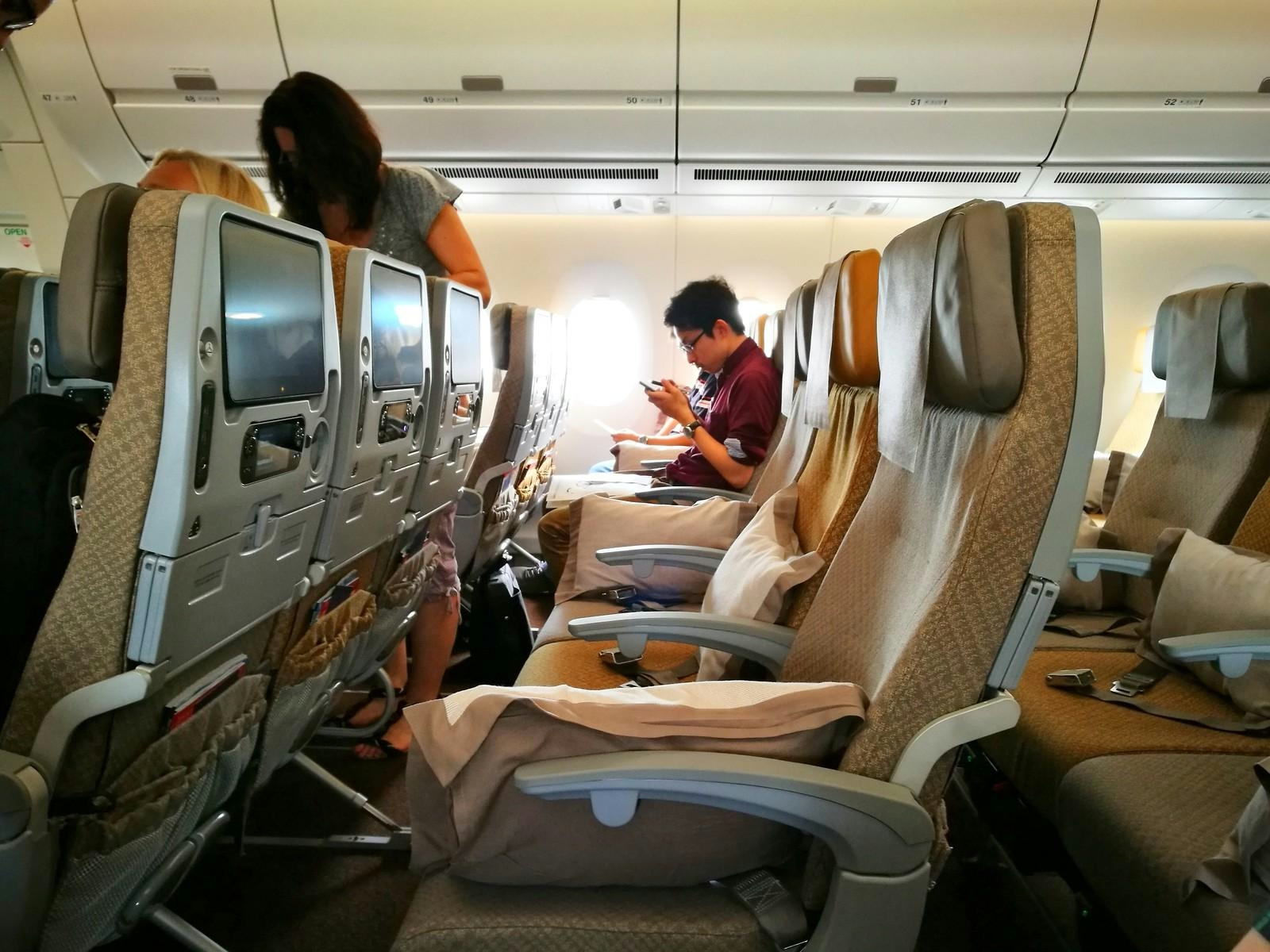
Early jet-powered airliners were infamous for their loud, high-pitched engine noise—a hallmark of classic airport scenes in films. Today, such piercing sounds have largely been eliminated, with modern aircraft offering significantly quieter cabins. Among these, the Airbus A350 distinguishes itself as one of the quietest widebody jets currently in service. In the United States, Delta Air Lines is the sole operator of the A350, although United Airlines has placed orders. Globally, the aircraft is widely adopted, particularly by European and Asian carriers.
A Clean-Sheet Design for Enhanced Comfort
The Airbus A350 represents a clean-sheet widebody aircraft, designed entirely from the ground up with the latest technological advancements. This comprehensive approach allowed engineers to optimize every element of the aircraft, unlike incremental upgrades to older models constrained by legacy frameworks. Alongside Boeing’s 787 Dreamliner, the A350 is one of only two clean-sheet widebodies on the market today. Both aircraft incorporate extensive use of advanced materials; approximately 70% of the A350’s airframe consists of such materials, including 53% composites. This level of composite integration matches that of the Dreamliner and significantly surpasses the use found in updated models like the Boeing 777X or Airbus A330neo.
Advanced Materials and Noise Reduction
A principal factor contributing to the A350’s notably quiet cabin is its use of carbon-fibre reinforced plastics (CFRP). These composites are lighter than aluminum, stronger than iron, and highly resistant to corrosion. Beyond their structural advantages, CFRP panels excel at dampening and limiting the transmission of vibrations, thereby substantially reducing noise levels within the cabin. Passenger comfort is further enhanced by the A350’s ability to maintain a higher cabin pressure—equivalent to an altitude of 6,000 feet compared to the typical 8,000 feet—and increased humidity levels, both of which contribute to a more pleasant in-flight environment.
Market Position and Competitive Challenges
The A350’s quieter cabin environment has been well received by both airlines and passengers, fueling a surge in Airbus orders. This trend is particularly evident in the company’s robust order book for November 2025, driven largely by A350 commitments. However, Airbus faces emerging competition from manufacturers such as China’s Comac, which is developing large business jets featuring multiple VIP cabin configurations that could pose a challenge to Airbus’s market share.
Despite the A350’s commercial success, Airbus has recently confronted setbacks. Quality concerns involving metal panels on certain A320 aircraft, coupled with a software recall affecting 6,000 jets in the A320 family, have unsettled investors and contributed to a decline in Airbus shares. Nonetheless, the company remains optimistic about the A350’s prospects, with ongoing interest in a potential stretched variant powered by the more powerful Rolls-Royce Trent XWB-97 engine.
Looking Ahead
As the aviation industry continues to evolve, the Airbus A350’s advanced design and quieter cabin establish a new benchmark for passenger comfort. While competitors innovate and market dynamics shift, Airbus’s dedication to technological progress and enhancing the passenger experience ensures the A350 remains at the forefront of modern air travel.
Airbus and RVmagnetics Develop Sensing Mat for Aircraft Repair
Why Delta Air Lines Has Returned the Boeing 747 to Service
Aircraft Engine Troubleshooting at AirVenture

Iran Air Retires the Last Boeing 747SP, Ending an Era in Aviation

The Impact of Generative AI on Airline Distribution and Travel Retail

Unilode Introduces Fire Containment Cover Leasing for Airlines

Global Aviation to Double Capacity by 2050 Through AI and Software Without New Airports
Lithuania Reviews Future of Šiauliai International Airport
Four Air Taxi Models That Could Shape Future Travel
Rolls-Royce’s Trent 1000 XE Gains Ground on GEnx in Boeing 787 Market
