
حوّل رؤى الذكاء الاصطناعي إلى أفعال منسّقة

الرائج الآن
Categories
5 Economy Seats So Spacious That Passengers Mistake Them For Premium
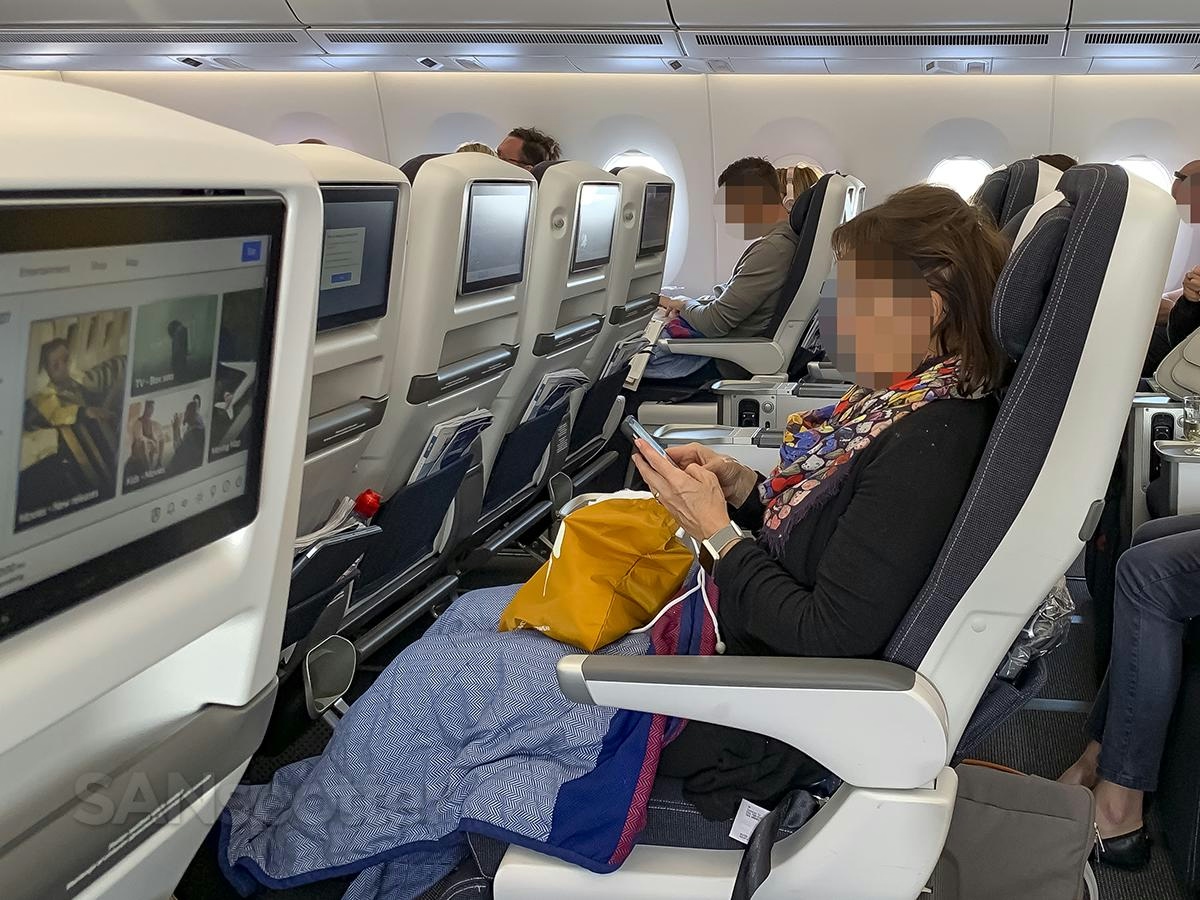
Economy Class Reimagined: Airlines Offering Exceptional Space and Comfort
Over the past two decades, economy class travel has become increasingly cramped as airlines strive to maximize passenger capacity. This trend has often involved reducing seat width, tightening legroom, or both. Many long-haul aircraft that once featured spacious nine-abreast seating now accommodate ten seats across. Typical seat pitch on major carriers has settled around 31 to 32 inches, with ultra-low-cost airlines sometimes offering as little as 28 inches. For travelers, these incremental reductions have translated into significantly less personal space, especially on flights lasting eight hours or more.
Amid this widespread contraction of economy comfort, a select group of airlines has taken a markedly different approach. Rather than prioritizing maximum seating capacity, these carriers emphasize passenger comfort by preserving generous seat width, maintaining above-average pitch, or adopting cabin layouts that foster a more open environment. These choices often come at the expense of overall capacity, representing a deliberate commercial tradeoff. The result is an economy class experience that frequently surprises passengers, with wider seats reducing shoulder contact, additional pitch easing pressure on knees and hips, and thoughtful cabin designs creating a greater sense of spaciousness.
Japan Airlines: A Benchmark in Economy Comfort
Japan Airlines (JAL) exemplifies the value of intelligent cabin layout and passenger-centric design. While much of the industry has increased seat counts on modern widebody aircraft, JAL has resisted this trend, preserving some of the most spacious economy cabins in commercial aviation. This philosophy is most evident aboard the Boeing 787 Dreamliner. Whereas nearly every other airline configures the aircraft with nine seats per row in a 3-3-3 arrangement, JAL remains the only operator worldwide to adopt an eight-seat, 2-4-2 layout in economy. This configuration yields seat widths of approximately 18.9 to 19 inches—dimensions that rival or exceed those found in some premium economy cabins.
JAL applies the same approach to its Boeing 777-300ER fleet, maintaining a nine-abreast economy layout rather than the increasingly common ten-abreast configuration. Seat pitch typically ranges from 33 to 34 inches, comfortably surpassing industry averages and providing noticeably more knee room on long-haul flights. Marketed under the "Sky Wider" brand, these cabins offer practical benefits that extend beyond branding. Wider cushions reduce shoulder compression, while fewer passengers per row facilitate easier aisle access and reduce crowding throughout the cabin. On overnight flights, these incremental improvements combine to create a substantially more relaxed travel experience.
Independent evaluations consistently affirm JAL’s reputation for economy comfort. Skytrax has awarded Japan Airlines the title of World's Best Economy Class Seat, recognizing both seat dimensions and overall passenger comfort. Aviation analysts regularly cite JAL as offering one of the most spacious economy products globally, achieving exceptional width without compromising legroom. The airline’s example demonstrates that premium comfort in economy class does not necessarily require premium pricing but rather thoughtful engineering and design decisions.

Etihad and Swissport Extend Global Partnership

Sepehran Airlines B737 Returns to Mashhad After Tyre and Engine Issues

Etihad Deploys Widebody Fleet to Meet Strong Demand

Korean Air Finalizes $36.2 Billion Deal with Boeing

Australia’s RFDS Queensland Section Orders Six King Air 260Cs

Korean Air Finalizes Order for 103 Boeing Jets and Engines

Embraer E195-E2 Features Distinctive Engine Placement Among Regional Jets

What Passengers Can Expect on Boeing’s New 777X Jet

How Ethiopian Airlines Became Africa’s Leading Carrier Amid Gulf Competition

Joby Aviation Extends Autonomous Flight Capabilities with Cross-Country Tour
