
حوّل رؤى الذكاء الاصطناعي إلى أفعال منسّقة

الرائج الآن
Categories
Air Niugini Cancels Boeing 787 Order, Faces Uncertain Wide-Body Fleet Future

Air Niugini Cancels Boeing 787 Order, Faces Uncertain Wide-Body Fleet Future
Air Niugini, the national airline of Papua New Guinea, has quietly canceled its order for two Boeing 787-8 Dreamliners, raising significant questions about the future of its wide-body fleet. This development, initially reported by ch-aviation, comes as the carrier’s existing wide-body aircraft—two aging Boeing 767-300ERs—approach the end of their lease agreements in 2026.
Background and Implications of the Cancellation
The 2023 order for the Dreamliners was originally viewed as a pivotal advancement for Air Niugini, promising enhanced passenger comfort, extended range, and increased capacity. Deliveries were anticipated to begin as early as 2026, later deferred to late 2027, with the 787s intended to replace the airline’s three-decade-old 767s. With the cancellation, however, Air Niugini currently holds no wide-body aircraft on order, leaving the airline’s long-haul route strategy in a state of uncertainty once the current leases expire.
While the possibility of extending the 767 leases remains, the advanced age of these aircraft and their limited alternative uses make this a less viable long-term solution. The absence of a clear replacement plan has drawn scrutiny from industry analysts and investors alike. This decision coincides with Air Niugini’s ongoing efforts to modernize its narrow-body fleet, having recently taken delivery of 11 Airbus A220s—comprising eight A220-100s and three A220-300s—to phase out its Fokker 70s and Fokker 100s. Although the narrow-body renewal program continues apace, the lack of a parallel wide-body strategy presents a stark contrast.
Market and Strategic Considerations
The cancellation carries broader implications for the regional aviation market. As Air Niugini retreats from wide-body expansion, competitors such as Sun PhuQuoc Airways and Thai Airways—both of which have recently placed substantial orders for Boeing 787s—stand to benefit. These carriers are positioned to strengthen their foothold in regional and long-haul markets, potentially attracting increased business and market attention as they expand their wide-body fleets. This shift underscores the competitive dynamics within the sector, where fleet renewal decisions are closely monitored by market participants and industry observers.
Internally, Air Niugini’s leadership has emphasized a focus on “maintaining and enhancing operations and profitability” in the near term, while preparing the airline for potential partial privatization in the future. The recent return of a former CEO, who led the airline until 2020, signals a period of strategic reassessment. Rising aircraft acquisition costs and evolving government priorities appear to have influenced the decision to withdraw from the Dreamliner agreement.
As Air Niugini navigates these challenges, questions persist regarding its long-term strategy for international operations and its capacity to compete in a region where rivals are intensifying their wide-body investments. For now, the airline’s wide-body future remains uncertain, with industry watchers closely observing its forthcoming decisions.

Bangladesh Launches Initiative to Become Regional Aviation Hub
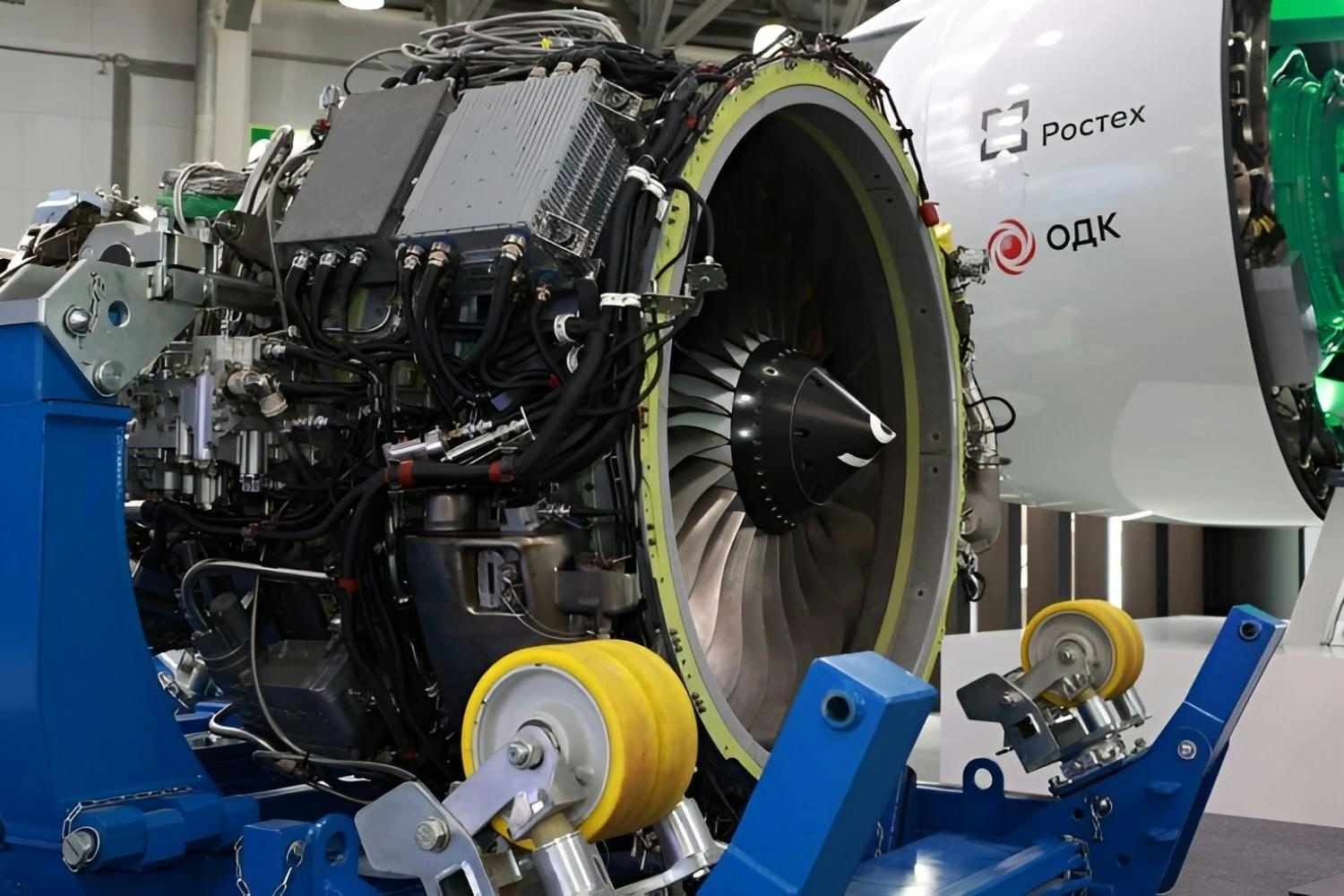
Russia Transports PD-8 Engine to India for International Certification

Kyrgyzstan to Adopt EMPIC GmbH Software for Flight Safety Oversight

Why Hawaiian Airlines Is Waiting Until 2028 To Add A Premium Economy Cabin To Its Airbus A330 Fleet

Engine Fault Causes Royal Navy Helicopter Crash Fatality

Joby Aviation Begins Texas Air Taxi Test Flights Amid Stock Decline

Iberia Receives Full Approval for Airbus A350 Heavy Maintenance

NetJets to Construct Terminal and Hangar at Dallas Love Field

Using AI in Aircraft Purchases

CIAM Unveils RPD-150T Engine to Replace Rotax 150 hp Model
