
حوّل رؤى الذكاء الاصطناعي إلى أفعال منسّقة

الرائج الآن
Categories
Airbus and Pratt & Whitney Aim to Resolve A220 Engine Issues by Year-End
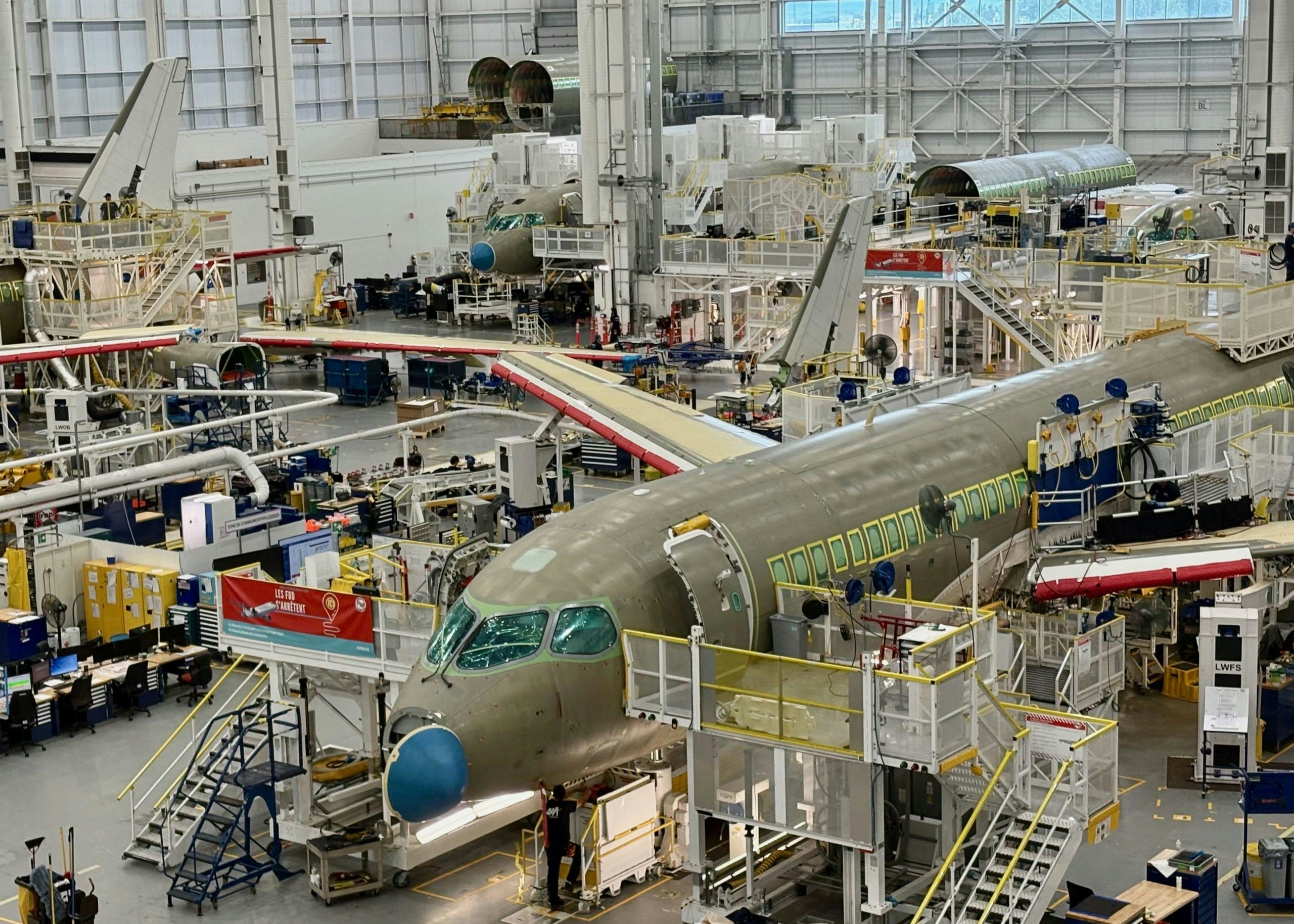
Airbus and Pratt & Whitney Aim to Resolve A220 Engine Issues by Year-End
Progress and Current Status of the A220 Engine Reliability
Airbus and Pratt & Whitney have announced that they are on course to resolve the longstanding reliability issues affecting the geared turbofan (GTF) engines powering the A220 family by the end of 2026. Speaking at a recent media briefing at the Mirabel production facility, Guillaume Chevasson, head of the A220 program and CEO of Airbus Canada, declared that the "AOG crisis is over," emphasizing that technical problems impacting the fleet have now been reduced to nearly zero.
The PW1500G engine, which exclusively powers the A220, has been at the heart of a broader crisis within Pratt & Whitney’s GTF engine family. As recently as November 2025, approximately 17% of the global A220 fleet was grounded or inactive. This figure has since declined sharply, with only 2 to 3 percent of A220 aircraft currently sidelined due to GTF engine issues. Other aircraft remain parked for reasons unrelated to engine reliability, such as scheduled heavy maintenance or storage.
Both Airbus and Pratt & Whitney confirm that ongoing technical improvements and expanded maintenance capacity are expected to eliminate any A220 groundings caused by GTF engine problems by late 2026. The A220 program has been particularly vulnerable because it relies solely on the PW1500G engine, unlike the A320neo family, which offers operators a choice between Pratt & Whitney’s GTF and the CFM LEAP engines.
Impact on Operators and Industry Response
The engine difficulties have had a significant operational and financial impact on several airlines. Air Baltic has publicly criticized the situation, citing substantial financial losses due to grounded aircraft. Swiss International Air Lines grounded its entire sub-fleet of nine A220-100s in 2026 to conserve engines for its larger A220-300s. Meanwhile, ITA Airways is pursuing approximately €150 million in damages from Pratt & Whitney after several aircraft were grounded in Naples for over a year.
Pratt & Whitney has made strides in reducing maintenance turnaround times. The PW1500G engines require about 200 days for a shop visit, compared to roughly 300 days for the larger PW1100G engines used on the A320neo. These repair times are improving as the manufacturer increases capacity and streamlines its maintenance processes.
The A220 engine issues are related to, but distinct from, the powder metal contamination problem that affected the PW1100G engines, which led to a large-scale inspection program initiated by RTX in 2023. The severity of the crisis has even prompted some early retirements of aircraft to provide engines for grounded jets. In March 2026, Airbus filed a formal damages claim against Pratt & Whitney over GTF engine delivery failures, which caused deliveries in early 2026 to fall approximately 20% below the previous year’s pace.
Production Adjustments and Market Implications
Looking ahead, Airbus has reduced its 2026 A220 production target to 12 aircraft per month, reflecting both engine availability constraints and a recalibration of supply and demand. The A220 faces additional challenges amid declining orders compared to the more popular A320neo family. Market reactions have led some airlines to reassess their fleet strategies due to ongoing engine reliability concerns, potentially affecting both Airbus’s sales and Pratt & Whitney’s market position.
Competitors such as Boeing and Embraer are poised to capitalize on these difficulties, seeking to strengthen their presence in the 100-160 seat market segment. Despite these challenges, Airbus and Pratt & Whitney remain confident that the technical and operational improvements underway will restore full reliability to the A220 fleet by the end of next year.

Etihad and Swissport Extend Global Partnership

Sepehran Airlines B737 Returns to Mashhad After Tyre and Engine Issues

Etihad Deploys Widebody Fleet to Meet Strong Demand

Korean Air Finalizes $36.2 Billion Deal with Boeing

Australia’s RFDS Queensland Section Orders Six King Air 260Cs

Korean Air Finalizes Order for 103 Boeing Jets and Engines

Embraer E195-E2 Features Distinctive Engine Placement Among Regional Jets

What Passengers Can Expect on Boeing’s New 777X Jet

How Ethiopian Airlines Became Africa’s Leading Carrier Amid Gulf Competition

Joby Aviation Extends Autonomous Flight Capabilities with Cross-Country Tour
