
حوّل رؤى الذكاء الاصطناعي إلى أفعال منسّقة

الرائج الآن
Categories
Airbus: Latest Developments and the Future of Aviation
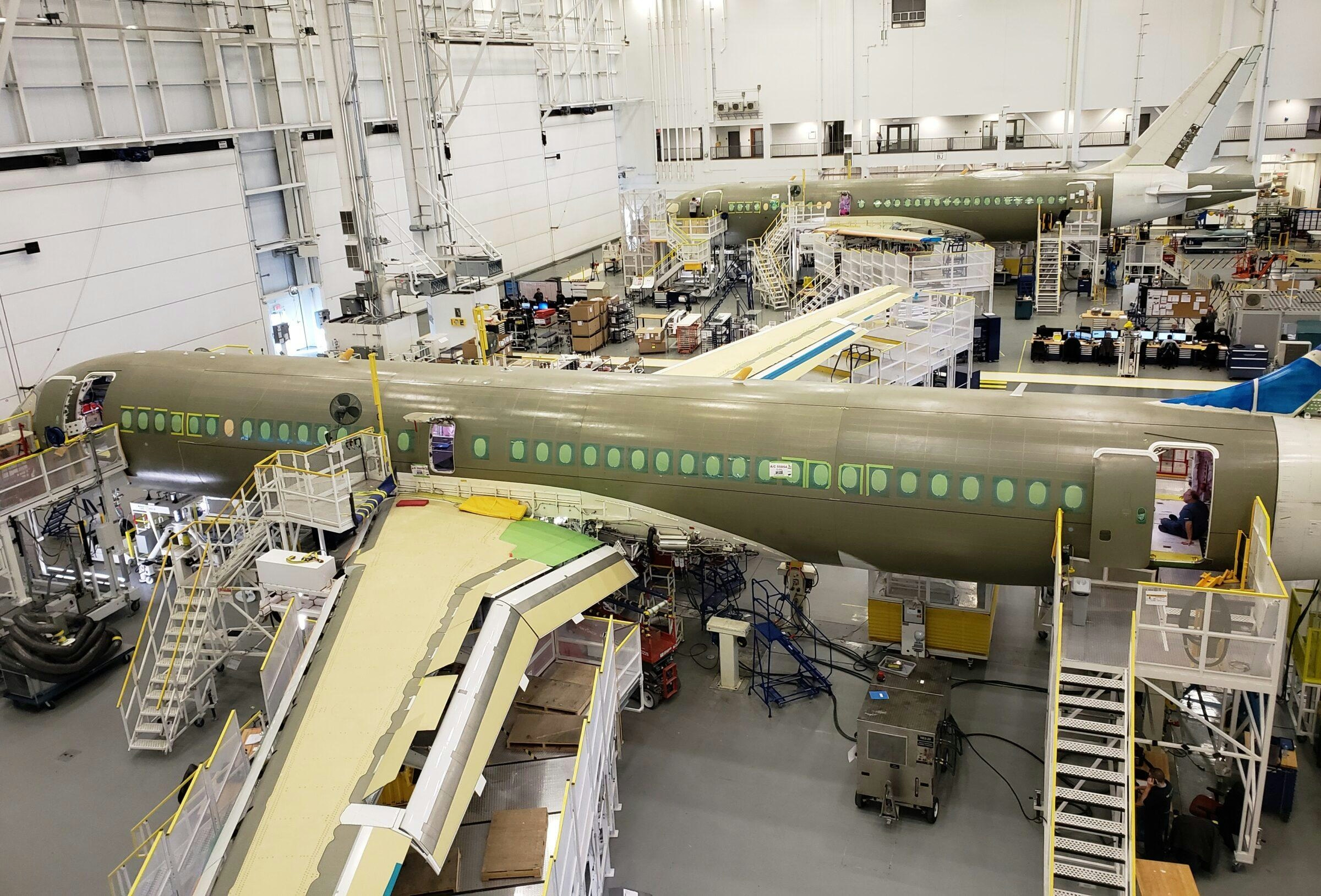
Airbus: Latest Developments and the Future of Aviation
Airbus continues to play a pivotal role in shaping the future of air travel through its commitment to innovation, sustainability, and engineering excellence. As the aviation sector navigates a complex landscape of opportunities and challenges, Airbus remains at the forefront by introducing new aircraft models, advancing green technologies, and maintaining a competitive edge in the global market.
Advancements in Aircraft Design
The breadth of Airbus’s fleet, ranging from the efficient A220 to the iconic double-decker A380, reflects the company’s dedication to combining advanced engineering with passenger comfort. The A350 exemplifies this approach by incorporating state-of-the-art materials and aerodynamic enhancements that improve fuel efficiency and reduce emissions. At the Hamburg facility, the A321XLR is driving innovation with its extended range and operational efficiency, setting new benchmarks in the single-aisle segment and reinforcing Airbus’s leadership in this market.
Commitment to Innovation and Sustainability
Airbus is investing significantly in next-generation technologies that promise to transform aviation’s environmental footprint. The company is actively exploring electric and hydrogen-powered aircraft, aiming to develop quieter, emission-free flights that could redefine sustainable air travel. Research into sustainable aviation fuel (SAF), derived from renewable sources, remains a strategic priority. Airbus is dedicated to integrating SAF across its fleet and promoting its wider adoption throughout the industry.
In addition to environmental initiatives, Airbus is enhancing the passenger experience by improving cabin configurations, entertainment systems, and connectivity options, ensuring that technological progress translates into greater comfort and convenience for travelers.
Addressing Industry Challenges
Despite its strong position, particularly with the A320 family dominating single-aisle sales, Airbus faces significant challenges. Scaling up production to meet rising demand is a complex endeavor, especially as the industry recovers from recent disruptions. Strategic decisions regarding future aircraft development require balancing innovation with the realities of global supply chains and evolving market dynamics.
Competition remains intense. Boeing, while struggling to regain its narrowbody market share, continues to hold a strong position in the widebody segment. External factors, such as former President Trump’s call to revoke certificates for all Bombardier Global jets, add further complexity to the competitive environment.
Looking Forward
Airbus’s vision extends beyond traditional aircraft to include new modes of air mobility. Projects such as electric vertical takeoff and landing (eVTOL) aircraft have the potential to revolutionize urban transportation by providing faster and more environmentally friendly ways to navigate cities.
As production accelerates and technological innovations advance, Airbus is well-positioned to lead the next chapter of aviation. Its focus on sustainability, innovation, and adaptability ensures that the company will continue to set the pace in an industry characterized by rapid change and high expectations.

Etihad Airways Suspends Airbus A380 Flights on Key Route

Aditya Birla Group Seeks Approval for Aircraft Leasing in GIFT City

Qatar Airways Highlights Innovation and Connectivity at Arabian Travel Market 2026

Hong Kong's Five-Year Plan Includes Andrew Fan's Aircraft Parts Processing Hub Proposal

ACIA Aero Leasing Delivers ATR72-600 to Air Nostrum

RTX Appoints Jill Albertelli as Head of Pratt & Whitney

TAT Technologies Joins Beyond Aero Hydrogen Aircraft Program

AURAK Study Highlights Barriers to Air Taxi Adoption in Emerging Economies

Xiamen Air Selects Altitude for 787 Maintenance at Heathrow

Etihad and Swissport Extend Global Partnership
