صورة

أيروجيني — مساعدك الذكي للطيران.

اسأل عن أي شيء. قم بتحليل كل شيء. تصرف فورًا.

الرائج الآن

Categories

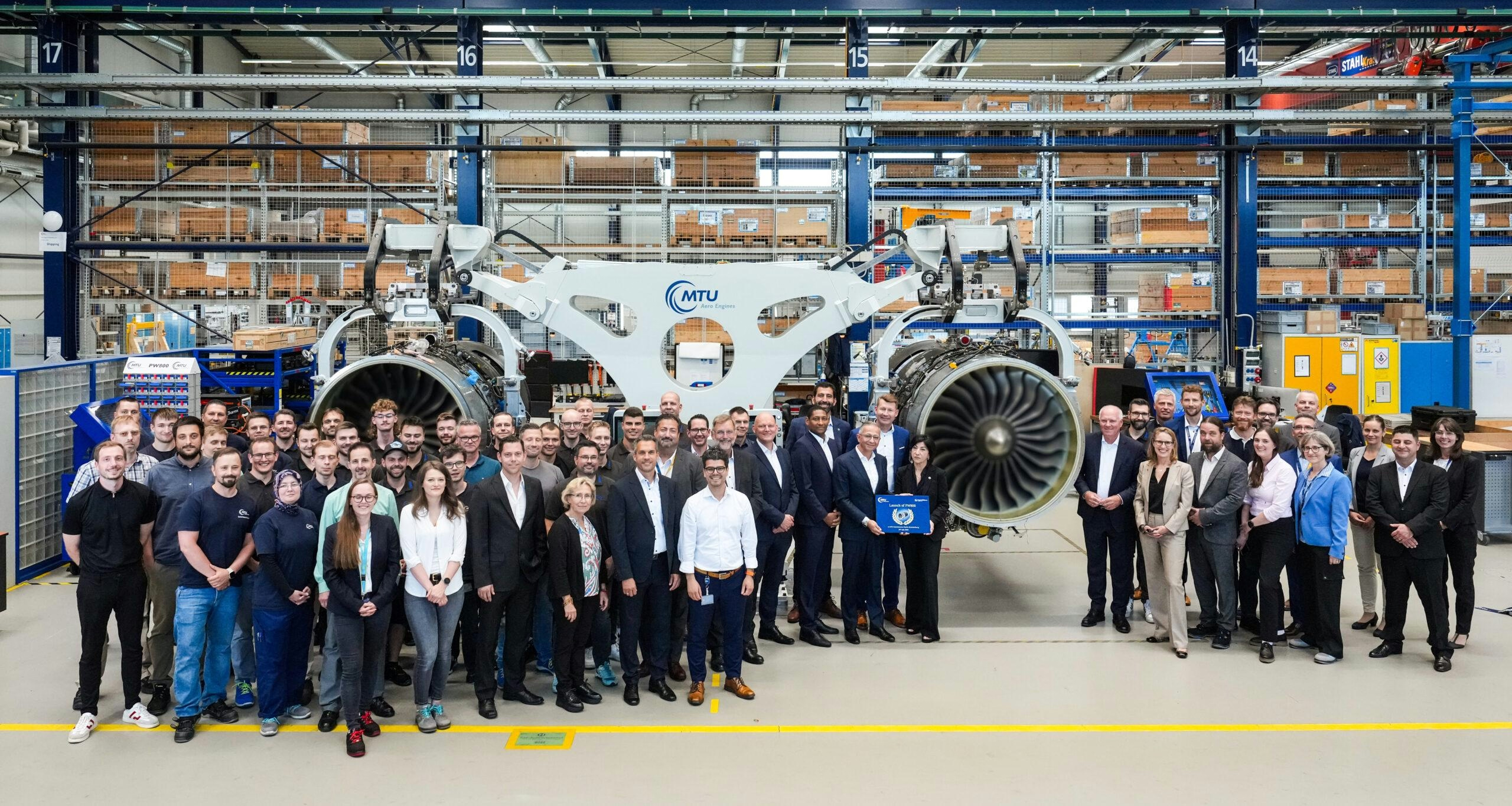
An Inside Look at MTU Maintenance Canada
March 25, 2026By ePlane AI
An Inside Look at MTU Maintenance Canada
0
0
MTU Maintenance Canada
Aircraft Engine MRO
MTU Aero Engines

An Inside Look at MTU Maintenance Canada

A Leading Force in Canadian Aviation MRO

MTU Maintenance Canada (MTU-C), headquartered in Delta, British Columbia, is a prominent player in the Canadian aviation Maintenance, Repair, and Overhaul (MRO) industry. As a subsidiary of MTU Aero Engines AG, MTU-C leverages the extensive global expertise of its parent company, which has over 40 years of experience, employs 13,000 people, and operates across 19 locations worldwide. MTU Aero Engines AG, a publicly traded company on the Frankfurt Stock Exchange’s DAX index, reported consolidated sales of US$7.42 billion and has completed more than 22,000 shop visits, underscoring its stature as a leading provider of tailored services for commercial aircraft engines.

MTU’s worldwide MRO network supports a diverse portfolio of over 30 engine types, servicing aircraft ranging from business jets to wide-body commercial planes. The company is recognized for its technological leadership in areas such as low-pressure turbines, high-pressure compressors, turbine centre frames, and advanced manufacturing and repair techniques. In the commercial original equipment manufacturer (OEM) sector, MTU collaborates internationally to develop and market sophisticated engine components, with approximately 30% of aircraft currently in service incorporating MTU parts. The company ranks among the top three global service providers for commercial aircraft engines and industrial gas turbines and serves as Germany’s industrial lead for nearly all military engines in operation.

Growth, Challenges, and Strategic Developments

MTU Maintenance Canada will celebrate its 28th anniversary in 2026 and currently employs over 630 staff members, some of whom have dedicated more than 40 years to the company. The firm’s origins date back to a 1998 partnership between Canadian Airlines and MTU Aero Engines. Following Air Canada’s acquisition of Canadian Airlines in 1999 and the subsequent divestment in 2003, MTU-C became a wholly owned subsidiary of MTU. In 2021, the company expanded into a new 236,800-square-foot facility near Vancouver International Airport, reinforcing its commitment to growth and innovation.

Despite its achievements, MTU-C faces ongoing challenges, particularly related to Pratt & Whitney’s Geared Turbofan (GTF) engine program. These issues have affected a significant portion of MTU’s commercial maintenance revenue. Nonetheless, MTU Aero Engines reported record earnings in 2025, driven by strong performance in both the OEM and maintenance sectors. The company also recently signed a memorandum of understanding with Airbus to advance hydrogen fuel cell propulsion technology, signaling a strategic commitment to future-oriented innovations.

Market reactions to MTU’s recent developments have been mixed. While some investors express concern over the GTF engine difficulties, others view the company’s expanding maintenance services and proactive management of in-service fleet challenges as promising. Although competitor responses remain uncertain, MTU’s focus on resolving operational issues and broadening its service offerings may enhance its competitive position.

Expertise in Legacy Engines and Future Outlook

A notable strength of MTU-C lies in its expertise with legacy engines, particularly the International Aero Engines V2500—specifically the –A5 model and its –E5 military variant, for which MTU-C holds worldwide exclusivity on behalf of the OEM. Since the V2500 program’s introduction in 2017, the Delta facility has completed over 300 shop visits. Dr. Uwe Zachau, CEO and President of MTU-C, attributes the company’s sustained success to the team’s deep experience with legacy engines, stating, “The collective competence amassed over the last decades drives our success forward.”

Guided by the mission statement “Our Commitment, Your Success,” MTU Maintenance Canada continues to evolve as a leading independent MRO provider in North America. The company remains focused on navigating industry challenges while investing in innovation and sustainable growth.

More news
IndiGo Flight Makes Emergency Landing at Delhi Airport Following Suspected Engine Failure

IndiGo Flight Makes Emergency Landing at Delhi Airport Following Suspected Engine Failure

IndiGo Flight Makes Emergency Landing at Delhi Airport Following Suspected Engine Failure An IndiGo flight en route to Bengaluru was compelled to make an emergency landing at Delhi’s Indira Gandhi International Airport on Thursday morning after a suspected engine failure occurred mid-flight. The aircraft, carrying 180 passengers and crew members, touched down safely at 11:30 AM, with no injuries reported. Incident Overview and Safety Response Flight 6E-120, a regularly scheduled service from Delhi to Bengaluru, was cruising over northern India when the flight crew detected a potential malfunction in one of the engines. In accordance with standard aviation protocols, the captain immediately informed air traffic control and requested an urgent diversion back to Delhi. Emergency services were placed on standby as a precautionary measure, and the aircraft executed a safe landing. Passengers were promptly evacuated, and IndiGo confirmed that all onboard were unharmed. The crew’s swift and professional response has been widely praised by aviation authorities and experts. Although engine failures are infrequent, pilots undergo rigorous training to manage such emergencies, including diverting to the nearest suitable airport and maintaining close coordination with ground control. This incident highlights the critical importance of continuous crew training, stringent operational procedures, and regular aircraft maintenance. Authorities have initiated an investigation to ascertain the precise cause of the suspected engine malfunction. Preliminary reports suggest a technical fault, but further analysis is ongoing to prevent recurrence and ensure the safety of future flights. The event has reignited discussions about the necessity of rigorous maintenance checks and the vital role of preparedness in aviation safety. Broader Context and Passenger Experience The emergency landing occurs amid a challenging period for IndiGo, which is currently under increased scrutiny from aviation regulators following recent operational disruptions, including widespread flight cancellations. The sudden resignation of CEO Pieter Elbers during this turbulent time has further intensified concerns regarding the airline’s leadership stability and operational reliability. Industry analysts caution that such incidents may have wider implications, potentially affecting IndiGo’s reputation and stock market performance. Competitors might seek to leverage these challenges to attract passengers concerned about safety and service reliability. Internally, the airline faces the dual challenge of addressing technical issues while reassuring customers about its commitment to safety standards. Passengers described the experience as unsettling but commended the professionalism and composure of the crew, who maintained clear communication and calm throughout the emergency. Many expressed relief at the safe resolution and praised IndiGo’s handling of the situation. As the investigation proceeds, IndiGo and aviation authorities remain focused on identifying the root cause of the engine issue and reinforcing safety protocols. This incident serves as a reminder of the complexities inherent in airline operations and the paramount importance of passenger safety within the aviation industry.
IndiGo Flight Makes Emergency Landing at Delhi Airport After Engine Failure

IndiGo Flight Makes Emergency Landing at Delhi Airport After Engine Failure

IndiGo Flight Makes Emergency Landing at Delhi Airport Following Engine Failure An IndiGo flight from Visakhapatnam to Delhi was forced to make an emergency landing at Indira Gandhi International Airport on Saturday after reporting an engine failure, according to the Civil Aviation Ministry. The incident, involving flight 6E 579, has intensified scrutiny of IndiGo’s safety protocols amid ongoing operational challenges faced by the airline. Incident Details and Response The Boeing 737, carrying 160 passengers, experienced the engine malfunction shortly before its scheduled arrival in Delhi. Airport authorities declared a full emergency at 10:39 a.m., with the Delhi Fire Service alerted at 10:53 a.m. The aircraft successfully landed at 10:59 a.m., as confirmed by flight tracking data from Flightradar24. In an official statement, an IndiGo spokesperson explained that a technical snag was detected just before landing. The pilots requested priority landing as a precautionary measure, following standard operating procedures. The airline emphasized that all relevant authorities were promptly informed and that the aircraft is currently undergoing necessary checks and maintenance. The statement reaffirmed IndiGo’s commitment to the safety of its passengers and crew as its highest priority. Regulatory and Industry Implications Although airport operations continued without disruption after the emergency landing, the incident is expected to prompt increased regulatory scrutiny of IndiGo’s maintenance and safety standards. Aviation authorities are likely to investigate the cause of the engine failure and evaluate the airline’s adherence to safety protocols. This could lead to regulatory fines or heightened oversight. The emergency landing occurs amid a turbulent period for IndiGo. The airline has recently faced mounting pressure to uphold service standards amid regulatory demands and operational disruptions. The resignation of CEO Pieter Elbers following a significant operational meltdown has further raised concerns about leadership stability and the company’s capacity to manage ongoing challenges. Market analysts warn that such incidents may temporarily undermine passenger confidence, particularly among frequent flyers. Competitors could leverage the situation to highlight their own safety records and operational reliability, potentially affecting IndiGo’s market position. As investigations proceed, IndiGo’s management confronts growing pressure to reassure both regulators and the public of its dedication to safety and operational excellence. The airline has reiterated that the affected aircraft is undergoing comprehensive maintenance checks and that passenger and crew safety remains paramount.
Why Airlines Retire Aircraft Early

Why Airlines Retire Aircraft Early

Why Airlines Retire Aircraft Early Airlines are increasingly retiring relatively young aircraft, including models such as the Airbus A320neo and A220, some of which are only four to eight years old. This trend is not driven by the age of the airframes but rather by persistent engine reliability problems and the soaring value of spare engines. Recent fleet data and analysis from industry firms like Naveo highlight that engines such as the Pratt & Whitney PW1000G have experienced prolonged inspection and repair backlogs. These issues have left aircraft grounded for extended periods, fundamentally altering how these assets are valued within the industry. Engine Reliability and Supply Chain Challenges A primary factor behind the early retirement of aircraft is the reliability of new-generation engines. Although modern engines like the PW1000G and CFM LEAP are engineered for improved fuel efficiency and reduced emissions, their increased technical complexity has resulted in unforeseen problems. These include premature wear, contamination of metal components, and frequent maintenance requirements. Airlines such as IndiGo have reported significant portions of their A320neo fleets grounded for months due to ongoing engine inspections. Similarly, Air Austral has faced difficulties maintaining its A220 fleet amid recurring engine faults. These reliability challenges are exacerbated by global supply chain disruptions and limited maintenance capacity. Even when the airframes remain structurally sound, the inability to obtain reliable engines renders many aircraft economically unviable. Consequently, airlines are compelled to make difficult decisions, often opting to retire aircraft earlier than originally planned rather than endure continuous operational disruptions and escalating costs. The Rising Value of Spare Engines Another critical factor reshaping airline fleet management is the dramatic increase in the value of serviceable spare engines. Due to global shortages and maintenance bottlenecks, a single functioning engine can command prices between $10 million and $15 million (€9–14 million) or more. Airlines such as Lufthansa and Spirit Airlines have reported grounding aircraft simply because spare engines were unavailable, despite the rest of the aircraft being fully operational. This scarcity has made dismantling relatively new aircraft for valuable components more profitable than continuing to operate them. Broader Industry Pressures and Market Dynamics The trend toward early aircraft retirements is further influenced by elevated maintenance costs associated with newer engines, high fuel prices, and ongoing supply chain challenges. Industry analysts anticipate a wave of liquidations and retirements of older, maintenance-intensive aircraft, which could substantially reduce the number of such planes in the global fleet. Geopolitical conflicts, particularly in regions like the Middle East, add further complexity to airline operations, sometimes resulting in flight cancellations and operational adjustments that accelerate retirement decisions. Despite these challenges, the aerospace sector is exhibiting renewed confidence. There has been a notable increase in aircraft orders and deliveries, signaling a gradual easing of supply chain pressures and a return of optimism. Nevertheless, the current combination of engine reliability issues, component shortages, and shifting economic factors means that dismantling modern aircraft can often be more financially advantageous than keeping them in service—an unprecedented development that is reshaping global airline fleets.
Aircraft Pump Demand Expected to Grow Through 2035 Amid Fleet Renewal and New Aircraft Programs

Aircraft Pump Demand Expected to Grow Through 2035 Amid Fleet Renewal and New Aircraft Programs

Aircraft Pump Demand Expected to Grow Through 2035 Amid Fleet Renewal and New Aircraft Programs The global aircraft pumps market is projected to experience steady growth through 2035, driven by ongoing fleet renewal cycles, increasing air travel demand, and the advancement of next-generation, more-electric aircraft. As the aviation industry moves into 2026, the market is shaped by solid demand fundamentals, more disciplined procurement practices, and a geographically diversified supply base, according to the latest analysis from IndexBox. Industry Dynamics and Demand Drivers Aircraft pumps serve as essential components across various systems, including fuel, hydraulics, lubrication, air conditioning, and waste management. These pumps are supplied both as original equipment for new aircraft and as high-volume aftermarket parts for maintenance, repair, and overhaul (MRO). The sector’s growth is underpinned by rising production rates from major original equipment manufacturers (OEMs), the operational requirements of an expanding global fleet, and mandatory overhaul schedules that sustain aftermarket demand. Several factors are propelling market expansion. The global commercial aircraft fleet is undergoing significant renewal and expansion, while higher aircraft utilization rates are intensifying aftermarket MRO needs. Military aviation modernization programs are also driving demand for advanced fluid system components. Additionally, the industry is witnessing a technological shift toward more-electric aircraft (MEA) architectures, which require innovative pump solutions. Regulatory pressures aimed at improving fuel efficiency and reducing emissions further stimulate demand. The growing use of unmanned aerial vehicles (UAVs) is creating a niche market for miniaturized pump technologies. Leading airlines are actively pursuing fleet renewal initiatives to capitalize on these trends. For instance, Cathay Pacific and Qantas have accelerated their upgrade programs to incorporate more fuel-efficient aircraft. In the Middle East, carriers are adjusting strategies to mitigate risks associated with regional geopolitical tensions, such as the ongoing Iran crisis, which continues to influence travel demand patterns. Market Challenges and Technological Outlook Despite optimistic growth forecasts from industry players like ITP Aero, the aircraft pumps market faces several challenges. Supply chain constraints remain a significant concern, particularly in sourcing specialized materials and engine components amid global shortages. The high costs and lengthy qualification processes for certifying new pump designs add further complexity. Moreover, increasing competition from parts manufacturer approval (PMA) suppliers is reshaping the aftermarket landscape, intensifying pressure on traditional suppliers. Technological advancements in the market are expected to be evolutionary rather than revolutionary. Efforts are concentrated on enhancing pump reliability, reducing weight, and improving energy efficiency. The adoption of new pump technologies will closely align with the development schedules of next-generation aircraft platforms, including potential midsize aircraft and sustainable aviation demonstrators featuring more-electric architectures. Geopolitical developments, supply chain stability—especially concerning alloys and semiconductors—and the pace of regulatory certification for new designs and alternative parts will be critical factors influencing market dynamics. Pricing structures are anticipated to remain relatively rigid, with value increasingly derived from total cost of ownership models and long-term service agreements. Resilient Market Supported by Dual Demand Streams Overall, the aircraft pumps market is positioned for resilient growth, supported by the capital-intensive and highly regulated nature of the aerospace sector. Demand will continue to be driven by both new aircraft production and the maintenance requirements of the in-service fleet. This dual-stream demand is expected to sustain steady, non-discretionary growth aligned with the long-term recovery and expansion of global air traffic.
Outlook for Anti-Soiling Aircraft Exterior Coatings Through 2035

Outlook for Anti-Soiling Aircraft Exterior Coatings Through 2035

Outlook for Anti-Soiling Aircraft Exterior Coatings Through 2035 The global market for anti-soiling aircraft exterior coatings is anticipated to undergo significant transformation and steady growth through 2035, according to the latest IndexBox report. As the industry enters 2026, it is marked by broader demand fundamentals, disciplined procurement practices, and a more regionally diversified supply chain. This evolution is largely driven by the aviation sector’s relentless pursuit of operational efficiency, where even marginal improvements in fuel economy translate into substantial cost savings. Advanced coatings—including hydrophobic, superhydrophobic, icephobic, anti-static, and multi-functional hybrid systems—are transitioning from niche enhancements to essential components of fleet management. The market is increasingly divided into two main segments: a high-volume, cost-sensitive segment accessed primarily through maintenance, repair, and overhaul (MRO) channels, and a premium segment focused on delivering measurable returns on investment through extended durability and drag reduction. Market Dynamics and Influences Several intersecting trends shape the outlook for anti-soiling coatings. Airlines’ strategic emphasis on reducing fuel consumption and operational costs remains a primary driver of demand, as cleaner aircraft surfaces contribute directly to drag reduction and improved efficiency. Stringent environmental regulations and carbon emission targets, particularly in Europe and North America, are accelerating adoption by validating fuel-saving claims and supporting broader sustainability objectives. The growth of global air traffic and fleet expansion—especially in the Asia-Pacific region—continues to enlarge the addressable market for both new aircraft (line-fit) and aftermarket applications. Concurrently, advancements in polymer science are enabling the development of more durable, multi-functional coatings, which justify higher price points through longer reapplication cycles. The market’s trajectory is also influenced by developments in adjacent sectors. For example, trends in the aircraft floor panel market, which is divided between commoditized and customized offerings, may indirectly affect demand for advanced exterior coatings as airlines and manufacturers seek to optimize maintenance and operational costs comprehensively. Furthermore, the increasing emphasis on situational awareness in military aviation is driving demand for specialized coatings that enhance visibility, reduce maintenance frequency, and provide features such as stealth and ice protection. Competitive Landscape and Strategic Responses Competition within the anti-soiling coatings market is expected to intensify, with leading players expanding their portfolios to address diverse market needs. Innovation in coating technology will be a key focus, aiming to deliver superior performance and cost-effectiveness. This dynamic is likely to spur increased investment in research and development, alongside strategic partnerships and collaborations designed to enhance product offerings and maintain competitive advantage. Despite these opportunities, the market faces several constraints. High certification costs and lengthy approval processes from aviation authorities such as the FAA and EASA can delay the introduction of new formulations. Some operators remain skeptical about the long-term efficacy and real-world fuel savings of advanced coatings, presenting challenges for performance validation. Additionally, intense competition—particularly from private-label products and contract manufacturers serving large MRO networks—continues to compress profit margins. Outlook Between 2026 and 2035, the anti-soiling aircraft exterior coatings market is projected to expand steadily, propelled by the recovery of global air travel, sustainability pressures, and ongoing fleet maintenance cycles. The market will remain concentrated among a limited number of global MRO networks, airline procurement groups, and original equipment manufacturers (OEMs), making technical approval and route-to-market relationships critical. As airlines and manufacturers increasingly prioritize efficiency and cost optimization, anti-soiling coatings are poised to become an integral element of the aerospace sector’s future.
American Airlines Explores AI to Reduce Contrail Formation

American Airlines Explores AI to Reduce Contrail Formation

American Airlines Partners with Google to Combat Contrail Pollution Using AI American Airlines, the United States’ second-largest carrier, has embarked on a pioneering collaboration with Google to employ artificial intelligence in reducing contrail formation—a significant yet often underestimated contributor to aviation’s environmental footprint. Contrails, the elongated cloud-like trails that appear behind aircraft at cruising altitudes, form when hot, humid exhaust from jet engines interacts with the cold, thin air at high elevations. Although these vapor trails do not contain harmful chemicals, they trap heat in the atmosphere, thereby exacerbating climate change. Persistent and spreading contrails are recognized as one of the aviation industry’s most substantial sources of non-CO₂ climate impact. AI-Driven Forecasting to Minimize Contrails In an effort to mitigate this environmental challenge, American Airlines is testing AI-powered forecasting tools developed in partnership with Google. These advanced systems analyze atmospheric conditions to predict where contrails are most likely to form, enabling flight planners to adjust routes and altitudes accordingly to avoid such regions. Initial results have been encouraging: flights adhering to AI-recommended routes have experienced a 62% reduction in contrail formation, while an overall 11.6% decrease has been observed across all participating flights. Notably, these improvements have been achieved without a significant increase in fuel consumption, underscoring the efficiency of the approach. This initiative builds upon a 2023 study led by Google Research and Breakthrough Energy, which demonstrated that practical and scalable interventions could enable airlines to avoid generating contrails. Subsequent research conducted in 2024 and 2025 has focused on refining these strategies and integrating them into flight planning systems, with the ultimate goal of industry-wide adoption. Challenges and Industry Implications Despite its promise, the implementation of AI-driven contrail avoidance faces several challenges. The approach demands extensive data collection and continuous algorithmic refinement to maintain accuracy. Ensuring the safety and operational feasibility of altered flight paths remains paramount, and there may be resistance from pilots and air traffic controllers who must adapt to new routing procedures. Nevertheless, the technology’s scalable design makes it accessible for adoption by other airlines. Market response to American Airlines’ efforts has been largely positive, reflecting growing consumer interest in sustainable travel options. This initiative is expected to enhance the airline’s brand image and may prompt competitors to invest in similar AI technologies, thereby intensifying the aviation industry’s commitment to environmental responsibility. As the sector confronts mounting pressure to reduce its climate impact, American Airlines’ collaboration with Google stands as one of the most ambitious attempts to address contrail pollution. By leveraging artificial intelligence, the airline seeks not only to diminish its own environmental footprint but also to establish a new benchmark for sustainable aviation globally.
Embry-Riddle Marks Centennial with Philanthropic Campaign and Major Gift from Hosseini Family

Embry-Riddle Marks Centennial with Philanthropic Campaign and Major Gift from Hosseini Family

Embry-Riddle Marks Centennial with Philanthropic Campaign and Major Gift from Hosseini Family Embry-Riddle Aeronautical University has embarked on its most ambitious philanthropic campaign to date, commemorating its 100th anniversary with a bold vision to advance educational excellence and innovation in aviation and aerospace. The centennial celebrations took place across the university’s campuses in Daytona Beach, Florida; Prescott, Arizona; and Asia, culminating in a gala event at the Daytona Beach campus on March 26. At the gala, a landmark $20 million donation was announced by Board of Trustees Chairman Mori Hosseini and his wife, Forough Hosseini. This generous gift officially launched the public phase of “Imagine What’s Next: The Campaign for Embry-Riddle,” which aims to raise $300 million in philanthropic contributions by 2030. This campaign represents the largest fundraising effort in the university’s history, designed to propel Embry-Riddle into a new era of growth and innovation. Centennial Celebrations and Strategic Partnerships Florida Governor Ron DeSantis, the evening’s keynote speaker, lauded Embry-Riddle’s pivotal role in driving economic growth and technological advancement. He highlighted recent developments such as the forthcoming Boeing Engineering Center at the university’s Research Park, which is projected to generate approximately 400 high-paying jobs. Additionally, the establishment of French aircraft manufacturer AURA AERO’s U.S. headquarters on campus underscores Embry-Riddle’s growing influence in the aerospace sector. Governor DeSantis praised the university’s students, faculty, and alumni for their contributions to Florida’s leadership in academic freedom and industry collaboration. Chairman Mori Hosseini reflected on the university’s century-long tradition of partnership with alumni, donors, industry leaders, and government entities. He emphasized the importance of strengthening these relationships amid intensifying global competition. “Together, we will shape the next century of aviation and aerospace and ensure that Embry-Riddle continues to lead the world toward what’s possible,” Hosseini stated during the celebrations. Challenges and Future Outlook Despite the optimism surrounding the centennial campaign, Embry-Riddle faces notable challenges. Economic uncertainty remains a significant concern, with potential implications for philanthropic giving and long-term financial planning, as highlighted by Inside Philanthropy. The university’s recent introduction of the Aviation Cybersecurity Training & Certification program positions it at the forefront of emerging industry demands. However, this innovation also intensifies competition, as peer institutions are expected to expand their own cybersecurity and aerospace offerings, increasing pressure on Embry-Riddle to maintain its competitive edge. Nevertheless, university leadership remains steadfast in its commitment to advancing Embry-Riddle’s mission. The centennial campaign seeks not only to secure essential resources but also to reinforce the university’s role as a critical talent pipeline for next-generation technologies and the expanding space economy.
Stolen Spanish Engine Parts Prompt Global Aviation Safety Review

Stolen Spanish Engine Parts Prompt Global Aviation Safety Review

Stolen Spanish Engine Parts Prompt Global Aviation Safety Review In late January 2026, over 600 non-airworthy aircraft engine parts were stolen in Spain, triggering a significant aviation safety alert. These components, associated with the CFM56, V2500, PW1100, and RB211 engine families, were originally slated for destruction through a process known as “mutilation,” designed to prevent their reuse. However, thieves impersonating disposal contractors intercepted the shipment, raising serious concerns that these parts could re-enter the global aviation supply chain as counterfeit or falsely certified components. EASA’s Immediate Action and Industry Response Following notification from Spanish authorities, the European Union Aviation Safety Agency (EASA) acted swiftly by publishing a detailed list of serial numbers for the stolen parts. Airlines and maintenance organizations worldwide have since been urged to cross-check their inventories to ensure these unauthorized components are not installed on commercial aircraft. This incident highlights the critical importance of maintaining the integrity of aviation’s “cradle-to-grave” tracking system, which monitors every part from manufacture to disposal. The theft exposes a hidden risk to passenger safety, as the installation of expired or non-airworthy parts could jeopardize aircraft reliability and crew and passenger security. The situation is analogous to fitting a vehicle with defective brakes, underscoring the potential severity of such lapses in aviation maintenance. Global Implications and Industry Measures The repercussions of the theft have prompted a comprehensive review of aviation supply chain security on a global scale. Airlines, maintenance, repair, and overhaul (MRO) providers, along with regulatory bodies, are intensifying their scrutiny and verification procedures for all engine parts. Enhanced security protocols are being implemented to prevent fraud and unauthorized diversions, although these measures have contributed to delays in aircraft maintenance and operations. Market reactions have been immediate, with concerns voiced over supply chain integrity and the potential for increased operational costs. In response, industry stakeholders are fostering greater collaboration on safety standards and exploring advanced technologies such as artificial intelligence and blockchain to improve the traceability and authenticity of aircraft components. Advancing Safety and Innovation Amid Challenges Despite the alarm raised by the theft, the incident is catalyzing positive developments within the aviation sector. Airlines are adopting more rigorous inspection regimes to ensure only approved parts are utilized. The industry is accelerating the integration of technologies like blockchain and GPS tracking to safeguard against future diversions. Furthermore, European and international authorities are enhancing cooperation to combat organized crime targeting aviation. This heightened vigilance is also increasing consumer awareness, leading to elevated expectations for safety standards. However, these advancements come with challenges. The intensified scrutiny and verification processes can result in flight delays and extended maintenance periods, particularly when suspect parts are identified. Additionally, the investments required for enhanced security and technological solutions may increase costs for airlines, with potential downstream effects on travelers. The theft of engine parts in Spain has thus become a pivotal moment for the aviation industry, prompting a renewed focus on safety and supply chain integrity. While these efforts may introduce operational complexities, they underscore the ongoing commitment to ensuring the security of global air travel.
Minister’s Visit Highlights Jet2’s Commitment to Domestic Talent

Minister’s Visit Highlights Jet2’s Commitment to Domestic Talent

Minister’s Visit Highlights Jet2’s Commitment to Domestic Talent The UK Minister for Aviation, Maritime and Decarbonisation, Keir Mather MP, visited Jet2.com’s maintenance hangar at Leeds Bradford Airport this week, emphasizing the airline’s dedication to investing in domestic talent and sustainable operations. Hosted by Jet2’s Chief Operations Officer Phil Ward and Head of Base Maintenance Marcus Mountcastle, the Minister toured the facility, which is equipped to service three aircraft simultaneously from Jet2’s fleet of 139 planes. During the visit, he engaged with engineers and apprentices, including a former apprentice from his own constituency, underscoring the airline’s strong regional ties. Workforce Development and Apprenticeships Jet2 used the occasion to highlight its significant regional employment impact and ongoing commitment to workforce development. The airline has launched over 400 apprenticeships across various disciplines and currently trains more than 30 engineering apprentices. Among the initiatives showcased was the fully funded Jet2FlightPath pilot training scheme, designed to cultivate future aviation professionals. Jet2 also called for enhanced funding support for engineering roles to bolster the UK’s aviation talent pipeline, reflecting the company’s strategic focus on nurturing homegrown skills. Sustainability and Industry Challenges Sustainability formed a central theme of the discussions, with particular attention given to airspace modernisation and the development of a robust UK sustainable aviation fuel (SAF) industry. These elements are integral to Jet2’s broader decarbonisation strategy. Phil Ward remarked on the significance of the visit, stating, “A huge amount of investment and hard work goes into running our award-winning operations, so it was great to welcome the Aviation Minister and give him a first-hand insight into why nothing beats a Jet2holiday.” He further emphasized the airline’s dual focus on career development and environmental responsibility, highlighting the need for key industry levers such as airspace modernisation and a thriving SAF sector. Jet2’s commitment to domestic talent and sustainability comes amid intensified competition within the UK airline sector. The company’s profits remain consistent with expectations ahead of its forthcoming Gatwick launch, demonstrating its ability to balance investment in personnel with maintaining profitability in a challenging market environment. As Jet2 expands its capacity, industry observers are closely monitoring the potential impact on the domestic airline landscape. Competitors may adjust their strategies to attract or retain skilled workers, particularly as the aerospace sector experiences a notable rebound, evidenced by a 71% surge in aircraft orders in January 2026. The Minister’s visit not only underscored Jet2’s role in supporting UK jobs and skills but also highlighted the broader challenges and opportunities confronting the aviation industry as it strives for sustainable growth and competitiveness.
Guanajuato seeks to boost the aerospace value chain

Guanajuato seeks to boost the aerospace value chain

Guanajuato Seeks to Boost Aerospace Value Chain Amid Industry Growth and Challenges Strategic Focus at the Aerospace & Advanced Manufacturing Summit 2026 Oscar Rodriguez Yañez, president of the Guanajuato Aerospace Cluster (BJX Aerospace), underscored the pivotal role of the Aerospace & Advanced Manufacturing Summit 2026 in reinforcing the region’s aerospace value chain on both national and international levels. Speaking at the event’s fifth edition, Yañez emphasized that the summit is intentionally designed as a focused platform rather than a large-scale gathering. Its primary objective is to connect capabilities, accelerate projects, and facilitate business opportunities—elements deemed essential for the sector’s advancement. The summit attracted nearly 30 companies, which leveraged the occasion to showcase their products and broaden their networking horizons. Yañez highlighted the critical importance of collaboration among partners to manufacture parts, components, and even complete aircraft. He cited Horizontec’s production of the Halcon 2.1 in Celaya as a successful example of such cooperation. Furthermore, he called for enhanced integration of the supply chain, intensified talent development, and the promotion of local capabilities to expand Guanajuato’s aerospace ecosystem. Industry Trends and Regional Challenges Panels at the event addressed pressing topics including opportunities within the aerospace supply chain, financing mechanisms, inshoring strategies, and operational excellence. These discussions are particularly timely as the global aerospace industry experiences renewed momentum. In January 2026, aircraft orders surged by 71 percent, signaling a rebound in market confidence and robust future demand. However, this growth is accompanied by challenges. Guanajuato, like many other regions, confronts uncertainties related to tariffs, supply chain sluggishness, and the imperative to strengthen local suppliers to meet increasing demand. The current market dynamics present a complex landscape of opportunities and risks. While companies such as ITP Aero project continued strong growth with double-digit increases in revenue and profit, others like Ducommun remain cautious due to the cyclical nature of the aerospace and defense sectors. Meanwhile, competitor regions such as Brazil face an underdeveloped aviation market, although airlines like Azul recognize significant growth potential despite structural barriers. Guanajuato’s Progress and Industry Engagement Cristina Villaseñor, Secretary of Economy for Guanajuato, highlighted the state’s advancements, noting that 141 companies are now integrated into the aviation value chain. These enterprises generate over 2,000 specialized jobs and contribute to an anticipated US$18 billion in exports by 2025. The summit also attracted prominent industry figures, including Luis Camargo, director of advisors at the Ministry of Economy; Luis Azua and Luis Lizcano, president and CEO of FEMIA respectively; Alejandro Cardona, head of Safran Mexico; and General Disraeli Gomez Herrera, director of FAMEX. As Guanajuato endeavors to establish itself as a leading aerospace hub, its efforts to enhance the value chain will be crucial in navigating the opportunities and challenges posed by a rapidly evolving global market.
line










