صورة

أيروجيني — مساعدك الذكي للطيران.

اسأل عن أي شيء. قم بتحليل كل شيء. تصرف فورًا.

الرائج الآن

Categories

Atlas Air orders 20 Airbus A350F freighters in break from all-Boeing fleet
March 16, 2026By ePlane AI
Atlas Air orders 20 Airbus A350F freighters in break from all-Boeing fleet
0
0
Atlas Air
Airbus A350F
Freighter Fleet Expansion

Atlas Air Breaks with Tradition, Orders 20 Airbus A350F Freighters

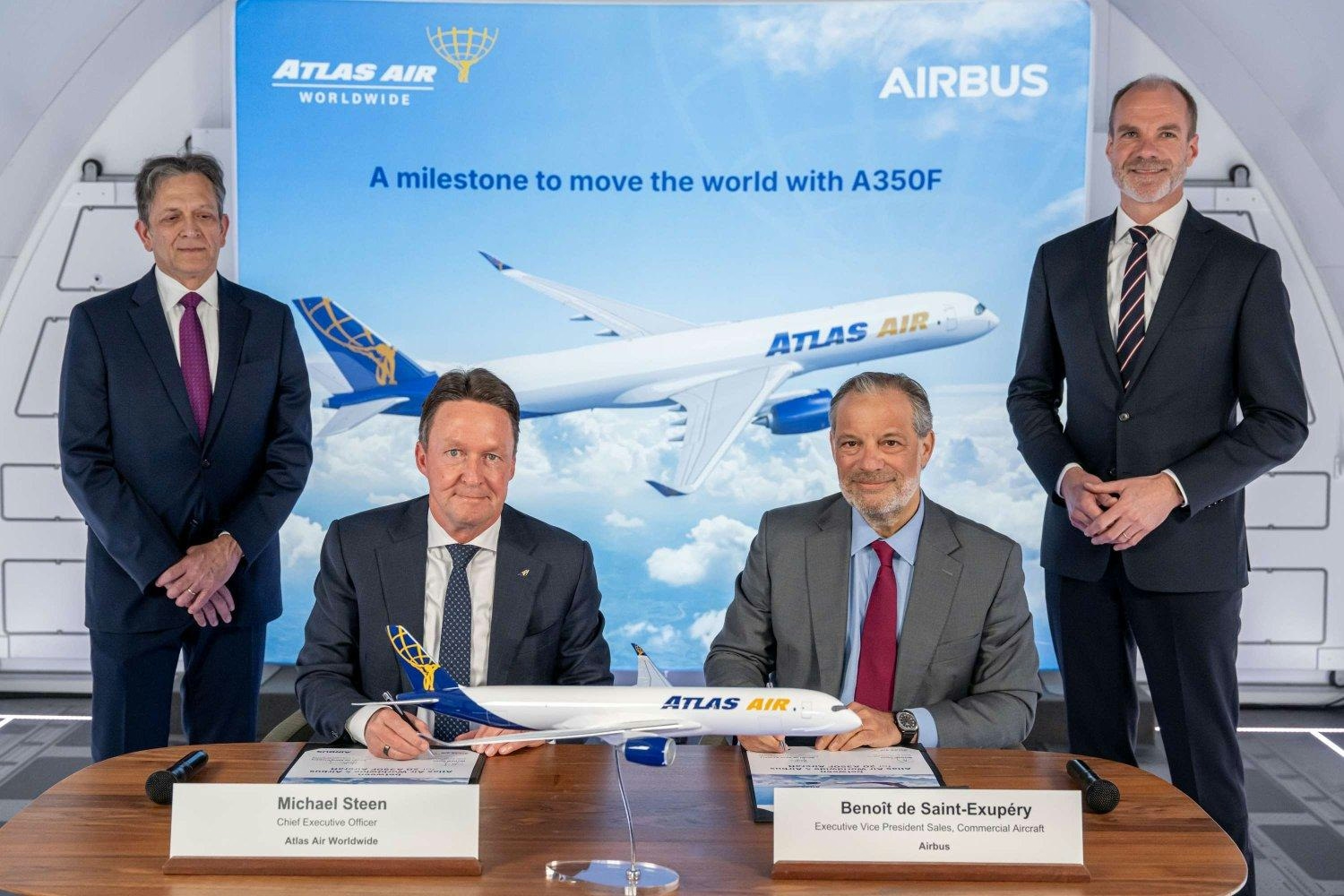
Atlas Air has announced an order for 20 Airbus A350F freighters, marking a significant departure from its longstanding all-Boeing fleet. This agreement positions Atlas Air as the largest customer for the A350F, Airbus’s next-generation widebody freighter currently under development. The decision to select the A350F over Boeing’s 777-8F—a rival model whose development has experienced multiple delays—signals a notable shift in the U.S.-based cargo operator’s fleet strategy.

Transition from an All-Boeing Fleet

Until now, Atlas Air’s fleet has been exclusively composed of Boeing aircraft, including 48 747-400Fs, 17 747-8Fs (among them the final 747 ever produced), 10 767Fs, and 11 777Fs. The introduction of the A350F represents a strategic diversification, reflecting evolving market conditions and technological advancements. The A350F, derived from the A350-900 and A350-1000 passenger variants, is engineered to carry approximately 111 tonnes of payload. It features a large main deck cargo door designed to accommodate outsized freight and is notable for being the first freighter constructed predominantly from composite materials. This innovation results in a lighter airframe compared to traditional metal designs, enhancing fuel efficiency and operational performance.

As of February 2026, Airbus had secured 81 firm orders for the A350F. The first prototype is in the final stages of assembly and is expected to undertake its maiden flight shortly. Airbus aims to introduce the aircraft into service by 2028, aligning with new ICAO emissions standards that will phase out production of older-generation freighters such as the 767F and 777F.

Operational and Market Implications

Atlas Air Worldwide Holdings’ decision to incorporate Airbus aircraft into its fleet introduces a range of operational challenges. Integrating the A350F will necessitate comprehensive training programs for flight and maintenance crews, as well as updates to existing operational procedures. Additionally, the company may encounter delivery uncertainties given the A350F’s ongoing development phase.

The order has attracted considerable attention from industry analysts, who are evaluating its financial impact on Atlas Air and its competitors. This move could prompt other cargo carriers to reassess their fleet compositions, potentially accelerating diversification trends within the sector. Competitors may respond by revisiting their aircraft procurement plans or intensifying efforts to enhance operational efficiencies in order to sustain their market positions.

Atlas Air’s landmark acquisition underscores the shifting dynamics within the air cargo industry, highlighting the increasing importance of next-generation, fuel-efficient freighters as operators adapt to stringent regulatory requirements and evolving market demands.

More news
California Air Taxi Company to Test Autonomous Flight Technology in Arizona

California Air Taxi Company to Test Autonomous Flight Technology in Arizona

California Air Taxi Company to Test Autonomous Flight Technology in Arizona Federal Initiative to Accelerate eVTOL Integration Joby Aviation, a California-based air taxi company, has been selected by the Federal Aviation Administration (FAA) to test its autonomous flight technology in Arizona. This selection, announced on March 9, is part of the FAA’s Electric Vertical Takeoff and Landing (eVTOL) Integration Pilot Program, a federal initiative supported by the White House aimed at expediting the adoption of eVTOL aircraft within the United States commercial airspace. Joby’s participation reflects a broader effort to integrate innovative electric aircraft into the national transportation infrastructure. Testing Across Diverse Environments Joby plans to conduct extensive air taxi testing across various environments in the Western United States, including urban centers, rural corridors, mountainous regions, and areas prone to wildfires. These trials are integrated into Utah’s uFLY initiative, one of eight projects selected for the federal pilot program. The company’s approach seeks to evaluate the performance and safety of autonomous eVTOL operations under a wide range of conditions, providing critical data to inform regulatory standards and operational protocols. Challenges and Competitive Dynamics Despite the promising potential of autonomous air taxis, significant challenges remain. Regulatory hurdles persist as federal and state agencies work to develop comprehensive safety and operational frameworks for this emerging technology. Safety concerns continue to be a primary focus for both regulators and the public, particularly regarding the reliability of autonomous flight in complex and dynamic environments. The competitive landscape is intensifying, with companies such as Archer Aviation advancing their own eVTOL technologies and competing for market dominance. This rivalry has occasionally escalated into legal disputes, with Archer accusing Joby of fraudulent activities related to its business dealings in China, underscoring the reputational and legal risks inherent in this rapidly evolving industry. Market and Regulatory Outlook Market responses to autonomous air taxis remain mixed. While investors and industry proponents emphasize the potential benefits, including reduced urban congestion and expanded transportation options, skepticism endures concerning safety, scalability, and regulatory preparedness. The FAA’s endorsement of pilot programs across multiple states signals increasing institutional support but also imposes expectations for stringent oversight and transparent reporting of results. As Joby and its competitors advance their technologies, the outcomes of these pilot programs in Arizona and other locations will be pivotal. They are expected to influence the development of regulatory frameworks and shape public acceptance of autonomous urban air mobility in the years ahead.
Stan Barnes Named Partner and Head of Aviation Advisory at BDO Ireland

Stan Barnes Named Partner and Head of Aviation Advisory at BDO Ireland

Stan Barnes Appointed Partner and Head of Aviation Advisory at BDO Ireland BDO Ireland has announced the appointment of Stan Barnes as Partner and Head of Aviation Advisory, a strategic decision designed to enhance the firm’s expertise in aviation finance and leasing amid significant growth and transformation within the sector. This move aligns with BDO’s broader objective to strengthen its market position in a highly competitive environment, building on recent merger momentum to expand its presence in the aviation advisory space. Extensive Experience in Aviation Finance and Technology Stan Barnes brings over 18 years of senior leadership experience across aviation finance, leasing, and technology. His career includes executive roles advising global aviation stakeholders on large-scale transformation, transaction, and growth initiatives. Most recently, Barnes served as Chief Executive Officer of AerPrice, where he spearheaded the development of advanced aircraft pricing, valuation, and analytics software aimed at supporting data-driven decision-making in aviation markets. Before his tenure at AerPrice, Barnes spent eight years at Aergo Capital as Chief Financial Officer and Head of Human Resources. During this period, he was instrumental in expanding Aergo’s portfolio to $6 billion, encompassing more than 250 aircraft, and played a key role in the company’s inaugural asset-backed securities (ABS) transaction, METAL 2017-1. Earlier in his career, Barnes held senior finance positions at Standard Chartered Aviation Finance following its acquisition of Pembroke Capital, ultimately serving as CFO and overseeing the growth of a global portfolio exceeding 120 aircraft. Barnes’s expertise spans portfolio valuation, pricing, structured finance, transaction support, acquisitions, ABS structures, capital strategy, and integration programmes. He has also led finance transformation initiatives and implemented technology-enabled solutions to improve reporting, analytics, and asset management. Strategic Vision and Industry Context Brian McEnery, Managing Partner at BDO Ireland, welcomed Barnes’s appointment, emphasizing the importance of his diverse experience. McEnery noted, “Ireland remains the global centre of aviation leasing and finance, and the sector continues to evolve rapidly as capital markets, technology, and fleet strategies develop. Stan brings a rare combination of commercial, financial, and technology experience within aviation, so his appointment enhances our ability to support aviation businesses as they pursue growth, manage portfolio strategy, and respond to changing market dynamics.” Barnes expressed enthusiasm about joining BDO Ireland during a pivotal period for the aviation sector. He remarked, “I’m very pleased to be joining BDO Ireland at a time of significant change and opportunity across the aviation sector. The sector is entering a new phase where data, capital strategy, and operational efficiency will play an even greater role in shaping competitive advantage. BDO has built a strong advisory platform across transactions, finance, and transformation, and I’m looking forward to working with clients across the aviation ecosystem to help them navigate complex decisions and unlock new opportunities.” As Barnes assumes his new role, he will confront a competitive landscape shaped by evolving regulatory and safety concerns. The appointment is expected to attract increased attention from competitors and stakeholders regarding BDO’s strategic direction in aviation advisory. Industry analysts anticipate that rivals may intensify efforts to capture market share or seek collaborative ventures to address shared challenges, highlighting the dynamic environment in which BDO and Barnes will operate.
AI Engineering Services Limited Receives Decarbonization Co-Benefits Award at Water Transversality Global

AI Engineering Services Limited Receives Decarbonization Co-Benefits Award at Water Transversality Global

AI Engineering Services Limited Receives Decarbonization Co-Benefits Award at Water Transversality Global AI Engineering Services Limited (AIESL), India’s largest aviation Maintenance, Repair, and Overhaul (MRO) organization, was honored with the Decarbonization Co-Benefits Award at the Water Transversality Global Awards and Conclave 2026. The event, hosted by the India Water Foundation, took place on March 6-7 at the India International Centre in New Delhi. The award was presented to Shri Amit Kumar, Chairman of AIESL, by the Chief Guest Shri Om Birla, Hon’ble Speaker of the Lok Sabha. Recognition for Comprehensive Decarbonization Initiatives AIESL received the award in recognition of its extensive decarbonization efforts implemented across its nationwide aviation MRO network. The company has consistently met emission reduction targets while maintaining stringent operational and safety standards. As a key player in India’s aviation engineering sector, AIESL operates energy-intensive facilities, including 13 aircraft hangars, engine workshops, and extensive ground operations. Historically, these operations have depended on high-energy lighting, diesel-powered ground support equipment (GSE), and paper-based documentation, all of which contributed significantly to carbon emissions and resource consumption. To mitigate these environmental impacts, AIESL adopted a systematic decarbonization and modernization strategy. This included upgrading to LED and high-efficiency lighting systems in hangars and workshops, which directly reduced electricity consumption and Scope 2 emissions. The company also phased in electrified GSE to replace diesel-powered equipment, cutting fuel use and Scope 1 emissions while enhancing the working environment for technical staff. Digital transformation played a crucial role, with the introduction of electronic work packages and digital documentation reducing paper consumption and minimizing the need for physical file movement. Additionally, AI-based planning tools were deployed to improve maintenance forecasting, resource utilization, and workflow efficiency, thereby reducing rework and unnecessary energy use. Administrative processes were streamlined through a 24×7 online payment gateway and digital financial systems, further lowering indirect emissions. Enhanced waste management and recycling programs promoted material efficiency and circular resource use within maintenance operations. These initiatives have yielded measurable environmental and operational benefits, including reduced energy intensity per maintenance event, decreased reliance on fossil-fuel-based equipment, faster aircraft maintenance turnaround times, and improved utilization of engineering infrastructure. Context Within the Global Industrial Decarbonization Landscape AIESL’s achievements come amid a growing global emphasis on industrial decarbonization. The market for industrial decarbonization is projected to reach USD 101.20 billion by 2035, driven by corporate environmental, social, and governance (ESG) commitments and increasing consumer demand for sustainable products. Artificial intelligence is emerging as a critical tool in this transition, optimizing energy efficiency, minimizing waste, and stabilizing processes in heavy industries to achieve significant emissions reductions. Currently, the consulting and advisory segment dominates this market, highlighting the importance of specialized expertise in meeting sustainability objectives. In response, industry competitors are expected to escalate investments in AI technologies and decarbonization strategies to sustain their market positions. During the conclave, Shri Amit Kumar also contributed to the CEO’s Leadership Dialogue, where industry leaders deliberated on the evolving role of corporate leadership in advancing cross-sector sustainability initiatives.
Air Niugini Cancels Boeing 787 Order, Faces Uncertain Wide-Body Fleet Future

Air Niugini Cancels Boeing 787 Order, Faces Uncertain Wide-Body Fleet Future

Air Niugini Cancels Boeing 787 Order, Faces Uncertain Wide-Body Fleet Future Air Niugini, the national airline of Papua New Guinea, has quietly canceled its order for two Boeing 787-8 Dreamliners, raising significant questions about the future of its wide-body fleet. This development, initially reported by ch-aviation, comes as the carrier’s existing wide-body aircraft—two aging Boeing 767-300ERs—approach the end of their lease agreements in 2026. Background and Implications of the Cancellation The 2023 order for the Dreamliners was originally viewed as a pivotal advancement for Air Niugini, promising enhanced passenger comfort, extended range, and increased capacity. Deliveries were anticipated to begin as early as 2026, later deferred to late 2027, with the 787s intended to replace the airline’s three-decade-old 767s. With the cancellation, however, Air Niugini currently holds no wide-body aircraft on order, leaving the airline’s long-haul route strategy in a state of uncertainty once the current leases expire. While the possibility of extending the 767 leases remains, the advanced age of these aircraft and their limited alternative uses make this a less viable long-term solution. The absence of a clear replacement plan has drawn scrutiny from industry analysts and investors alike. This decision coincides with Air Niugini’s ongoing efforts to modernize its narrow-body fleet, having recently taken delivery of 11 Airbus A220s—comprising eight A220-100s and three A220-300s—to phase out its Fokker 70s and Fokker 100s. Although the narrow-body renewal program continues apace, the lack of a parallel wide-body strategy presents a stark contrast. Market and Strategic Considerations The cancellation carries broader implications for the regional aviation market. As Air Niugini retreats from wide-body expansion, competitors such as Sun PhuQuoc Airways and Thai Airways—both of which have recently placed substantial orders for Boeing 787s—stand to benefit. These carriers are positioned to strengthen their foothold in regional and long-haul markets, potentially attracting increased business and market attention as they expand their wide-body fleets. This shift underscores the competitive dynamics within the sector, where fleet renewal decisions are closely monitored by market participants and industry observers. Internally, Air Niugini’s leadership has emphasized a focus on “maintaining and enhancing operations and profitability” in the near term, while preparing the airline for potential partial privatization in the future. The recent return of a former CEO, who led the airline until 2020, signals a period of strategic reassessment. Rising aircraft acquisition costs and evolving government priorities appear to have influenced the decision to withdraw from the Dreamliner agreement. As Air Niugini navigates these challenges, questions persist regarding its long-term strategy for international operations and its capacity to compete in a region where rivals are intensifying their wide-body investments. For now, the airline’s wide-body future remains uncertain, with industry watchers closely observing its forthcoming decisions.
IAT Secures A330 Freighter Deal for Amazon Air

IAT Secures A330 Freighter Deal for Amazon Air

IAT Secures A330 Freighter Deal for Amazon Air Strategic Acquisition and Lease Management IAT Leasing Limited (IAT) has announced its pivotal role in facilitating the acquisition and ongoing lease management of a portfolio comprising ten Airbus A330 freighter aircraft. These aircraft are currently leased to Amazon Air and operated by Alaska Airlines. The transaction involved the acquisition of the aircraft from funds managed by Altavair on behalf of Blue Owl Capital, with financing support provided by MUFG. Going forward, IAT will be responsible for the administration of leases and asset management for the entire portfolio. This deal represents a significant development for IAT, marking the addition of dedicated widebody freighter aircraft to its serviced portfolio. It also establishes a new relationship with Amazon Air while reinforcing the company’s existing partnership with Alaska Airlines. Furthermore, the acquisition expands IAT’s collaboration with Blue Owl Capital, following their joint participation in the Rolls-Royce LessorCare+ programme announced in January 2026. This programme further solidifies the ties between the parties and supports the underwriting of the aircraft involved. Market Context and Challenges The transaction occurs amid persistent challenges within the widebody freighter market. Supply chain disruptions continue to impact aircraft manufacturing, with Willie Walsh, Director General of the International Air Transport Association (IATA), recently highlighting that supply chains remain unstable and problematic. These ongoing issues may present obstacles for IAT as it manages and potentially seeks to expand its freighter portfolio. In addition, the market for converted freighters is becoming increasingly competitive. Companies such as Elbe Flugzeugwerke have secured recent deals, including a notable agreement with Asia Pacific Aviation Leasing Group, signaling intensified competition in this sector. Competitors are likely to pursue additional conversion contracts or enhance their conversion capabilities to meet the rising demand for freighter aircraft. Positioning in a Competitive Landscape Despite these market challenges, IAT’s latest acquisition underscores its commitment to expanding its footprint in the widebody freighter segment and strengthening relationships with key industry stakeholders. Through its ongoing partnerships and asset management initiatives, IAT is well-positioned to navigate the evolving dynamics of the air cargo leasing market.
PXCom and FPT Software Sign Strategic Memorandum of Understanding

PXCom and FPT Software Sign Strategic Memorandum of Understanding

PXCom and FPT Software Sign Strategic Memorandum of Understanding Advancing In-Flight Digital Experience Through Strategic Partnership PXCom, a specialist in in-flight entertainment and connectivity (IFEC), and global technology consultancy FPT Software have formalized a strategic memorandum of understanding aimed at enhancing digital offerings within the aviation sector. This alliance is designed to strengthen PXCom’s “glocal” presence by providing localized, day-to-day operational support for its SkyVerse platform as the company expands its footprint across five continents. Cyril Jean, CEO of PXCom, highlighted the necessity of this collaboration, stating that as the company’s activities grow globally, it is essential for customers to benefit from a local presence trained specifically on the SkyVerse platform. The partnership enables FPT Software to expand its aviation portfolio by integrating PXCom’s digital in-flight products, positioning both firms to deliver enriched content and advanced analytics to airlines worldwide. The Head of Aviation Technology at FPT Software emphasized the alignment of this alliance with their mission to deliver world-class digital experiences to complex industries. By combining FPT’s cloud-native software, artificial intelligence capabilities, and system integration expertise with PXCom’s IFEC platform, the partnership aims to facilitate a seamless passenger journey while enhancing operational efficiency for airlines. Navigating Technological Disruption and Market Challenges This collaboration emerges amid rapid technological evolution and intensifying competition within the aviation and technology sectors. Both companies face the dual challenge of transitioning to cloud-based services and contending with the rise of generative AI tools, which are transforming digital experiences across industries. Recent market volatility, exemplified by Dassault Systèmes’ significant share decline following concerns over AI integration and a cautious outlook, underscores the uncertainties surrounding digital transformation in aviation. Competitors are also making strategic investments to secure their positions in this shifting landscape. Meta’s recent chip deal with AMD, for instance, signals a broader industry commitment to long-term AI infrastructure development. PXCom and FPT Software must navigate these dynamics while addressing structural barriers in their respective markets—challenges reminiscent of those encountered by Azul in Brazil’s aviation sector, where regulatory and operational complexities have constrained growth. Cyril Jean underscored the critical role of strategic partnerships in this environment, describing PXCom as a technology enabler that relies on a select group of high-value partners to complement its capabilities and deliver superior in-flight digital platforms. He expressed enthusiasm about the significant advancement represented by the partnership with FPT Software. The Head of Aviation Technology at FPT Software further elaborated on the transformative potential of the alliance, stating that the collaboration goes beyond system integration to redefine the digital architecture of air travel. By merging expertise in AI and edge caching with world-class connectivity, the partnership seeks to eliminate traditional limitations of in-flight technology, aiming to make the cabin experience as seamless and intelligent as the connected world on the ground. As the aviation industry continues to grapple with digital disruption and AI-driven innovation, the PXCom-FPT Software alliance is poised to serve as a noteworthy example of how strategic collaboration can balance technological ambition with the practical realities of a rapidly evolving market.
Atlas Aluminum Corp Parts Catalog for Aerospace and Aviation Hardware

Atlas Aluminum Corp Parts Catalog for Aerospace and Aviation Hardware

Atlas Aluminum Corp Parts Catalog for Aerospace and Aviation Hardware The aerospace and aviation industries rely heavily on thousands of precisely engineered metal components, essential for the integrity and performance of aircraft. Among the key manufacturers in this sector is Atlas Aluminum Corp, a company renowned for producing precision aluminum components and aviation hardware that are integral to aircraft structures. Manufacturers specializing in aluminum aerospace parts play a crucial role in modern aircraft design and maintenance, contributing significantly to reliability, structural strength, and overall safety. The Role of Aluminum in Aviation Aluminum has been a cornerstone material in aviation since the early days of aircraft construction. Engineers sought a material that combined lightness with strength, and aluminum alloys emerged as the optimal solution. Thanks to its excellent strength-to-weight ratio, aluminum enabled the development of faster, lighter, and more fuel-efficient aircraft. This transition to metal airframe designs fundamentally shaped modern aircraft engineering and remains central to it today. Precision aluminum parts and structural fasteners continue to be indispensable in aviation manufacturing, ensuring the durability and performance of aircraft. The Importance of Aerospace Fasteners Aerospace fasteners, though small in size, are among the most critical components in aircraft assembly. They secure major structural systems such as wing assemblies, fuselage panels, structural brackets, interior components, and engine support structures. The use of precision fasteners, rivets, bolts, and aluminum hardware is vital to maintaining structural integrity under the extreme conditions experienced during flight. Aerospace engineering literature consistently emphasizes that even the smallest fastener can have a decisive impact on flight safety, underscoring the importance of comprehensive fastening systems in aircraft design. Navigating the Atlas Aluminum Corp Parts Catalog The Atlas Aluminum Corp parts catalog is a key resource featured on aviation procurement platforms, listing components widely used in aerospace maintenance and manufacturing. This catalog serves as an essential tool for engineers and procurement specialists, facilitating the identification of parts required for aircraft structural assemblies, aerospace maintenance operations, defense aviation supply chains, and aircraft repair and overhaul processes. Many of the catalog’s listings include National Stock Number (NSN) parts, enabling organizations and defense contractors to quickly locate standardized hardware for various aircraft systems. As such, parts catalogs act as a vital link between manufacturers, engineers, and the broader aerospace supply chain. Market Dynamics and Competitive Landscape Atlas Aluminum Corp operates within a highly competitive aerospace hardware market. The company faces challenges from global suppliers, including Embraer, which sources aerospace-grade aluminum from India’s Hindalco Industries. This competitive environment has intensified demand for reliable and cost-effective aerospace hardware. In response, rival suppliers are pursuing strategic partnerships and investing in their supply chains to maintain market share and meet evolving industry standards, reflecting the dynamic nature of the global aviation supply chain. Aluminum Components and Aircraft Structural Engineering Aluminum components are favored in aircraft engineering due to their lightweight nature, corrosion resistance, high structural durability, and strong fatigue resistance. These properties make aluminum an ideal material for aviation, supporting both the performance and safety requirements of modern aircraft. The Atlas Aluminum Corp parts catalog exemplifies the essential role of precision aluminum hardware in aerospace engineering, while also illustrating the competitive and rapidly evolving landscape of the global aviation supply chain.
Airbus Helicopters Announces New Orders and Partnerships

Airbus Helicopters Announces New Orders and Partnerships

Airbus Helicopters Secures New Orders and Strengthens Strategic Partnerships Airbus Helicopters has announced a series of significant new orders and strategic agreements with emergency medical services and law enforcement agencies across Europe and Japan, highlighting sustained demand for its H135, H140, and H145 helicopter platforms. These developments underscore the company’s continued prominence in supporting critical public safety and emergency response operations worldwide. Expanding Fleet Modernization in Japan and Europe Japan’s National Police Agency (NPA) has placed a follow-on order for three H135 helicopters as part of its ongoing fleet modernization efforts. These aircraft are slated for deployment with the Hokkaido, Shimane, and Miyagi Prefectural Police departments, where they will support a variety of missions including patrol, search and rescue, and tactical transport. This order reflects the NPA’s commitment to enhancing operational capabilities through advanced rotorcraft technology. In Europe, ADAC Luftrettung, one of the continent’s largest Helicopter Emergency Medical Services (HEMS) operators, has signed a long-term framework contract with Airbus Helicopters. The agreement encompasses the H135, H140, and H145 models and builds upon the initial partnership announced at last year’s VertiCon event, where ADAC Luftrettung was introduced as a launch customer and development partner for the new H140 helicopter. This collaboration signals a deepening relationship aimed at advancing emergency medical aviation services. Further strengthening Airbus Helicopters’ presence in the European HEMS sector, German operator DRF Luftrettung has expanded its cooperation by placing a new order for four H145 helicopters. This latest contract reinforces the longstanding partnership between the two organizations and reflects their shared dedication to enhancing air rescue capabilities. Operational Challenges and Market Dynamics While these contracts affirm Airbus Helicopters’ pivotal role in emergency response and public safety, they also present operational challenges. The company faces the task of maintaining sufficient production capacity to meet the surge in orders amid ongoing global supply chain disruptions that continue to impact the aerospace industry. Ensuring timely delivery of aircraft remains a critical concern as the company navigates these complexities. Market reactions to the new agreements have been predominantly positive, with investor confidence buoyed by the company’s growth prospects. Nonetheless, apprehensions persist regarding Airbus Helicopters’ ability to fulfill delivery schedules in the face of persistent supply chain pressures. The competitive landscape is expected to intensify as rivals such as Leonardo and Sikorsky respond to Airbus Helicopters’ recent successes. Industry analysts anticipate that competitors may increase marketing efforts and consider pricing strategies to defend their market share, signaling a potentially more aggressive environment in the rotorcraft sector. These developments collectively illustrate the opportunities and challenges confronting Airbus Helicopters as it strives to meet rising demand and sustain its leadership position in the global rotorcraft market.
Astronics selected by Boeing for 737 MAX fuel tank access doors

Astronics selected by Boeing for 737 MAX fuel tank access doors

Astronics Selected by Boeing to Supply 737 MAX Fuel Tank Access Doors Astronics Corporation has been appointed by Boeing to provide fuel tank access doors for the 737 MAX aircraft program, marking an expansion of the companies’ longstanding collaboration. Nick Stevenson, President of Astronics PECO, emphasized the significance of this partnership, expressing satisfaction in supporting the 737 MAX program by adding fuel tank access doors to their existing portfolio of aerospace components. Manufacturing Capabilities and Facility The fuel tank access doors will be produced at Astronics’ Clackamas, Oregon facility, which is renowned for its advanced technical manufacturing tailored to the aerospace sector. This site boasts comprehensive multi-disciplinary design engineering and product qualification capabilities, alongside vertically integrated manufacturing operations. These include custom injection molding, die casting, CNC machining, NADCAP-accredited bonding, chemical and finishing processes, as well as integrated assembly and testing, underscoring Astronics’ capacity to deliver complex aerospace components with stringent quality standards. Context Amid Boeing’s Production Challenges Astronics’ selection coincides with a period of intensified scrutiny surrounding Boeing’s 737 MAX program, which has faced ongoing quality concerns. Recent interruptions in 737 MAX deliveries, including a pause to address wiring rework issues, have raised questions about the stability of production and the resilience of the supply chain. These developments have prompted cautious market reactions to supplier announcements, with potential repercussions for Astronics’ production schedules and delivery commitments. Industry analysts observe that competitors will likely monitor Astronics closely, particularly regarding part quality and responsiveness, should Boeing’s delays extend beyond the first quarter. Astronics may also be required to adjust to any changes in Boeing’s production timelines or evolving quality standards to ensure continued alignment with the manufacturer’s requirements. Despite these challenges, Astronics’ advanced manufacturing expertise and established relationship with Boeing position the company to effectively support the 737 MAX program as it seeks to resolve ongoing issues and restore production stability.
Thomas Global Systems Expands Irvine Facility on 70th Anniversary

Thomas Global Systems Expands Irvine Facility on 70th Anniversary

Thomas Global Systems Expands Irvine Facility on 70th Anniversary Thomas Global Systems has marked a significant milestone by inaugurating the expanded engineering and advanced manufacturing facility in Irvine, California, coinciding with the company’s 70th anniversary. This development highlights the firm’s sustained dedication to enhancing its engineering capabilities, program delivery, and long-term support for aerospace and defense clients. Strengthening U.S. Operations and Capabilities The enlarged Irvine site substantially increases Thomas Global Systems’ capacity for engineering, manufacturing, and program support within the United States. This expansion reinforces the company’s ability to provide innovative and high-integrity electronic solutions tailored to commercial aviation, defense, and government sectors. Angus Hutchinson, CEO of Thomas Global Systems, emphasized that the investment reflects a strategic commitment to their workforce, capabilities, and customer base. He noted that as the company celebrates seven decades of operation, its priorities remain focused on practical innovation, engineering excellence, and delivering sustained value across the aerospace and defense industries. Founded in Sydney, Australia, in 1956, Thomas Global Systems has transformed from a specialist electronics manufacturer into a global aviation and defense electronics enterprise. With modern facilities in both Irvine and Sydney, the company continues to offer reliable, customer-centric solutions across commercial aviation, defense, and government markets. Industry Challenges and Strategic Implications The expansion occurs amid broader challenges facing the U.S. manufacturing sector, including persistent labor shortages and an increasing reliance on industrial automation. These factors present potential obstacles as Thomas Global Systems scales its operations. Industry analysts have highlighted concerns over rising domestic production costs, which may subject the company to greater scrutiny and pressure to adopt advanced technologies and automation to sustain competitiveness. This strategic move also carries wider implications for the aerospace and defense industry. By bolstering its U.S. presence, Thomas Global Systems may prompt competitors to reassess their industrial strategies, particularly in an environment that increasingly prioritizes domestic production and supply chain resilience. Despite these challenges, the company’s investment in its Irvine facility signals confidence in the long-term growth prospects of the aerospace and defense sectors. It also underscores Thomas Global Systems’ ongoing commitment to innovation and operational excellence as it embarks on its eighth decade of business.
line