
حوّل رؤى الذكاء الاصطناعي إلى أفعال منسّقة

الرائج الآن
Categories
City Delivery Drones Take Flight Over NYC Amid Uncertain Future
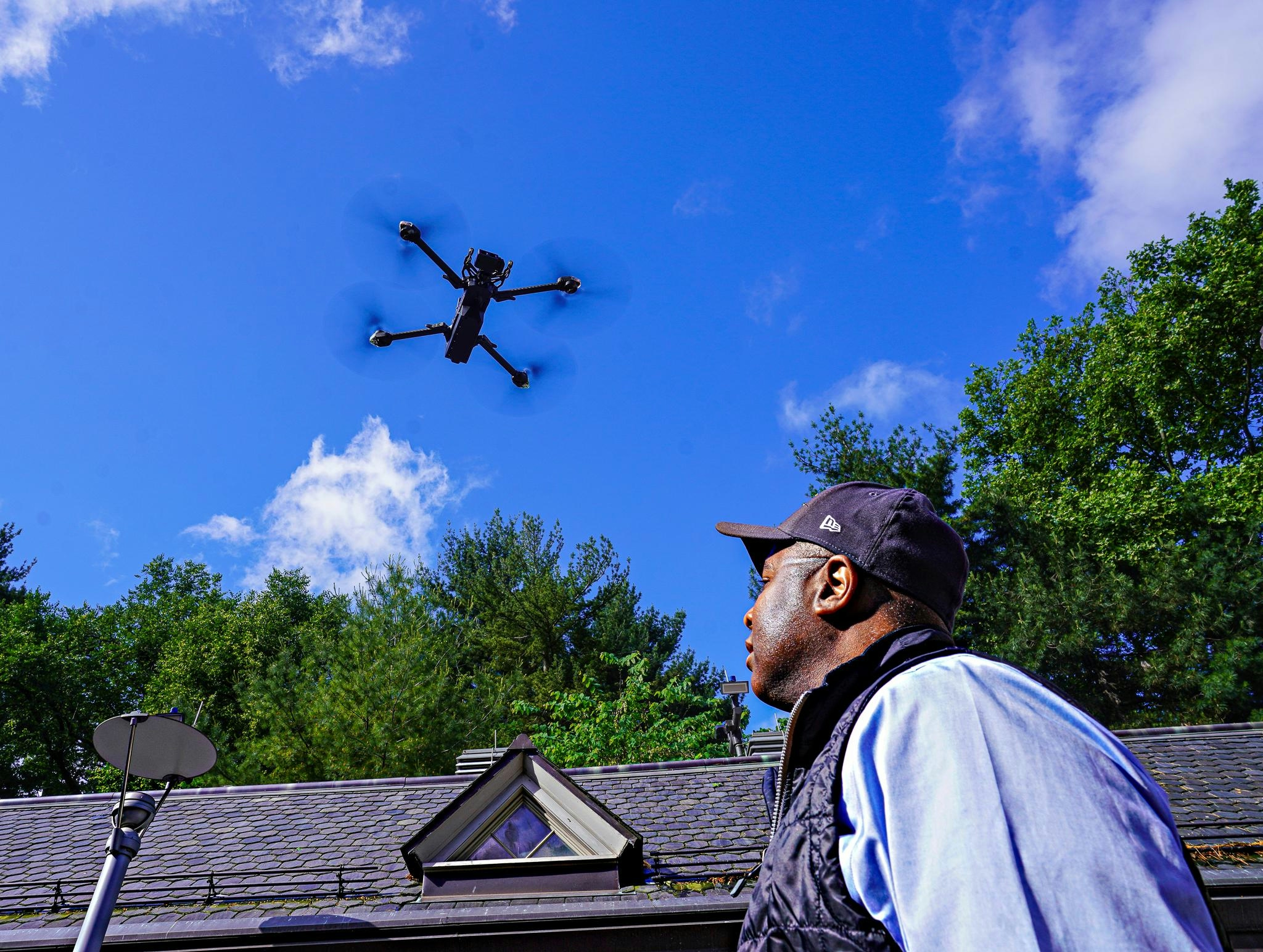
City Delivery Drones Take Flight Over New York City Amid Uncertain Prospects
A six-propeller drone with an eight-foot wingspan has recently begun flying over New York City’s East River, marking a significant step in urban drone delivery. Since early May, British company Skyports has been conducting daily weekday flights between lower Manhattan and a Brooklyn pier, transporting light cargo for an unnamed New York City health care system. Currently limited to carrying a few pounds of paper, the initiative aims to expand to nonhazardous, non-biological items such as light pharmaceuticals once the system demonstrates reliability.
Testing Drone Delivery in a Complex Urban Environment
This year-long pilot project is a collaboration between the Port Authority of New York and New Jersey and the New York City Economic Development Corporation. It seeks to explore how drone delivery—a technology still largely experimental worldwide—might operate within the dense and dynamic environment of New York City. The project aims to address several critical questions: whether drones can deliver packages more quickly and cost-effectively than existing carriers, whether the frequency of flights—currently one to two per hour—can provide tangible value to clients, and whether the community will accept drones overhead or perceive them as a nuisance.
Stephan Pezdek, regional freight planning manager at the Port Authority, emphasized the importance of these factors, stating, “Will deliveries make it to their destination faster and within the financial constraints of the current carriers they are using? Will the community appreciate the work and not feel like it is a disruption? All of this will inform our understanding of how the first corridor shapes up.”
Challenges and Context of Urban Drone Delivery
Globally, drone delivery efforts have predominantly targeted rural or suburban areas, where less congested airspace and sparse road networks make the technology more feasible. Skyports, for instance, operates mail deliveries in remote regions of Scotland and services offshore wind turbines in Germany. Similarly, US-based Zipline runs vaccine and blood product deliveries across four continents, with its longest-standing program in Rwanda. In the United States, companies such as Alphabet’s Wing and Amazon’s Prime Air are expanding drone services in suburban Texas, focusing on areas around Houston, Austin, and Dallas.
Urban centers like New York City, however, present unique challenges. The city’s airspace is heavily congested, with three international airports and three public heliports located in Manhattan alone. In May 2023, nearly 9,000 helicopter flights occurred over city land or water, highlighting the complexity of safely integrating drones into this crowded environment. Regulatory obstacles, including Federal Aviation Administration certification requirements, further complicate the deployment of drone delivery systems.
Public Reception and Industry Responses
Public acceptance of drone delivery remains uncertain. Market reactions have been mixed, with some Amazon customers reporting damaged packages due to improper handling of fragile items. Industry responses vary: Walmart is actively expanding its drone delivery services, while in Philadelphia, Uber Eats’ delivery robots encountered public backlash and vandalism shortly after their introduction. In New Orleans, city officials have expressed concerns about autonomous vehicles such as Waymo, underscoring the political and social challenges that new delivery technologies often face.
As New York’s drone pilot progresses, officials will closely monitor not only operational efficiency and cost-effectiveness but also the impact on patient care and community sentiment. The outcome of this experiment may prove pivotal in determining whether drones can establish a sustainable role within the city’s intricate logistics network or if urban airspace will remain largely inaccessible to such technologies.

Etihad Airways Suspends Airbus A380 Flights on Key Route

Aditya Birla Group Seeks Approval for Aircraft Leasing in GIFT City

Qatar Airways Highlights Innovation and Connectivity at Arabian Travel Market 2026

Hong Kong's Five-Year Plan Includes Andrew Fan's Aircraft Parts Processing Hub Proposal

ACIA Aero Leasing Delivers ATR72-600 to Air Nostrum

RTX Appoints Jill Albertelli as Head of Pratt & Whitney

TAT Technologies Joins Beyond Aero Hydrogen Aircraft Program

AURAK Study Highlights Barriers to Air Taxi Adoption in Emerging Economies

Xiamen Air Selects Altitude for 787 Maintenance at Heathrow

Etihad and Swissport Extend Global Partnership
