
حوّل رؤى الذكاء الاصطناعي إلى أفعال منسّقة

الرائج الآن
Categories
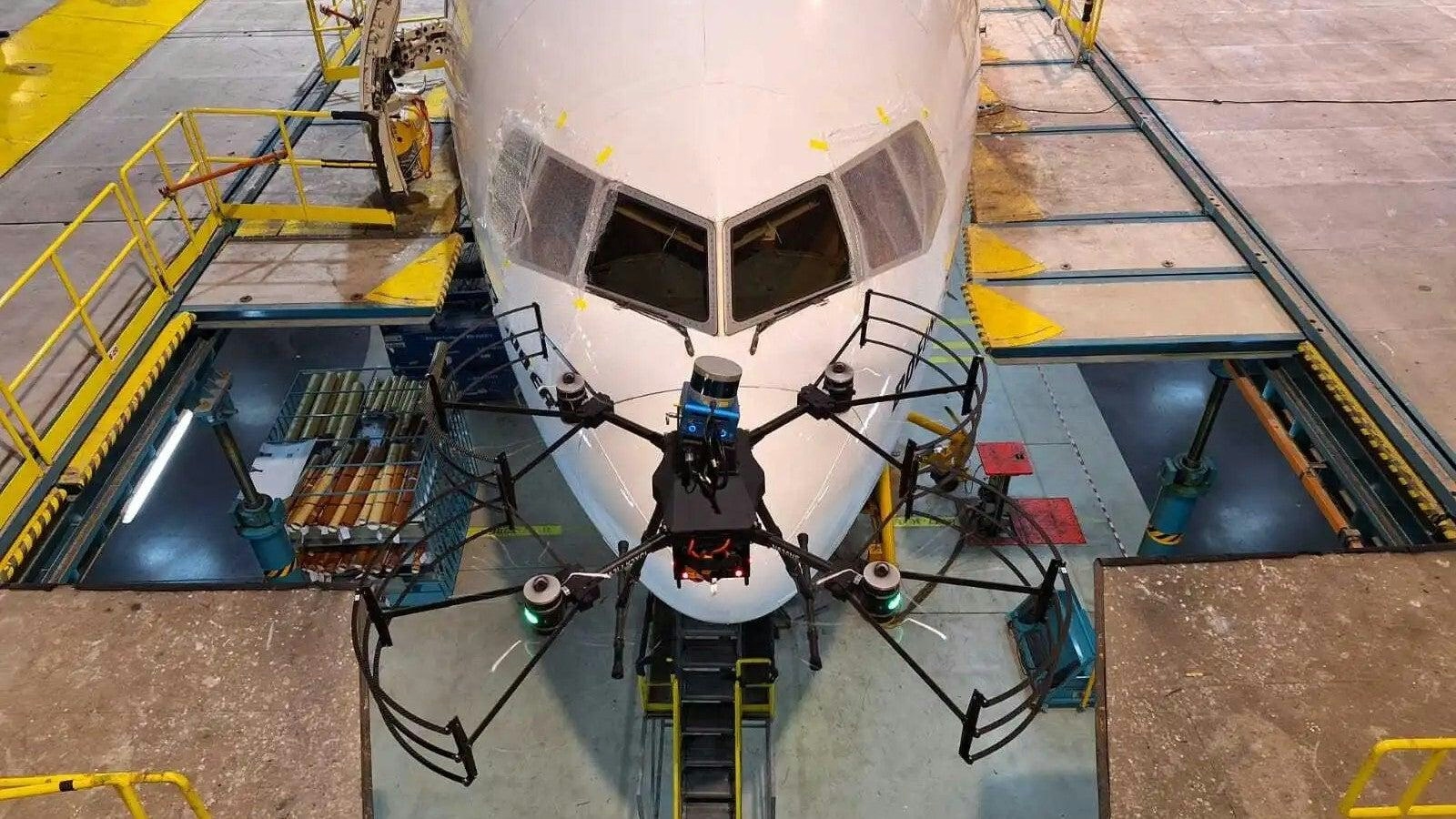
Commercial Aerospace in 2026: Advances from Self-Healing Parts to Space-Based MRO
Commercial Aerospace in 2026: Advances from Self-Healing Parts to Space-Based MRO
As the commercial aerospace industry approaches 2026, it finds itself navigating a complex landscape shaped by rapid digital transformation and expanding operational frontiers. The sector is simultaneously reinforcing its digital infrastructure on the ground and exploring innovative maintenance and logistics solutions in space. This dual evolution reflects the industry's response to emerging challenges and opportunities, positioning it for a new era of resilience and growth.
Strengthening Digital Resilience Amid Rising Cyber Threats
The aviation sector’s critical infrastructure, responsible for the global movement of people and goods, has become an increasingly attractive target for cyberattacks. Recent data from Thales reveals a dramatic 600% increase in ransomware incidents between 2024 and 2025. A notable example occurred in September 2025, when a cyberattack disrupted check-in systems at major European airports including Brussels, London, and Berlin, underscoring the vulnerability of current systems.
A significant weakness lies within the “middle section” of the industry’s technology stack, where airline, aircraft, and ground systems remain only partially modernized. In response, airlines and regulatory bodies are expected to enforce comprehensive digital upgrades aimed at closing these security gaps. Maintenance, Repair, and Overhaul providers (MROs), along with operators, will be required to collaborate closely with software partners to ensure a proactive cybersecurity posture. This will involve frequent software updates and a design philosophy focused on eliminating vulnerabilities from the outset, thereby enhancing the sector’s overall digital resilience.
Innovations in Supply Chain and Materials Technology
Persistent supply chain disruptions, particularly in the availability of spare parts, continue to challenge aviation maintenance. Traditional approaches, such as reliance on Parts Manufacturer Approval (PMA) components, often encounter resistance from lessors and incur significant costs during lease returns, limiting airlines’ flexibility and maintaining dependence on primary suppliers.
In 2026, however, 3D printing is expected to become a mainstream solution, enabling airlines to manufacture critical components on demand and reduce their reliance on conventional supply chains. The integration of digital thread technologies will further improve traceability and operational efficiency, allowing operators to maintain readiness despite ongoing disruptions.
Concurrently, the industry is witnessing a materials revolution with the introduction of self-healing components, including advanced polyurethane topcoats. These materials offer enhanced durability and potential cost savings, with market forecasts indicating substantial growth in their adoption. While some resistance from traditional maintenance practices is anticipated, competitive pressures and positive market responses are likely to accelerate widespread implementation. This shift will compel competitors to prioritize innovation and operational efficiency to sustain their market positions.
Industry Consolidation and the Emergence of Space-Based MRO
The commercial aerospace sector is also experiencing increased private equity activity, driven by consolidation opportunities and the pressing need to address supply chain bottlenecks and aging fleets. This trend is expected to intensify as companies seek greater scale and resilience in a rapidly evolving market environment.
Beyond terrestrial operations, the rise of reusable launch vehicles is opening new avenues for space-based Maintenance, Repair, and Overhaul (MRO) and logistics services. Initiatives such as Amazon’s Low Earth Orbit (LEO) space communications network and SpaceX’s in-orbit refueling capabilities are reshaping the technological landscape. These developments hold the potential to redefine operational models and market dynamics, further blurring the boundaries between commercial aviation and the space sector.
In 2026, the commercial aerospace industry will thus be characterized by a delicate balance of urgent digital modernization, innovative supply chain strategies, and the adoption of next-generation materials, all while extending its operational reach into space. The sector’s capacity to adapt to these multifaceted challenges will be critical to its resilience and competitiveness in the years ahead.

Etihad Airways Suspends Airbus A380 Flights on Key Route

Aditya Birla Group Seeks Approval for Aircraft Leasing in GIFT City

Qatar Airways Highlights Innovation and Connectivity at Arabian Travel Market 2026

Hong Kong's Five-Year Plan Includes Andrew Fan's Aircraft Parts Processing Hub Proposal

ACIA Aero Leasing Delivers ATR72-600 to Air Nostrum

RTX Appoints Jill Albertelli as Head of Pratt & Whitney

TAT Technologies Joins Beyond Aero Hydrogen Aircraft Program

AURAK Study Highlights Barriers to Air Taxi Adoption in Emerging Economies

Xiamen Air Selects Altitude for 787 Maintenance at Heathrow

Etihad and Swissport Extend Global Partnership
