
حوّل رؤى الذكاء الاصطناعي إلى أفعال منسّقة

الرائج الآن
Categories
Delivery of Norwegian F-16s to Ukraine Delayed by Maintenance Dispute with Sabena Aerospace
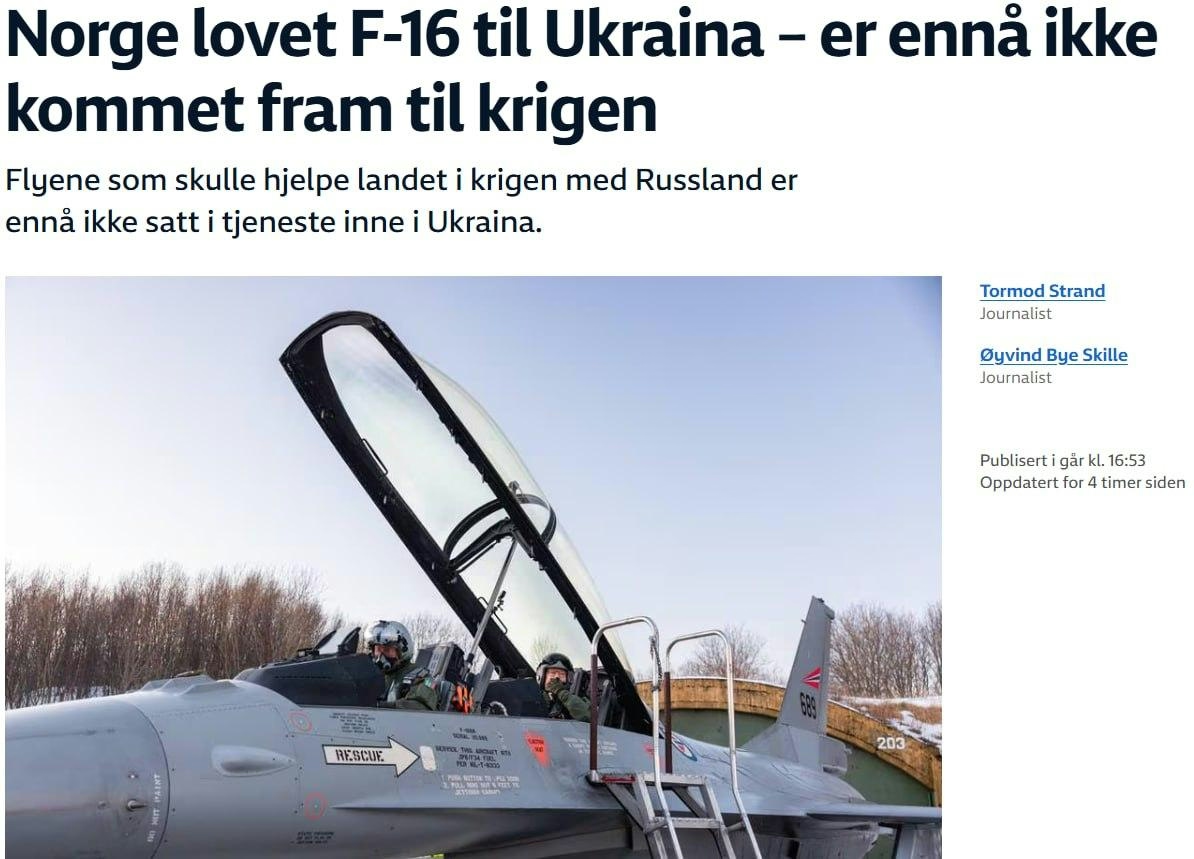
Delivery of Norwegian F-16s to Ukraine Delayed by Maintenance Dispute with Sabena Aerospace
Maintenance Dispute and Logistical Challenges
The planned delivery of Norwegian-donated F-16 fighter jets to Ukraine has encountered significant delays due to a maintenance dispute and logistical complications, raising concerns about Norway’s defense strategy and the stability of international defense supply chains. Norwegian authorities were reportedly warned as early as 2025 by Kongsberg Aviation Maintenance Services (KAMS) against sending the retired F-16s to Sabena Aerospace Engineering in Belgium. KAMS highlighted capacity constraints at the Belgian facility and recommended that both refurbishment and pilot training be conducted domestically in Norway. Despite these cautions, Norwegian officials proceeded with the plan to ship several aircraft—some missing up to 100 parts and transported without wings, engines, or tails—to Sabena’s workshop, where they remain awaiting servicing.
The backlog at Sabena Aerospace has delayed the jets’ readiness for deployment to Ukraine, even as the demand for advanced air defense intensifies amid ongoing Russian attacks on Ukrainian infrastructure. In contrast, Danish authorities, confronted with similar constraints, chose to retain and service their F-16s domestically, thereby avoiding comparable delays.
Political and Strategic Implications
The handling of the program has drawn sharp political criticism within Norway. Lawmaker Peter Frølich condemned the approach as a “lack of leadership,” asserting that the aircraft could already be operational in Ukraine had the domestic maintenance option been pursued. The Norwegian Ministry of Defence confirmed that the jets have not yet been delivered but declined to specify whether KAMS’ proposal was seriously considered. Officials now maintain that Norway lacks both the capacity and spare parts to perform the necessary maintenance domestically, as resources are currently committed to a separate F-16 sale to Romania.
This maintenance dispute not only hampers support for Ukraine but also exposes vulnerabilities in Norway’s own defense posture. The repercussions extend across the defense industry, potentially affecting other procurement and sales programs. For instance, delays and disputes of this nature could impact the Belgian order for the Cessna SkyCourier and Norway’s procurement of anti-tank mines. The situation reflects broader international challenges, exemplified by Switzerland’s recent contemplation of abandoning its purchase of the US Patriot air defense system due to delivery delays, underscoring the complexities and interdependencies inherent in global defense supply chains.
International Context and Future Outlook
In January 2026, the US Department of Defense contracted Sabena Aerospace Engineering to provide intermediate and depot-level maintenance for F-16s transferred to Ukraine, with work scheduled to continue through 2029. However, the current backlog raises serious questions about the capacity of international partners to meet urgent defense needs promptly.
As the delay persists, this episode serves as a cautionary example for governments navigating the intricate logistics of military aid and procurement within an increasingly interconnected and complex defense market.

Etihad Airways Suspends Airbus A380 Flights on Key Route

Aditya Birla Group Seeks Approval for Aircraft Leasing in GIFT City

Qatar Airways Highlights Innovation and Connectivity at Arabian Travel Market 2026

Hong Kong's Five-Year Plan Includes Andrew Fan's Aircraft Parts Processing Hub Proposal

ACIA Aero Leasing Delivers ATR72-600 to Air Nostrum

RTX Appoints Jill Albertelli as Head of Pratt & Whitney

TAT Technologies Joins Beyond Aero Hydrogen Aircraft Program

AURAK Study Highlights Barriers to Air Taxi Adoption in Emerging Economies

Xiamen Air Selects Altitude for 787 Maintenance at Heathrow

Etihad and Swissport Extend Global Partnership
