
حوّل رؤى الذكاء الاصطناعي إلى أفعال منسّقة

الرائج الآن
Categories
European Narrow-Body Aircraft Use Rises While Regional Jets Decline Since 2019
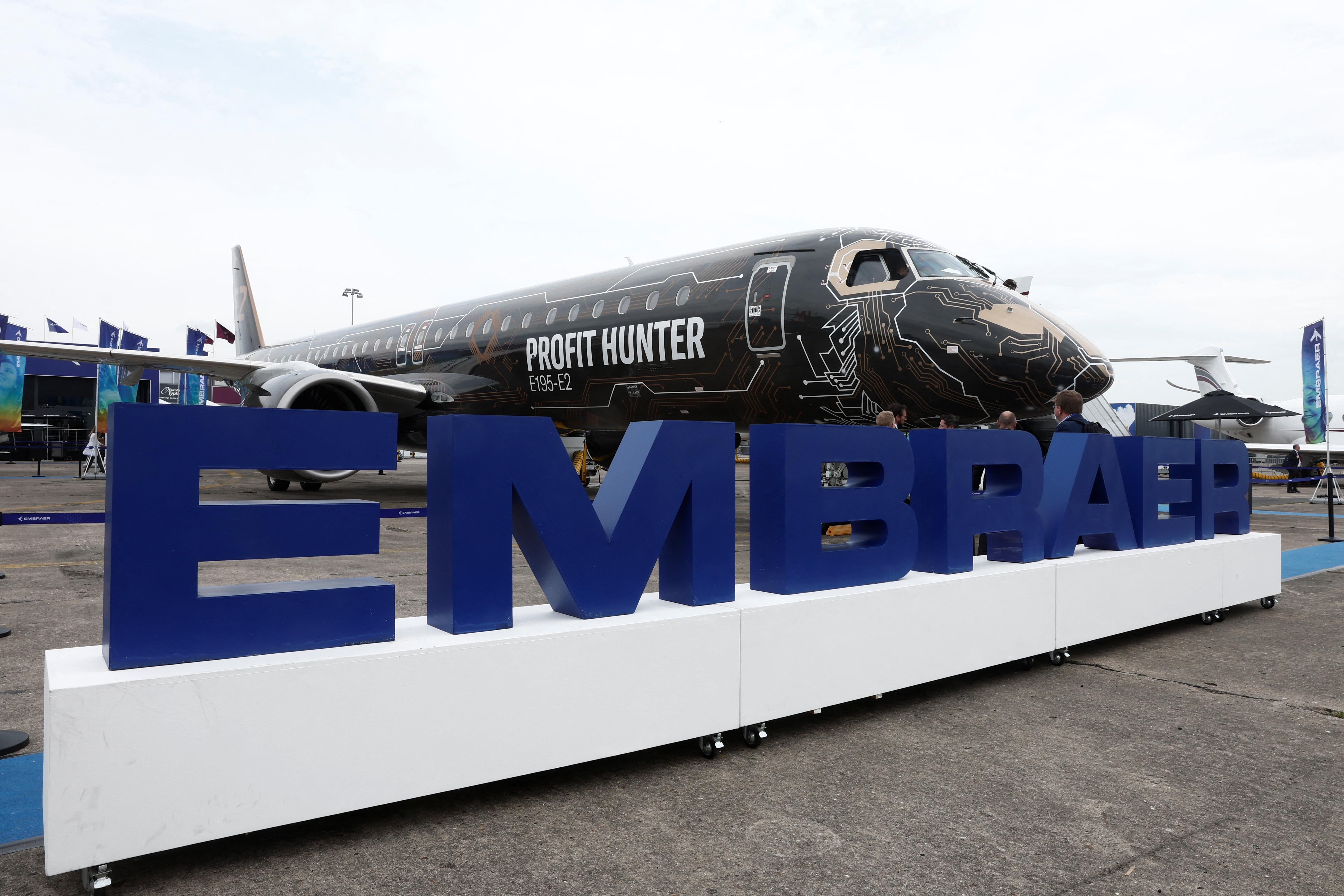
European Narrow-Body Aircraft Use Rises While Regional Jets Decline Since 2019
Divergent Trends in Post-Pandemic Recovery
As the aviation industry prepares for the 2025 Paris Air Show, recent data reveals a pronounced divergence in the recovery trajectories of European aircraft categories, excluding Russian operators. Analysis of flight cycles compared to 2019 indicates that narrow-body aircraft have experienced significant growth, whereas regional jets continue to decline sharply.
Narrow-body aircraft have emerged as the strongest performers in the European market. In May 2024, flights operated by these aircraft increased by nearly 5% compared to the same month in 2019, supported by a 9% expansion in the in-service fleet. Projections for 2025 suggest even greater momentum, with the fleet expected to grow by 13% and flight cycles rising almost 9% above pre-pandemic levels. This growth is largely driven by the continued delivery of Airbus A321neos, which airlines such as Aer Lingus, Iberia, and TAP are deploying on longer transatlantic routes. Although these aircraft are flying slightly fewer cycles, they are logging more hours per flight, reflecting a strategic shift toward longer sectors.
Challenges and Shifts in Fleet Strategy
The increasing reliance on larger narrow-body jets introduces potential operational challenges. Airlines may face higher fuel consumption and maintenance costs associated with these aircraft. Consequently, carriers are adjusting their fleet strategies to favor more efficient narrow-body models over regional jets. Manufacturers like Airbus and Boeing are responding by ramping up production and deliveries of narrow-body aircraft to meet this growing demand. Conversely, regional jet manufacturers risk losing market share and revenue amid this shift.
Regional turboprops have demonstrated notable resilience despite a 15% reduction in fleet size since 2019. Flights operated by turboprops have increased by 4%, indicating that operators are maximizing utilization of their remaining aircraft, primarily on shorter routes.
The widebody segment has also shown signs of recovery, with flight cycles in May 2024 nearly 3% higher than in May 2019. An 8% increase in the in-service widebody fleet since 2019 reflects renewed confidence in long-haul travel and international markets.
In stark contrast, the regional jet market continues to contract sharply. The in-service fleet has declined by more than 20% since 2019, resulting in a corresponding drop in monthly flight cycles. With no new Embraer E175 orders and no plans to certify the Comac C909 in Europe, the segment’s downward trend appears set to persist.
These shifts in fleet composition and utilization are occurring amid rising costs and ongoing supply chain challenges, factors that are likely to complicate operational decisions for airlines as they adapt to evolving demand patterns.
The data underpinning this analysis was sourced from Aviation Week’s Tracked Aircraft Utilization database.

Etihad Airways Suspends Airbus A380 Flights on Key Route

Aditya Birla Group Seeks Approval for Aircraft Leasing in GIFT City

Qatar Airways Highlights Innovation and Connectivity at Arabian Travel Market 2026

Hong Kong's Five-Year Plan Includes Andrew Fan's Aircraft Parts Processing Hub Proposal

ACIA Aero Leasing Delivers ATR72-600 to Air Nostrum

RTX Appoints Jill Albertelli as Head of Pratt & Whitney

TAT Technologies Joins Beyond Aero Hydrogen Aircraft Program

AURAK Study Highlights Barriers to Air Taxi Adoption in Emerging Economies

Xiamen Air Selects Altitude for 787 Maintenance at Heathrow

Etihad and Swissport Extend Global Partnership
