
حوّل رؤى الذكاء الاصطناعي إلى أفعال منسّقة

الرائج الآن
Categories
Florida to Use $200 Million Meant for EV Chargers to Build Air Taxi Pads
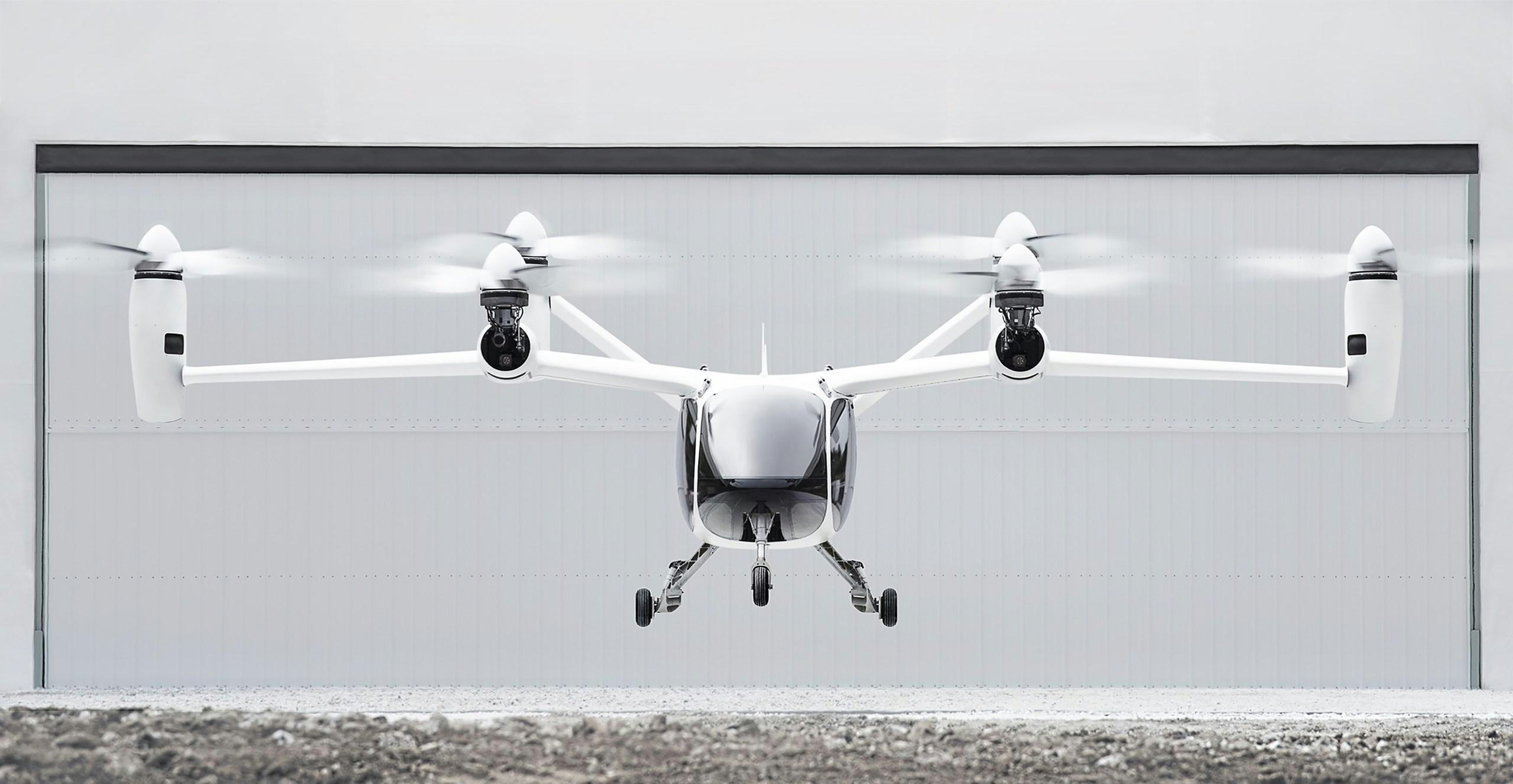
Florida Redirects $200 Million in EV Charger Funds to Develop Air Taxi Infrastructure
Florida, which hosts one of the largest electric vehicle (EV) fleets in the United States, is adopting an unconventional strategy in deploying federal infrastructure funds. Rather than expanding its network of EV chargers, the state plans to allocate nearly $200 million from the National Electric Vehicle Infrastructure (NEVI) program to construct landing pads and charging stations for electric air taxis. This decision, reported by the Miami Herald, marks a significant shift in the use of funds originally intended to accelerate the buildout of EV charging corridors nationwide under the Bipartisan Infrastructure Law.
A Shift Toward Electric Vertical Take-Off and Landing Aircraft
The Florida Department of Transportation (FDOT) justifies this reallocation by noting that private companies have largely met the current demand for EV charging infrastructure, despite the state lagging behind the national average in chargers per vehicle. Consequently, FDOT intends to build 32 landing pads for electric vertical take-off and landing aircraft (eVTOLs), a nascent market characterized by startups progressing toward production-ready models, some of which are also exploring defense applications.
Officials express optimism that these small, typically four- to five-passenger aircraft could alleviate Florida’s well-documented traffic congestion. The Kissimmee Gateway Airport has already begun testing electric air taxis, highlighting potential advantages such as reduced noise pollution and lower emissions. Nonetheless, widespread adoption faces considerable hurdles, including the need for infrastructure development, regulatory approvals, and public acceptance.
Regulatory Flexibility and Controversy
Florida’s decision aligns with updated NEVI program guidelines that permit states with “fully built out” EV charging corridors to redirect funds toward other publicly accessible EV charging infrastructure. While states like New York and North Carolina have used NEVI funds to expand community charging options—particularly benefiting renters and homeowners without dedicated parking—Florida’s approach emphasizes future-oriented mobility solutions. The planned landing pads and charging stations are intended for diverse locations, including golf courses, luxury apartment complexes, and airports.
The move has sparked debate within traditional aviation sectors, which may resist the shift, and among competitors who might lobby for funding to support more established transportation methods or to accelerate their own air taxi projects. Investor sentiment remains divided; some view the initiative as a promising innovation in urban mobility, while others question the practicality and economic viability of such a substantial pivot.
As Florida pioneers this approach, its strategy will serve as a critical test case for how federal infrastructure dollars can be leveraged to support emerging transportation technologies, even as questions persist regarding readiness and return on investment.

Etihad and Swissport Extend Global Partnership
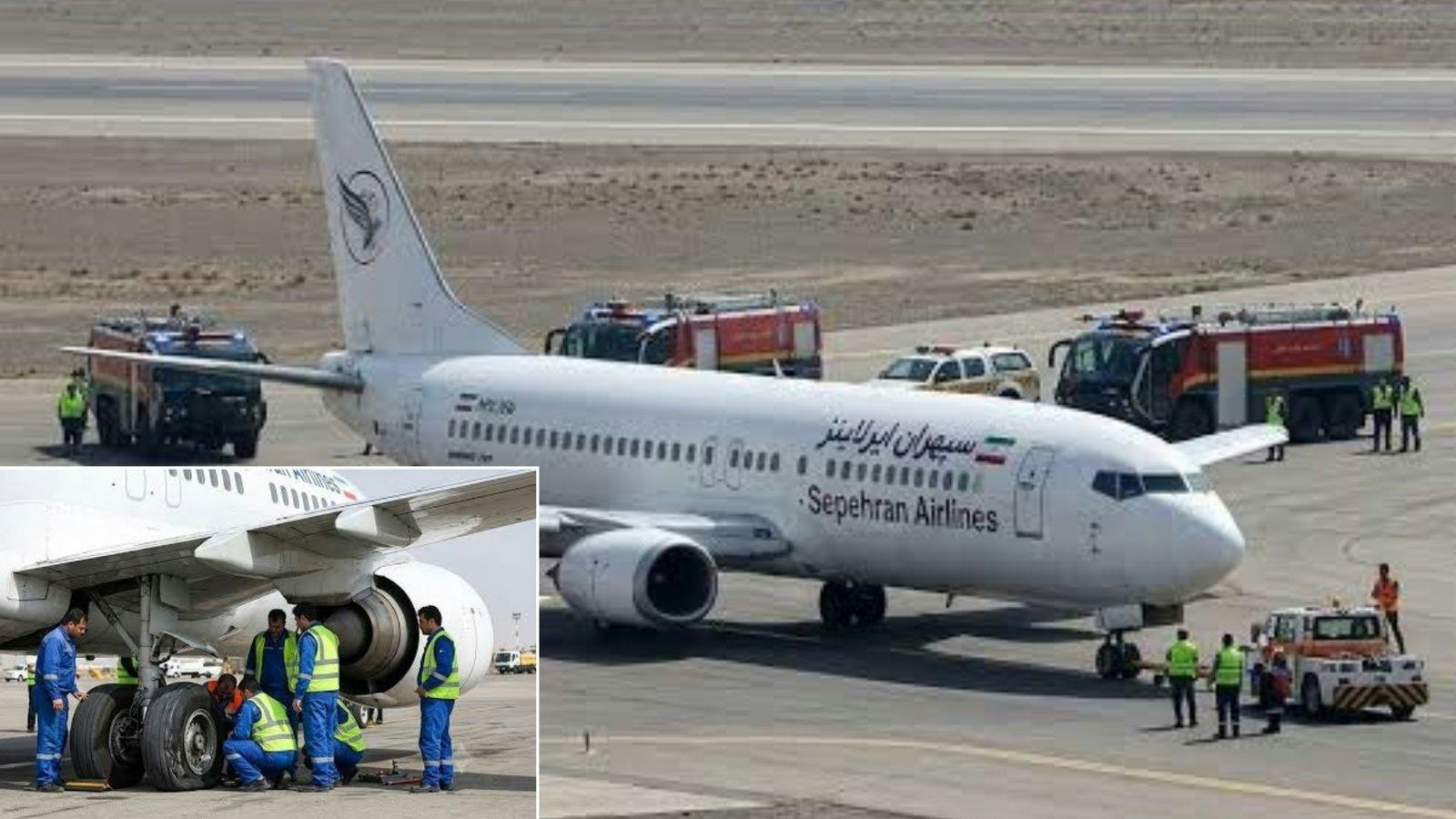
Sepehran Airlines B737 Returns to Mashhad After Tyre and Engine Issues

Etihad Deploys Widebody Fleet to Meet Strong Demand

Korean Air Finalizes $36.2 Billion Deal with Boeing
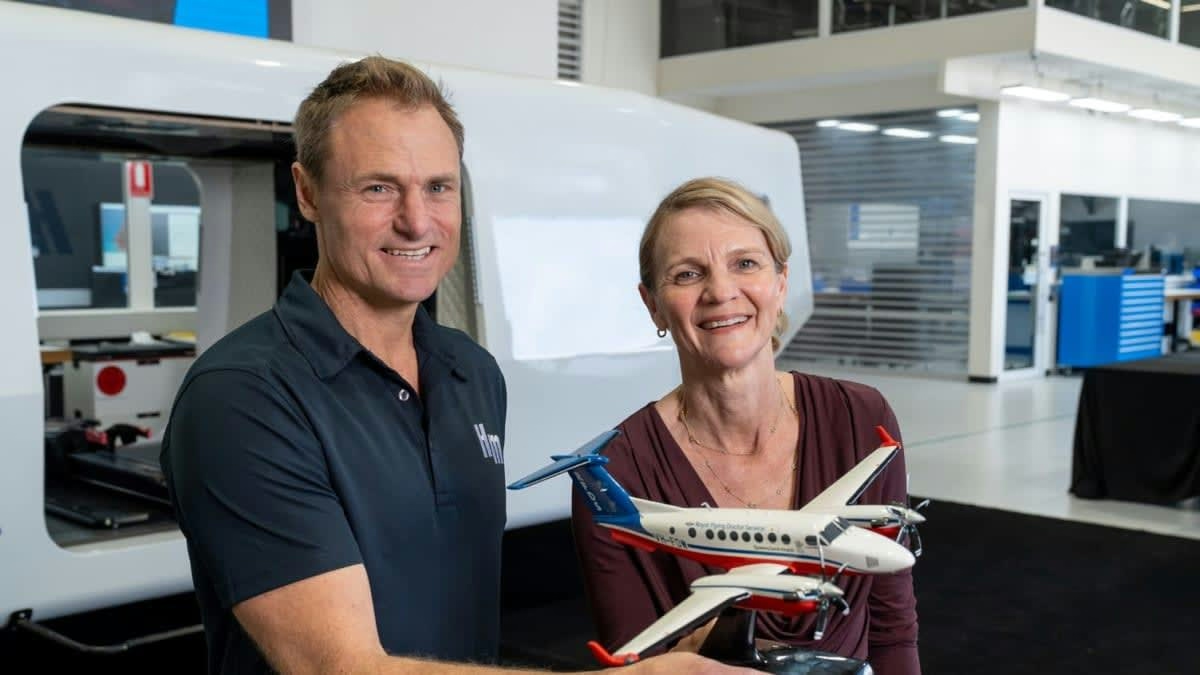
Australia’s RFDS Queensland Section Orders Six King Air 260Cs

Korean Air Finalizes Order for 103 Boeing Jets and Engines

Embraer E195-E2 Features Distinctive Engine Placement Among Regional Jets

What Passengers Can Expect on Boeing’s New 777X Jet

How Ethiopian Airlines Became Africa’s Leading Carrier Amid Gulf Competition

Joby Aviation Extends Autonomous Flight Capabilities with Cross-Country Tour
