
حوّل رؤى الذكاء الاصطناعي إلى أفعال منسّقة

الرائج الآن
Categories
Government Shutdown May Close Portions of U.S. Airspace
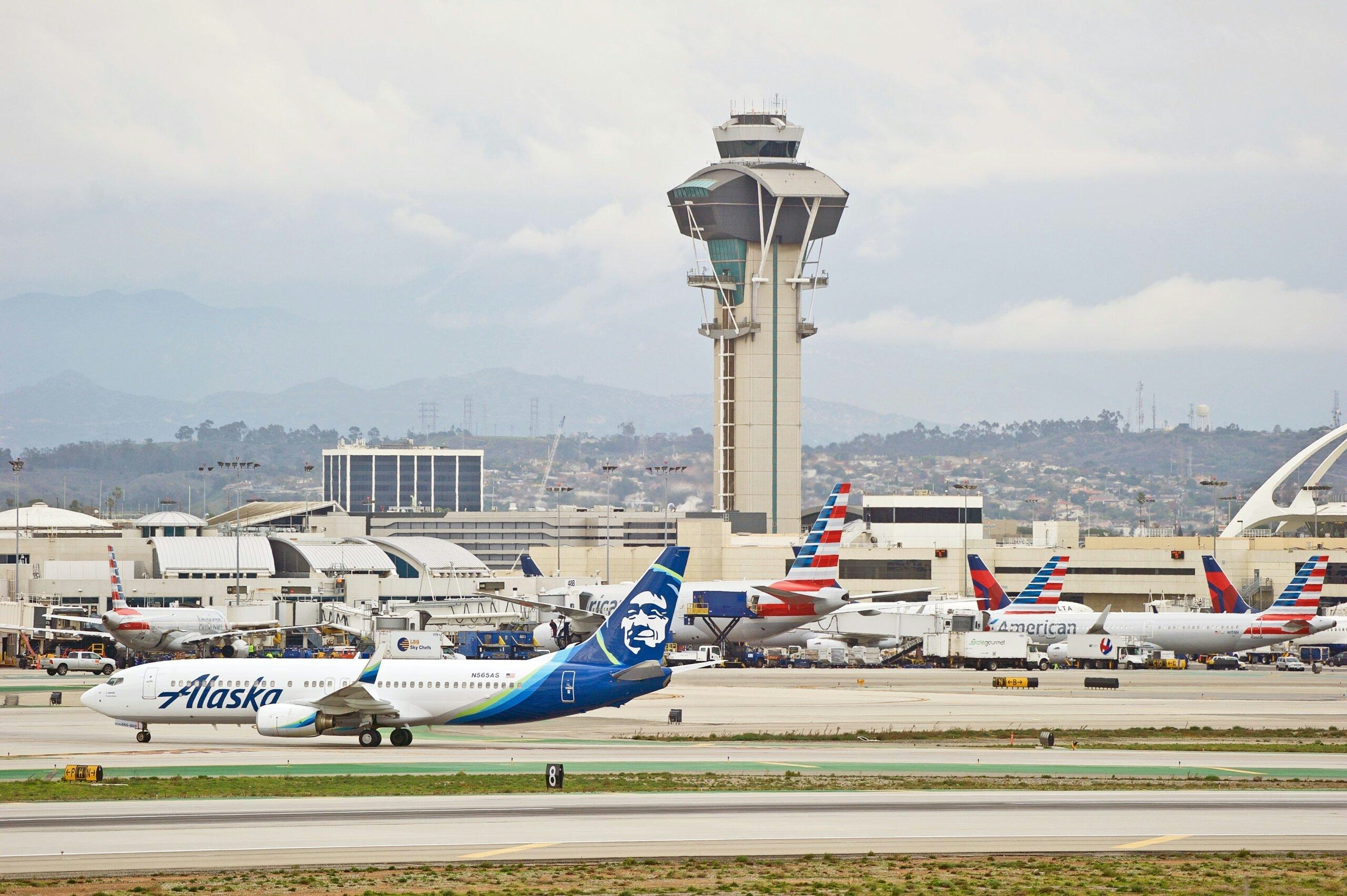
Government Shutdown Threatens U.S. Airspace Amid Growing Aviation Crisis
The protracted U.S. government shutdown, now extending beyond a month, is exerting unprecedented pressure on the nation’s aviation infrastructure. Transport Secretary Sean Duffy has issued a stark warning that if the impasse persists, portions of U.S. airspace may be forced to close due to critical staffing shortages. While he affirmed that the skies remain safe for the moment, Duffy cautioned that “mass chaos” could ensue should air-traffic control centers lose a significant number of essential personnel.
Strain on Aviation Personnel and Infrastructure
Despite the shutdown, air-traffic controllers and other key staff continue to report for duty, many without paychecks for several weeks. The cumulative effects of fatigue and stress are raising serious concerns about the potential for operational errors. Secretary Duffy acknowledged the mounting pressure, stating, “We are pushing our people to the limit,” and underscored that the risk of mistakes grows with each passing day.
The strain is already evident nationwide. Airports are grappling with longer security lines, delayed departures, and missed connections, creating widespread uncertainty for travelers. Airlines are struggling to maintain reliable schedules amid these challenges. The Federal Aviation Administration (FAA) has suspended recruitment and training programs, while critical upgrades to radar systems and control software have been put on hold. The absence of new hires and halted maintenance heighten the risk of technical failures within the system.
Industry and Economic Implications
Industry leaders have described the situation as “unsustainable.” Airlines are developing contingency plans, though their options remain limited without government intervention. Some carriers have begun adjusting operations and offering alternative travel arrangements in an effort to mitigate disruptions. Even a brief closure of U.S. airspace would trigger extensive delays, cancellations, and economic repercussions, impacting both passenger travel and freight transport.
Financial markets have reacted sharply to the unfolding crisis. Airline stocks have experienced significant selloffs as investors grow increasingly concerned about operational disruptions. The uncertainty is prompting competitors to reevaluate their strategies in anticipation of further instability.
The Department of Transportation has indicated it is closely monitoring the situation and may take action if safety is compromised. However, officials emphasize that a lasting resolution depends on congressional action. Each missed paycheck erodes morale among aviation workers, while each cancelled flight undermines public confidence in the system.
What began as a political deadlock now threatens to escalate into a national crisis. Unless lawmakers reach an agreement promptly, the prospect of grounded planes and restricted airspace looms larger. Officials have delivered a clear message: without immediate measures to sustain the aviation system, the nation’s skies—and its economy—face significant risk.

Etihad Airways Suspends Airbus A380 Flights on Key Route

Aditya Birla Group Seeks Approval for Aircraft Leasing in GIFT City

Qatar Airways Highlights Innovation and Connectivity at Arabian Travel Market 2026

Hong Kong's Five-Year Plan Includes Andrew Fan's Aircraft Parts Processing Hub Proposal

ACIA Aero Leasing Delivers ATR72-600 to Air Nostrum

RTX Appoints Jill Albertelli as Head of Pratt & Whitney

TAT Technologies Joins Beyond Aero Hydrogen Aircraft Program

AURAK Study Highlights Barriers to Air Taxi Adoption in Emerging Economies

Xiamen Air Selects Altitude for 787 Maintenance at Heathrow

Etihad and Swissport Extend Global Partnership
