
حوّل رؤى الذكاء الاصطناعي إلى أفعال منسّقة

الرائج الآن
Categories
Hydrogen-Powered Jet Engine Reaches Full Power in Test
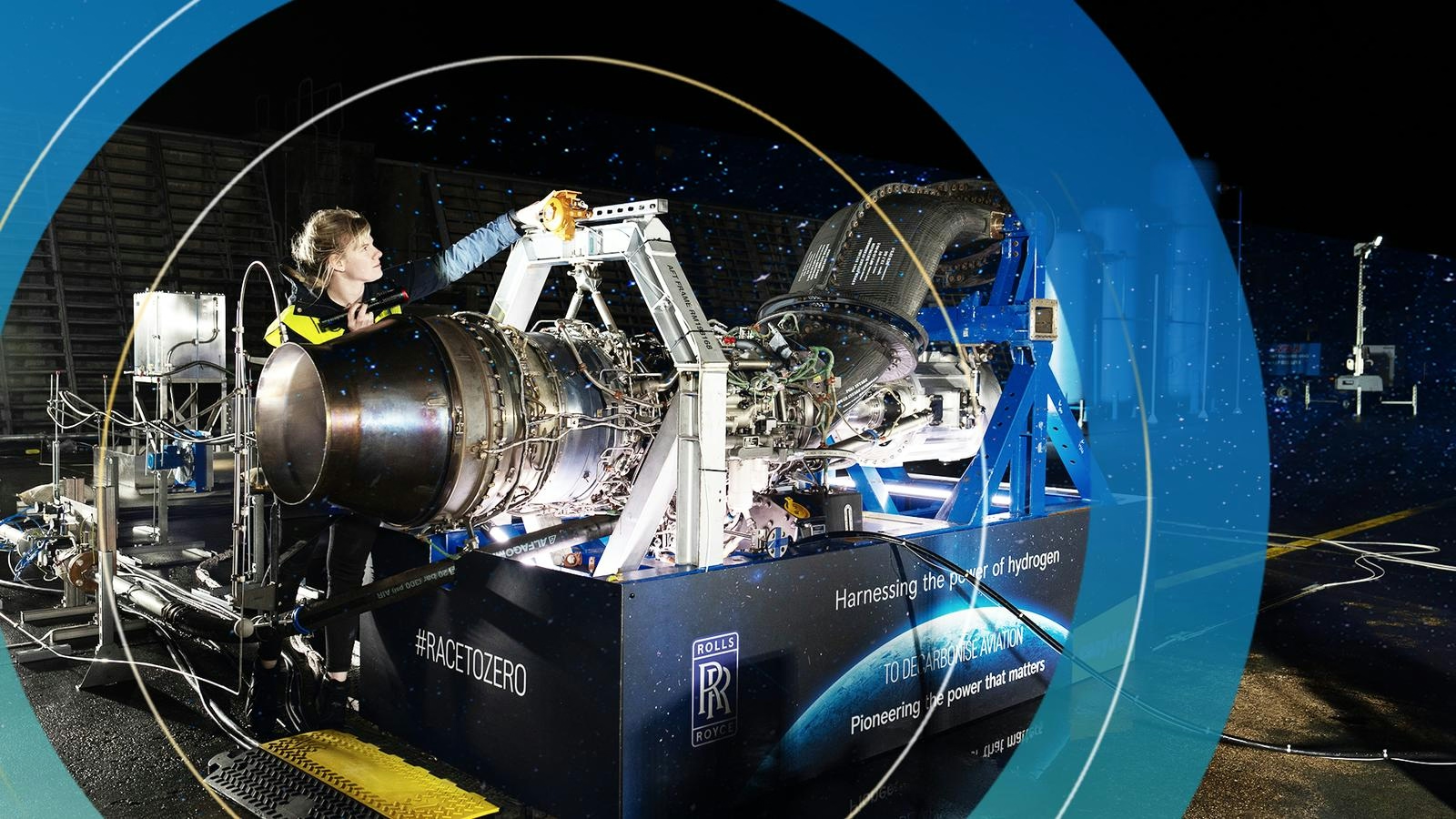
Hydrogen-Powered Jet Engine Achieves Full Take-Off Power in Landmark Test
Rolls-Royce has reached a significant milestone in sustainable aviation by successfully powering a jet engine to full take-off thrust using 100% hydrogen fuel. This world-first achievement was realized through a close collaboration with scientists from Britain’s Health and Safety Executive (HSE), whose expertise in hydrogen systems and safety engineering was instrumental to the project’s success.
Demonstrating Hydrogen Combustion in Modern Aero Engines
The test represents the first occasion on which a jet engine has operated at full power solely on hydrogen, providing critical insights into the feasibility of hydrogen as an alternative to conventional aviation fuels. The initiative, known as Engine GH2, not only demonstrated hydrogen combustion but also examined the behaviour of hydrogen within a modern aero gas turbine under a comprehensive range of operating conditions, including full flight cycles and fault scenarios.
Adam Newman, Chief Engineer of the Hydrogen Demonstrator Program at Rolls-Royce, underscored the importance of the achievement, stating, “This programme has given us the clearest understanding in the industry of how hydrogen behaves in a modern aero gas turbine. Through a collaborative, staged testing approach, we have validated combustion, fuel and control system technologies, and demonstrated the safe use of hydrogen through design, commissioning, maintenance and testing.”
Safety and Technical Collaboration
The HSE’s specialist research team, based at its Science and Research Centre in Buxton, played a vital role in the project by designing, manufacturing, and installing the high-flow, high-pressure hydrogen control and monitoring systems essential for safe engine testing. Their involvement included rigorous safety assessments, drawing on over two decades of experience with hydrogen technologies across various industries.
Despite this breakthrough, several challenges remain before hydrogen-powered aviation can be widely adopted. These include the development of extensive infrastructure to support hydrogen refuelling, the high initial costs associated with hydrogen production and storage, and technical difficulties in scaling hydrogen-powered engines for commercial use.
Industry Implications and Future Prospects
The successful test is expected to stimulate increased interest from airlines seeking sustainable alternatives to traditional fuels. The market is already witnessing heightened activity, with competitors such as H2Fly and other major aerospace firms advancing their own hydrogen engine projects. Industry responses are likely to involve further investment in hydrogen technology and expanded collaboration among stakeholders to facilitate broader adoption.
HSE officials emphasize that the project illustrates how stringent safety practices can foster innovation rather than hinder it. The agency has previously partnered with leading aerospace companies, including Airbus and Rolls-Royce, on initiatives aligned with the UK’s industrial growth and decarbonization objectives.
As governments and the aviation sector intensify efforts to achieve net-zero emissions, the successful hydrogen-powered engine test stands as a pivotal development, offering both a proof of concept and a clearer pathway toward the future of clean aviation.

Etihad Airways Suspends Airbus A380 Flights on Key Route

Aditya Birla Group Seeks Approval for Aircraft Leasing in GIFT City

Qatar Airways Highlights Innovation and Connectivity at Arabian Travel Market 2026

Hong Kong's Five-Year Plan Includes Andrew Fan's Aircraft Parts Processing Hub Proposal

ACIA Aero Leasing Delivers ATR72-600 to Air Nostrum

RTX Appoints Jill Albertelli as Head of Pratt & Whitney

TAT Technologies Joins Beyond Aero Hydrogen Aircraft Program

AURAK Study Highlights Barriers to Air Taxi Adoption in Emerging Economies

Xiamen Air Selects Altitude for 787 Maintenance at Heathrow

Etihad and Swissport Extend Global Partnership
