
حوّل رؤى الذكاء الاصطناعي إلى أفعال منسّقة

الرائج الآن
Categories
Investigation Centers on Navigation Error in Cargo Plane Crash
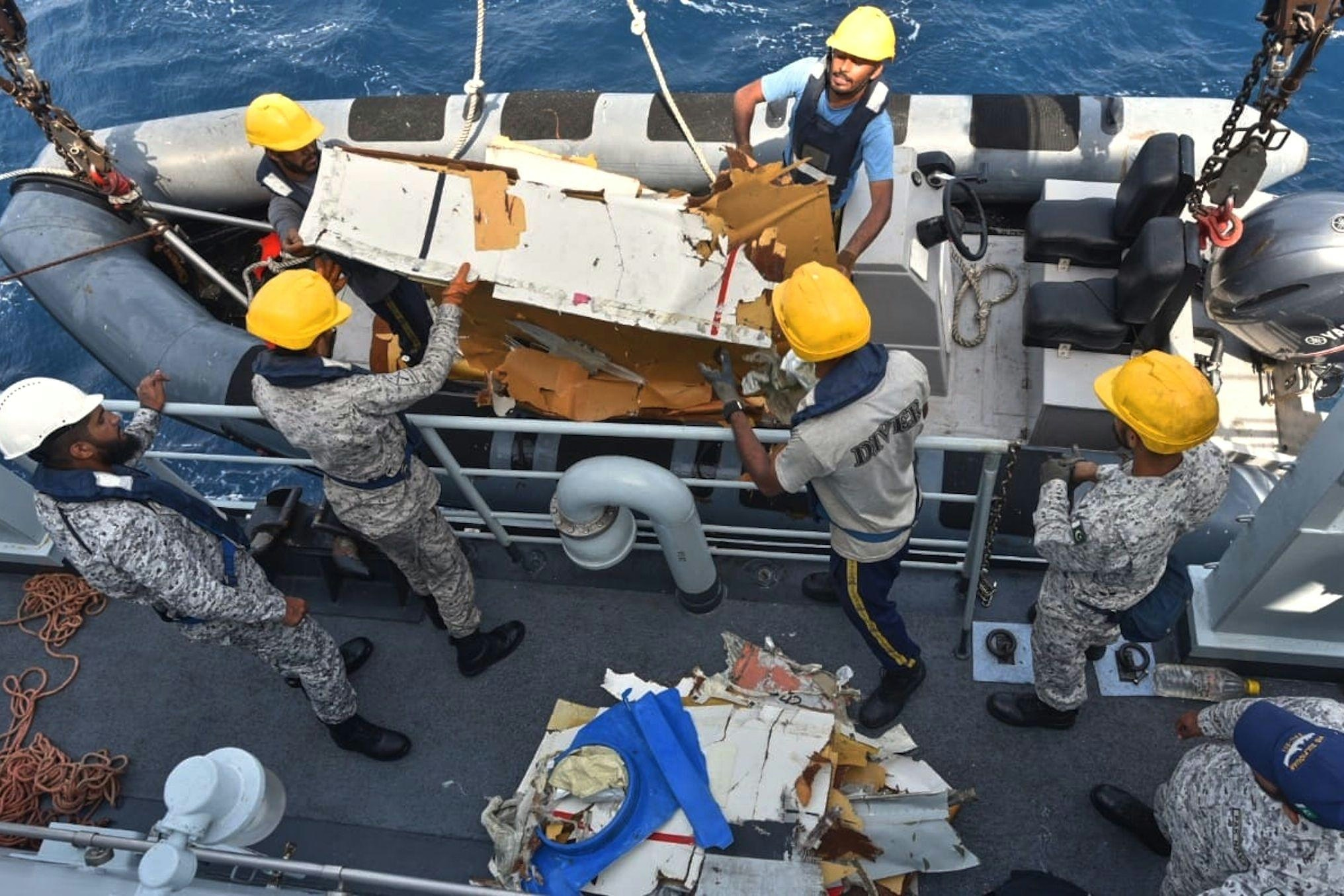
Investigation Centers on Navigation Error in Cargo Plane Crash
Focus on Inertial Reference System and Spatial Disorientation
Investigators probing the recent crash of a K2 Airways cargo aircraft are concentrating on a potential malfunction in the plane’s Inertial Reference System (IRS) and the possibility of spatial disorientation affecting the flight crew. Now in its fifth day, the ongoing salvage and rescue operations have yet to recover critical components such as the black box, engines, fuselage, or crew members. This absence of key evidence continues to hinder efforts to establish the exact cause of the accident.
Preliminary findings from sources close to the investigation suggest a technical fault in the IRS, a vital navigation system that independently provides pilots with data on the aircraft’s position, direction, attitude, and speed. The IRS’s autonomy from external navigation signals makes its proper functioning essential for safe flight. Alongside this, investigators are exploring whether the pilots may have suffered spatial disorientation—a dangerous condition where a loss of accurate awareness of the aircraft’s orientation can lead to misjudgments and a false sense of direction.
Flight Crew’s Request and Ongoing Recovery Challenges
Shortly before the crash, the flight crew reportedly sought heading guidance from air traffic control, an action that has drawn particular scrutiny. This request raises questions about whether the crew was experiencing confusion or if the navigation system was malfunctioning, with investigators aiming to determine the relative influence of technical failure versus human factors.
The search for the black box and flight data recorder remains critical, as these devices are expected to provide definitive information about the sequence of events leading to the crash. However, difficult conditions at the crash site have impeded recovery efforts, prolonging uncertainty for both investigators and K2 Airways.
Industry and Regulatory Reactions
The incident has sparked calls for a thorough investigation into possible navigation errors and attracted the attention of regulatory authorities, who may intensify oversight of K2 Airways’ operational procedures. The crash has also raised concerns about the airline’s safety standards, reflected in a temporary decline in its stock prices amid investor apprehension over safety and reliability.
In response, competitors within the cargo aviation sector are reportedly reviewing their own navigation systems and issuing public statements to reassure customers and stakeholders about their safety protocols. While the broader impact on the industry remains uncertain, the crash has highlighted the critical importance of reliable navigation technology and comprehensive crew training in ensuring aviation safety.
As the search for the missing aircraft and crew continues, all eyes remain on the recovery of the black box, which is anticipated to provide crucial insights into the factors that contributed to this tragic accident.

Etihad and Swissport Extend Global Partnership

Sepehran Airlines B737 Returns to Mashhad After Tyre and Engine Issues

Etihad Deploys Widebody Fleet to Meet Strong Demand

Korean Air Finalizes $36.2 Billion Deal with Boeing

Australia’s RFDS Queensland Section Orders Six King Air 260Cs

Korean Air Finalizes Order for 103 Boeing Jets and Engines

Embraer E195-E2 Features Distinctive Engine Placement Among Regional Jets

What Passengers Can Expect on Boeing’s New 777X Jet

How Ethiopian Airlines Became Africa’s Leading Carrier Amid Gulf Competition

Joby Aviation Extends Autonomous Flight Capabilities with Cross-Country Tour
