
حوّل رؤى الذكاء الاصطناعي إلى أفعال منسّقة

الرائج الآن
Categories
Kenya Airways Plans to Use 767 Freighters Ahead of 777F Delivery
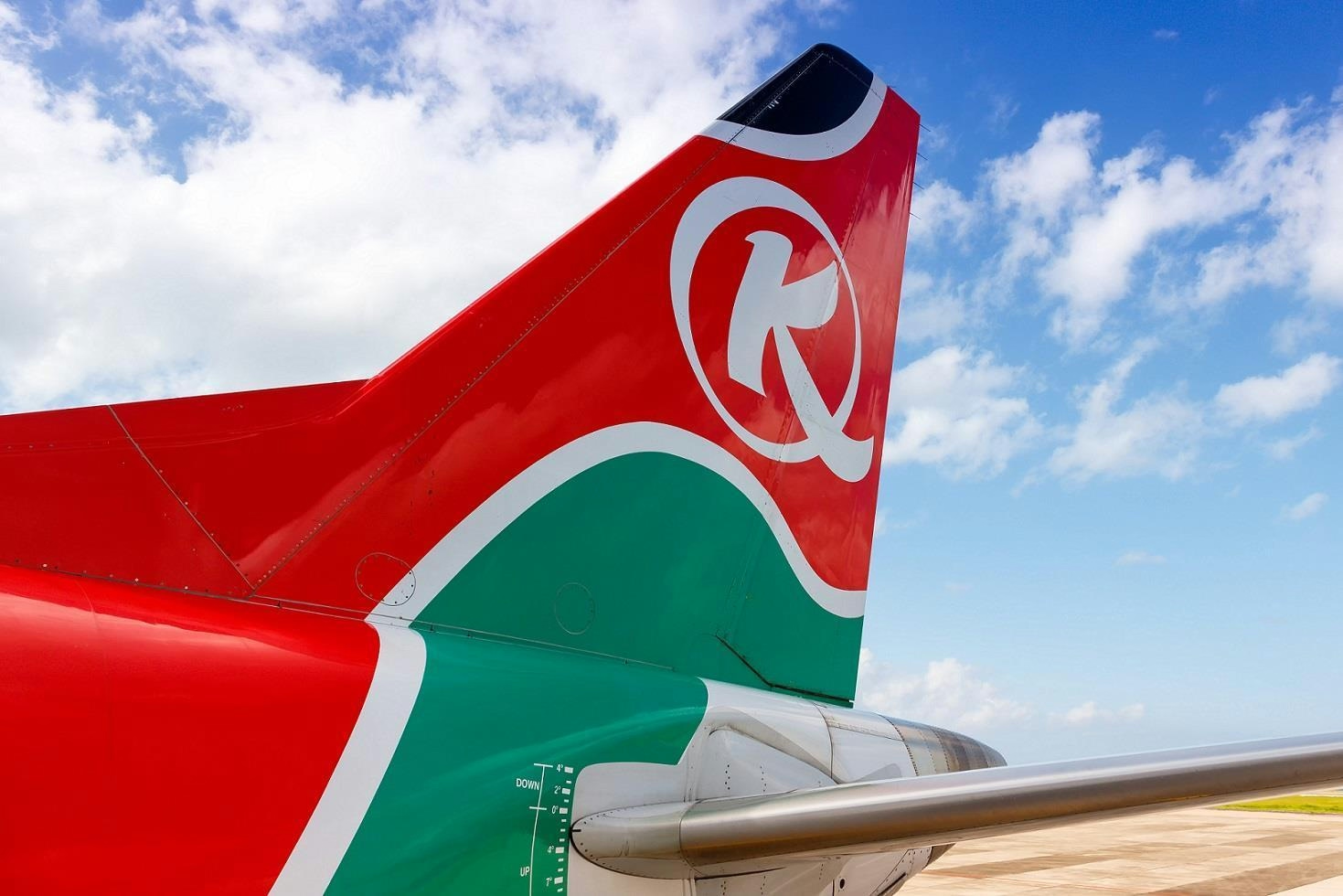
Kenya Airways to Deploy 767 Freighters as Interim Measure Ahead of 777F Deliveries
Kenya Airways is advancing its cargo expansion strategy by introducing Boeing 767 freighters as an interim solution while awaiting the delivery of larger Boeing 777F aircraft. This initiative forms a key part of the airline’s objective to double the cargo division’s contribution to group revenues from 10% to 20% within the year, aiming to stabilize earnings and reduce dependence on the fluctuating passenger market.
Interim Fleet Expansion and Strategic Outlook
Fitsum Abadi Gebrehawaria, Kenya Airways’ cargo director, revealed that the airline anticipates adding its first 767 freighter by the end of the first quarter, with a second expected shortly thereafter. These aircraft will serve as a transitional fleet until the arrival of the 777Fs, which Kenya Airways plans to operate in a fleet of three by 2030. While the 777F remains the preferred long-term freighter, immediate acquisition has been constrained by limited availability. Boeing is currently seeking an FAA emissions waiver to authorize the sale of 35 additional 777F freighters, responding to strong customer demand and delays in certifying the next-generation 777-8F. This industry-wide bottleneck has compelled Kenya Airways to rely on the more readily available 767s in the short term, reflecting a broader trend among airlines turning to older models to meet urgent air freight requirements.
At present, Kenya Airways operates four narrowbody freighters—two Boeing 737-300s and two 737-800s, the latter introduced in 2024. The introduction of widebody freighters is expected to significantly enhance the airline’s capacity to serve high-demand routes, particularly within the Asia-Pacific region. Guangzhou and potentially Hong Kong have been identified as key destinations, with initial 767 operations likely to include technical stops in the Middle East to facilitate the transport of perishable exports before returning with e-commerce cargo.
Enhancing Market Position Through Technology and Partnerships
The fleet expansion is part of a broader effort to strengthen Kenya Airways Cargo’s market position. In addition to acquiring new aircraft, the airline is investing in digital transformation initiatives, including the implementation of advanced cargo management systems designed for capacity planning, real-time tracking, and yield optimization. Abadi emphasized the importance of these technological upgrades in improving operational efficiency and revenue management.
Kenya Airways is also expanding its network reach through strategic partnerships. Recent memorandums of understanding with Qatar Airways and Air Tanzania, alongside interline agreements with China Southern, Saudia, Turkish Airlines, Ethiopian Airlines, and Bluorbit, are intended to open access to new markets and increase cargo revenues. According to Abadi, these interline agreements enable the airline to tap into offline markets, thereby supporting cargo growth.
Further investments are being directed toward specialized cargo solutions tailored for pharmaceuticals, e-commerce, express, and courier services, building on Kenya Airways’ established expertise in perishable exports. While the market’s response and competitor reactions to the interim use of 767 freighters remain to be seen, the strategy underscores the airline’s adaptability and commitment to addressing current air freight demand amid widespread industry supply constraints.

Etihad Airways Suspends Airbus A380 Flights on Key Route

Aditya Birla Group Seeks Approval for Aircraft Leasing in GIFT City

Qatar Airways Highlights Innovation and Connectivity at Arabian Travel Market 2026

Hong Kong's Five-Year Plan Includes Andrew Fan's Aircraft Parts Processing Hub Proposal

ACIA Aero Leasing Delivers ATR72-600 to Air Nostrum

RTX Appoints Jill Albertelli as Head of Pratt & Whitney

TAT Technologies Joins Beyond Aero Hydrogen Aircraft Program

AURAK Study Highlights Barriers to Air Taxi Adoption in Emerging Economies

Xiamen Air Selects Altitude for 787 Maintenance at Heathrow

Etihad and Swissport Extend Global Partnership
