
حوّل رؤى الذكاء الاصطناعي إلى أفعال منسّقة

الرائج الآن
Categories
KQ Manager Dismissal Highlights Changes in Engine Maintenance Contracts
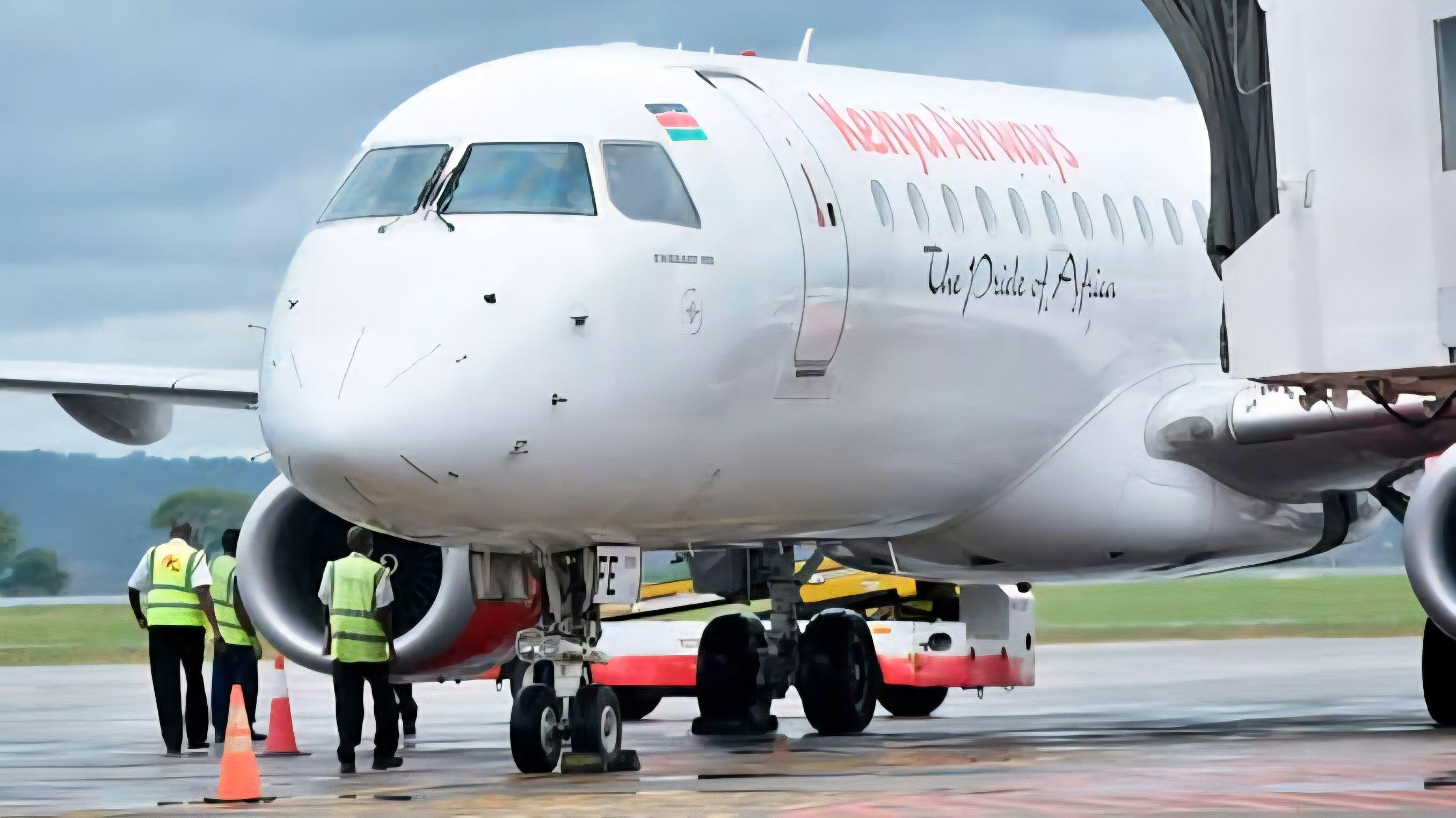
KQ Manager Dismissal Highlights Shifts in Engine Maintenance Contracts
Legal Dispute Reveals Internal Tensions
The recent dismissal of David Shellany, a senior manager within Kenya Airways’ (KQ) technical and engineering department, has brought to light significant internal conflicts regarding the procurement of engine maintenance services. Legal proceedings surrounding Shellany’s termination have exposed deeper challenges within the national carrier, particularly concerning the management of high-value maintenance, repair, and overhaul (MRO) contracts—one of the largest operational expenses for any commercial airline.
Court documents reveal that Shellany’s dismissal was closely tied to disagreements over the selection process for external service providers responsible for maintaining KQ’s aircraft engines. Shellany contends that his professional recommendations were overlooked during the procurement process, suggesting that the dispute extends beyond personnel issues to fundamental disagreements over the airline’s maintenance strategy. Kenya Airways, however, asserts that the dismissal was conducted in accordance with established disciplinary procedures and was justified based on performance and organizational alignment, rather than the specifics of the maintenance tender.
Industry Trends and Operational Challenges
This legal conflict emerges amid a global shift in how airlines approach engine maintenance, driven by rising fuel costs and fluctuating demand. Airlines worldwide are increasingly adopting maintenance contracts that provide greater cost predictability and operational flexibility. For instance, South American carriers such as Azul have embraced flight-hour-based maintenance agreements, which link costs directly to aircraft usage. These contracts, often awarded to original equipment manufacturers or specialized engineering firms, aim to reduce fleet downtime and enhance preventive maintenance.
Moreover, vertical integration within engine platforms is gaining momentum, enabling airlines to improve coordination, reduce fragmentation, and utilize data analytics for more effective lifecycle management. Despite these advantages, such strategies carry inherent risks, including challenges in contract execution, project design complexities, and vulnerability to shifting market conditions.
Kenya Airways has historically faced difficulties balancing operational costs with the imperative to maintain stringent safety and engineering standards. The technical department plays a critical role in ensuring the airworthiness of the fleet through both scheduled and unscheduled maintenance. Disputes over engine maintenance contracts, therefore, have immediate implications for flight schedules and overall reliability.
Broader Implications for Kenya Airways
The ongoing legal battle coincides with the Kenyan government’s exploration of measures to stabilize the national carrier, including potential partnerships and the privatization of certain business segments. Analysts observe that conflicts such as this underscore the complexities inherent in managing state-linked corporations with substantial procurement budgets. They also highlight the pressing need for transparent and adaptable contract management frameworks.
As the court case unfolds, it not only reflects internal governance challenges at Kenya Airways but also illustrates the broader pressures confronting airlines as they adapt to a rapidly evolving maintenance landscape.

Etihad Airways Suspends Airbus A380 Flights on Key Route

Aditya Birla Group Seeks Approval for Aircraft Leasing in GIFT City

Qatar Airways Highlights Innovation and Connectivity at Arabian Travel Market 2026

Hong Kong's Five-Year Plan Includes Andrew Fan's Aircraft Parts Processing Hub Proposal

ACIA Aero Leasing Delivers ATR72-600 to Air Nostrum

RTX Appoints Jill Albertelli as Head of Pratt & Whitney

TAT Technologies Joins Beyond Aero Hydrogen Aircraft Program

AURAK Study Highlights Barriers to Air Taxi Adoption in Emerging Economies

Xiamen Air Selects Altitude for 787 Maintenance at Heathrow

Etihad and Swissport Extend Global Partnership
