
حوّل رؤى الذكاء الاصطناعي إلى أفعال منسّقة

الرائج الآن
Categories
Ryanair CEO Warns Wizz Air and airBaltic May Struggle This Winter
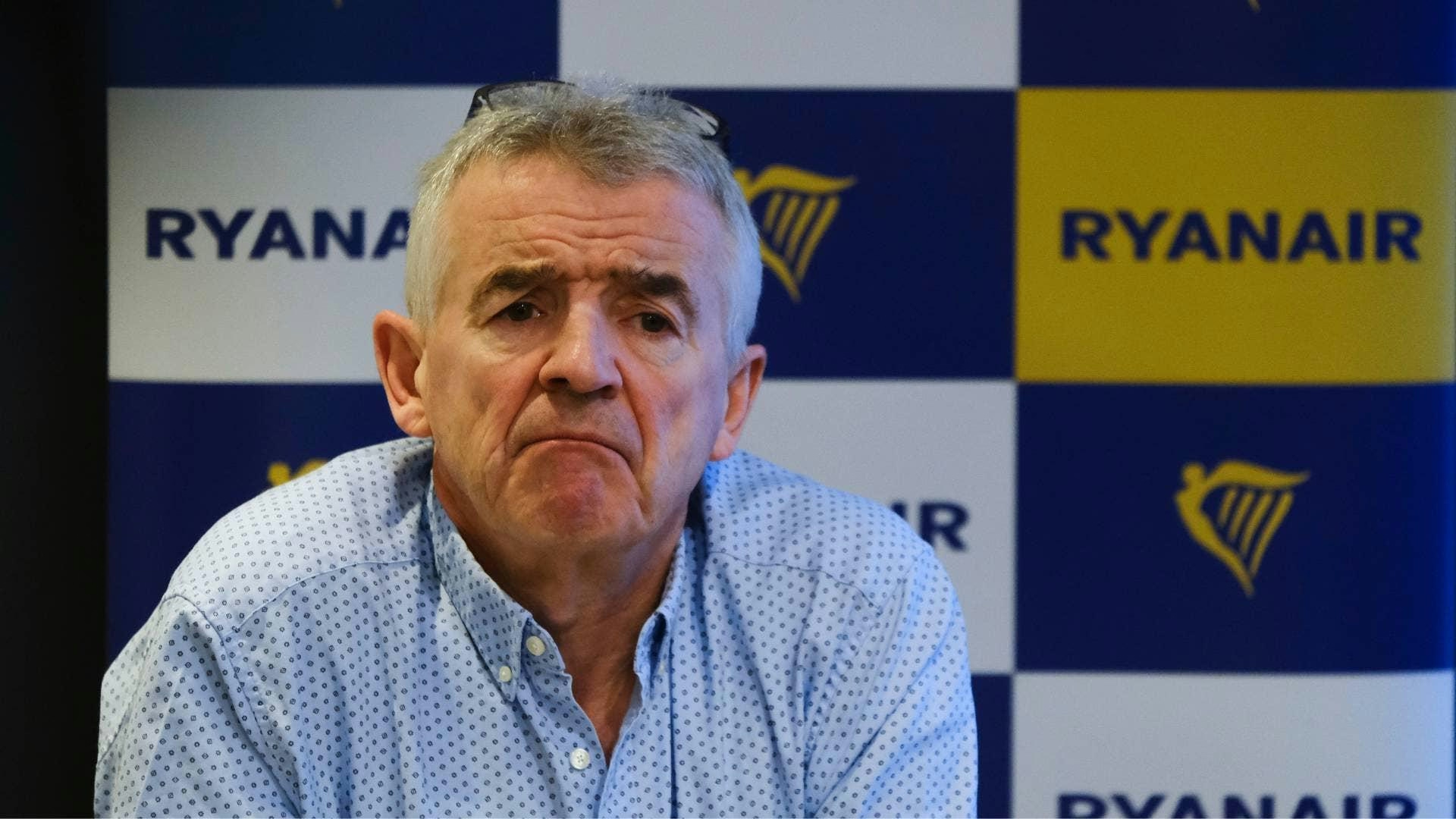
Ryanair CEO Issues Warning Over Winter Challenges for Wizz Air and airBaltic
Ryanair’s Chief Executive Officer, Michael O’Leary, has issued a stark warning regarding the financial stability of two prominent European carriers, Wizz Air and airBaltic, as they confront escalating jet fuel prices and limited fuel hedging ahead of the winter season. O’Leary emphasized that these factors could severely disrupt their operations and threaten their viability in the coming months.
Fuel Crisis and Financial Vulnerability
O’Leary, known for his candid assessments, revealed that Ryanair has already incurred an additional $50 million in jet fuel expenses this month alone. He cautioned that the situation could worsen if fuel shortages emerge and oil prices continue to rise, driven by geopolitical tensions in the Middle East and potential disruptions in the Strait of Hormuz. While Ryanair has hedged approximately 80% of its fuel requirements at $67 per barrel through March next year, the remaining 20% is exposed to volatile market prices, which have surged beyond $150 per barrel. This volatility places significant financial strain on airlines, many of which are unable to sustain such elevated costs without passing them on to passengers through higher airfares and fuel surcharges.
O’Leary specifically identified Wizz Air, the Hungarian ultra-low-cost carrier, and Latvia’s airBaltic as particularly vulnerable due to their insufficient fuel hedging strategies. He warned that both airlines risk depleting their cash reserves by the end of the fourth quarter if oil prices remain at current levels. “If oil stays at these levels, two or three European airlines in October or November could go bankrupt like Wizz Air, which wants to sue me but won’t have enough time to do so, and airBaltic,” O’Leary stated, implying that a reduction in competition could ultimately benefit Ryanair.
Expansion Amid Uncertainty
This warning comes as both Wizz Air and airBaltic continue to pursue aggressive expansion plans. Wizz Air recently announced new routes from Maastricht Aachen Airport and Eindhoven Airport, while airBaltic has introduced a new service connecting Groningen Airport Eelde to Tenerife. Despite these growth initiatives, O’Leary’s remarks cast doubt on the sustainability of such expansions given the mounting fuel costs and uncertain liquidity positions.
The broader airline industry is already grappling with the repercussions of the Middle East conflict, which has driven operational costs higher and contributed to a decline in airline share prices. Ryanair itself has experienced a drop in its share price from €35 ($37) to €25 ($29) in recent months. O’Leary warned that if fuel supplies tighten further in the coming months, the financial pressure on airlines could intensify, potentially forcing carriers unable to absorb these costs to suspend operations.
Industry data highlights the scale of the challenge facing Wizz Air and airBaltic. Wizz Air operates a fleet of 228 aircraft across its subsidiaries, while airBaltic continues to expand its network from its base in Riga. However, without adequate fuel hedging and with cash reserves under strain, both airlines may face a difficult and turbulent winter ahead.

Etihad Airways Suspends Airbus A380 Flights on Key Route

Aditya Birla Group Seeks Approval for Aircraft Leasing in GIFT City

Qatar Airways Highlights Innovation and Connectivity at Arabian Travel Market 2026

Hong Kong's Five-Year Plan Includes Andrew Fan's Aircraft Parts Processing Hub Proposal

ACIA Aero Leasing Delivers ATR72-600 to Air Nostrum

RTX Appoints Jill Albertelli as Head of Pratt & Whitney

TAT Technologies Joins Beyond Aero Hydrogen Aircraft Program

AURAK Study Highlights Barriers to Air Taxi Adoption in Emerging Economies

Xiamen Air Selects Altitude for 787 Maintenance at Heathrow

Etihad and Swissport Extend Global Partnership
