
حوّل رؤى الذكاء الاصطناعي إلى أفعال منسّقة

الرائج الآن
Categories
Lufthansa Orders 10 Airbus and 10 Boeing Long-Haul Aircraft
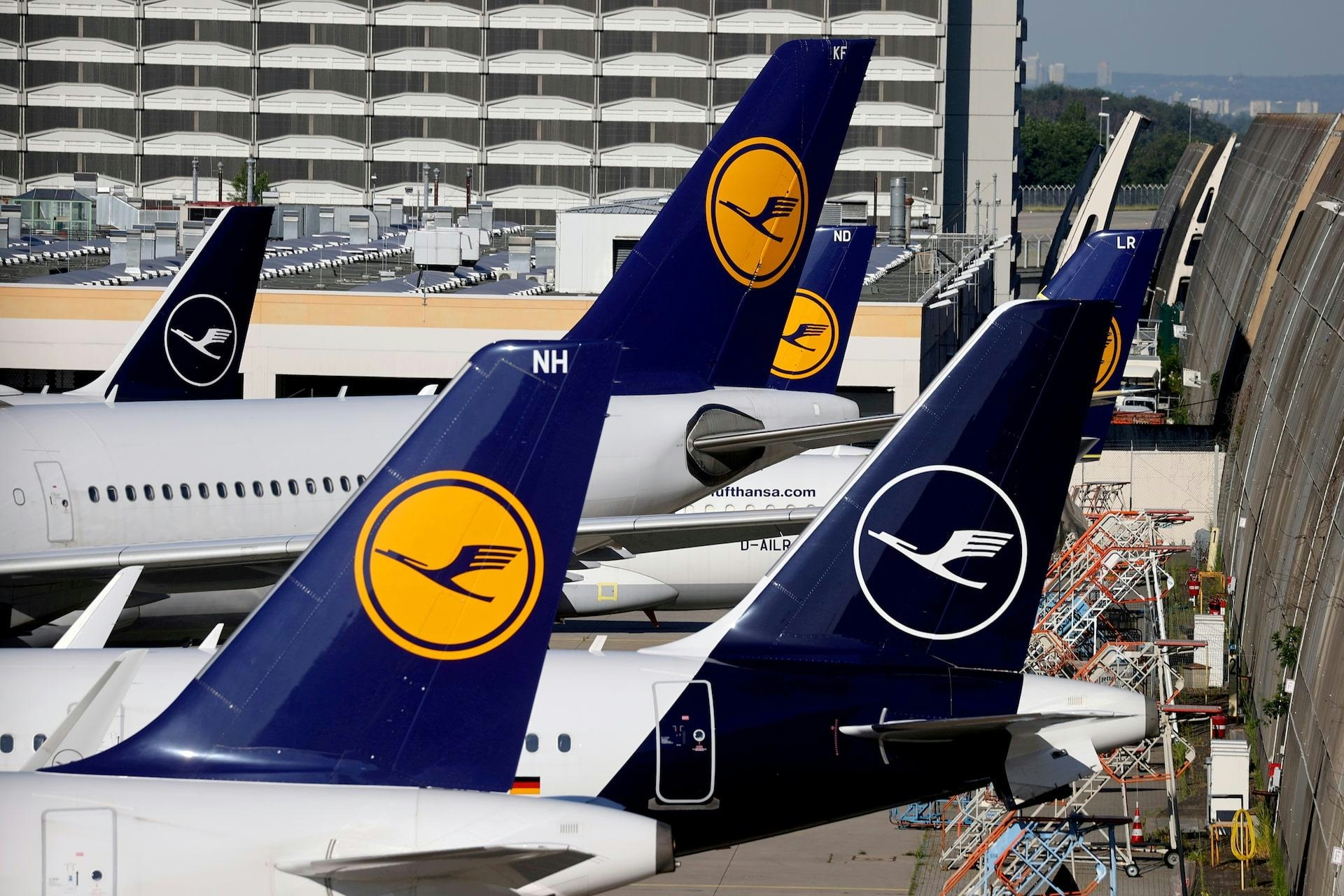
Lufthansa Confirms Order for 20 New Long-Haul Aircraft from Airbus and Boeing
Deutsche Lufthansa AG’s Supervisory Board has approved a significant fleet expansion, authorizing the purchase of 20 new long-haul aircraft. The order comprises ten Airbus A350-900s and ten Boeing 787-9s, with deliveries scheduled between 2032 and 2034. This acquisition forms a key part of Lufthansa’s ongoing fleet modernization strategy aimed at enhancing efficiency and sustainability.
Strategic Investment in Fleet Modernization and Sustainability
Carsten Spohr, Chairman of the Executive Board and CEO of Lufthansa, highlighted the strategic significance of the order, describing it as a sustainable investment in the airline’s future. He underscored the commitment to maintaining a modern fleet that prioritizes premium quality and the reduction of CO2 emissions. Spohr noted that incorporating the latest aircraft technology is essential for advancing climate-friendly air travel, positioning Lufthansa at the forefront of environmental responsibility within the aviation industry.
The new Airbus and Boeing aircraft will replace older, less efficient models, including the airline’s remaining Airbus A340-600s, which are scheduled for retirement. This transition aligns with Lufthansa’s broader efforts to reduce capacity and phase out inefficient aircraft amid rising fuel prices and persistent labor challenges. These factors have compelled the airline to streamline operations and focus on cost reduction.
Competitive Pressures and Operational Efficiency
Lufthansa’s investment also reflects the intensifying competition within the global aviation sector. Rival carriers, such as El Al, have recently placed substantial orders for similar aircraft, with El Al acquiring six Boeing 787-9s. Industry analysts suggest that other airlines may follow suit, adopting comparable strategies to mitigate escalating operational costs. This trend is expected to foster a more dynamic and competitive market environment.
The planned fleet standardization is anticipated to yield multiple operational benefits for Lufthansa. By reducing complexity, the airline aims to improve efficiency and operational stability. Additionally, the new aircraft are expected to lower maintenance and operating expenses, while generating synergies in areas such as crew licensing and spare parts management.
With this latest order, the Lufthansa Group’s backlog now includes 232 new aircraft, of which 107 are next-generation long-haul jets. The precise allocation of the newly ordered aircraft across Lufthansa’s various airlines and hubs will be determined in due course.

Etihad Airways Suspends Airbus A380 Flights on Key Route

Aditya Birla Group Seeks Approval for Aircraft Leasing in GIFT City

Qatar Airways Highlights Innovation and Connectivity at Arabian Travel Market 2026

Hong Kong's Five-Year Plan Includes Andrew Fan's Aircraft Parts Processing Hub Proposal

ACIA Aero Leasing Delivers ATR72-600 to Air Nostrum

RTX Appoints Jill Albertelli as Head of Pratt & Whitney

TAT Technologies Joins Beyond Aero Hydrogen Aircraft Program

AURAK Study Highlights Barriers to Air Taxi Adoption in Emerging Economies

Xiamen Air Selects Altitude for 787 Maintenance at Heathrow

Etihad and Swissport Extend Global Partnership
