صورة

حوّل رؤى الذكاء الاصطناعي إلى أفعال منسّقة

انضم إلى قائمة الانتظار لـ AeroGenie اليوم!

الرائج الآن

Categories

Maintenance Error Leads to Power Loss in Cirrus SR22T

June 24, 2026By ePlane AI
Maintenance Error Leads to Power Loss in Cirrus SR22T
0
0
Cirrus SR22T
Maintenance Error
Fuel System Failure

Maintenance Error Causes Power Loss in Cirrus SR22T During Takeoff

A Cirrus SR22T experienced a significant power loss shortly after takeoff from Boerne, Texas, resulting in a runway overrun and extensive wing damage. The incident was traced to a maintenance error that led to excessive fuel flow, raising concerns about maintenance protocols and operational safety within the general aviation community.

Incident Details and Technical Findings

The flight instructor reported that both the preflight inspection and engine run-up appeared normal. However, approximately 20 to 30 feet above the runway, a cockpit alert indicated abnormal fuel flow. The engine began to sputter and failed to provide sufficient power for a safe climb. Despite the instructor’s attempt to abort the takeoff and land on the remaining runway, the aircraft was unable to stop in time and collided with a fence.

Data retrieved from the aircraft’s onboard systems showed fuel flow peaking at around 45 gallons per hour (gph) during the flight, surpassing the 42 gph limit specified in Cirrus’s mandatory service bulletin and the SR22T Pilot’s Operating Handbook. Both documents caution that fuel flow above this threshold can lead to engine power loss or failure and require immediate maintenance action.

Post-accident engine testing confirmed the excessive fuel flow, with readings again reaching 44 gph. This condition caused rough engine operation and black smoke emissions from the exhaust. No other mechanical faults were identified during the examination.

Maintenance and Operational Concerns

The aircraft had undergone a 100-hour inspection just 15 flight hours prior to the accident. While the mechanic documented the engine setup as compliant with Cirrus and Continental Motors manuals, the required operational check data—specifically unmetered fuel pressure and fuel flow at 2,500 rpm—were not recorded. This omission raises questions about the thoroughness and completeness of the inspection process.

Further analysis of the aircraft’s remote data module revealed that fuel flow had exceeded the 42 gph threshold on multiple previous flights. A flight instructor who had flown the aircraft before reported receiving fuel flow anomaly alerts on all four of his flights, describing high fuel flow as a known issue with this model. However, the instructor on the accident flight was not informed of any prior anomalies, highlighting a breakdown in communication.

Broader Implications for Cirrus Design Corporation

This incident occurs amid a challenging period for Cirrus Design Corporation. The company is under increased scrutiny from aviation safety authorities, with potential regulatory actions that could lead to higher insurance costs for operators. Additionally, the U.S. Department of Defense has designated Cirrus as a "Chinese Military Company," a classification that may restrict government contracts and affect the company’s financial outlook. Competitors are reportedly leveraging these developments to promote their aircraft as safer alternatives, potentially eroding Cirrus’s market share.

As investigations proceed, the case emphasizes the vital importance of meticulous maintenance documentation and clear communication among flight crews—issues that are increasingly critical across the general aviation sector.

More news
FAA Partners with AI and Software Firms to Modernize Air Traffic Control

FAA Partners with AI and Software Firms to Modernize Air Traffic Control

FAA Partners with AI and Software Firms to Modernize Air Traffic Control The Federal Aviation Administration (FAA) has embarked on a major initiative to modernize the United States’ air traffic control system through a 12-year contract valued at nearly $876 million with Air Space Intelligence (ASI). This agreement aims to revamp the FAA’s core technology infrastructure in response to growing demands from airports and industry stakeholders for urgent upgrades to aging systems and enhanced safety protocols. Developing a New Technological Backbone Under the terms of the contract, ASI will create the Flow Management Data Services (FMDS), a centralized data platform designed to proactively identify and manage flight delays. The Department of Transportation (DOT) described FMDS as the “new technological backbone” of the FAA’s Air Traffic Control System Command Center. Transportation Secretary Sean Duffy highlighted ongoing improvements to radars, radios, and telecommunications infrastructure but emphasized that transforming flight management processes is essential to improving the overall flying experience for the public. A critical element of this modernization is the integration of advanced artificial intelligence. ASI will deploy an AI-driven tool within FMDS called Strategic Management of Airspace, Routes, and Trajectories (SMART). This system will enable controllers to visualize weather patterns and other vital data through a unified interface. The FAA anticipates that SMART will begin initial operations by the fall, with full deployment of both FMDS and SMART expected within the next two years. Challenges and Industry Perspectives Despite the promise of these technological advancements, integrating them into existing systems poses significant challenges. Ensuring robust cybersecurity, managing a seamless transition with minimal disruption to current operations, and aligning new tools with legacy infrastructure are critical factors for the project’s success. Industry observers have expressed skepticism regarding the feasibility and timelines of such an ambitious overhaul, while competitors may accelerate their own AI and software initiatives in response. The urgency of modernization was underscored during a recent Senate Commerce Subcommittee hearing on Aviation, Space, and Innovation. Industry leaders stressed the importance of improved safety tools, particularly those providing accurate weather data and real-time situational awareness. Captain Jason Ambrosi, president of the Air Line Pilots Association International, emphasized the necessity of equipping pilots with the best tools to ensure safety, citing weather information as a prime example. The hearing also highlighted the significance of Automatic Dependent Surveillance-Broadcast In (ADSB-In), a technology that allows aircraft to receive data from other planes to enhance collision avoidance. James Viola, president and CEO of the General Aviation Manufacturers Association, referenced last year’s midair collision near Ronald Reagan Washington National Airport, stating, “Everybody here agrees that ADSB-In could have avoided the accident here in D.C. for sure.” Despite concerns over the retrofit cost of approximately $50,000 per plane, lawmakers and industry representatives largely support the investment, describing the technology as “readily available.” The increasing presence of unmanned aircraft systems (UAS) further amplifies the need for enhanced situational awareness. Chris Sununu, president and CEO of Airlines for America, warned that all types of aircraft—commercial airlines, private jets, and UAS—pose risks that must be managed. He stressed that integrating UAS safety regulations into all aspects of national airspace management is essential, leaving no room for regulatory gaps. While the FAA’s substantial investment signals a strong commitment to modernization, the success of these efforts will ultimately depend on overcoming technical, security, and operational challenges to ensure the nation’s airspace remains safe, efficient, and prepared for future demands.
IndiGo Begins AI Trials to Reduce Fuel Use During Take-Off

IndiGo Begins AI Trials to Reduce Fuel Use During Take-Off

IndiGo Launches AI Trials to Enhance Fuel Efficiency During Take-Off Introducing OptiClimb: AI-Driven Climb Optimization In an effort to address rising fuel costs and reduce carbon emissions, IndiGo has initiated trials of an artificial intelligence (AI) system designed to improve fuel efficiency during aircraft take-offs. Beginning Thursday, the airline will deploy the “OptiClimb” solution across its Airbus fleet, encouraging pilots to optimize climb profiles—the phase of flight known for the highest fuel consumption. Developed in collaboration with global flight operations provider SITA, OptiClimb leverages AI-powered analytics to recommend variable climb speeds tailored to real-time conditions. These include aircraft performance metrics, take-off weight, cruise altitude, and atmospheric factors. By moving away from a fixed-speed climb, IndiGo anticipates saving approximately 60 to 65 kilograms of fuel per take-off. Given the airline’s average of 2,000 daily flights, even partial implementation could translate into substantial fuel savings and a meaningful reduction in carbon emissions. Captain Ashim Mittra, IndiGo’s Senior Vice President of Flight Operations, highlighted the initiative’s significance in a message to the airline’s 6,000 pilots. He noted that the airline has been collaborating closely with SITA over recent months to implement this AI-powered flight optimization tool, which aims to reduce fuel burn and emissions during the energy-intensive climb phase. Challenges and Industry Context The climb phase is traditionally the most fuel-intensive segment of a flight. Advances in aircraft performance analytics have recently enabled more precise climb optimization, allowing airlines to reduce fuel consumption and emissions without compromising safety or regulatory compliance. However, integrating AI technology into established flight operations presents challenges. IndiGo must ensure that OptiClimb aligns with aviation regulations and does not disrupt existing procedures. The airline will closely monitor the trial’s effectiveness before deciding on broader adoption. This initiative comes amid significant operational pressures for IndiGo, as soaring fuel prices—exacerbated by ongoing geopolitical tensions in the Middle East—have compelled the carrier to cut routes and slow capacity growth to safeguard its financial stability. While AI-driven solutions like OptiClimb offer promising avenues for cost reduction, their immediate impact may be constrained by these broader market challenges. Industry analysts suggest that IndiGo’s embrace of AI for fuel efficiency could stimulate greater investor interest in similar technologies. Competitors may accelerate their own digital transformation efforts or emphasize alternative fuel-saving measures. The aviation sector has long pursued fuel reduction strategies, ranging from lighter aircraft interiors to more efficient engines, but the arrival of next-generation fuel-saving aircraft remains years away. Until then, data-driven solutions such as OptiClimb represent a significant step toward operational sustainability. Captain Mittra underscored the initiative’s core objectives: enhancing fuel efficiency, reducing the airline’s carbon footprint, and strengthening operational sustainability, all while maintaining full compliance with Air Traffic Control requirements and safe operating practices. As IndiGo advances with these trials, its experience may serve as a benchmark for the wider adoption of AI in aviation fuel management, demonstrating how innovation can be balanced with the realities of a challenging economic environment.
Japan Airlines Flight JL8012 Diverts Across Pacific En Route from Tokyo to Dallas

Japan Airlines Flight JL8012 Diverts Across Pacific En Route from Tokyo to Dallas

Japan Airlines Flight JL8012 Diverts Mid-Pacific Due to Technical Issues Japan Airlines Flight JL8012, operated by a Boeing 787-9, was compelled to divert back to Tokyo Narita on Wednesday, June 24, 2026, after encountering technical difficulties approximately two hours into its trans-Pacific journey from Tokyo to Dallas/Fort Worth. The incident, rare in its nature, underscores the operational challenges airlines face when managing disruptions over vast oceanic routes. Technical Anomaly and Immediate Response Flight telemetry revealed that while cruising within its designated oceanic corridor, automated systems detected a persistent pressure anomaly in the aircraft’s environmental control system (ECS). Prioritizing passenger safety, the flight crew executed a 180-degree turn, opting to return to Tokyo rather than continue the trans-Pacific crossing. The aircraft remained airborne for a total of 4 hours and 12 minutes, including a holding pattern to safely reduce fuel load, a standard precaution for widebody jets operating with heavy fuel reserves. Upon landing, ground teams at Tokyo Narita promptly facilitated the safe and orderly disembarkation of all passengers without incident. The swift response highlighted the airline’s preparedness in handling in-flight emergencies and ensuring passenger welfare. Operational and Industry Implications The diversion presented significant logistical challenges for Japan Airlines, necessitating rapid coordination to deploy a replacement aircraft and crew. The substitute flight departed Tokyo at 11:10 PM JST the same evening, successfully completing the journey to Dallas/Fort Worth and minimizing further disruption to the airline’s long-haul schedule. This event draws attention to the complexities inherent in managing diversions over the Pacific, including navigating unpredictable weather conditions, adhering to international aviation regulations, and rerouting aircraft far from alternate airports. The incident also attracted scrutiny from aviation authorities and raised concerns among passengers regarding safety and operational reliability. In the competitive landscape, rival carriers may leverage the incident to emphasize their own safety records and operational resilience. The timing is particularly significant as Japan Airlines has recently expanded its long-haul operations to meet growing demand and has actively promoted its commitment to sustainable aviation fuel. The diversion may prompt renewed evaluation of these initiatives alongside the airline’s corporate culture, which is noted for transparency and executive accountability, including senior management pay reductions following operational disruptions. Japan Airlines’ rapid and coordinated response to Flight JL8012’s diversion illustrates the critical role of real-time telemetry and integrated operational control systems. By effectively combining live flight data with ground logistics, the airline managed the disruption efficiently, safeguarding passenger safety while maintaining network integrity. As global aviation networks become increasingly interconnected, incidents such as this highlight the essential need for robust contingency planning and transparent communication between airlines and their passengers.
IATA Identifies Four Priorities to Strengthen Aerospace Supply Chain

IATA Identifies Four Priorities to Strengthen Aerospace Supply Chain

IATA Identifies Four Priorities to Strengthen Aerospace Supply Chain The International Air Transport Association (IATA) has called for enhanced collaboration within the aviation industry to tackle ongoing challenges affecting the aerospace supply chain. Speaking at the inaugural IATA World Maintenance and Engineering Symposium (WMES) in Madrid, Stuart Fox, IATA’s director of flight and technical operations, outlined four critical priorities designed to bolster supply chain resilience and reduce operational disruptions across the global fleet. Addressing Persistent Supply Chain Challenges Fox highlighted the increasing uncertainty faced by airlines, driven by issues such as aircraft delivery delays, concerns over engine durability, shortages of spare parts, and constrained maintenance capacity. He emphasized that airlines are often forced to operate without reliable information, stating, “Airlines can’t run global networks on guesswork, but too often that is what they’re being asked to do.” To confront these challenges, IATA has identified four key areas of focus. The first is enhancing supply chain visibility, which calls for greater transparency from manufacturers regarding delivery schedules, repair turnaround times, and parts availability. Improved visibility would enable airlines to better plan maintenance activities and manage fleet operations more effectively. The second priority involves opening up the aftermarket by promoting increased competition and broader access to third-party maintenance, repair, and overhaul (MRO) providers, alternative parts, and approved repairs. Fox argued that this approach would reduce waiting times and costs while providing operators with greater operational flexibility. Thirdly, IATA stresses the importance of unlocking the value of data, digitalization, and artificial intelligence (AI). Closer integration between airline maintenance systems and external market intelligence is seen as essential for optimizing inventory management, identifying material shortages, and supporting informed repair-or-replace decisions. However, Fox cautioned that the effectiveness of AI depends heavily on the quality of the underlying data. The fourth priority focuses on building human capacity. With projections indicating a need for 710,000 new maintenance technicians over the next two decades, Fox called for the evolution of recruitment, training, and licensing processes to attract a more diverse and capable talent pool. Industry Pressures and Calls for Coordinated Action These priorities emerge amid a complex landscape of additional pressures, including technology-related disruptions that can result in revenue losses, geopolitical and operational challenges, and the imperative to comply with increasingly stringent sustainability requirements. The market is responding with a growing demand for resilient supply chains and adaptable fulfillment networks. Competitors are concentrating on operational efficiency, leveraging technology to enhance supply chain coordination, and investing in energy-efficient infrastructure to meet environmental goals. Fox acknowledged the magnitude of these challenges but maintained an optimistic perspective, urging all stakeholders—including original equipment manufacturers (OEMs), suppliers, MROs, lessors, regulators, and airlines—to collaborate on practical solutions. He remarked, “The supply chain is under real pressure, but this is not a reason for pessimism. It is a reason for action.” While recognizing that the four priorities are not exhaustive solutions, he emphasized their importance as foundational steps toward achieving the resilient aerospace supply chains essential for global connectivity. In addition to these recommendations, IATA called on regulators to adopt realistic and globally coordinated timelines for new aircraft equipment and avionics mandates. Fox stressed that compliance deadlines must take into account equipment certification, availability, installation capacity, and broader supply chain conditions. “This is not about delaying safety,” he explained, “It is about making safety deliverable.”
FL Technics Receives FAA Part 145 Approval for Punta Cana Facility

FL Technics Receives FAA Part 145 Approval for Punta Cana Facility

FL Technics Secures FAA Part 145 Approval for Punta Cana Facility FL Technics has achieved a significant milestone with the receipt of a Part 145 Repair Station Certificate from the US Federal Aviation Administration (FAA) for its 20,000-square-metre maintenance facility located in Punta Cana. This certification marks an important step in the company’s strategic expansion across the Americas and follows the facility’s earlier approval by the Dominican Republic’s Civil Aviation Authority (Instituto Dominicano de Aviación Civil - IDAC) on June 16. Expansion and Operational Capabilities The Punta Cana maintenance, repair, and overhaul (MRO) centre is authorised to conduct heavy maintenance on Airbus A320 and Boeing 737 family aircraft. Initially, operations will commence with five maintenance bays, with plans to scale up to 20 bays in response to increasing demand. JetBlue Airways is poised to become the facility’s first client, underscoring the centre’s role in servicing prominent regional carriers. Industry Challenges and Market Context FL Technics’ entry into the Caribbean market coincides with a period of intensified geopolitical tensions that are exerting pressure on global supply chains for MRO providers. According to Aviation Week, these disruptions may complicate the procurement of parts and materials, potentially affecting turnaround times and operational efficiency. In this environment, competitors with established supplier relationships may have an advantage in maintaining service continuity and safeguarding their market share. The broader aviation sector also faces financial uncertainties, exemplified by the recent difficulties encountered by Ascend Airways, a client indebted to FL Technics. Such challenges within airline operations can have direct implications for MRO providers, impacting cash flow and complicating strategic planning. This situation highlights the critical need for robust risk management as FL Technics expands its presence in the region. Despite these challenges, the FAA certification affirms FL Technics’ commitment to high operational standards and positions the company to support a growing customer base in the Americas. The Punta Cana facility is expected to become a vital asset in servicing regional airline fleets, providing essential capacity as the aviation industry continues its recovery.
Lithuania’s Granta Autonomy Unveils AI-Enabled Black Wasp C-UAS Interceptor

Lithuania’s Granta Autonomy Unveils AI-Enabled Black Wasp C-UAS Interceptor

Lithuania’s Granta Autonomy Unveils AI-Enabled Black Wasp C-UAS Interceptor Lithuanian defense technology company Granta Autonomy has introduced the Black Wasp interceptor drone, an advanced unmanned aerial vehicle (UAV) designed to counter a wide range of hostile strike drones, intelligence, surveillance, reconnaissance (ISR) platforms, and loitering munitions, including Shahed-class drones. The Black Wasp incorporates Granta’s battlefield-tested artificial intelligence (AI) and machine learning (ML) flight control system, enabling automated flight operations, precision target tracking, and terminal guidance. Advanced Capabilities and Operational Design Engineered for demanding operational environments, the Black Wasp features vertical take-off and landing (VTOL) capabilities, robust resistance to electronic jamming, and seamless integration with most NATO air-defense radar networks. The system addresses the increasing threat posed by hostile strike drones by offering military forces an affordable, agile, and infrastructure-independent interceptor solution. Designed as a dedicated “kinetic shield,” the Black Wasp complements existing defense architectures by providing automated intercept capabilities even under severe operational constraints. A key innovation lies in its proprietary AI/ML navigation and guidance system, which enhances maneuverability and enables autonomous flight without manual control. In scenarios where electronic warfare disrupts GNSS or GPS signals, the onboard machine learning core ensures mission continuity. The drone’s advanced terminal guidance, powered by computer vision algorithms, allows it to identify, track, and lock onto high-speed targets, ensuring effective engagement in contested airspace. The Black Wasp can be deployed directly from restricted front-line environments by infantry units without requiring specialized launch infrastructure. Upon launch, it rapidly transitions to high-speed intercept flight, efficiently closing the distance to threats. Its hardware and software integrate with most NATO military radar platforms, automatically receiving real-time telemetry updates and providing operators with three-dimensional target position information, thereby streamlining the detection-to-engagement process. Technical Specifications and Market Context The Black Wasp measures 600 by 450 by 450 millimeters, including the propeller arc, and achieves a cruise speed of 160 km/h with a maximum speed of 320 km/h. It offers a standard flight range of 20 kilometers, extendable to 40 kilometers with return capability, and a flight endurance of up to 15 minutes at cruise speed and over six minutes at maximum speed. The drone operates at altitudes up to 7,000 meters above mean sea level, with a climb rate of 30 meters per second. It has a maximum take-off weight of approximately four kilograms and can carry a payload warhead weighing up to 500 grams. The system employs jamming-resilient S-band and C-band data links and is equipped with multiple electro-optical seekers, including daylight and thermal cameras. Despite its advanced features, the Black Wasp enters a competitive counter-unmanned aerial system (C-UAS) market. It faces competition from rival technologies such as MARSS’s Interceptor weapon and Quantum Systems’ Pulse P19 turboprop, both offering robust counter-drone capabilities. Market analysts highlight ongoing scrutiny regarding the reliability and effectiveness of AI-driven autonomy in contested environments, especially following mixed results during NATO testing in Latvia. Competitors are also advancing AI-powered solutions, with systems like Tycho.AI’s Voyager emphasizing precision and reliability in GPS-denied conditions. As militaries worldwide intensify efforts to counter the growing threat of hostile drones, the Black Wasp’s combination of AI-driven autonomy, rapid deployment, and NATO radar integration positions it as a significant contender in the evolving C-UAS landscape. For further details, visit Granta Autonomy.
Airbus and 3M Partner to Enhance A220 Passenger Comfort

Airbus and 3M Partner to Enhance A220 Passenger Comfort

Airbus and 3M Collaborate to Enhance Comfort on the A220 Amid Market Pressures Airbus and 3M have entered into a long-term supply agreement focused on improving passenger comfort and operational performance on the Airbus A220 aircraft. Through this partnership, 3M will supply advanced thermal and acoustic insulation materials designed to create a quieter and more comfortable cabin environment for both passengers and crew, while also contributing to the aircraft’s overall efficiency. Advancing Cabin Comfort and Operational Efficiency The collaboration underscores the commitment of both companies to innovation in aircraft design and the enhancement of the passenger experience. 3M’s thermal insulation products are expected to improve the A220’s operational performance by optimizing temperature regulation, while its acoustic solutions aim to absorb and reduce noise generated by the engines and airframe throughout the cabin. Eric Forbes, vice president of Aerospace and Defense at 3M, emphasized the importance of this partnership, stating that the agreement reflects a deep collaboration that brings advanced materials science to aviation, benefiting both passengers and airlines over the aircraft’s lifecycle. Building on a longstanding relationship, 3M has supported a wide range of Airbus programs beyond the A220. The two companies intend to continue their joint efforts to develop future innovations that will further enhance onboard comfort and address the evolving operational requirements of airlines. Market Challenges and Industry Response The announcement comes at a challenging time for the A220 program. Financial constraints have placed pressure on the project, and Airbus’s hesitation to proceed with a larger, stretched variant of the A220 has resulted in cautious responses from leasing companies. Additionally, the A220 faces intense competition from Brazilian manufacturer Embraer, as airlines carefully consider their fleet expansion strategies. Reactions within the industry to the partnership and the A220’s future remain mixed. Ethiopian Airlines is reportedly evaluating the A220 for its fleet growth but is also considering alternatives from Embraer and Boeing. Meanwhile, the CEO of Air France-KLM has expressed reservations about the timing of a stretched A220 model, contributing to uncertainty surrounding the program. Despite these challenges, Airbus and 3M remain focused on leveraging their combined expertise to deliver meaningful improvements in passenger comfort and aircraft performance. As the aviation sector continues to evolve, both companies are positioning themselves to meet customer demands and respond to competitive pressures through sustained innovation. 3M’s global scale and materials science capabilities, applied across multiple industries, bring valuable resources to this partnership. Its multidisciplinary teams are dedicated to solving complex challenges in aviation, supporting Airbus’s efforts to strengthen its aircraft portfolio in a highly competitive market.
FlyExclusive Revises Jet AI Deal and Strategic Priorities

FlyExclusive Revises Jet AI Deal and Strategic Priorities

FlyExclusive Revises Jet AI Deal and Strategic Priorities Shareholder Approval Delays and Deal Status FlyExclusive’s planned acquisition of Jet AI’s aviation division remains pending after another delay in securing the necessary shareholder approval. The transaction, initially announced in February 2025, requires affirmative votes representing 710,861 shares. However, recent shareholder meetings, including one held yesterday, fell short of this threshold, garnering only 688,285 shares in favor—approximately 48.4% of outstanding shares. While nearly 99% of votes cast supported the merger, overall participation has not met the required level. Consequently, the special shareholder meeting was adjourned and is scheduled to reconvene on July 2, 2026. FlyExclusive Chairman Jim Segrave highlighted the strong backing from participating shareholders, affirming the company’s commitment to completing the transaction and advancing its strategic goals. The company reiterated that the terms, structure, and economics of the merger agreement remain unchanged, with both parties actively working to fulfill the remaining closing conditions. Market Context and Competitive Pressures FlyExclusive is pursuing this acquisition amid a competitive and cautious market environment. Rival operator Elevate Jet recently launched an AI-powered pricing engine for private jet charters, intensifying competition within the sector. At the same time, broader market sentiment toward AI-driven strategies remains guarded. For instance, cybersecurity firm SentinelOne’s recent workforce reduction of 8% and strategic pivot toward AI resulted in an 11% decline in its share price, reflecting investor apprehension. Public trust in AI also remains limited, with research indicating that 80% of Americans distrust AI-generated information, underscoring the importance of transparency and control in any AI applications FlyExclusive may implement. Operational Performance and Strategic Outlook Despite these challenges, FlyExclusive reported a record-breaking May, logging over 7,000 flight hours. Based in Raleigh, North Carolina, the company is on track to become the fourth-largest U.S. charter and fractional operator. Segrave emphasized that the company’s focus throughout 2026 remains on improving profitability, strengthening the balance sheet, increasing aircraft utilization, and creating long-term shareholder value. He described the Jet AI acquisition as one component of a broader strategic framework that includes operational execution across FlyExclusive’s vertically integrated aviation platform, encompassing charter operations, maintenance, repair and overhaul services, aircraft sales, and technology-enabled offerings. As FlyExclusive advances its strategic priorities, it faces the dual challenge of securing shareholder approval for the Jet AI deal while addressing market skepticism toward AI initiatives. The company’s ability to demonstrate operational excellence alongside responsible and transparent AI deployment will be critical to its success.
Landing Pad Design to Curb Noise for Future Air Taxis

Landing Pad Design to Curb Noise for Future Air Taxis

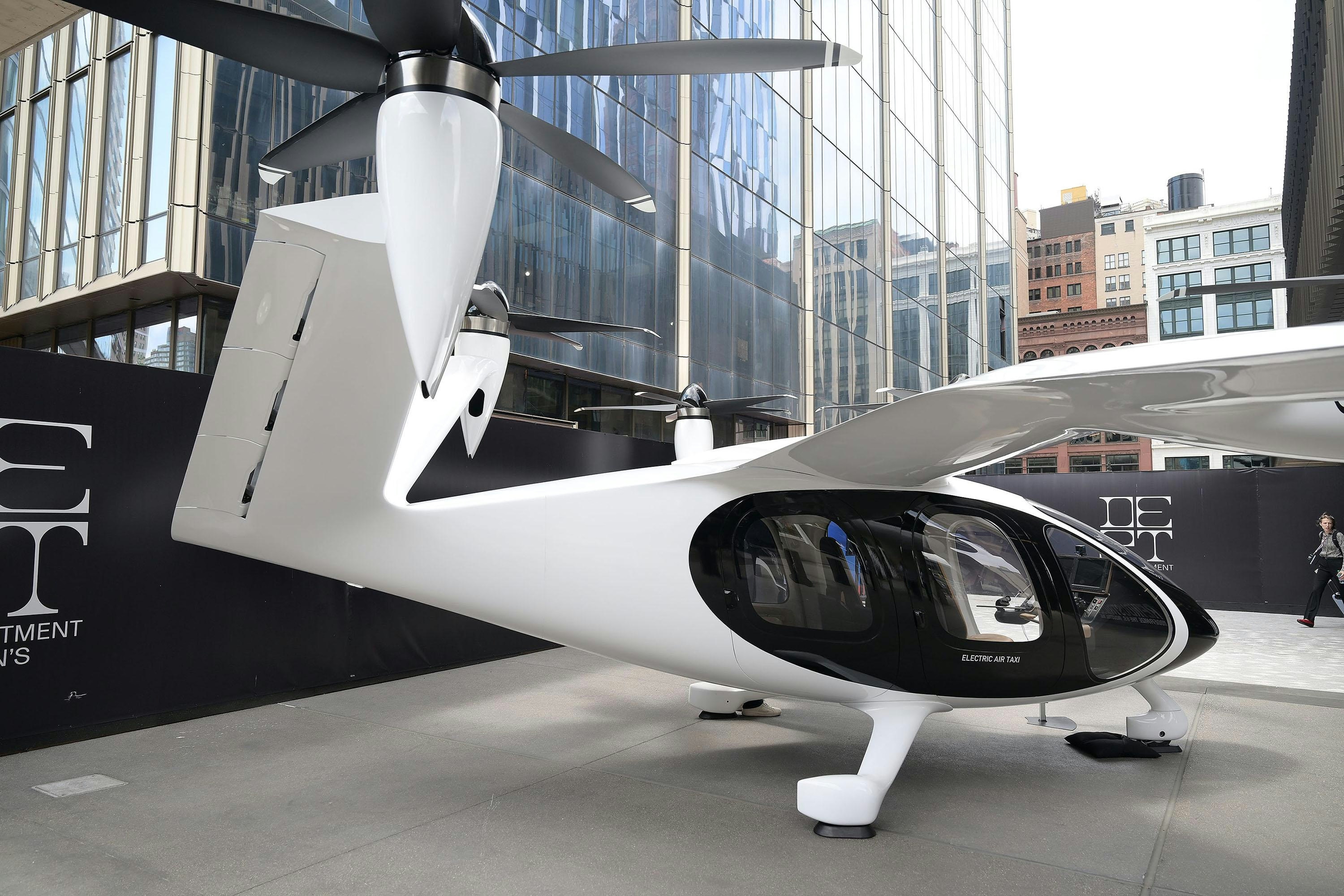
Perforated Landing Pads Offer Solution to Noise Challenges in Urban Air Mobility As electric air taxis and delivery drones approach widespread urban deployment, noise pollution remains a critical obstacle to their acceptance. New research from the University of Bristol, published in *Applied Acoustics*, proposes that perforated landing pads could play a vital role in mitigating the disruptive noise generated during take-off and landing phases of electric vertical take-off and landing (eVTOL) vehicles. By incorporating grid-like or perforated surfaces into vertiports—the designated landing sites for these aircraft—the study suggests a significant reduction in noise levels can be achieved. Addressing Ground Effect Noise Through Innovative Design The Bristol research team focused on the phenomenon known as "ground effect" noise, which arises when rotor airflow interacts with solid surfaces, creating high-pressure zones and acoustic reflections that amplify sound. Their experiments demonstrated that perforated landing surfaces allow a portion of the airflow to pass through the openings, thereby disrupting the mechanisms that intensify noise. This design reduces blade noise by up to 15 decibels and lowers overall sound pressure by as much as 7 decibels, offering a promising approach to quieter urban skies. Dr. Esmaeel Masoudi, Lecturer in Aeroacoustics and lead author of the study, explained that the perforated surfaces effectively dissipate airflow within the openings, preventing the strong impingement on solid ground that typically amplifies noise. “Instead of the airflow strongly impinging on a solid surface, part of the flow is passed and dissipated within the perforations,” he noted. Implications for the eVTOL Industry and Urban Infrastructure The findings arrive at a crucial juncture for the eVTOL sector, which continues to navigate technical, regulatory, and public acceptance challenges. Despite recent milestones such as the Federal Aviation Administration’s approval of Honda’s all-electric air taxi and the anticipated certification of Beta Technologies’ Alia 250, issues related to battery endurance, safety standards, and legal disputes among key players like Joby, Archer, and Vertical persist. Regulatory programs, including the eVTOL Integration Pilot Program initiated during the Trump administration, have provided some validation but have not fully resolved these hurdles. Industry experts emphasize that noise remains a significant concern for communities near potential vertiport locations. Innovations in infrastructure design, such as the adoption of perforated landing pads, could alleviate these concerns and facilitate smoother integration of air taxis and drones into urban environments. The Bristol team advocates for a holistic approach that considers both aircraft and infrastructure design to effectively address noise pollution. Dr. Masoudi highlighted the broader impact of their research, stating, “Reducing noise is essential if drones and air taxis are to become a practical part of future urban transportation systems. This work demonstrates that perforated landing surfaces have the potential to significantly reduce—and in some cases, nearly eliminate—the noise penalties associated with ground effect, helping pave the way for quieter and more sustainable urban skies.” The study, titled “Mitigation of propeller noise in ground effect using perforated sheets,” was conducted by Dr. Masoudi alongside Professor Mahdi Azarpeyvand, Dr. Sung Tyaek Go, and Dr. Abhishek Gautam, contributing valuable insights to the evolving field of urban air mobility infrastructure.
India Advances Electric Air Mobility with ePlane e200X Milestone

India Advances Electric Air Mobility with ePlane e200X Milestone

India Advances Electric Air Mobility with ePlane e200X Milestone India has marked a significant advancement in electric air mobility with the successful completion of the ePlane Company’s first full-scale prototype of the e200X electric aircraft. This development represents a pivotal moment for the nation’s ambitions in air taxis, cargo transport, and emergency medical aviation, positioning India as an emerging contender in the global aviation industry. Transition from Simulation to Reality The newly assembled prototype, designated PT-01, signifies the transition of the e200X program from digital simulations to tangible, real-world testing. This achievement places the ePlane Company among a select group of international developers who have constructed a full-scale electric vertical takeoff and landing (eVTOL) aircraft, bringing the project closer to commercial viability. Building a full-scale prototype is a crucial phase in aerospace development, as it validates that engineering designs can perform beyond theoretical models and controlled laboratory environments. The successful assembly also confirms the integration of manufacturing processes, supply chains, and engineering systems necessary to produce an operational aircraft capable of undergoing rigorous testing. Versatility and Domestic Manufacturing Focus What distinguishes the e200X is its design as a versatile platform capable of serving multiple sectors, including passenger air taxis, urban cargo delivery, and emergency air ambulance services, without the need for separate aircraft models. This adaptability enables operators to optimize fleet utilization while streamlining infrastructure and operational requirements. The ePlane Company has adopted a highly integrated domestic manufacturing strategy, developing key components such as propellers, the structural airframe, landing gear, and battery packs in-house. This approach reduces dependence on imports and enhances control over performance, cost, and ongoing engineering refinements, reinforcing the company’s commitment to fostering a robust domestic aerospace ecosystem. Capital Efficiency Amidst a Competitive Market Electric aviation remains one of the most capital-intensive industries globally, with many competitors investing hundreds of millions or even billions of dollars. In contrast, the ePlane Company has reached this milestone with approximately $21 million in funding, demonstrating a capital-efficient model that may provide a competitive advantage as the market expands. The global eVTOL market was valued at around $1.3 billion in 2023, with projections estimating growth to between $20 billion and $30 billion by 2030. The broader urban air mobility sector is expected to experience rapid expansion as cities seek sustainable alternatives to congested roadways, fueling increased investor interest in sustainable aviation solutions. Challenges and Competitive Dynamics Despite this progress, India’s advancement with the e200X faces challenges including regulatory hurdles, infrastructure development, and intensifying competition. Emerging players such as BluJ Aerospace, MD Aircraft, and Vaeridion are accelerating their development timelines and broadening their strategies to capture market share. This evolving landscape is likely to drive further innovation and investment as companies compete for leadership in electric air mobility. Looking Forward As urban populations continue to grow and road networks become increasingly strained, cities worldwide are turning to air mobility solutions to alleviate congestion and reduce environmental impact. The ePlane e200X milestone not only strengthens India’s position in this emerging sector but also reflects a broader global shift toward sustainable and efficient urban transportation.
line