
حوّل رؤى الذكاء الاصطناعي إلى أفعال منسّقة

الرائج الآن
Categories
NTSB Releases Video Showing Engine Detachment Before UPS Plane Crash in Louisville
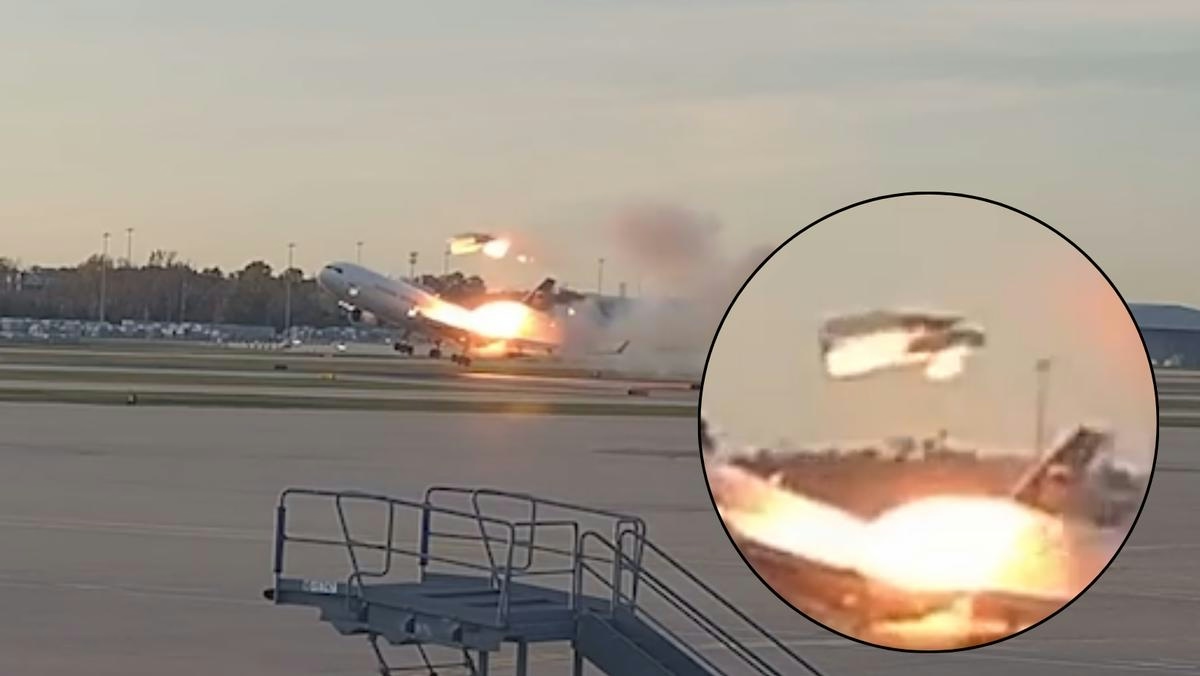
NTSB Releases Video Showing Engine Detachment Before UPS Plane Crash in Louisville
New Evidence Sheds Light on Fatal Crash
Federal investigators have unveiled new video footage capturing the moment an engine detached from a UPS cargo plane shortly before it crashed in Louisville, Kentucky. The National Transportation Safety Board (NTSB) released the footage, which shows the left engine of UPS Flight 2976 breaking away from the wing soon after takeoff last November. The incident resulted in the deaths of all 15 people on board, including three crew members.
The NTSB has commenced a two-day hearing in Washington to examine the factors leading to the crash. The inquiry centers on the detachment of the engine from the aging McDonnell Douglas MD-11F aircraft. Investigators are meticulously reviewing maintenance records, flight data, and the structural integrity of the aircraft to determine the cause of the failure.
Investigation and Preliminary Findings
On the first day of the hearings, officials presented the newly released video alongside an animation demonstrating how the engine’s attachment failed. Early findings indicate that cracks had formed in the components securing the engine and pylon to the wing. Significantly, Boeing had recorded four previous failures of this critical part in 2011 but had concluded at the time that the issue did not pose a significant threat to flight safety.
The NTSB is actively questioning representatives from UPS, Boeing, the Federal Aviation Administration (FAA), and other relevant parties regarding maintenance reporting practices and potential safety oversights. In response to the investigation, all MD-11 aircraft have been grounded as a precautionary measure while the root cause is being determined.
Broader Implications and Ongoing Hearings
The hearings, which began on Tuesday and are scheduled to continue through Wednesday, seek to clarify the sequence of events that led to the catastrophic engine failure. The NTSB aims to recommend measures to prevent similar incidents in the future. This tragedy has intensified scrutiny of older aircraft models, with industry competitors and manufacturers closely monitoring the investigation’s progress. The aviation market has reacted with increased concern over the safety of aging cargo fleets.
As the investigation proceeds, the NTSB remains focused on identifying any systemic issues in aircraft maintenance and regulatory oversight that may have contributed to the crash. The goal is to ensure that lessons are learned to enhance aviation safety and prevent future tragedies.

Etihad Airways Suspends Airbus A380 Flights on Key Route

Aditya Birla Group Seeks Approval for Aircraft Leasing in GIFT City

Qatar Airways Highlights Innovation and Connectivity at Arabian Travel Market 2026

Hong Kong's Five-Year Plan Includes Andrew Fan's Aircraft Parts Processing Hub Proposal

ACIA Aero Leasing Delivers ATR72-600 to Air Nostrum

RTX Appoints Jill Albertelli as Head of Pratt & Whitney

TAT Technologies Joins Beyond Aero Hydrogen Aircraft Program

AURAK Study Highlights Barriers to Air Taxi Adoption in Emerging Economies

Xiamen Air Selects Altitude for 787 Maintenance at Heathrow

Etihad and Swissport Extend Global Partnership
