
حوّل رؤى الذكاء الاصطناعي إلى أفعال منسّقة

الرائج الآن
Categories
Qantas Faces Union Pressure on AI Strategy
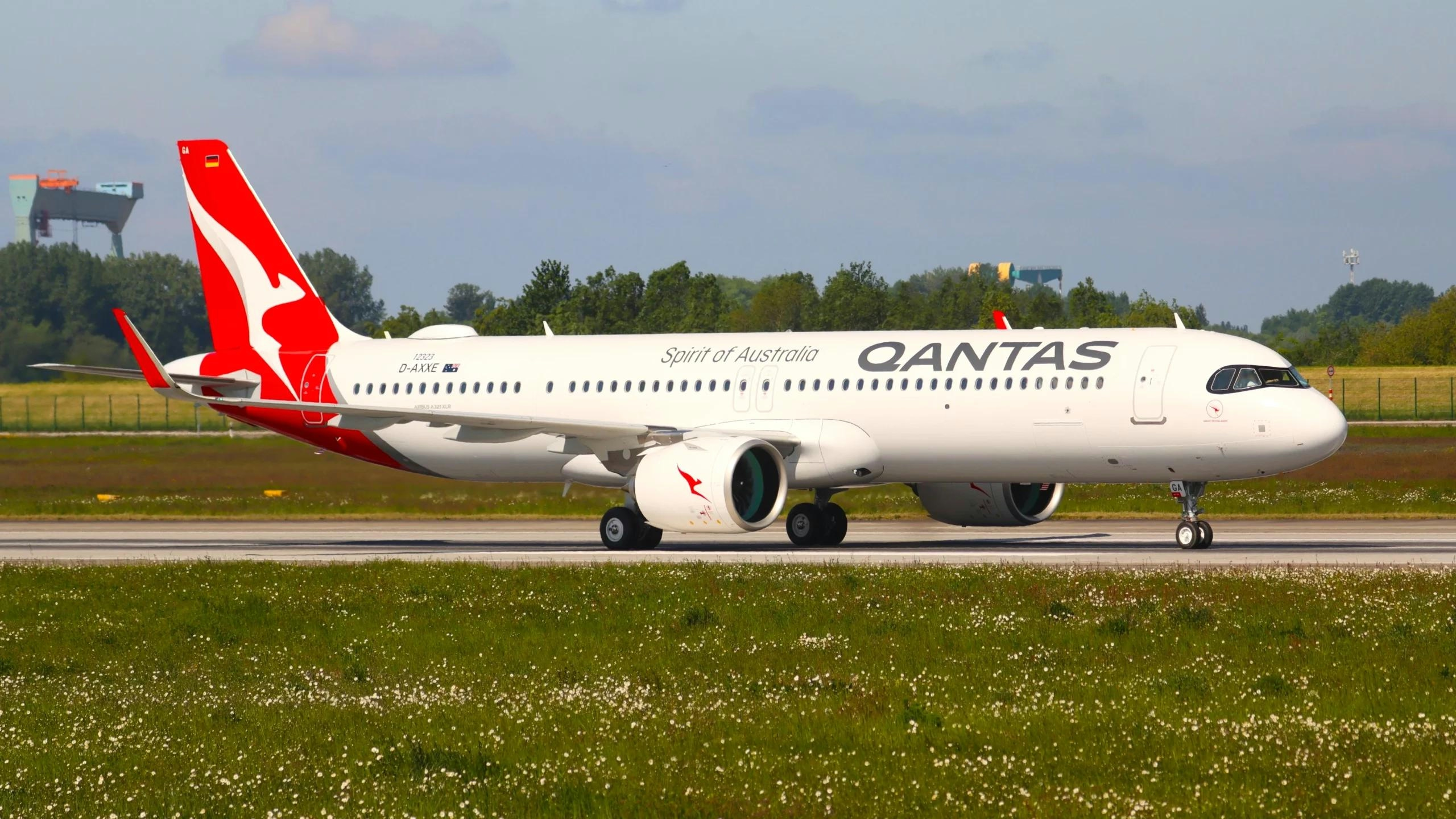
Qantas Faces Union Pressure on AI Strategy
Union Seeks Clarity Amid Workforce Concerns
The Australian Services Union (ASU) has formally requested an urgent meeting with Qantas chief executive Vanessa Hudson to gain greater insight into the airline’s artificial intelligence (AI) strategy. This move comes amid mounting apprehension regarding the potential impact of AI on the workforce and broader operational changes within the company.
The union’s intervention follows comments made by Hudson in May 2026, where she emphasized the positive role AI tools have played in enhancing Qantas’s on-time performance by three to four percentage points. Hudson noted that AI technologies are currently employed to integrate maintenance records with weather data, thereby streamlining operations and boosting efficiency. Despite these advancements, the ASU contends that Qantas’s AI initiatives constitute an “active programme of major workforce change,” primarily aimed at cost reduction and accompanied by the risk of job losses. These concerns have been heightened by the airline’s recent decision to cut 400 head office positions earlier this year.
Strategic Shifts Amid Market Pressures
Qantas’s AI strategy is unfolding within a challenging industry environment marked by significant market pressures. The airline has recently decelerated its international capacity growth and extended reductions in domestic capacity in response to sharply rising fuel costs. These increases are linked to the ongoing fuel crisis stemming from the conflict in Iran. In response, Qantas has shifted capacity towards its European long-haul routes, reflecting a broader strategic realignment designed to navigate volatile market conditions.
The airline’s experience highlights the complex intersection of AI adoption and operational restructuring, a challenge shared by companies worldwide. Technology firms such as Nvidia face risks related to AI investment and intensifying competition, while businesses in the United Kingdom have been cautioned about lagging behind in the AI economy due to skills shortages. For Qantas, the integration of AI represents not only a technological advancement but also a strategic response to external economic and geopolitical pressures, underscoring the intricate balance between workforce management, market dynamics, and rapid technological change.
The Need for Transparency and Dialogue
The ASU’s call for dialogue with Qantas leadership underscores the critical need for transparency as the airline seeks to balance innovation with employee interests. The forthcoming discussions may prove pivotal in setting a precedent for how airlines and other sectors manage the transition to AI-driven operations amid ongoing economic uncertainties and geopolitical challenges.

Etihad Airways Suspends Airbus A380 Flights on Key Route

Aditya Birla Group Seeks Approval for Aircraft Leasing in GIFT City

Qatar Airways Highlights Innovation and Connectivity at Arabian Travel Market 2026

Hong Kong's Five-Year Plan Includes Andrew Fan's Aircraft Parts Processing Hub Proposal

ACIA Aero Leasing Delivers ATR72-600 to Air Nostrum

RTX Appoints Jill Albertelli as Head of Pratt & Whitney

TAT Technologies Joins Beyond Aero Hydrogen Aircraft Program

AURAK Study Highlights Barriers to Air Taxi Adoption in Emerging Economies

Xiamen Air Selects Altitude for 787 Maintenance at Heathrow

Etihad and Swissport Extend Global Partnership
