صورة

ضاعف عائداتك من فرص عروض الأسعار ثلاث مرات بفضل الذكاء الاصطناعي!

انضم إلينا في عرض مباشر لمدة 30 دقيقة حول أتمتة إعداد عروض الأسعار

الرائج الآن

Categories

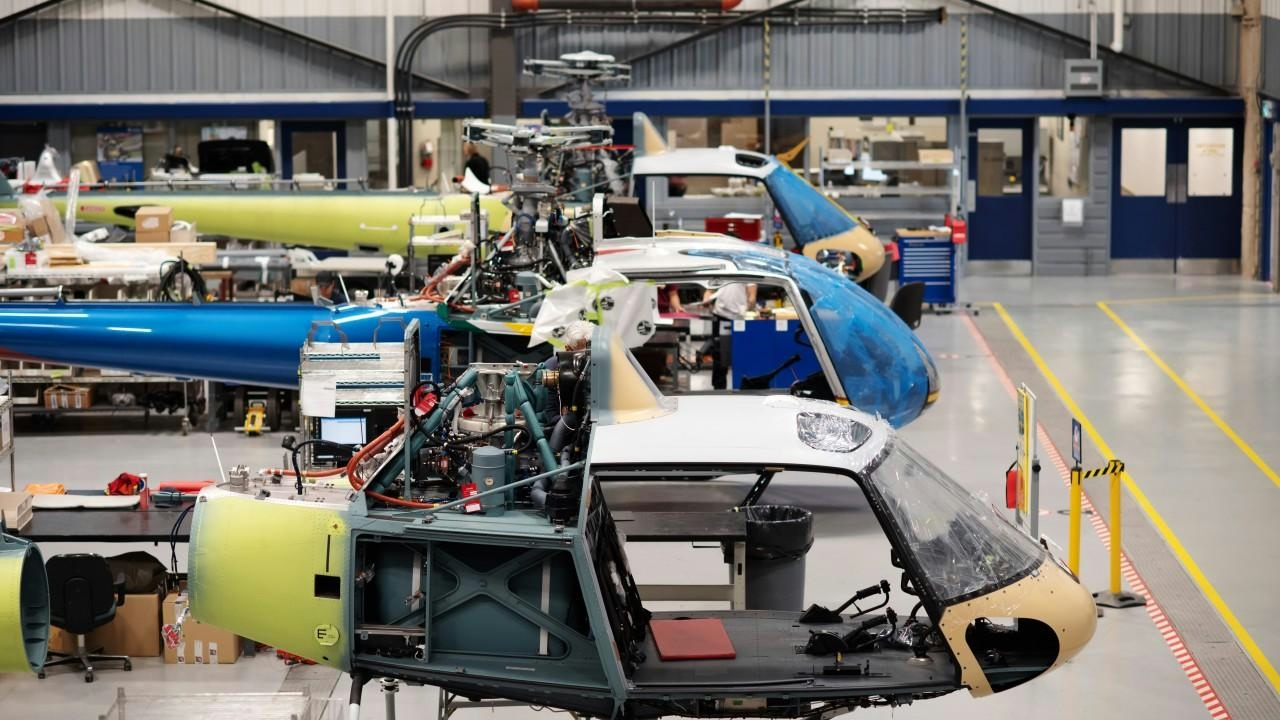
Spanish Ministry of Defence Orders 100 Airbus Helicopters
December 18, 2025By ePlane AI
Spanish Ministry of Defence Orders 100 Airbus Helicopters
0
0
Spanish Ministry Of Defence
Airbus Helicopters
Military Helicopter Procurement

Spanish Ministry of Defence Commits to Largest-Ever Helicopter Acquisition

Albacete, Spain, 18 December 2025 – The Spanish Ministry of Defence has formalized a landmark agreement to procure 100 helicopters from Airbus, representing the most significant helicopter acquisition in the nation’s history. This procurement, managed by the Directorate General for Armament and Material (DGAM), forms a central component of the National Helicopter Plan unveiled earlier this year. The initiative seeks to comprehensively modernize Spain’s defence and security capabilities across all branches of the armed forces.

Details of the Procurement and Strategic Objectives

The €1.4 billion contract encompasses four distinct helicopter models tailored to specific operational roles. The Spanish Air and Space Force will receive 13 H135 helicopters—12 designated for advanced pilot training and light utility missions, with one allocated to the Navy for observation tasks. The Spanish Army (FAMET) will be equipped with 50 H145M helicopters, intended to support military pilot training, light attack operations utilizing the HForce system alongside the Tiger fleet, as well as disaster relief and utility missions. The Air and Space Force will also acquire six H175M super-medium utility helicopters, which will undertake governmental transport duties and replace aging aircraft within Wing 48. Finally, 31 NH90 helicopters will be distributed among the Army (13 units), Air and Space Force (12 units), and Navy (6 units), enhancing tactical transport, manoeuvre capabilities, special operations, and amphibious warfare readiness.

María Amparo Valcarce García, Secretary of State for Defence, emphasized the strategic nature of the investment, highlighting its role in significantly bolstering Spain’s security and defence posture while ensuring national strategic autonomy within a critical sector of European defence. Airbus Helicopters CEO Bruno Even described the contract as a tangible realization of the National Helicopter Plan, marking a qualitative enhancement in the Armed Forces’ operational capabilities. He further noted that the deal would strengthen Airbus Helicopters’ industrial presence in Spain, positioning the country as a key hub within the European aeronautical industry.

Industrial Impact and Market Challenges

The contract is projected to create over 300 highly skilled jobs in Spain over the next three years. Airbus plans to expand its facilities in Albacete by establishing a dedicated military helicopter customization centre alongside an international training centre for H145M pilots and technicians. This expansion underscores the broader industrial and economic benefits anticipated from the procurement.

Nevertheless, the order arrives amid ongoing challenges faced by Airbus, particularly concerning supply chain disruptions linked to metal panel issues in its A320 aircraft. These difficulties have raised concerns among market analysts regarding the reliability of delivery schedules for the new helicopter fleet. The Spanish Navy’s current NH90 delivery timeline remains a critical factor in maintaining operational readiness and may influence future procurement strategies.

Concurrently, Airbus faces intensified competition from rivals such as Sikorsky and NHIndustries, which are actively securing contracts with various national police and military forces across Europe. The success of Spain’s partnership with Airbus is likely to have significant implications for the competitive dynamics of helicopter procurement within the European defence market.

More news
Fiji Airports Launches AI Training Program to Enhance Workforce Skills and Operations

Fiji Airports Launches AI Training Program to Enhance Workforce Skills and Operations

Fiji Airports Launches AI Training Program to Enhance Workforce Skills and Operations Fiji Airports has initiated a specialised Artificial Intelligence (AI) training program as a central component of its digital transformation strategy. The initiative seeks to strengthen workforce capabilities, improve operational efficiency, and sustain competitiveness within the rapidly evolving aviation sector. Advancing Workforce Capabilities Through AI The training program, conducted in Nadi, involved over 30 employees from diverse departments including Air Traffic, Safety and Risk, Airside Operations, Electrical and Mechanical, and Airport Management. Led by Caribbean AI and data transformation expert Leslie Fook, the sessions concentrated on practical AI applications, workplace innovation, and technology-driven decision-making. Participants engaged with AI tools designed to streamline operational tasks, enhance data analysis, accelerate risk identification, and support more effective airport management practices. This initiative arrives at a pivotal moment for Fiji’s labour market, which has been challenged by significant workforce migration. Approximately 15,500 Fijians have left the country seeking better opportunities abroad, underscoring a persistent disconnect between education, training, and industry requirements. Fiji Airports’ AI program directly addresses this gap by fostering digital literacy and equipping employees with the skills necessary to meet the future demands of aviation technology. Addressing the AI Skills Gap and Fostering Innovation Industry data highlights the urgency of such workforce development efforts. Despite considerable investments in AI infrastructure, many organisations—including those in Fiji—face challenges in workforce readiness. The AI Skills Gap Score reveals that only 14% of graduates are able to apply AI effectively in real-world workflows. Fiji Airports’ program aims to bridge this divide by delivering comprehensive training that extends beyond theoretical knowledge to practical implementation. Human resources leaders have stressed the importance of humility and agility as organisations adapt to the impact of AI on employment and workplace culture. Fiji Airports’ approach seeks to cultivate a culture of innovation and adaptability, thereby maintaining employee trust and addressing concerns related to technological change. Enhancing Airport Operations with AI The training underscored AI’s potential to support airport operations through predictive analytics, operational planning, and improved customer service systems. Employees were introduced to AI-driven tools for decision-making, risk assessment, safety management, and performance monitoring. These technologies are expected to reduce response times during operational disruptions, enhance workflow management, and optimise resource allocation across departments. As airports worldwide increasingly adopt smart technologies, Fiji Airports is positioning itself to align with international trends and meet growing passenger expectations. The organisation views AI as a critical enabler for smarter airport management, increased productivity, and sustainable business growth. By investing in workforce development and digital skills, Fiji Airports aims not only to elevate operational standards but also to confront broader national challenges related to workforce readiness and talent retention. This AI training program represents a significant step toward cultivating a future-ready workforce capable of navigating the complexities of modern aviation.
Locations of Boeing Headquarters and Major Hubs

Locations of Boeing Headquarters and Major Hubs

Boeing Headquarters: Historical Shifts and Strategic Relocations Boeing, a preeminent figure in the global aerospace industry, has undergone several headquarters relocations that mirror its evolving corporate strategies and the shifting landscape of the aerospace sector. Established in Seattle in 1916, Boeing’s headquarters remained in the city for many decades, closely intertwined with its primary manufacturing operations in the Pacific Northwest. This long-standing connection underscored Seattle’s role as the heart of Boeing’s commercial aircraft production. However, in 2001, the company moved its headquarters to Chicago, seeking a more centralized position that offered enhanced access to global markets, key business partners, and financial institutions. This relocation marked a strategic pivot toward broadening Boeing’s commercial and financial reach. In 2022, Boeing once again shifted its headquarters, this time to Arlington, Virginia, just outside Washington, D.C. This move was driven by the increasing importance of Boeing’s government and defense sectors. By situating itself near federal policymakers, regulatory agencies, and defense stakeholders, Boeing positioned itself to better navigate the complexities of defense contracts, regulatory approvals, and policy developments. The Arlington location provides direct access to critical institutions such as the Pentagon and the Federal Aviation Administration, facilitating closer collaboration on defense programs and certification processes. This proximity aligns with Boeing’s long-term strategy to integrate its commercial aviation, defense, and space operations more effectively. Operational Hubs and Industry Challenges Despite these headquarters relocations, Boeing’s operational footprint remains firmly rooted in several key U.S. hubs. The Seattle region, particularly the cities of Everett and Renton, continues to serve as a vital center for commercial aircraft assembly, hosting some of Boeing’s most significant jet programs. Beyond the Pacific Northwest, Boeing maintains substantial engineering, manufacturing, and support facilities in South Carolina, Missouri, and Texas, reflecting the company’s extensive national presence. Boeing’s geographic evolution occurs against a backdrop of broader industry challenges and shifting market dynamics. The company faces considerable geopolitical risks, especially concerning its relationship with China, a critical market for commercial aircraft sales. Heightened tensions between the United States and China have disrupted Boeing’s delivery schedules and order book in the Asia-Pacific region, exposing the company’s vulnerability to changes in U.S. foreign policy. While Boeing’s profitability continues to be viewed positively by the market, these geopolitical uncertainties remain a significant risk factor for its international business operations. Concurrently, competitive pressures within the U.S. airline industry are intensifying. The potential merger between United Airlines and American Airlines threatens to reshape the domestic aviation landscape, with implications for key airport hubs such as Sky Harbor. United’s strong presence in Denver could shift the balance of power among major hubs, raising concerns about market dominance. Such a merger would likely attract rigorous antitrust scrutiny due to the combined entity’s potential to control approximately 40% of the domestic market. Boeing’s relocation to Arlington exemplifies a broader corporate trend of seeking closer engagement with government decision-makers and regulatory bodies. While Seattle no longer serves as Boeing’s headquarters, it remains central to the company’s identity and operational strength. This geographic realignment highlights how leading aerospace companies adapt their organizational structures to address evolving industry demands, regulatory environments, and strategic priorities.
Hyundai’s Air Taxi Unit Supernal Returns with New Design Plans

Hyundai’s Air Taxi Unit Supernal Returns with New Design Plans

Hyundai’s Air Taxi Unit Supernal Returns with New Design Plans Supernal, Hyundai’s advanced air mobility (AAM) division, is reemerging after a period of suspension in flight testing last September and significant staff reductions in March. The company has confirmed plans to develop a “next-generation” electric vertical takeoff and landing (eVTOL) aircraft, signaling a renewed commitment to the evolving urban air mobility sector. New Partnership and Strategic Shift On Sunday, Hyundai announced a memorandum of understanding (MOU) with Korea Aerospace Industries (KAI) to jointly develop a new AAM aircraft. This collaboration marks a strategic departure from advancing the S-A2 model, which had begun flight testing last year. Instead, Supernal and KAI will focus on a new aircraft concept, with Supernal leading the design and engineering efforts. Although the S-A2 will no longer be the primary focus, its development continues to inform the company’s proprietary design and technical framework as the project pivots toward this new initiative. The partnership aims to combine Supernal’s expertise in powertrain technology with KAI’s extensive mass manufacturing capabilities. Together, they plan to address critical challenges in the eVTOL industry, including regulatory certification, infrastructure development, and public acceptance. Early stages of development will concentrate on defining comprehensive requirements to facilitate global certification, while fostering cooperation across supply chains and customer networks worldwide. Industry Context and Competitive Landscape The eVTOL sector is rapidly evolving but faces significant hurdles. For instance, U.S.-based Joby Aviation is currently under investigation by the U.S. Trade Commission over patent infringement allegations, which could impact its partnership with Delta Air Lines. Despite such challenges, Joby recently demonstrated an air taxi service in New York City, underscoring the industry’s determination to advance electric air mobility amid regulatory and operational complexities. Meanwhile, Japan’s SkyDrive Consortium aims to launch commercial eVTOL services by 2028, highlighting the intensifying global competition to bring air taxis to market. Supernal remains steadfast in its commitment to eVTOL development. Earlier this year, the company forged partnerships with fixed-base operators Signature Aviation and Clay Lacy Aviation to explore S-A2 operations and route planning in key U.S. markets such as Miami and Los Angeles. The new collaboration with KAI is expected to bolster Supernal’s development and commercialization efforts, particularly as KAI seeks to expand its footprint in civil aviation. KAI currently manufactures KT-1 trainer aircraft and RQ-101 uncrewed aerial vehicles for the South Korean government. Leadership and Future Prospects Farhan Gandhi, who joined Supernal as chief technical officer earlier this month, emphasized the significance of the partnership with KAI. He described it as a commitment to building a robust, partner-integrated foundation aimed at delivering a commercially viable aircraft. Gandhi’s arrival follows a period of restructuring during which Supernal reduced its workforce by nearly 300 employees, retaining a core team of 70 to 80. The company characterized this downsizing as a “strategic pivot” designed to optimize staffing and costs in preparation for the long-term delivery of a market-aligned aircraft. Looking ahead, Hyundai and KAI will also collaborate on the commercialization of electric aviation powertrains, reflecting a broader strategic push into the civil aviation sector. This partnership represents a critical step for Supernal as it seeks to navigate industry challenges and establish a competitive position in the global eVTOL market.
GE Aerospace and Pratt & Whitney Develop NGAP Engines for Boeing F-47 Fighter

GE Aerospace and Pratt & Whitney Develop NGAP Engines for Boeing F-47 Fighter

GE Aerospace and Pratt & Whitney Advance NGAP Engines for Boeing F-47 Fighter Progress in Adaptive-Cycle Engine Development GE Aerospace and Pratt & Whitney have achieved critical design milestones in the development of adaptive-cycle turbofan engines under the US Air Force’s Next Generation Adaptive Propulsion (NGAP) program. These engines are intended to power Boeing’s forthcoming F-47 sixth-generation air dominance fighter. On May 11, 2026, GE Aerospace completed an assembly readiness review of its XA102 engine design, while Pratt & Whitney finalized a technical assessment of its XA103 engine on May 8, 2026. Both companies utilized fully digital engine models to accelerate development and facilitate a smoother transition from design to manufacturing. GE Aerospace’s assembly readiness review assessed the XA102’s design integrity, manufacturing processes, and supply chain readiness. The company anticipates receiving additional US Air Force funding to support the next phase of NGAP development later this year. Steve Russell, general manager of GE’s Edison Works advanced projects unit, underscored the maturity of the XA102 and highlighted the benefits of a digital-first approach, which enables faster and more precise delivery of advanced propulsion capabilities. Similarly, Pratt & Whitney, a subsidiary of RTX, views the completion of its XA103 technical assessment as a pivotal step toward prototype assembly. Jill Albertelli, president of military engines at Pratt & Whitney, emphasized the development of innovative digital validation tools and projected that the XA103’s performance will exceed that of current propulsion systems. The company plans to assemble an XA103 prototype in the late 2020s, followed by ground testing. Challenges and Strategic Implications The development of NGAP engines presents significant technical challenges, including the complexity of adaptive-cycle turbofan technology and the necessity for rigorous testing to meet stringent military standards. Potential delays in US Air Force funding could further complicate development timelines. Despite these obstacles, advancements in next-generation propulsion have attracted increased investor interest in the aerospace sector. Competitors are expected to intensify efforts to secure similar contracts, with some likely to pursue partnerships to mitigate the technological and financial risks associated with developing cutting-edge engine designs. F-47 Flight Testing and NGAP Integration The Pentagon plans to commence flight testing of the Boeing F-47 as early as 2028, prior to the certification of NGAP engines. As a result, the initial F-47 fighters will not be equipped with adaptive-cycle turbofan engines. Neither the US Air Force nor Boeing has disclosed which engines will power the first production batch of F-47 aircraft. The NGAP program aims to mature technologies that extend fighter range, reduce aircraft thermal signatures, and increase onboard electrical power generation—capabilities essential for supporting advanced weapons and sensors on sixth-generation aircraft. Adaptive-cycle engines offer the ability to dynamically adjust airflow, switching between high-thrust and fuel-efficient modes to optimize performance and endurance. As GE Aerospace and Pratt & Whitney continue to advance their NGAP engine designs, the competition to equip the next generation of US fighters with superior propulsion technology is reshaping the landscape of military aviation.
Budapest Transport Museum Acquires Rolls-Royce Aircraft Engine

Budapest Transport Museum Acquires Rolls-Royce Aircraft Engine

Budapest Transport Museum Acquires Rolls-Royce Aircraft Engine The Hungarian Museum of Science, Technology and Transport has significantly enriched its collection with the addition of a Rolls-Royce RB211 aircraft engine, a landmark in aviation history. After serving for four decades, this engine will become a central exhibit in the museum’s permanent display, illustrating the evolution of jet propulsion and engineering excellence. A Historic Engine Finds a New Home The RB211 engine was transferred directly from the hangar of Aeroplex Central European Aircraft Technical Center Ltd. to the museum’s newly established exhibition space in Kőbánya, Budapest, situated on the grounds of the Northern Train Maintenance Depot (Északi Járműjavító). It will feature prominently in the museum’s temporary exhibition focused on safe and cooperative transportation. Until recently, this large and advanced gas turbine engine powered a DHL Boeing 757 aircraft, retiring only a year ago with the airline’s consent before being donated to the museum. The Rolls-Royce RB211 is celebrated as a milestone in jet aviation, emblematic of British engineering innovation and reliability. Initially developed for the Lockheed L-1011 TriStar, the engine later powered several iconic long-haul aircraft, including select models of the Boeing 747, 757, and 767. The RB211 remained in active service until July 2025, marking the end of its operational life. Alongside the museum’s acquisition, two RB211 engines will continue to serve educational purposes at the Aeroplex Training Center in Budapest, supporting the practical training of future aviation professionals. Context and Significance The museum’s decision to exhibit the RB211 coincides with a period of renewed confidence in Rolls-Royce’s market position, particularly following the successful introduction of the Trent 1000 XE engines, which addressed earlier durability challenges. This resurgence in reliability enhances the museum’s appeal to aviation enthusiasts and historians who closely monitor the legacy and technological progress of major engine manufacturers. The acquisition also highlights Rolls-Royce’s broader strategic initiatives, including expanding maintenance capacity and pioneering hydrogen-powered engine testing, underscoring the company’s leadership in sustainable aviation technology and intensifying competition within the aerospace industry. Aeroplex Central European Aircraft Technical Center Ltd., a subsidiary of 4iG Space and Defense Technologies Ltd., specializes in the maintenance, repair, and overhaul of Airbus and Boeing aircraft. Operating from its Budapest base, Aeroplex offers comprehensive hangar-level maintenance, line care, and equipment repairs, reinforcing the city’s status as a regional hub for aviation expertise. By incorporating the RB211 engine into its collection, the Budapest Transport Museum not only preserves a pivotal chapter in aviation history but also emphasizes ongoing innovation and the dynamic evolution of aerospace technology.
Skyports and Gold Coast Sign Agreement on Advanced Air Mobility

Skyports and Gold Coast Sign Agreement on Advanced Air Mobility

Skyports and Gold Coast Sign Agreement to Advance Urban Air Mobility Skyports Infrastructure has formalized a partnership with the City of Gold Coast through a Memorandum of Understanding (MoU) aimed at accelerating the deployment of Advanced Air Mobility (AAM) in the region. The agreement, signed by Yun Yuan Tay, Head of APAC at Skyports, and Gold Coast Mayor Tom Tate at the City of Gold Coast Chambers, designates Skyports as the lead entity responsible for developing a network of vertiports and the necessary supporting infrastructure throughout the city. Scope and Objectives of the Partnership Under the terms of the MoU, Skyports will manage critical components of the project, including navigating complex regulatory frameworks, assisting with urban planning processes, identifying potential vertiport locations, and engaging with landowners. This collaboration is intended as a foundational step toward Skyports potentially operating the vertiport network in the future. The agreement builds upon a prior MoU signed in March 2026 with Alt Air and EVE Air Mobility, which outlined preliminary plans to prepare for electric vertical take-off and landing (eVTOL) operations across New South Wales and Queensland. Skyports has already initiated discussions with local landlord partners to identify suitable sites for the vertiport network. Engagements with Gold Coast Airport and other strategically important locations in the region have been reportedly positive, indicating strong local support for the initiative. Potential Impact and Challenges Stakeholders agree that the introduction of AAM offers a significant opportunity to provide faster, more sustainable, and premium mobility options along the Gold Coast. For instance, the proposed network could reduce the typical 45-minute drive between Gold Coast Airport and Broadbeach to a flight lasting just five to seven minutes, dramatically improving connectivity. Yun Yuan Tay emphasized the shared vision behind the partnership, stating, “This collaboration reflects a shared ambition to deliver innovative, future-ready transport for one of Australia’s most dynamic regions. By combining Skyports’ global expertise in vertiport development with the City’s forward-thinking vision, we are laying the groundwork for a connected, efficient, and sustainable mobility network that will enhance accessibility for residents and visitors alike.” Despite the promising outlook, the initiative faces several challenges. Regulatory complexities, technological integration, and public acceptance remain significant hurdles to widespread adoption. The evolving regulatory environment will necessitate close cooperation between industry stakeholders and government authorities to ensure safe and efficient operations. Market Response and Future Prospects The announcement has generated increased investor interest in the advanced air mobility sector, which is widely regarded as a frontier for urban transportation innovation. Competitors in the field may respond by accelerating their development timelines and forging strategic partnerships to maintain a competitive advantage. As the Gold Coast advances its vision for advanced air mobility, the partnership with Skyports represents a pivotal step toward transforming urban transport and positioning the region at the forefront of next-generation mobility solutions.
Archer and Joby Plan to Launch Commercial Air Taxi Flights in U.S. Cities This Year

Archer and Joby Plan to Launch Commercial Air Taxi Flights in U.S. Cities This Year

Archer and Joby Advance Plans for Commercial Air Taxi Services in U.S. Cities Leading electric vertical takeoff and landing (eVTOL) developers Archer Aviation and Joby Aviation are progressing toward launching commercial air taxi operations in several U.S. cities, with initial flights anticipated as early as this year. Both companies are active participants in the Federal Aviation Administration’s (FAA) eVTOL Integration Pilot Program, designed to facilitate the integration of advanced air mobility vehicles into American airspace. Archer Aviation’s CEO, Adam Goldstein, recently affirmed during an investor call that the company remains “on track” to commence operations in 2026. Archer has submitted applications to the FAA for approximately a dozen cities across Southern California, Texas, and Florida to serve as early hosts for its air taxi services. The U.S. Department of Transportation is expected to announce the final list of selected cities later this month. Goldstein indicated that once the finalists are confirmed, Archer will collaborate closely with local authorities to develop initial operational plans, aiming to initiate public flights in the latter half of the year. Joby Aviation has also expressed confidence in beginning initial operations within the year. Following a series of demonstration flights over Manhattan, Joby’s CEO JoeBen Bevirt highlighted the installation of charging infrastructure at two Manhattan heliports and ongoing efforts with Orlando International Airport to establish a vertiport. Bevirt described the public response as a strong indicator of the company’s progress and the opportunities ahead. Regulatory, Legal, and Market Challenges Potential launch sites under the FAA program include major metropolitan areas such as New York City, regions in Florida, Texas, North Carolina, the Pacific Northwest, the Rocky Mountains, and parts of Oklahoma. The Port Authority of New York and New Jersey has also issued a solicitation to develop and operate a vertiport at LaGuardia Airport, signaling growing institutional support for urban air mobility. Despite these advancements, both Archer and Joby face significant obstacles on the path to commercialization. Joby’s key partner, Delta Air Lines, has voiced concerns regarding an ongoing investigation by the U.S. International Trade Commission into Joby’s trade practices. This investigation, initiated by Archer, alleges that Joby infringed on Archer’s patents, potentially jeopardizing the partnership. Additionally, Joby confronts uncertainties related to FAA regulatory approvals, public acceptance of aerial ridesharing, and a competitive market environment. Recent financial disclosures from Joby underscore risks associated with intellectual property protection and evolving regulatory frameworks. Joby’s demonstration flights in New York have nonetheless illustrated the potential for electric air taxis to substantially reduce travel times to major airports. Meanwhile, Boeing subsidiary Wisk Aero has recently completed the first flight of its latest autonomous aircraft in California and is participating in the FAA’s pilot program in collaboration with the Texas Department of Transportation. Unlike Archer and Joby, which are developing piloted vehicles, Wisk is focusing on fully autonomous, pilotless aircraft with a target for commercial operations by 2030. In a related development, Supernal, Hyundai’s air mobility subsidiary, announced the appointment of Farhan Gandhi as chief technology officer, marking a new phase in its technical execution. As the FAA prepares to finalize the initial cities for air taxi deployment, the industry’s progress will hinge not only on technological advancements but also on resolving regulatory, legal, and public acceptance challenges.
Boeing Resumes Narrowbody Aircraft Studies as Crisis Eases

Boeing Resumes Narrowbody Aircraft Studies as Crisis Eases

Boeing Resumes Narrowbody Aircraft Studies Amid Market Recovery Boeing is intensifying internal research on a new commercial aircraft aimed at the upper segment of the single-aisle market, where Airbus currently holds a dominant position with its A321neo family. According to a Bloomberg report, Boeing plans to initiate preparatory work on this project next year, targeting a launch toward the end of the decade and entry into service by the mid-2030s. Bridging the Gap in the Single-Aisle Market The proposed aircraft is intended to fill a niche between traditional narrowbodies and smaller widebodies, effectively reviving concepts from Boeing’s previously shelved New Mid-market Airplane (NMA) studies, informally known as the “797.” While sometimes described as a successor to the 737, the new jet’s size and capabilities align more closely with the larger segment currently led by the A321neo. Boeing envisions a future family beginning at the size of the 737 MAX 10, with potential expansion into additional variants. Over the past decade, airlines have shown a clear preference for larger single-aisle aircraft that offer greater range and capacity. Smaller models such as the Boeing 737 MAX 7 and Airbus A319neo have experienced limited demand, whereas newer, more efficient aircraft like the Airbus A220 and Embraer E195-E2 have gained traction in lower-capacity markets. Design Philosophy and Technological Approach Boeing is reportedly adopting a lower-risk strategy for its new aircraft, emphasizing conventional technologies over radical innovations. The company has scaled back its focus on the Transonic Truss-Braced Wing (TTBW) concept, instead exploring a traditional tubular fuselage design paired with ducted turbofan engines. The aircraft is expected to feature highly efficient wings with increased span, thinner profiles, and folding wingtips similar to those on the Boeing 777X. Exploratory collaboration with suppliers is intensifying as Boeing evaluates technologies likely to be available within the next decade. Studies include redesigned cockpit concepts aimed at enhancing pilot interaction and assessments of alternative propulsion layouts, such as a small auxiliary engine near the tail. While Boeing is engaged in discussions with engine manufacturers about future propulsion systems, it reportedly shows limited interest in open-fan concepts like the CFM RISE demonstrator, which Airbus is considering. Instead, Boeing favors ducted engine architectures, potentially incorporating future developments derived from RISE technology. Challenges and Market Outlook Despite this renewed focus, Boeing faces several challenges as it advances its narrowbody aircraft studies. Ongoing geopolitical tensions with China could affect delivery schedules and long-term order books in the Asia-Pacific region, a critical market for both Boeing and Airbus. Nonetheless, market reactions have been positive, buoyed by Boeing’s return to net profitability in 2025 and a narrower loss reported in the first quarter of 2026. The company’s progress in securing certifications for new 737 MAX variants and maintaining steady deliveries may strengthen its competitive position, although responses from rivals remain uncertain. Much of Boeing’s future product strategy remains tied to the certification of the delayed 777-9, which continues to consume significant engineering resources. As Boeing navigates these challenges, its next-generation narrowbody project will be closely monitored by airlines and industry observers worldwide.
Archer CEO Highlights Air Taxis, Defense, and AI in Growth Strategy

Archer CEO Highlights Air Taxis, Defense, and AI in Growth Strategy

Archer CEO Highlights Air Taxis, Defense, and AI in Growth Strategy Archer Aviation Inc. (ACHR) is actively reshaping its corporate identity beyond the confines of a traditional air taxi manufacturer. In its recent Form 8-K filing, CEO Adam Goldstein characterized Archer as a “multi-threat company,” underscoring the convergence of its Midnight electric vertical takeoff and landing (eVTOL) aircraft, defense sector initiatives, and artificial intelligence (AI) technologies into a cohesive growth framework. This strategic repositioning emerges amid the company’s ongoing financial challenges, including minimal revenue generation, escalating losses, and substantial cash burn reported in the first quarter. Expanding Horizons: Air Taxis and Regulatory Milestones Goldstein outlined a roadmap that includes initiating air taxi operations in select U.S. cities, securing phased government contracts, and deploying AI-driven solutions within the current year. The immediate priority remains the commercial launch of the Midnight aircraft, with U.S. operations slated to commence in 2024 under the auspices of the White House’s eVTOL Integration Pilot Program. Preparations are also underway for deployment during the LA28 Olympic Games. Notably, Archer has become the first eVTOL company to complete Phase 3 of the Federal Aviation Administration’s (FAA) four-phase Type Certification process, marking a significant regulatory achievement that keeps the company at the forefront of industry compliance and safety standards. Diversification into Defense and Advanced Technologies Beyond urban air mobility, Archer is pursuing defense applications through a partnership with Anduril Industries to develop a dual-use, hybrid autonomous aircraft designed specifically for military purposes. Goldstein emphasized that the defense market requires solutions driven by stringent performance and cost criteria, rather than mere adaptations of existing air taxi platforms. While defense contracts could potentially offer new revenue streams and sustained demand, these prospects remain uncertain as Archer has yet to secure any major government awards. Simultaneously, Archer is advancing its AI capabilities as a central pillar of its growth strategy. The company is integrating Nvidia’s onboard computing technology to enable autonomy-ready flight systems, utilizing Starlink’s low-latency satellite connectivity to enhance aircraft communication, and collaborating with Palantir Technologies on FAA air traffic control initiatives linked to the Department of Transportation’s $20 billion modernization plan. By positioning itself as both an aircraft manufacturer and a provider of cutting-edge aviation technology, Archer aims to diversify its market appeal and capture value beyond the traditional urban air mobility sector. Financial and Competitive Challenges Despite these strategic initiatives, Archer faces significant operational and financial headwinds. The company closed the first quarter with approximately $1.8 billion in liquidity but recorded a cash burn of $149.1 million in core operations. Its net loss widened to $217.7 million, with an adjusted EBITDA loss forecasted between $170 million and $200 million for the second quarter. Investor confidence may hinge on whether increased expenditures translate into measurable progress in manufacturing scale-up and air taxi deployment. Compounding these challenges, Archer is embroiled in a legal dispute with rival Joby Aviation, involving allegations of patent infringement and tariff evasion. The competitive landscape is further complicated by concerns raised by Delta Air Lines, a key Joby partner, regarding an ongoing U.S. Trade Commission investigation into Joby’s trade practices. This scrutiny could have broader implications for Joby’s partnerships and the wider eVTOL industry. As Archer endeavors to persuade investors to prioritize its long-term platform potential over immediate profitability, the company confronts a complex array of operational, financial, and competitive obstacles. The forthcoming months will be critical in determining whether Archer’s multifaceted strategy can achieve the breakthroughs necessary to substantiate its ambitious vision.
Dornier Technology Increases Maintenance Capacity at Clark MRO

Dornier Technology Increases Maintenance Capacity at Clark MRO

Dornier Technology Expands Maintenance Capacity at Clark MRO Amid Rising Regional Demand Dornier Technology is undertaking a significant expansion of its maintenance, repair, and overhaul (MRO) operations at Clark International Airport in the Philippines. This move aims to address the escalating demand for aircraft maintenance services across Asia, driven by the rapid growth of airline fleets and a persistent shortage of hangar space in the region. The company has recently commissioned a second hangar and plans to inaugurate a third facility by the end of the third quarter of 2026, reflecting the mounting pressure on the regional MRO infrastructure. Expansion of Facilities and Capabilities Currently, Dornier Technology operates Hangar 1, a 4,705 square meter facility capable of accommodating either one narrow-body aircraft or two turboprops simultaneously. The newly operational Hangar 2 adds 4,401 square meters of space, allowing the company to service up to four turboprop aircraft at once. The forthcoming Hangar 3 will provide an additional 4,705 square meters, with capacity for two narrow-body aircraft. In addition, Dornier Technology has access to a fourth hangar measuring 2,250 square meters, designed to handle two turboprop aircraft. This expansion from a single hangar to three represents a 194% increase in capacity, rising to 241% if the fourth hangar is fully utilized. A notable enhancement accompanying this expansion is the introduction of full aircraft painting capabilities for narrow-body and ATR aircraft. This new service will enable Dornier Technology to offer operators and aircraft lessors a comprehensive maintenance and repaint solution within a single location. Chief Executive Officer Nick Gitsis highlighted that aircraft lessors often face challenges in finding MRO providers capable of delivering both heavy airframe maintenance and full repainting services, positioning Dornier Technology as a more competitive and integrated service provider. Market Context and Competitive Landscape The company’s increased capacity arrives amid a highly competitive market environment. According to FTAI Aviation, approximately 12% of the maintenance market for CFM56 and IAE V2500 engines—valued at $25 billion annually—remains contested, underscoring the critical importance of competitive pricing strategies. Furthermore, the business jet maintenance segment is projected to reach $10.4 billion by 2032, which is expected to intensify competition among MRO providers. Industry analysts anticipate that Dornier Technology’s expansion may prompt rival firms to respond through strategic partnerships, enhanced service offerings, or by leveraging their existing market share to counter the company’s growing presence. Gitsis emphasized that the expansion strategy is primarily driven by strong demand from Asian carriers, particularly low-cost airlines in Southeast Asia and operators in Northeast Asia, where ongoing labor shortages continue to constrain maintenance capacity. As the regional MRO landscape evolves, Dornier Technology’s expanded footprint and enhanced service portfolio are poised to play a pivotal role in meeting the needs of Asia’s rapidly growing aviation sector.
line










