
حوّل رؤى الذكاء الاصطناعي إلى أفعال منسّقة

الرائج الآن
Categories
Spirit Airlines Collapse May Relieve Pratt & Whitney’s Engine Supply Strain
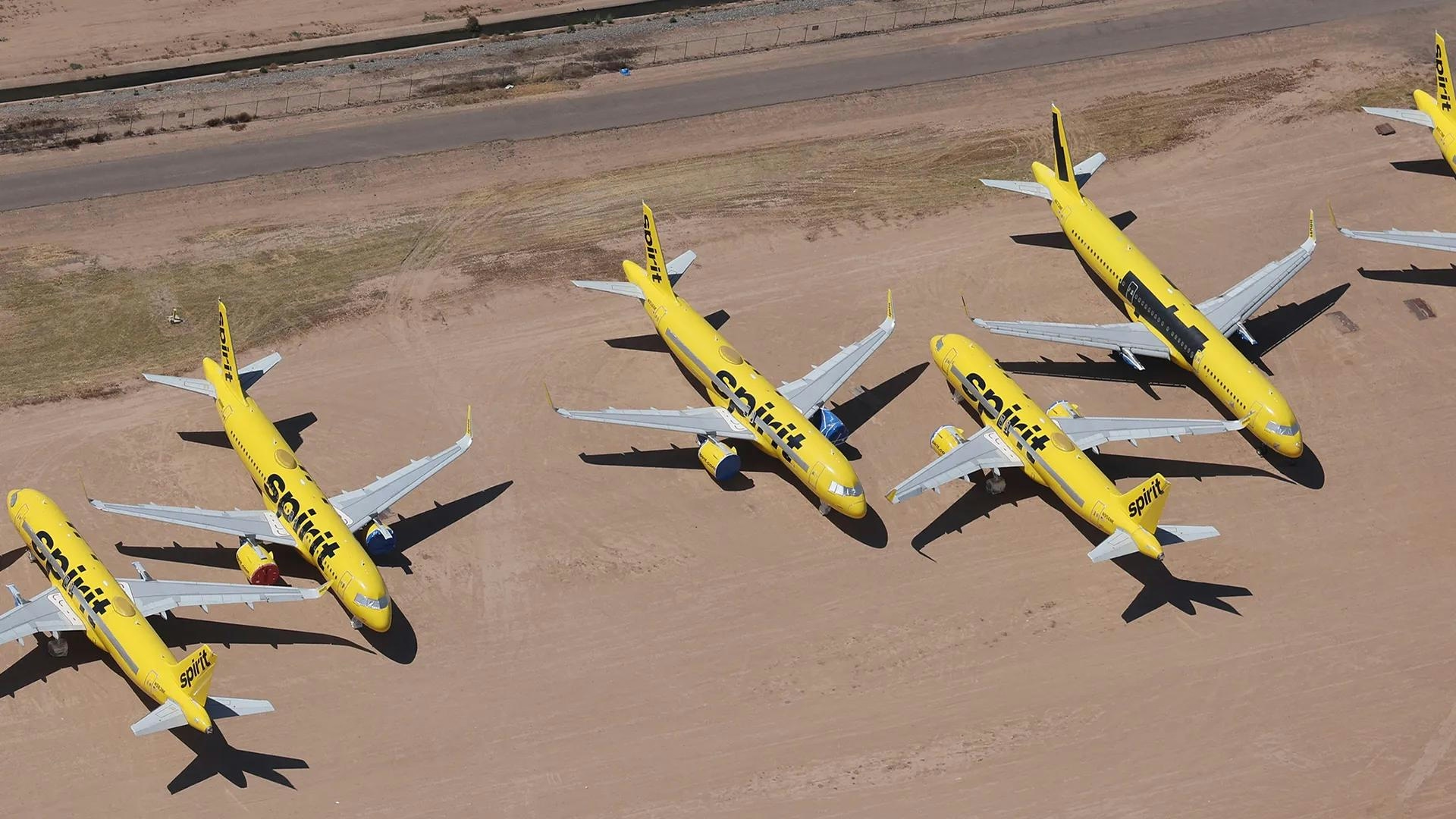
Spirit Airlines Collapse May Relieve Pratt & Whitney’s Engine Supply Strain
Impact of Spirit Airlines’ Grounding on Engine Supply
The sudden grounding of Spirit Airlines’ Airbus A320neo fleet and the carrier’s subsequent bankruptcy filing have sent significant reverberations through the aviation sector. Spirit’s fleet, powered by Pratt & Whitney’s PW1000G Geared Turbofan (GTF) engines, is being dismantled, releasing a supply of spare engines into a market that has been grappling with persistent shortages. This unexpected availability offers a potential, albeit temporary, reprieve for Pratt & Whitney’s strained engine supply chain.
Industry insiders report that some of Spirit’s GTF engines are already being leased to airlines struggling to maintain their own A320neo operations. Globally, hundreds of these aircraft remain grounded due to extended repair times and mandatory inspections stemming from a manufacturing flaw identified by Pratt & Whitney. The influx of engines from Spirit’s fleet could alleviate some of the pressure on operators facing these challenges, though the relief is expected to be limited in duration.
Market Dynamics and Broader Industry Challenges
Despite the additional engines entering the market, lease rates for GTF engines have remained stable, reflecting ongoing demand and limited supply. The process of making all of Spirit’s engines available is gradual, as lessors must navigate complex technical documentation and maintenance verification. Austin Willis, CEO of Willis Lease Finance, described the situation as “limited temporary relief,” emphasizing that the engines are being directed to customers with grounded aircraft. Scott Butler, chief commercial officer at KP Aviation, highlighted the high value of these engines, noting, “There’s a lot of money in the engines.”
Spirit Airlines’ collapse also introduces wider challenges for the aviation industry. The exit of a major ultra-low-cost carrier reduces competition, likely resulting in higher fares and fewer travel options for passengers. Major airlines have limited capacity to absorb Spirit’s displaced customers, exacerbating difficulties for travelers seeking refunds or alternative flights. Additionally, lessors and parts suppliers face increased maintenance costs as they repurpose Spirit’s nearly new A320neo jets for parts, with engines sometimes commanding higher value than the aircraft themselves.
Pratt & Whitney’s Position Amid Market Pressures
For Pratt & Whitney, a unit of RTX Corporation, the timing of Spirit’s collapse is critical. The company is navigating a surge in aftermarket demand alongside ongoing operational challenges. In the first quarter of 2026, Pratt & Whitney’s commercial aftermarket sales rose by 19%, prompting RTX to raise its sales and earnings forecasts for the year. Nevertheless, the company continues to contend with stiff competition from CFM International’s LEAP engine and must balance limited engine availability between new Airbus deliveries and existing operators awaiting maintenance.
Airbus is similarly under pressure to manage engine shortages while fulfilling demand for new aircraft. Although Pratt & Whitney has reported a recent decline in grounded A320neo cases, attributing this to improved repair-shop capacity, the overall market remains constrained.
On a related note, Pratt & Whitney recently announced the completion of a fully digital assembly readiness review for the XA103 engine, part of the U.S. Air Force’s Next Generation Adaptive Propulsion program. While this development signals progress in military engine projects, the commercial engine market remains focused on the immediate repercussions of Spirit’s collapse and the ongoing scramble for spare parts.
Spirit Airlines’ shutdown may provide Pratt & Whitney with a brief window of relief in the spare engine market, yet the broader aviation industry continues to face significant turbulence, marked by supply chain constraints, rising costs, and passenger disruptions.

Etihad Airways Suspends Airbus A380 Flights on Key Route

Aditya Birla Group Seeks Approval for Aircraft Leasing in GIFT City

Qatar Airways Highlights Innovation and Connectivity at Arabian Travel Market 2026

Hong Kong's Five-Year Plan Includes Andrew Fan's Aircraft Parts Processing Hub Proposal

ACIA Aero Leasing Delivers ATR72-600 to Air Nostrum

RTX Appoints Jill Albertelli as Head of Pratt & Whitney

TAT Technologies Joins Beyond Aero Hydrogen Aircraft Program

AURAK Study Highlights Barriers to Air Taxi Adoption in Emerging Economies

Xiamen Air Selects Altitude for 787 Maintenance at Heathrow

Etihad and Swissport Extend Global Partnership
